Traill County Public Land for Deer
Trying to pin down a good deer hunting spot in Traill County, North Dakota, can feel like you're searching for a needle in a haystack, especially when you're dedicated to finding public access. So many folks just throw their hands up, assuming it's all private land out here. But trust me, with the right knowledge and a bit of grit, you absolutely can find productive public ground for deer in Traill County. This guide is all about cutting through that frustration and showing you exactly where to look, what to expect, and how to maximize your chances on public land in this often-overlooked corner of the state.
The Lay of the Land: Deer Hunting in Traill County
Traill County, nestled in eastern North Dakota, isn't typically the first place that comes to mind when you think of deer hunting in the state. Most hunters envision the rugged Badlands for mule deer or the vast river bottoms of the Missouri for trophy whitetails. But Traill County offers a unique, albeit often challenging, experience primarily focused on white-tailed deer. Its landscape is a mosaic of rich agricultural fields, scattered shelterbelts, and winding riverine corridors, all of which whitetails utilize.
Understanding Traill County's Habitat for Whitetails
The habitat in Traill County is largely shaped by its agricultural heritage. You'll find expansive fields of corn, soybeans, and wheat dominating the landscape. While these fields provide abundant food sources for deer, they also present challenges in terms of cover and concealment, especially during the early archery season. Deer in this region are masters of adapting to limited timber and heavy human activity. They'll often bed down in tall grass, standing crops, or even small, overgrown ditches during the day, emerging under the cloak of darkness to feed in fields. The key to finding them often lies in identifying those smaller, overlooked pockets of cover that offer refuge in a largely open environment. This could be a small unharvested sunflower field or a deep cattail slough that holds just enough water to deter casual trespassers.
The true gems for whitetail habitat in Traill County are the riparian areas along the Goose River and its tributaries. These corridors offer denser timber, thick brush, and natural travel routes that deer depend on. These areas provide the necessary thermal cover in winter and crucial bedding sites year-round. Understanding how deer utilize these linear features to move between feeding areas and more secluded bedding grounds is paramount. It’s not about finding massive blocks of woods, but rather understanding how even a narrow strip of trees or a brushy draw acts as a deer highway in an otherwise open landscape. North Dakota Deer Herd Size isn't always about vast wilderness; sometimes it's about dense pockets in farmed areas.
The Challenges of Finding Public Access
One of the biggest hurdles for deer hunters in Traill County, and indeed much of eastern North Dakota, is the sheer dominance of private land. Much of the county's prime deer habitat, particularly the river bottoms and larger blocks of timber, is privately owned. This reality can be disheartening for hunters who don't have personal connections to landowners or the resources to lease private ground. The frustration is real; you might drive for miles, seeing excellent deer sign, only to be met with "No Hunting" signs.
Furthermore, even when public land is available, it's often in smaller, fragmented parcels. These aren't vast national forests where you can wander for days without seeing another soul. Instead, you'll be dealing with smaller tracts, often surrounded by private property, which can lead to increased hunting pressure. This fragmentation requires a much more deliberate and strategic approach to scouting and hunting. You can't just stumble upon a good spot; you have to actively seek it out, understand its boundaries, and sometimes even deal with other hunters who have the same idea. It’s a completely different ballgame than hunting in the sprawling Badlands.
Unlocking Public Hunting Opportunities in Traill County
Despite the challenges, public land opportunities do exist in Traill County if you know where to look and how to interpret the available resources. The North Dakota Game and Fish Department (NDGFD) works tirelessly to provide access through various programs, and hunters need to become experts at leveraging these resources.
Navigating PLOTS Lands in Traill County
The Private Land Open To Sportsmen (PLOTS) program is your absolute best friend when it comes to finding public hunting access in counties like Traill. PLOTS lands are private lands leased by the NDGFD to provide public hunting access. These parcels can vary greatly in size and habitat, from small shelterbelts to large blocks of CRP grass or even river bottom timber. They are explicitly marked with yellow PLOTS signs, making them easy to identify in the field.
To effectively use PLOTS, you need to commit to thorough research before you ever set foot in the field. The NDGFD releases a PLOTS guide booklet annually, and even more critically, they offer an interactive mapping application. Tools like onX Hunt or GoHunt integrate this PLOTS data directly onto their maps, overlaying it with satellite imagery and topographical features. This allows you to literally zoom in on potential hunting areas, identify likely bedding cover, pinch points, and travel corridors, all from the comfort of your home. Always check the current year's maps, as PLOTS agreements can change. A parcel that was open last year might be closed this year, and vice versa. Scouting PLOTS Land With the ND Hunt App is a critical step in your preparation.
Exploring State School Trust Lands
North Dakota also has a significant amount of State School Trust Lands. These are parcels, often square mile sections, that were granted to the state to support public education. While these lands are generally open to public recreation, including hunting, they are typically unposted and unmarked. This means you need to do your homework to identify them. Mapping applications like onX Hunt or GoHunt are indispensable here, as they clearly delineate property boundaries and show state school land ownership.
Hunting State School Trust Lands in Traill County often means walking agricultural fields or small, isolated blocks of grasslands. Deer will use these areas, especially if there's adjacent cover on private land, often moving onto these public parcels to feed or transit. The key is to find those pieces that offer some form of natural cover – a deep ditch, a patch of brush, or even standing crops if the hunt occurs early enough in the season. These lands often see less pressure than well-known PLOTS areas simply because they aren't explicitly signed, requiring hunters to be more proactive in their scouting and boundary identification. Remember, legal access to these parcels is usually via public roads, and you cannot cross private land without permission to reach them.
Waterfowl Production Areas (WPAs) and Deer Potential
While primarily managed for waterfowl, Waterfowl Production Areas (WPAs) can offer surprising deer hunting opportunities in Traill County. These federal lands, scattered across the prairie pothole region, consist of wetlands, grasslands, and sometimes small clumps of trees or brush. While they might not scream "deer hunting," whitetails use these areas for bedding, especially during the day when hunting pressure might be higher on adjacent private lands.
The thick cattail sloughs and dense grass cover within WPAs provide excellent concealment for deer. During the late season, when agricultural fields are harvested, deer will often seek refuge in these protected areas. Don't overlook the edges of WPAs, particularly where they border standing corn or other food sources. Deer will stage in the cover of the WPA before moving out to feed. While waterfowl hunting might be prominent, focusing on the upland and brushy edges can yield results for deer. Always respect WPA regulations, which are typically well-posted, and be mindful of other hunters, particularly those pursuing migratory birds. Hunting a Waterfowl Production Area for Deer can be a rewarding, if unconventional, approach.
Public Land Comparison in Traill County
To give you a clearer picture of the different types of public land you might encounter for deer hunting in Traill County, here's a brief comparison:
| Public Land Type | Primary Habitat | Key Deer Use | Access & Visibility | Hunting Pressure | Best Tools for Finding |
|---|---|---|---|---|---|
| PLOTS Lands | Varied: shelterbelts, CRP, river bottom, crops | Bedding, travel, feeding | Clearly marked with yellow signs, variable access | Moderate to High, depending on parcel | NDGFD App, onX Hunt, GoHunt |
| State School Trust Lands | Agricultural fields, small grass blocks | Transit, feeding, isolated bedding | Unmarked, no specific signage | Low to Moderate, often overlooked by hunters | onX Hunt, GoHunt (ownership layers) |
| Waterfowl Production Areas | Wetlands, grasslands, small brush/timber | Day bedding, thermal cover, staging | Marked with WPA signs, focused on waterfowl | Moderate (mixed with bird hunters), can be low for deer | NDGFD App, onX Hunt, GoHunt, federal maps |
Strategies for Success on Traill County Public Land
Once you've identified potential public land parcels in Traill County, the real work begins: developing a strategy to effectively hunt these areas. It's not enough to just show up; success comes from smart scouting, adapting to pressure, and understanding deer behavior in this unique environment.
Scouting Smart with Mapping Tools
Gone are the days when scouting meant simply driving around and glassing fields. Modern hunting truly thrives on technology-aided scouting. This is where tools like onX Hunt become absolutely invaluable. Before you ever hit the road, spend hours meticulously poring over satellite imagery, topographical maps, and public/private land overlays. Look for specific features:
- Linear Cover: River and creek bottoms, shelterbelts, fencelines with heavy brush. These are natural travel corridors.
- Isolated Cover: Small groves of trees, cattail sloughs, unharvested food plots, or even overgrown farmsteads. Deer seek these spots for bedding in open country.
- Pinch Points and Funnels: Areas where cover narrows, forcing deer into predictable travel lanes. This could be where two shelterbelts meet or a thicket forces deer to walk a specific field edge.
- Food Sources: Identify crop types, especially standing corn or bean fields early in the season, and consider Late-Season Food Sources for North Dakota Whitetails like waste grain after harvest.
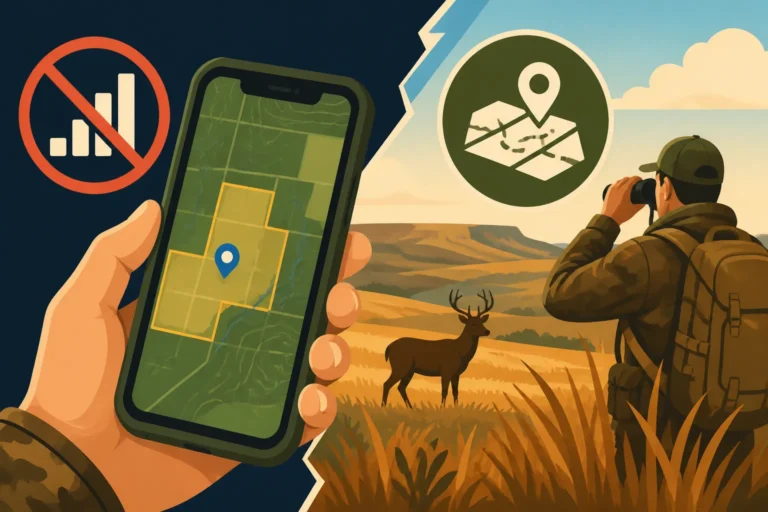
Overlaying PLOTS boundaries with these features on your phone or GPS (many hunters rely on onX Hunt's robust offline capabilities) helps you develop a game plan. You can drop pins for potential stand sites, entry and exit routes, and suspected bedding areas. Use the aerial photos to visualize the terrain and vegetation. This detailed digital scouting helps maximize your limited time in the field, guiding you directly to promising areas rather than aimlessly wandering. You'll want to avoid unnecessary walking and noise, so knowing your path is key.
Adapting to Hunting Pressure
Public land in North Dakota, especially accessible PLOTS tracts, can experience significant hunting pressure. This isn't necessarily a bad thing, but it means you need to adjust your tactics. Deer on pressured land become more nocturnal and will gravitate toward the densest, most overlooked cover. Your goal should be to find those sanctuaries within or adjacent to public land that other hunters might skip.
Consider hunting during weekdays if possible, or during less popular times like midday. While most hunters are out during the first and last hours of light, a midday still-hunt through a thick shelterbelt or a deep slough on a WPA can be incredibly effective for jumping deer that are bedded down. Don't be afraid to walk a little further than others. Often, the best spots are just beyond where most hunters are willing to go. Look for "edge" habitats – where different cover types meet – or transitions between public and private land. Deer often use the security of private land to bed and slip onto public ground to feed. Patience and persistence are key when dealing with Hunting Pressure on North Dakota Public Land.
Late Season Opportunities and Food Sources
Traill County deer hunting can truly shine in the late season, especially after the gun season closes and archery/muzzleloader seasons continue into December. By this time, many crops are harvested, leaving deer highly reliant on specific food sources. This concentration makes them more predictable, provided you can find those crucial food plots or standing grain.
Focus on fields with waste grain, standing corn, or soybeans that might have been left unharvested. These are calorie goldmines for deer in the bitter North Dakota cold. River bottoms and shelterbelts provide crucial thermal cover during cold snaps. Deer will often bed in these areas during the day and move to food sources in the late afternoon and early morning. Consider setting up on the downwind edge of a standing cornfield, or along a travel corridor leading from heavy cover to a known food source. Hunting a Standing Corn Field for Deer is a classic late-season tactic that can be extremely productive. Be prepared for cold weather, as late-season hunts can be frigid, but the rewards can be substantial.
Essential Gear and Mindset for Traill County Deer Hunters
Hunting in Traill County requires not only strategic thinking but also the right equipment and a resilient mindset to overcome the unique challenges presented by the landscape and conditions.
Packing for the Prairie and River Bottoms
Your gear selection needs to be practical and adaptable for the varied conditions of Traill County. Unlike mountain hunts, you're not facing extreme elevation changes, but you are dealing with open country, potentially deep snow, and often strong winds that amplify the cold.
- Layered Clothing: Essential for temperature regulation. Start with good base layers, add insulating mid-layers, and finish with a waterproof and windproof outer shell. This is especially true for late-season hunts where temperatures can plummet.
- Reliable Boots: Waterproof, insulated boots are a must. You'll be walking through potentially wet fields, snow, and muddy river bottoms. Good ankle support is also critical for covering uneven terrain.
- Mapping & Navigation: A quality GPS unit or a smartphone with a subscription to a mapping app like onX Hunt or GoHunt is non-negotiable. Ensure you have downloaded offline maps for areas where cell service might be spotty. A portable power bank to recharge your devices is also a smart addition.
- Optics: Binoculars are key for spotting deer at a distance in open fields or picking apart dense cover in river bottoms. A good rangefinder is also crucial for ethical shot placement.
- Scent Control: While debated by some, minimizing your scent can be especially important on pressured public land where deer are highly sensitive to human presence.
- Safety Gear: A small first-aid kit, a headlamp, and knowing North Dakota Public Land Hunting Hours are crucial. Blaze orange is a requirement during the gun season and a good idea for visibility on public land even when not mandated. How Much Blaze Orange North Dakota Requires will be a specific rule to follow during the gun season.
The Importance of Persistence
Hunting public land in Traill County is rarely easy, but it can be incredibly rewarding. The deer are there, but they demand dedication and persistence. You might have to scout multiple PLOTS tracts, walk more miles than you initially planned, or endure a few slow days without seeing much activity. This is where your mindset comes into play.
Don't get discouraged if your first few attempts don't yield immediate success. Each outing is a learning experience. Pay attention to deer sign, understand how deer are using the available cover, and observe other hunters' patterns. Use tools like onX Hunt to mark areas where you see fresh sign or areas where you notice increased pressure. Be willing to adapt your strategy, try different entry points, or change your hunting times. The most successful public land hunters in Traill County are those who are resilient, adaptable, and willing to put in the extra effort to find those overlooked gems. Remember, the quiet satisfaction of harvesting a deer on public land that you worked hard to find is unmatched.
Disclaimer
This article is for general informational purposes only and does not constitute professional advice. Laws, prices and regulations vary by location and change over time. Consult a qualified professional for guidance on your specific situation.