Timber Cuts and Where Deer Move After
For those of us who spend our autumns navigating the timbered draws and shelterbelts of North Dakota, few things can throw a wrench into our well-laid deer hunting plans quite like a fresh timber cut. Suddenly, the woods we've scouted for months are unrecognizable, and the deer seemingly vanish. This guide is all about understanding the chaos and opportunity that timber cuts create, helping you predict where deer will go and how you can adapt your hunting strategy for success.
The Immediate Shockwave: How Timber Cuts Displace Deer
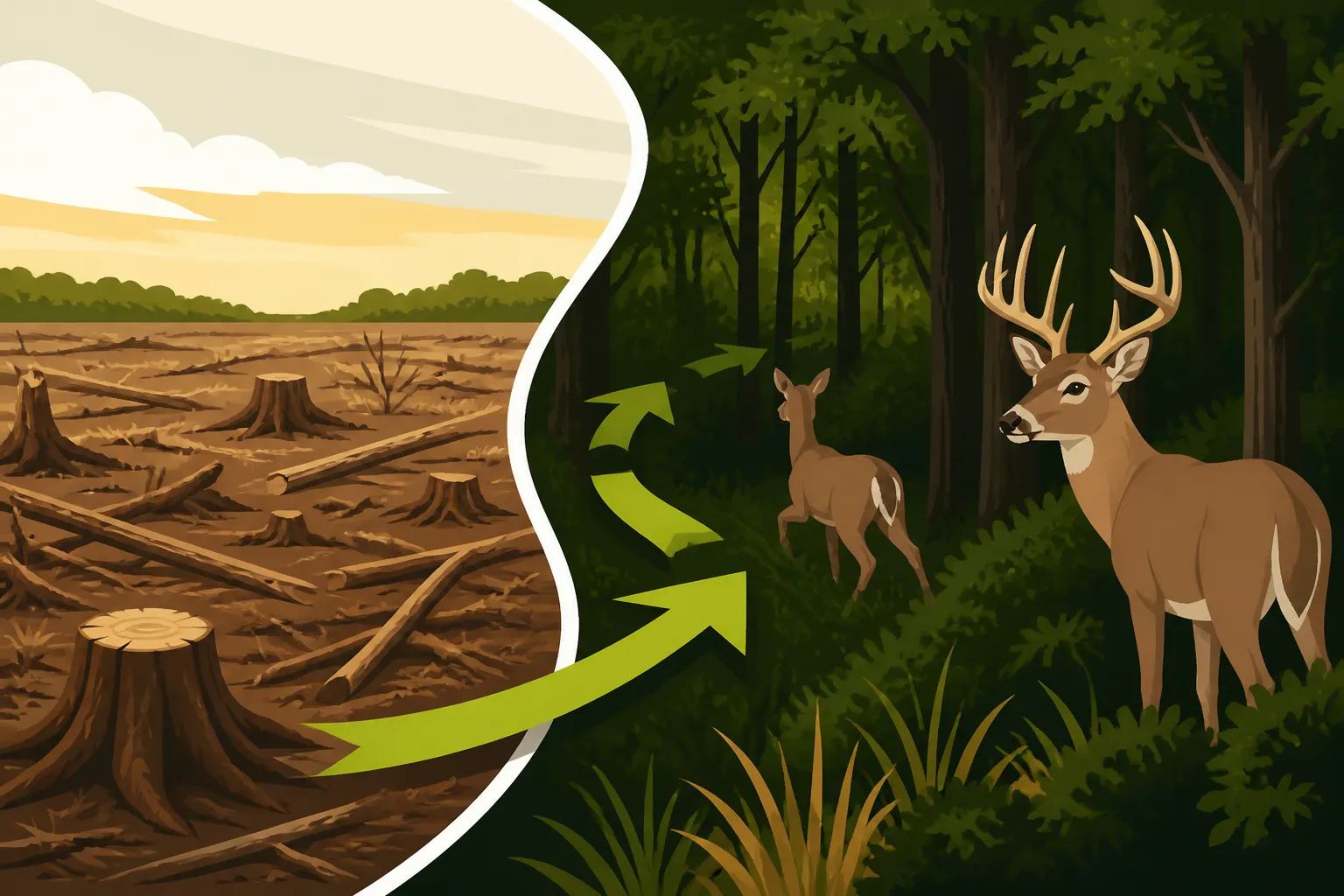
When the chainsaws start humming and the heavy machinery moves in, it sends an undeniable shockwave through the deer population. It's not just the noise; it's the sudden, dramatic alteration of their home. Imagine your own neighborhood being completely restructured overnight – that's a bit what it's like for these animals. Their sense of security is shattered, and their familiar routes, bedding areas, and food sources are either gone or drastically changed. This initial period is often marked by confusion and a scramble for safety.
The Initial Disorientation and Flight Response
Deer are creatures of habit. They rely on established patterns, trails, and secure cover to survive. When a timber cut occurs, especially a large-scale clear-cut or even significant selective logging, that entire world is upended. The sound of machinery alone can drive them out of an area for days, if not weeks. They don't differentiate between a logging crew and a pack of coyotes; it's simply a massive, unfamiliar threat. Their first instinct is often flight – to get as far away from the disturbance as possible, even if it means exposing themselves in unfamiliar terrain. This initial flight can push deer into areas they wouldn't normally frequent, sometimes causing them to congregate in smaller, unpressured pockets of cover that still remain.
Loss of Familiar Cover and Bedding Areas
The most immediate and critical impact of a timber cut is the destruction of established cover and bedding areas. Deer, particularly mature bucks, crave thick, secure spots where they can lie down and feel safe from predators and the elements. These might be dense cedar thickets, stands of mature pines, or just gnarly pockets of hardwoods. When these areas are removed, the deer are left exposed. They lose their thermal cover, which is vital in North Dakota's often brutal shoulder seasons and early winters. They also lose their visual security, making them feel vulnerable. This forces them to find new places to bed, often in less-than-ideal spots, which can be a real challenge if surrounding areas are already heavily pressured or lack suitable habitat. It's a game of musical chairs, and the deer are frantically searching for an open seat.
Short-Term Adaptations: Where Deer Move Right After the Saw Stops
Once the initial flight response subsides and the logging crews pack up, deer will begin a period of intense short-term adaptation. They won't just disappear forever; they'll try to find new ways to survive in their altered world. This is where a savvy hunter can start to piece together the new puzzle, understanding that the deer are actively seeking solutions to their immediate habitat problems. Their movements become highly focused on finding what was lost: cover, food, and safe travel.
Seeking Adjacent Thermal Cover and Security
In the immediate aftermath of a timber cut, deer will almost universally seek out the thickest, most impenetrable cover still available in the vicinity. This often means adjacent stands of uncut timber, dense shelterbelts bordering the logged area, or even unlogged draws and coulees within the larger tract. They need that security blanket, especially as the weather turns colder. Think about those overlooked patches of evergreens, plum thickets, or even cattail sloughs adjacent to a recent cut – these become prime real estate. Deer will pack into these spots, using them as primary bedding areas during daylight hours. Hunters who focus on the immediate edges of the cut and these dense, unlogged islands of cover will likely find concentrated deer activity. It's not just about hiding; it's about minimizing exposure until new growth provides some relief.
Shifting Food Sources and Browsing Habits
With their familiar feeding grounds potentially flattened, deer are forced to adapt their diet. Initially, they might rely more heavily on browse found in the surviving timber or nearby fields. However, one often overlooked short-term food source in a fresh timber cut is the logging slash itself. Tender buds and twigs on felled trees, especially certain species like aspen or willow, can provide a sudden bounty of accessible food. Deer will cautiously enter the cut to browse on these fresh offerings, particularly during low-light hours. Additionally, adjacent agricultural fields or plots that were less frequented before might see increased deer activity as they search for new calories. You might see deer shift from alfalfa to standing corn, or from an oak flat to a newly accessible browse line. Late-Season Food Sources for North Dakota Whitetails is a related topic that might help you understand deer dietary changes.
Altered Travel Corridors and Escape Routes
When their established travel corridors are obliterated, deer don't just stop moving. They simply find new ways to get from bedding to feeding and back. These new routes will often hug the remaining cover. Think of the narrow strips of uncut timber between the logged sections, the edges of fields adjacent to the cut, or the deeper, untouched creek bottoms. These become funnel points, bottlenecks where deer are forced to travel due to the loss of broader options. They're looking for the path of least resistance that still offers some level of concealment. Sometimes, they'll even use the edges of the cut itself, particularly under the cover of darkness, before darting into adjacent timber. Using an app like onX Hunt to study aerial imagery can be incredibly helpful here, allowing you to identify these new pinch points and travel corridors that weren't there before. A good aerial map can show you exactly where the new lines of security and openness are, allowing you to anticipate their movement.
| Factor | Immediate Post-Cut Deer Behavior | Hunter Strategy Considerations |
|---|---|---|
| Cover/Bedding | Seek densest, adjacent uncut timber, thickets, deep draws, or sloughs. | Focus on edges of the cut, remaining thick cover islands, and overlooked pockets. |
| Food Sources | Browse on logging slash, shift to accessible adjacent fields or surviving areas. | Scout for fresh browsing on downed timber, observe new field entry points, identify preferred browse. |
| Travel Routes | Utilize narrow strips of remaining cover, field edges, deep creek bottoms. | Identify new funnels and pinch points, use aerial maps, set up on new travel corridors. |
| Security/Pressure | Highly sensitive to disturbance, avoid open areas, move primarily at low light. | Hunt quietly, minimize disturbance, use ground blinds or distant stands, consider wind and thermals. |
Long-Term Benefits: How Regenerating Timber Cuts Become Deer Magnets
While the initial phase of a timber cut can be chaotic for both deer and hunters, the long-term effects are almost universally positive for deer habitat. Nature abhors a vacuum, and within a few years, a timber cut transforms into an entirely new, incredibly rich ecosystem that deer absolutely thrive in. This is where the true "deer magnet" aspect of timber management comes into play, creating a cycle of regeneration that benefits generations of deer.
Explosions of New Browse and Forage
After a timber cut, sunlight floods the forest floor that was once shaded. This triggers an explosion of new growth – tender saplings, shrubs, forbs, and grasses that were suppressed by the mature canopy. This young, succulent vegetation is incredibly palatable and nutritious for deer. Instead of having to reach high for limited browse or forage in sparse undergrowth, deer find an all-you-can-eat buffet at eye level. Species like aspen, willow, dogwood, and various berry bushes quickly establish themselves, providing a consistent food source throughout the year. This dense, diverse forage is critical for deer health, fawn production, and antler growth. It essentially creates a massive, natural food plot that can last for years as the forest regenerates.
The Growth of Thick Bedding and Escape Cover
Hand-in-hand with the new food sources, the regenerating timber provides exceptionally thick cover. Young trees and shrubs grow tightly packed, creating a nearly impenetrable maze of vegetation. This dense growth offers incredible security cover for deer, allowing them to bed down feeling completely hidden from predators and harsh weather. It provides thermal protection from winter winds and summer heat, crucial for North Dakota's extreme climate. For fawns, these thickets are vital nurseries, offering protection from coyotes and other predators. North Dakota Fawn Survival Rates can be significantly impacted by the availability of such cover. As the cut area matures over 5-15 years, it becomes prime bedding and escape cover, making it a sanctuary where deer feel safe to live and grow.
Creating Edge Habitat and Travel Funnels
Timber cuts are master creators of edge habitat – the transition zone between two different types of habitat. This edge effect is a well-known phenomenon in wildlife biology, as it provides a concentration of diverse resources. Deer love edges because they can feed in the regenerating growth while staying close to the security of mature timber or other dense cover. A long, irregular edge along a timber cut acts like a natural travel corridor, drawing deer along its length. These edges also create natural funnels, especially where the cut narrows or converges with other habitat features like a creek bottom or a food plot. Imagine a long, narrow strip of young growth between a mature woodlot and a cornfield; deer will almost certainly use this edge to travel, browse, and hide. Understanding these newly formed edges and funnels is key to hunting these areas effectively years after the initial cut. You might find similar funnels in areas like Hunting a Shelterbelt Edge for Deer.
Hunting the Transition: Strategies for Success in Cut Timber
Hunting timber cuts requires a flexible mindset and a willingness to adapt your strategies. The landscape has changed, and so too must your approach. This isn't about applying old tactics to new terrain; it's about understanding the new dynamics and leveraging them to your advantage. Whether it's the season immediately following a cut or several years down the line, there are specific strategies that will put you in a better position to encounter deer.
Scouting the Perimeter and Adjacent Uncut Timber
Your initial scouting efforts should focus heavily on the areas surrounding the timber cut, not just the cut itself. Deer are going to be pushed into these adjacent areas, and identifying those new concentrations is paramount. Look for fresh tracks, rub lines, and scrapes along the edges of the uncut timber, particularly where it borders the new opening. Pay close attention to any remaining thickets, plum patches, or even cattail sloughs that offer dense cover. These become high-priority bedding areas. Walk the perimeter of the cut, looking for where deer are entering and exiting. Are they using a narrow finger of timber that wasn't previously a major travel route? Is there a deep ravine or creek bottom running parallel to the cut that now sees increased traffic? Scouting PLOTS Land Before Season is always important, but after a major timber cut, it becomes even more critical for success. Don't assume anything; let the deer sign tell you where they've relocated.
Using Technology to Pinpoint Deer Movement
In a constantly changing environment like a timber cut, modern hunting technology can be your best friend. Apps like onX Hunt are invaluable for studying aerial imagery. Before you even set foot in the woods, you can identify the boundaries of the cut, locate adjacent cover, and predict potential new travel corridors. You can mark potential stand sites, food sources, and bedding areas right from your couch. After the cut, use the app to track your movements and mark any new deer sign you find. This helps you build a picture of current deer activity. Similarly, trail cameras can provide real-time intelligence. Place them strategically on the edges of the cut, along suspected new travel routes, or near remaining thickets. Pay attention to not just what deer are moving, but when they are moving, as post-cut deer can be extremely nocturnal, especially if pressure is high. Another great resource for understanding deer patterns, especially related to habitat and success, can be found on platforms like GoHunt, which often have articles and tools for analyzing habitat changes.
Patience and Adapting to New Patterns
Perhaps the most crucial strategy when hunting timber cuts is patience and adaptability. The deer will not immediately settle into predictable patterns. It takes time for them to adjust to their new home, and it takes time for you to learn those adjustments. Don't get discouraged if your first few hunts in a cut-over area are slow. Keep observing, keep scouting, and be prepared to move your stand or adjust your approach based on what the deer are telling you. This might mean sitting longer hours, using a ground blind for better concealment in sparse cover, or focusing on low-light hunting when deer feel safer venturing into more open areas. Understanding Hunting Pressure on North Dakota Public Land is also key here; if a cut is on public land, expect other hunters to also be trying to figure it out, which can further alter deer movement. The deer will eventually establish new routines, and the hunter who consistently adapts and learns these new patterns will be the most successful.
Disclaimer
This article is for general informational purposes only and does not constitute professional advice. Laws, prices and regulations vary by location and change over time. Consult a qualified professional for guidance on your specific situation.