North Dakota Posted Land Rules
Navigating hunting land in North Dakota can feel like deciphering a secret code, especially with the varied landscape of public, private, and hybrid access areas. It’s a common frustration to pull up to a promising looking piece of cover, only to be met with confusing signs or none at all, leaving you wondering if you're welcome or if you’re about to inadvertently become a trespasser. This guide will clarify North Dakota's posted land rules, helping you understand what "posted" truly means, how to identify accessible land, and how to avoid legal trouble while ensuring a respectful hunt.
Understanding North Dakota's Posted Land Laws
North Dakota takes private property rights seriously, and understanding the specific requirements for what constitutes legally posted land is paramount for any hunter. It’s not just about seeing a sign; there are very clear guidelines that landowners must follow for those signs to hold legal weight. Without these rules, it would be a free-for-all, and neither hunters nor landowners would know where they stand.
What Constitutes Legally Posted Land?
For land to be considered legally "posted" in North Dakota, preventing public access for hunting, the signs aren't just any old piece of paper tacked to a fence. The law is quite specific. These signs must be conspicuous, meaning easy to see. They need to be at least eleven inches by fourteen inches in size, clearly visible, and placed no more than 880 yards apart (that's roughly a half-mile) on the perimeter of the area being restricted. They also need to be placed at all major entry points, like gate openings or where a field road meets a public road.
The signs themselves must clearly state that hunting, fishing, or trapping is prohibited without permission. Simply writing "Private Property" isn't enough to restrict hunting access, although it does indicate the land is indeed private. The intent to prohibit hunting needs to be explicitly stated. Think about driving down a county road; you should be able to tell without question if the property you're passing is open or closed to hunting by looking for these specific, well-placed signs. Anything less than this legal standard means the land is not legally posted for hunting restriction purposes, though it remains private land.
This legal definition is designed to protect both the landowner, by giving them a clear method to control access, and the hunter, by providing unambiguous indicators of where they can and cannot hunt. It eliminates a lot of guesswork and potential arguments in the field. It’s a system built on clarity, which is something we all appreciate when we’re out in the elements trying to focus on the hunt. North Dakota Trespass and Permission Law goes into more detail on the legal nuances.
The Importance of "No Trespassing" Signs
While North Dakota law details specific posting requirements for restricting hunting, the general "No Trespassing" sign still holds significant importance. For hunting purposes, a simple "No Trespassing" sign, without the specific dimensions or wording about hunting, fishing, or trapping, doesn't automatically close the land to hunting. However, it does make it clear that you are entering private property. Even if hunting isn't explicitly prohibited by those signs, a landowner can still confront you and ask you to leave. If you refuse, you are then trespassing, regardless of the hunting-specific posting rules.
The core distinction here is that while "No Trespassing" signs indicate private land and a general desire for privacy, they don't carry the automatic legal weight to prosecute someone specifically for hunting without permission unless the signs also meet the specific hunting posting criteria. However, landowners still have the right to revoke permission, implied or otherwise, on their private property. It's a subtle but crucial difference in how the law is applied.
Ultimately, "No Trespassing" signs serve as a strong indicator that you should exercise caution and ideally seek permission before entering. It shows a landowner's intent. While you might not be breaking a hunting-specific posting law by entering, you could quickly find yourself in a general trespassing situation if the landowner objects to your presence. The best practice is always to respect the spirit of the sign and err on the side of caution.
When Permission is Always Required
There are certain scenarios in North Dakota where, regardless of how visible or well-placed "No Trespassing" or "Hunting Prohibited" signs might be, you absolutely need to obtain explicit permission from the landowner before stepping foot on their property for hunting. This isn't just about signs; it's about the fundamental nature of the land and its use. Understanding these situations can save you a lot of grief and legal trouble.
One major area where permission is always required is on land that is actively being cultivated. This includes standing crops like corn, wheat, sunflowers, or alfalfa fields, or even recently harvested fields where crop residue remains. The law states that you cannot hunt on such cultivated land without first obtaining permission from the owner or tenant, even if it's not posted. This rule protects farmers from damage to their crops, equipment, or livelihoods. It’s about respecting their active work and investment. Entry Routes Through Standing Sunflowers provides some context for hunting near these fields.
Additionally, certain types of private land, such as feedlots, farmsteads, or other areas immediately adjacent to homes or buildings, always require permission. This is for safety and privacy, ensuring hunters are not firing weapons too close to residences or livestock. Even if no signs are present, these areas are implicitly off-limits without a direct conversation with the landowner. Always assume you need to ask if you’re near a dwelling or working farm. It's about common courtesy and ensuring the safety of all parties.
Navigating Public and Private Land Boundaries
The North Dakota landscape is a mosaic of public and private ownership, making it essential for hunters to accurately identify property lines. It can be a challenge, especially in vast, open areas where visible markers are few and far between. Modern technology has become an indispensable tool for hunters trying to stay on the right side of the law and avoid accidental trespassing.
Using Technology for Land Identification
In today's hunting world, relying solely on physical maps or guessing where property lines might be is a recipe for disaster. The advent of GPS mapping applications has revolutionized how hunters navigate North Dakota's complex land ownership patterns. Tools like onX Hunt and GoHunt are invaluable for clearly identifying public and private boundaries in real-time, right in the palm of your hand.
These apps overlay property ownership data onto detailed satellite imagery and topographic maps. With onX Hunt, for instance, you can see not only where public lands (like National Grasslands or Wildlife Management Areas) begin and end, but also the specific parcels of private land, complete with landowner names and contact information in many cases. This is crucial for distinguishing between land that might look unposted but is, in fact, private. Imagine you're stalking a pheasant along a seemingly endless field edge; with onX Hunt open on your phone, you can see exactly when you're about to cross into a new parcel, helping you stay within legal boundaries or know when to seek permission. Using the PLOTS App Without Cell Service is another great feature for planning.
GoHunt offers similar robust mapping capabilities, providing detailed insights into land ownership, public access points, and even historical burn data or satellite imagery that can help you scout from home. The precision these apps offer means you can confidently determine if a slough, a shelterbelt, or a creek bottom is on public property, designated PLOTS land, or private land that may or may not be legally posted for hunting. This takes much of the guesswork out of field navigation, empowering you to hunt legally and ethically. They are essential tools for anyone hunting in North Dakota's diverse habitat. Finding North Dakota Property Lines has never been easier thanks to these advancements.
Identifying PLOTS Land vs. Other Public Access
North Dakota's Private Land Open To Sportsmen (PLOTS) program is a fantastic initiative that provides public hunting access on private land. However, it's critical to understand that PLOTS land, while offering public access, is still private land enrolled in a specific program. This distinction is important because the rules for PLOTS can sometimes differ from those on traditional public lands like Wildlife Management Areas (WMAs) or National Grasslands.
PLOTS tracts are always clearly identified by distinctive yellow triangle signs that state "PLOTS – Walk-In Access." These signs are the definitive indicator that you have permission to hunt, fish, or trap on that specific private parcel, typically for non-motorized access. Unlike other private lands where you might need to interpret general "No Trespassing" signs or specific hunting prohibitions, PLOTS signs are a direct invitation. This means that even if a PLOTS tract has a fence around it, or abuts other clearly posted private land, the yellow sign is your green light for access. Reading a PLOTS Sign Correctly is a basic skill every hunter should master.
In contrast, other public access lands, such as state-owned WMAs or federally managed National Grasslands, are designated public property. They often have different signage, if any, marking their boundaries, and general public access rules apply. While PLOTS lands are a godsend for hunters seeking more ground, it's important to remember that these agreements are between the landowner and the state. Always look for those specific yellow PLOTS signs and consult the official PLOTS guide or app to verify access, especially since PLOTS agreements can change year to year. How PLOTS Access Works is a resource worth exploring to fully grasp the program.
The Role of Fences and Natural Barriers
Many hunters, especially those new to an area, instinctively rely on physical features like fences, rivers, or coulees to determine property boundaries. While these features often coincide with property lines, it’s a dangerous assumption to make in North Dakota. A fence, in itself, does not legally mean "posted" or "private property" in the context of hunting access, just as a river doesn't automatically delineate public from private land.
A common misconception is that if there's a fence, it must be the boundary, and therefore, everything beyond it is private and off-limits unless otherwise stated. However, a fence could simply mark an internal pasture boundary on a large ranch, with all land on both sides still belonging to the same owner. Conversely, a fence could indeed be a property line, but if the private land beyond it isn't legally posted according to state guidelines (those 11×14 inch signs at 880-yard intervals, specifically stating hunting is prohibited), then it technically remains open to hunting for nonresidents after the initial restriction period. This nuanced understanding is critical for avoiding accidental trespassing.
Similarly, natural barriers like coulees, riverbanks, or thick timbered draws might seem like obvious dividing lines. But without official land ownership maps or clear posting, assuming these define legal boundaries can lead to mistakes. Always cross-reference with your GPS mapping app, like onX Hunt, which provides accurate property lines overlaid on topographical features. This way, you're not just guessing based on a physical feature but relying on verified data. Hunting Missouri River Bluff Country is a perfect example where natural features might fool you without proper map work.
Consequences of Trespassing and Best Practices
Stepping onto someone else's property without permission, especially with a firearm, can lead to much more than just an awkward conversation. In North Dakota, trespassing is a serious offense, and the consequences for hunters can be significant. It's not just about avoiding legal trouble; it's also about upholding the ethical standards of hunting and maintaining positive relationships with landowners, which are vital for future access.
Legal Ramifications of Hunting on Posted Land
Hunting on legally posted land without permission in North Dakota carries significant legal penalties. It's not just a slap on the wrist; these offenses can lead to substantial fines, the loss of hunting privileges, and in some cases, even jail time or confiscation of your hunting equipment. The state treats such violations with seriousness because they undermine property rights and public safety.
For a first offense, you might be looking at a misdemeanor charge, which can include fines. Repeat offenses can escalate quickly, leading to higher fines and the potential for a lengthier suspension of your hunting, fishing, and trapping licenses. Imagine having your hard-earned deer tag revoked and being barred from hunting for several years—all because you didn't take the time to verify if land was open or closed. The game wardens in North Dakota are vigilant, and they use every tool at their disposal to ensure compliance with posting laws. North Dakota Wildlife Violation Penalties outlines the severity of these infractions.
Furthermore, if you are found guilty of hunting on posted land, you could face civil liabilities from the landowner in addition to state penalties. The cost of a bad decision can quickly compound, turning what should have been an enjoyable day afield into a financial and legal nightmare. The message is clear: when in doubt, don't go in. Take the extra steps to ensure you're on legal ground.
Ethical Considerations and Landowner Relations
Beyond the strict legal repercussions, there's a profound ethical dimension to respecting posted land. Hunting is a privilege, and that privilege is heavily dependent on maintaining positive relationships with landowners. In a state like North Dakota, where much of the huntable land is privately owned, the goodwill of farmers and ranchers is the lifeblood of our hunting tradition.
When a hunter disrespects private property by trespassing, it doesn't just impact that individual landowner; it casts a shadow over all hunters. It reinforces negative stereotypes and can lead to more landowners posting their property, or even withdrawing from programs like PLOTS. This erosion of trust means fewer opportunities for everyone down the line. We owe it to ourselves, and to future generations of hunters, to be ambassadors of ethical conduct. Knocking on Doors in North Dakota Farm Country discusses the importance of these relationships.
A truly ethical hunter understands that access to land is a gift, not a right. They prioritize landowner consent, even if it means adjusting their hunting plans. This might involve walking an extra mile to stay on public land, or taking the time to knock on a farmer's door and politely ask for permission. By doing so, we not only avoid legal trouble but also build the kind of rapport that ensures hunting opportunities remain viable for years to come.
Seeking Permission: A Step-by-Step Approach
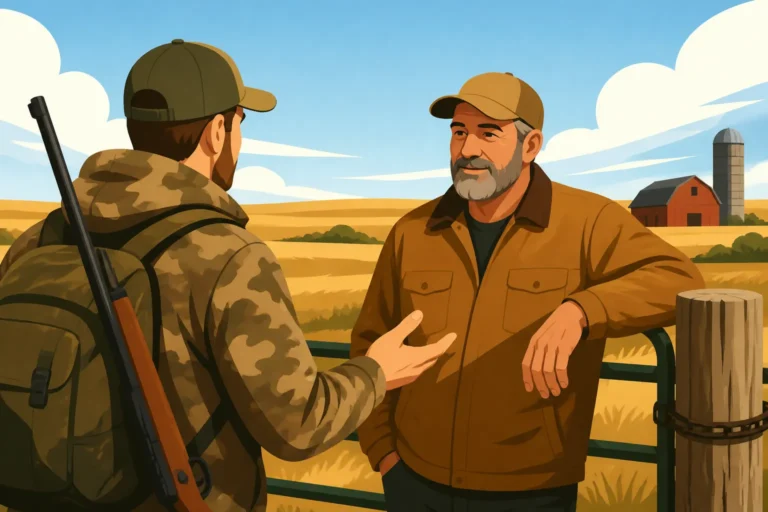
Approaching a landowner to ask for hunting permission might feel intimidating, but it's a time-honored tradition and one of the most rewarding ways to gain access to prime hunting ground in North Dakota. The key is to be respectful, prepared, and clear in your intentions.
First, do your homework. Before you even knock on a door, use apps like onX Hunt or the PLOTS guide to identify the landowner's name and the specific parcel you're interested in. Knowing this information shows respect and preparedness. Also, identify what you want to hunt (deer, pheasant, waterfowl, etc.) and when you want to hunt. A vague request is less likely to be granted. You might even want to consult Reading Aerial Photos for Badlands Deer to pick out specific features on their land to discuss.
Second, timing and presentation are everything. Avoid approaching a farmer during peak planting or harvest season, or when they're busy with livestock. Choose a time when they seem relaxed, perhaps in the late afternoon or evening. Dress neatly and speak clearly and courteously. Start by introducing yourself, explain why you're interested in hunting their land, and be ready to show them a map of their property on your phone, pointing out the specific area you'd like to access. Offer to share some of your harvest, or perhaps even offer to help with a small chore around the farm.
Finally, be gracious, whatever the answer. If they say yes, be extremely thankful, clarify any specific rules they might have (like where to park, which gates to close, or areas that are off-limits), and stick to those rules rigidly. If they say no, respect their decision immediately and thank them for their time. Do not argue or press the issue. A "no" today doesn't necessarily mean a "no" forever. Leaving a positive impression, even in refusal, can sometimes open doors for future seasons or even with neighboring landowners.
| Legal Posting Requirement | Description | Implications for Hunters |
|---|---|---|
| Sign Size | Minimum 11 inches by 14 inches | Smaller signs may indicate private land but do not legally restrict hunting access. |
| Sign Wording | Must explicitly state "Hunting, Fishing, or Trapping Prohibited" | Generic "Private Property" signs do not legally prohibit hunting. Permission still required for cultivated land or within safety zones. |
| Sign Spacing | No more than 880 yards apart (approx. half-mile) on perimeter, all entries | Gaps in posting or missing signs at entry points may render the land legally "unposted" for hunting purposes, but still private. |
| Cultivated Land | Always requires permission, regardless of signs | Hunting on standing or harvested crops without permission is illegal, even if no signs are present. |
| Safety Zones | Near residences, farmsteads, livestock | Always requires permission due to safety and privacy concerns, even without signs. |
| PLOTS Land | Distinctive yellow triangular signs "PLOTS – Walk-In Access" | These signs grant public walk-in hunting access on private land; no further permission needed for that specific parcel. Check app/guide annually. |
Disclaimer
This article is for general informational purposes only and does not constitute professional advice. Laws, prices and regulations vary by location and change over time. Consult a qualified professional for guidance on your specific situation.