Entry Routes Through Standing Sunflowers
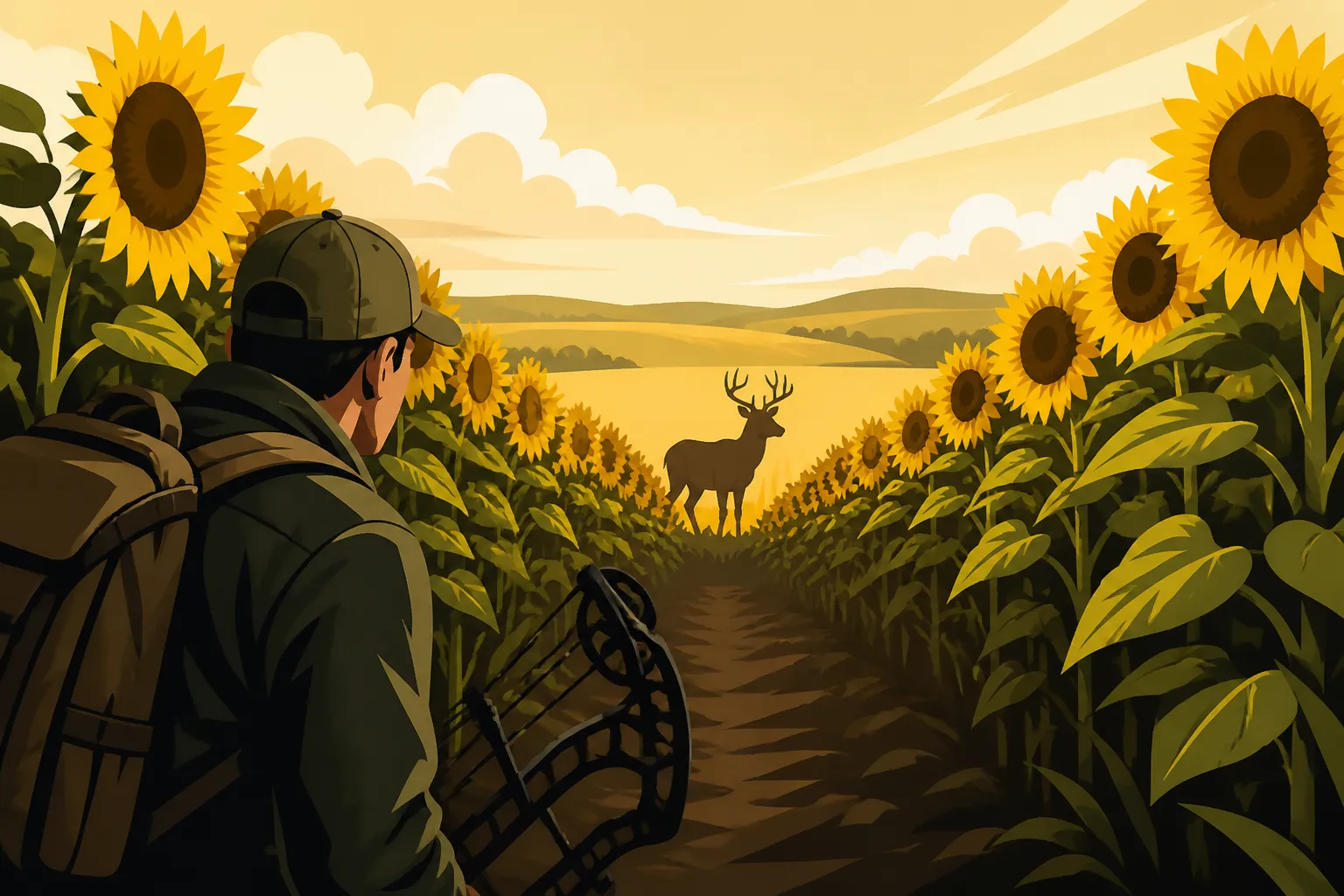
Hunting deer in North Dakota can be an incredibly rewarding experience, but let's be honest, those vast fields of standing sunflowers, while beautiful, present a unique set of challenges. You know deer absolutely love them for cover and food, but trying to sneak into one without spooking every animal within a quarter-mile radius feels like an impossible mission. This guide is dedicated to helping you master the art of silent, strategic entry into standing sunflower fields, turning that frustration into successful hunting opportunities.
The Allure and Challenge of Standing Sunflowers for Deer
Standing sunflower fields are true magnets for deer in North Dakota, especially as the season progresses. These agricultural havens offer a perfect storm of resources, making them irresistible to whitetails and, in some western areas, even mule deer. But what makes them such a double-edged sword for us hunters?
Why Deer Seek Sanctuary and Sustenance in Sunflower Fields
Deer aren't just passing through sunflower fields; they're actively living in them. The sheer density of the stalks provides incredible security cover, making deer feel safe from predators, including us. When those sunflowers are still standing tall, often well into the late fall, they create a natural, almost impenetrable fortress where deer can bed down, escape the elements, and move largely undetected.
Beyond just cover, these fields are a crucial food source. As the sunflower heads dry and drop their seeds, they become a high-energy buffet. Deer will browse on the fallen seeds, and sometimes even nip at the leaves and smaller stalks. This means you're not just looking for a travel corridor; you're looking for where deer are actively feeding and bedding, sometimes within the very same field. In a vast prairie landscape, a standing sunflower field can be the equivalent of a thick timber block or a deep river bottom for holding deer. They offer a comfortable thermal refuge during sudden cold snaps or hot days, keeping deer insulated from harsh winds or providing shade.
The Hunter's Dilemma: Noise, Scent, and Visibility Limitations
Now, while all of that sounds like a deer paradise, it creates a significant headache for us hunters. The primary issue is noise. Those dry sunflower stalks, even when seemingly still, can be incredibly brittle and loud. Every step can sound like you're crunching through a bag of chips, sending deer scattering before you even get close. This isn't like walking through soft forest duff or even crunchy snow where you can sometimes mask your sound; the sound of snapping stalks carries surprisingly far.
Visibility is another major problem. You might think the dense cover is a benefit, allowing you to get close, but it works both ways. You can barely see ten yards in front of you, making it nearly impossible to spot a bedded deer or anticipate movement. This dramatically increases the chances of bumping deer, which is a common frustration for anyone who's tried to hunt these fields. On top of that, the swirling air currents within a dense sunflower field can make managing your scent an absolute nightmare. The wind might be blowing consistently at the field edge, but once you're deep inside, it can swirl unpredictably, giving deer a whiff of your presence even if you thought you had a perfect wind.
Pre-Hunt Intelligence: Scouting and Planning Your Sunflower Assault
Successfully hunting standing sunflower fields isn't about brute force; it's about smarts. The preparation you put in before your hunt will often dictate your success, or at least your ability to get within range of a wary North Dakota whitetail. It’s about understanding the nuances of the terrain and the deer's habits.
Aerial Reconnaissance and On-the-Ground Clues
Before you even set foot near a sunflower field, some serious armchair scouting can give you a massive advantage. Tools like satellite imagery, available through platforms such as GoHunt, are invaluable for this. You can zoom in and analyze the field's layout: where does it border other cover like shelterbelts, tree lines, or thick cattail sloughs? Are there any low spots, drainage ditches, or fencelines that might offer a less dense entry point? These natural features can act as funnels or subtle travel corridors for deer. Look for any variations in the field itself—patches of thinner growth, areas that might have been harvested early, or even access roads cutting through. Understanding these patterns from above can help you identify potential ingress points and where deer might be bedding or traveling within the field. Reading aerial photos for Badlands deer offers general advice on using aerial maps that translates well to scouting prairie agriculture.
Once you’ve identified some promising spots from the air, it’s time for some boots-on-the-ground recon. This doesn't necessarily mean stomping through the middle of the field right before your hunt. Instead, focus on the edges. Walk the perimeter of the field, looking for tell-tale signs of deer activity. Fresh tracks entering and exiting the field are prime indicators. Look for well-worn trails, droppings, or even rubs and scrapes along the field's border. Pay close attention to corners or points where the sunflower field meets a wooded draw or a creek bottom; these are often high-traffic areas. Remember, deer are creatures of habit, and their trails will often give away their preferred entry and exit routes. You can even use resources like the Scouting PLOTS Land With the ND Hunt App to identify public access opportunities bordering prime sunflower habitat for your pre-season scouting missions.
The Critical Role of Wind and Thermals in Your Approach
In North Dakota, ignoring the wind is a surefire way to educate every deer in the county. When you're dealing with a dense cover like standing sunflowers, wind planning moves from important to absolutely critical. Your success hinges on maintaining a consistent wind advantage from the moment you leave your vehicle until you're within shooting range. This means not just checking the wind once, but constantly monitoring it and having backup plans if it shifts.
Deer rely heavily on their sense of smell, and the swirling, unpredictable air currents within a dense sunflower field can betray your presence instantly. A light breeze at the field's edge can become a chaotic vortex inside, making your scent disperse in multiple directions. You need to identify a prevailing wind direction that will carry your scent away from where you expect the deer to be. This often means approaching from directly downwind or crosswind. It’s not just about broad wind direction either; thermals, which are localized air currents driven by temperature changes, play a huge role, especially during dawn and dusk. In the morning, cold air sinks into low-lying areas, and as the sun warms the earth, it begins to rise. In the evening, the reverse happens. You'll often find deer moving into or out of fields along these thermal drafts. Understanding how Wind and Thermals in Badlands Terrain work, even if you’re not in the Badlands, provides crucial insight into planning your entry route to avoid broadcasting your scent. Always have a small wind checker puff bottle handy and use it constantly as you approach, especially when transitioning from open ground to the field's edge.
Executing the Infiltration: Silent and Stealthy Entry Techniques
Once you've done your homework and identified a promising entry point, the real challenge begins: actually getting into position without spooking your quarry. This requires a combination of patience, deliberate movement, and an understanding of how deer perceive their surroundings.
The Slow Stalk: Minimizing Noise and Maximizing Awareness
Entering a standing sunflower field is less about walking and more about a slow, methodical stalk. Each step must be intentional and calculated. Avoid rushing; your pace should be agonizingly slow, often taking several minutes to cover just a few yards. High-stepping over stalks or carefully placing your feet in any existing gaps or deer trails will minimize the tell-tale crunching sound. If you hear a loud snap, freeze. Wait several minutes. Deer are more likely to tolerate a single, isolated noise than a continuous rustle.
Use your senses to their fullest. Listen intently for any deer movement ahead—a rustle, a snort, a stomp. Stop frequently, perhaps every few steps, to scan ahead as best you can in the dense cover. Look for any patches of darker color that might indicate a bedded deer. A good trick is to use ambient sounds to your advantage. If there's a gentle breeze or distant traffic, try to time your movement with those masking noises. This is similar to the deliberate approach used when Still-Hunting North Dakota's Missouri River Bottomland, where every step is about reading the environment and moving with the utmost stealth. Remember, the goal isn't just to get into the field, but to get into a shooting position without alerting the deer to your presence.
Leveraging Field Edges and Natural Corridors
Sometimes, the best entry into a sunflower field isn't a direct plunge into the middle, but a calculated approach along its periphery. Deer often use the edges of these fields as primary travel routes, especially where the sunflowers meet another type of cover. Think of it like a natural highway system. If a small ditch, a fenceline, or a thin strip of timber runs parallel to the sunflower field, these can be excellent, quieter entry routes. Deer will often feel secure traveling just inside the edge of the field, knowing they have immediate escape cover.
Focus your initial efforts on ambushing these edge-runners. You can sometimes slip into position along a ditch or a slight rise, using the topography to conceal your final approach, and then set up within easy bow or gun range of the field's edge. This strategy reduces the amount of time you spend making noise in the dense stalks. Keep an eye out for natural breaks or openings within the field itself—maybe a small wet spot, a power line cut, or an area where the sunflowers didn't grow as thick. These can act as internal travel lanes that deer will readily use. By observing how deer utilize these marginal areas, you can often find a less disruptive path. A similar tactic is employed when Hunting a Shelterbelt Edge for Deer, where the key is to position yourself strategically along a primary travel corridor.
Gear Considerations and Avoiding Common Mistakes
Beyond the strategy and stealth, the right gear can make a tangible difference in your ability to successfully navigate and hunt standing sunflower fields. Just as important is recognizing and avoiding the common errors that often derail a well-intentioned hunt.
Essential Gear for Sunflower Field Success
Hunting dense cover like standing sunflowers demands a few specific gear considerations to enhance your stealth and effectiveness. First and foremost, quiet clothing is non-negotiable. Forget anything that rustles loudly; opt for soft, brush-resistant fabrics that won't betray your presence with every slight movement. Merino wool or fleece are excellent choices. Next, sturdy, waterproof boots are critical. North Dakota fields can be wet, muddy, and uneven, and you'll inevitably be walking over tough stalks. Good ankle support and a robust sole will help you maintain balance and carefully place your feet.
While the cover is dense, having quality optics is still beneficial. A compact pair of binoculars can help you pick apart dense cover for a flicker of an ear or a patch of hide that indicates a bedded deer. A rangefinder is also a smart addition, as judging distance accurately in a field of uniform stalks can be surprisingly difficult. Lastly, consider carrying a small, quiet pruning saw or heavy-duty snips. While you never want to create obvious trails, sometimes a single, strategic snip of an especially brittle stalk can prevent a loud snap that would otherwise blow your cover. For hunters considering setting up for an ambush, learning about Using a Ground Blind on PLOTS Land can offer insights into effective concealment near field edges.
Learning from What Goes Wrong: Common Entry Errors
We've all made mistakes in the field, and hunting standing sunflowers offers plenty of opportunities for them. The most common pitfall is rushing. Impatience leads to stomping, loud snaps, and spooked deer. Remember, this isn't a race. Another significant error is underestimating the wind and thermals. Many hunters check the wind at the truck, but fail to re-evaluate it as they penetrate the field or as the day progresses. Wind shifts, especially at dawn and dusk, are common and can instantly compromise your hunt. Always have that wind checker ready.
Pushing too deep into an un-scouted field without understanding the deer's primary bedding or travel routes is another frequent mistake. This often results in bumping deer out the back side of the field, never getting a shot, and potentially pushing them onto neighboring private land you don't have access to. A lack of an exit strategy is also problematic. Knowing how you'll quietly extract yourself, whether with or without a deer, is part of a complete plan. Finally, don't let the dense cover give you a false sense of security. Just because you can't see far doesn't mean deer can't hear, or smell, you. Always operate under the assumption that a deer is just out of sight, listening intently. Patience, meticulous planning, and a respect for the deer's senses will prevent many of these common blunders.
By combining thorough scouting, strategic planning around wind and thermals, and deliberate, quiet movement, you can transform intimidating sunflower fields into exciting hunting grounds. It takes a lot of effort, but the reward of outsmarting a wise North Dakota whitetail in its chosen sanctuary is truly unmatched.
| Entry Strategy | Best for Wind Conditions | Advantages | Disadvantages | Key Considerations |
|---|---|---|---|---|
| Deep Field Stalk | Consistent crosswind/headwind | Direct path to internal bedding/feeding areas | High noise risk, low visibility, scent swirls | Extreme stealth, high-step, frequent stops, wind checker |
| Edge Hunting (Interior) | Any consistent wind direction | Lower noise risk, leverages deer travel habits | Deer might detect movement on field edge | Identify well-used trails, use existing cover (ditches/fences) |
| Edge Hunting (Exterior) | Any consistent wind direction | Minimal noise, ambushes deer entering/exiting | May miss deer bedded deep in field | Set up well before deer movement, use natural blinds |
| Natural Corridor | Consistent wind through corridor | Quieter, leverages deer's preferred paths | Corridors can be narrow, visibility limited | Pre-scout for existing deer trails, small waterways |
Disclaimer
Hunting is an inherently dangerous activity. Always prioritize safety, adhere to all local and state regulations, and ensure you have the proper licenses and permits before engaging in any hunting activity. The information provided in this guide is for informational purposes only and should not replace professional guidance or official regulations from the North Dakota Game and Fish Department.