Dragging a Deer Out of a Coulee
You’ve just made a great shot, and your heart is pounding with that incredible mix of relief and exhilaration. But then, as you approach, you see it: your trophy buck has taken its last steps into a deep, brush-choked coulee, or worse, rolled to the bottom. The joy of the harvest quickly turns into the daunting reality of a monumental retrieval task. Getting a deer out of a steep North Dakota coulee is one of the toughest challenges a hunter faces, requiring careful planning, the right gear, and often, a hefty dose of grit. This guide will walk you through proven strategies to safely and efficiently extract your deer from these formidable natural traps.
Understanding the Coulee Challenge in North Dakota
North Dakota’s landscape is renowned for its vast prairies and rolling hills, but it’s also riddled with countless coulees – steep-sided ravines, often dry but sometimes holding water or snow. These natural drainage features can be deceptively deep and incredibly challenging to navigate, especially when trying to retrieve a downed animal. The excitement of finding your deer can quickly be overshadowed by the sheer physical effort required to get it back to accessible terrain.
The Anatomy of a North Dakota Coulee
Coulees in North Dakota vary wildly in their characteristics, from gentle slopes barely deep enough to hide a deer to sheer, clay-lined canyons that are a nightmare to descend, let alone ascend with weight. They often run through agricultural fields, mixed-grass prairie, or into the more rugged Badlands terrain. The bottoms can be muddy from recent rains, rock-strewn, or choked with dense brush like buckbrush, wild rose, and thorny buffaloberry, making footing treacherous and movement difficult. In late season, these coulees can be filled with deep snowdrifts or coated in slick ice, adding another layer of danger and difficulty to an already strenuous task. Imagine trying to navigate a steep, icy bank while pulling a dead weight – it's a recipe for injury if you're not prepared.
Assessing the Retrieval Situation Safely
Before you even think about putting hands on the deer, take a moment to assess the situation. This isn't just about finding the deer; it's about finding the safest and most efficient path to get it out. Walk the perimeter of the coulee, looking for the least steep incline, or perhaps a natural ramp or game trail that might offer a slightly easier route. Consider the wind direction if you need to circle around, and mark your deer's location mentally or with a GPS waypoint. Is there any standing water or ice? Are there loose rocks or unstable banks? Is the ground too muddy to get traction?
It's also crucial to consider daylight. If it's getting late, and you’re alone with a big deer at the bottom of a deep coulee, you might need to make the tough decision to come back in the morning with help, or at least with proper lighting. Having a reliable headlamp is non-negotiable for any evening hunt, as you never know when you’ll be Blood Trailing After Dark in North Dakota. Remember, your safety is paramount. A deer isn't worth a broken leg or worse. Consider how far you're from your vehicle, and if cell service is available to call for assistance. Sometimes, the best plan is to make a careful exit and return better equipped.
Essential Gear and Preparation for Deer Retrieval
Going into a retrieval situation unprepared is like walking into a blizzard in a t-shirt – you're just asking for trouble. Having the right tools and knowing how to use them can literally make or break your ability to get that deer out. Don't underestimate the North Dakota landscape; it will chew you up and spit you out if you're not ready.
Basic Dragging Tools
When it comes to the fundamental act of dragging, a few simple items can make a world of difference.
- Heavy-Duty Rope or Drag Straps: A good quality, strong rope (at least 20-30 feet) is indispensable. Better yet, specialized deer drag straps or harnesses are designed to be ergonomic, distributing the weight across your body or allowing two people to pull comfortably. Brands like Hunters Specialties and Allen offer effective drag systems that can save your back. If you're hunting in particularly rugged country, a second, longer rope can be used as a "safety" or "haul" line if you have multiple people, especially useful for those super steep sections.
- Game Sled or Tarp: This is a game-changer, especially for solo hunters or when you have to traverse long distances over rough ground. A sturdy plastic game sled, like those from Pelican or Jet Sled, allows the deer to slide more easily over vegetation, rocks, and even through snow. It minimizes friction significantly, making a 200-pound deer feel more like 100 pounds. Even a heavy-duty tarp can work in a pinch, though it won't offer the same rigid protection or ease of glide. Place the deer on the sled, secure it, and pull. This is invaluable when Dragging a Deer Out of a Coulee involves navigating thick undergrowth.
- Sharp Knife and Gloves: While not directly for dragging, a good fixed-blade knife is essential for field dressing, which often happens before retrieval to lighten the load. Heavy-duty work gloves protect your hands from rope burn, thorns, and sharp edges, especially when you're gripping and pulling with all your might.
Advanced Aids and Personal Protective Equipment
Sometimes, basic tools aren't enough, or you want to make the job as easy as possible.
- Game Cart: For less extreme terrain, a wheeled game cart can be a godsend. While likely impractical within a very steep, rocky coulee, it's invaluable once you get the deer to the rim and have a somewhat level path back to your vehicle. Some modern carts are designed with larger, more robust wheels to handle uneven ground. Be realistic about the terrain; if it's truly a vertical climb, a cart won't help until you're at the top.
- ATV or UTV (where permitted): On private land or designated trails on public land, an ATV or UTV can drastically cut down retrieval time and effort. Always check regulations for the specific hunting unit or land type you're on, as vehicle use is often restricted, especially on North Dakota Wildlife Management Areas or in wilderness study areas. If you can use one, carefully consider the path you take to avoid damaging habitat or getting stuck yourself. You can use mapping tools like GoHunt to scout for potential ATV access points or trails before you even head out, saving you a lot of guesswork and effort in the field.
- First-Aid Kit: This should be in your pack regardless of the hunt. Scrapes, cuts, sprains, and even deeper wounds can happen easily when scrambling up steep, uneven terrain with a heavy load. A compact but comprehensive first-aid kit is a non-negotiable item.
- Hydration and Snacks: Retrieving a deer, especially from a coulee, is a workout. You'll sweat, burn calories, and get thirsty. Have plenty of water and some high-energy snacks like granola bars or nuts. Dehydration and fatigue lead to poor judgment and increased risk of injury.
- Headlamp: As mentioned, if daylight is fading, a powerful headlamp frees up your hands and illuminates your path. Ensure it has fresh batteries or a backup.
| Retrieval Tool | Best Use Case | Pros | Cons |
|---|---|---|---|
| Drag Straps/Harness | Direct pulling, solo or tandem, any terrain | Ergonomic, distributes weight, compact | Still physically demanding, limited by friction |
| Game Sled/Tarp | Slippery surfaces, thick brush, long distances | Reduces friction significantly, protects hide/meat | Can be bulky to carry, might snag on sharp objects |
| Game Cart | Once out of the coulee, relatively flat ground | Wheels carry weight, less physical strain | Impractical in steep, rocky, or muddy coulees |
| Rope (Longer) | Steep inclines with multiple people | Leverage, allows pulling from higher ground | Requires knot-tying skills, can cause rope burn |
| ATV/UTV | Accessible trails, private land (where permitted) | Fastest, least physical effort | Restricted in many areas, risk of getting stuck/damage |
Techniques for Safely and Efficiently Dragging a Deer
Now that you're geared up, let's talk strategy. A smart approach can conserve your energy and prevent injury, which is critical when you're exerting yourself in challenging conditions like those found when Hunting North Dakota's Badlands Mule Deer Country.
Solo Retrieval Strategies
Dragging a deer alone from a coulee is perhaps the most physically demanding aspect of hunting. It's often where the decision to quarter a deer in the field becomes a necessity.
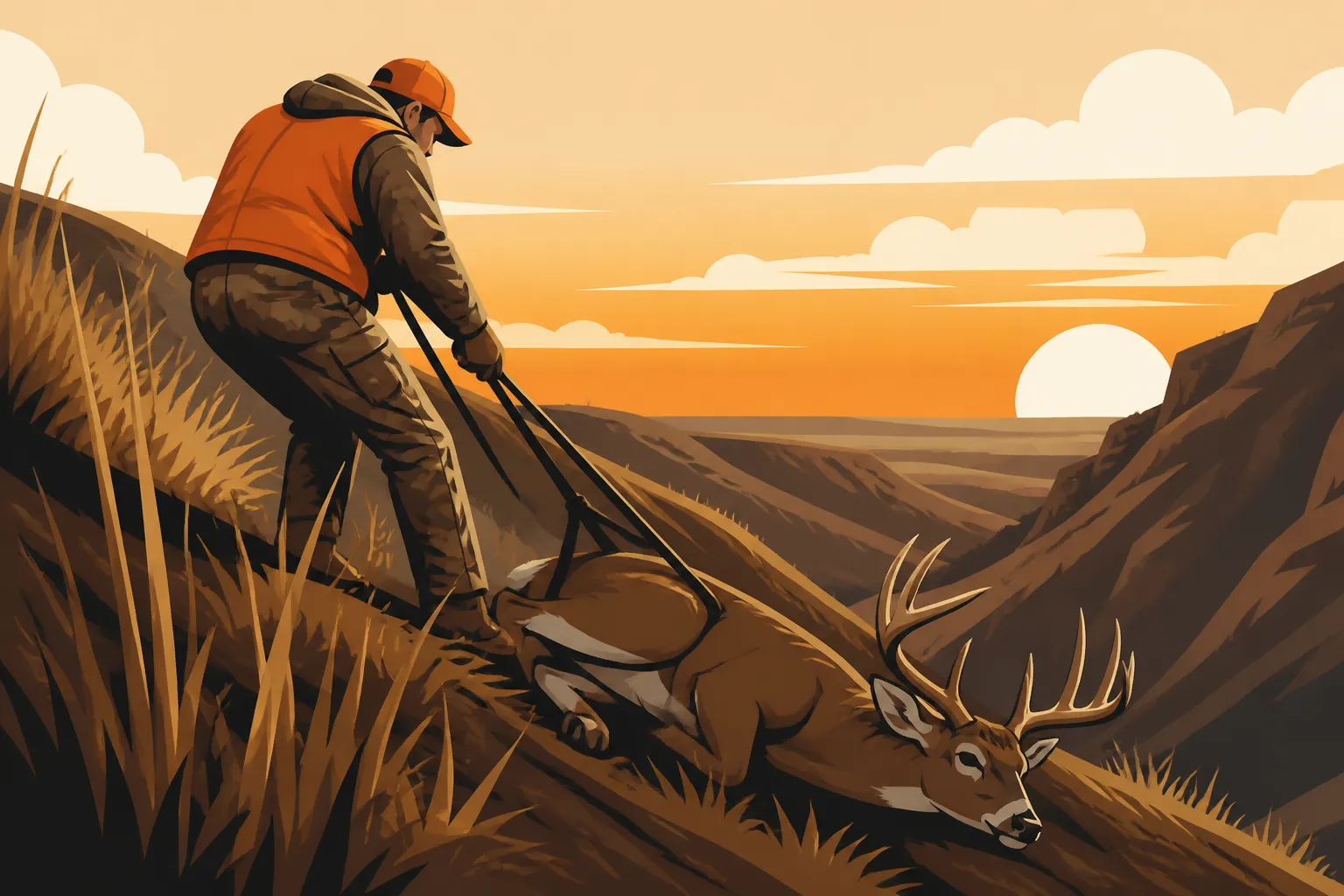
- The "Walk-and-Drag" Method: If the coulee isn't too steep and the deer isn't enormous, you can use a shoulder harness or a rope around the deer's antlers or neck. Turn the deer so its head points uphill. Pull a few feet, then take a breather. Repeat. Focus on short, powerful bursts. Position yourself so you’re pulling with your legs and core, not just your back. This slow, steady grind is often the only way, but it's incredibly taxing.
- Quartering the Deer: If the deer is too heavy, the terrain too steep, or the distance too far for a full drag, field quartering is your best friend. This involves breaking the deer down into its four primal cuts (front shoulders, hindquarters), backstraps, and tenderloins. You can then put these sections into heavy-duty game bags and pack them out using a sturdy backpack frame. This significantly reduces the overall weight and makes it manageable for one person. It also ensures proper cooling of the meat, which is vital, especially if you're Field Dressing a Deer in Cold Weather. While it adds time to the process, it can save your body from injury and potentially salvage meat that would otherwise spoil if left too long.
- Utilizing Natural Leverage: Look for small trees, stumps, or large rocks that you can brace against or use to redirect your pulling force. If you have enough rope, you can create a simple pulley system by looping the rope around a sturdy anchor point at the top of the coulee, then pulling from further up the bank. This can multiply your pulling power, but requires careful execution to avoid the rope slipping or snapping.
Team-Based Extraction Methods
If you're lucky enough to be hunting with a partner or can call for backup, a team effort can turn a nightmare retrieval into a manageable task.
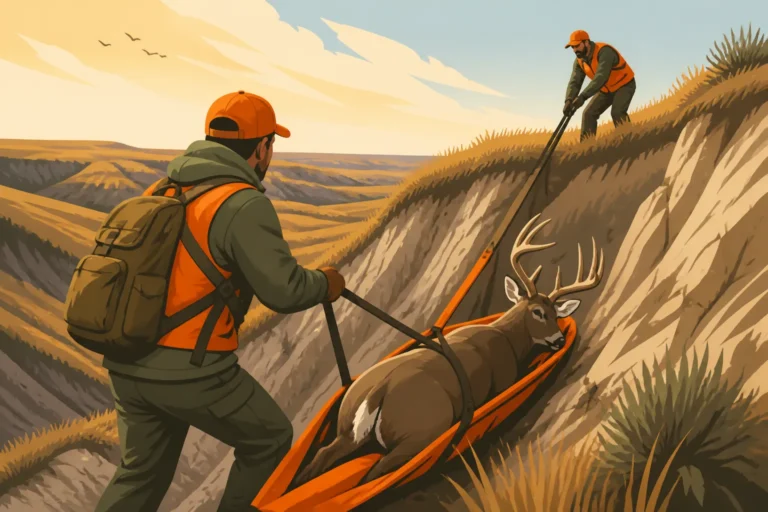
- The Tandem Drag: With two or more people, you can rig ropes to the front and back of the deer (or a sled). One person pulls from the front, while another pushes or stabilizes from the rear, especially on steep ascents. Communication is key here – coordinate your pulls and pauses.
- Rope and Anchor System for Steep Inclines: This is ideal for truly vertical or extremely slick slopes. Secure a long, strong rope to the deer (or sled) and have one person stay with the deer, guiding it and preventing it from rolling. The other person(s) climb to the top of the coulee, secure the other end of the rope to a robust anchor point (a strong tree, a truck hitch if nearby), and then pull the deer up. This is a controlled ascent, where the person at the top uses their body weight and the leverage of the anchor to haul the deer up, while the person at the bottom ensures it doesn't snag. This method is often employed when Recovering a Deer From a Coulee that's particularly deep.
- Human Chain/Shuttle System: For very long, winding coulees with multiple obstacles, a human chain can be effective. This involves several hunters positioned at intervals along the path. The deer is moved from one hunter to the next, piece by piece if quartered, or dragged in sections by rotating tired individuals. This keeps everyone fresh and distributes the effort.
Utilizing Terrain Features
The land itself can either be your enemy or your ally. Learning to "read" the terrain can help you find easier paths.
- Natural Ramps and Game Trails: Always scout for these. Deer and other wildlife are masters at finding the path of least resistance. Look for trails carved into the side of the coulee, often marked by worn earth or broken vegetation. These are almost always less steep and offer better footing. Similarly, eroded sections or natural depressions might form gentler "ramps" that are easier to navigate. Using mapping apps like GoHunt can help you identify subtle contour changes or potential game trails that might lead to an easier exit.
- High Ground Advantage: When pulling, try to position yourself on slightly higher ground than the deer, if possible. This gives you a better angle and leverages gravity to your advantage, even if only slightly.
- Avoiding Obstacles: Rather than dragging a deer directly over a fallen log or through a dense thicket of thorns, take an extra minute to find a way around. Every obstacle saps precious energy and increases the risk of snagging or injury. Sometimes, a slightly longer route that is clear of obstructions is faster and easier than a direct but difficult one.
Post-Retrieval Care and Transport
The hard part is over, but the work isn't quite done. Proper care of your deer once it's out of the coulee is just as important to ensure you honor the animal and preserve the meat.
Field Dressing and Cooling Considerations
Assuming you haven't already quartered it, once your deer is out of the coulee and on relatively flat ground, you'll want to finish the field dressing process if you haven't already. This is crucial for several reasons:
- Weight Reduction: Removing the internal organs significantly lightens the deer, making the final drag to your vehicle much easier.
- Meat Preservation: Getting the guts out quickly allows the carcass to cool down, especially important if temperatures are mild. North Dakota can have surprisingly warm fall days, even during deer season. Rapid cooling inhibits bacterial growth, which is the primary cause of spoilage. Open the chest cavity and prop it open with a stick to allow air circulation.
- Hygiene: Properly field dressing also makes for a cleaner transport and easier butchering later.
- Blood Trailing Considerations: If you retrieved the deer by tracking, ensure you've taken care of any necessary Blood Trailing After Dark in North Dakota guidelines, especially regarding leaving markers or disturbing evidence for potential follow-up.
Transporting and Checking Your Deer
Once field dressed and cooled, the final step is getting your deer home and legally checked.
- Securing for Transport: Lay your deer on a tarp or in the bed of your truck or trailer. Secure it with straps to prevent it from sliding around during transport. If it's warm, consider covering it with a breathable canvas tarp to keep dust and debris off, but avoid plastic tarps that can trap heat and hinder cooling. If you have ice, strategically placing bags inside the chest cavity can help further cool the meat.
- Legal Reporting Requirements: Don't forget North Dakota's mandatory deer reporting requirements. You'll need to report your harvest within a specific timeframe – often shortly after the kill. This can usually be done online through the North Dakota Game and Fish Department's website or app. Failure to report can result in penalties. Check the GoHunt app or your license details for specific deadlines.
- CWD Considerations: If you were hunting in one of North Dakota's North Dakota's Expanding CWD Hunting Units, be aware of any mandatory or voluntary CWD testing requirements. Knowing where to find a sampling station or how to submit a sample is important for wildlife management and your own peace of mind.
Retrieving a deer from a coulee is never easy, but with the right preparation, tools, and techniques, you can turn a potential disaster into a successful conclusion to your hunt. Stay safe, be smart, and enjoy the venison!
Disclaimer
The information provided in this guide is for general informational purposes only and does not constitute legal or professional advice. Hunting regulations and conditions can change rapidly. Always consult the latest North Dakota Game and Fish Department regulations and local land rules before engaging in any hunting activities. Safety should always be your top priority.