Glassing Badlands Coulees for Elk
Hunting elk in North Dakota's rugged Badlands is a unique and incredibly challenging endeavor. The vast, broken landscape of coulees, draws, and cedar pockets can hide an entire herd of elk, making them incredibly difficult to locate. Many hunters spend days busting through cover, only to come up empty-handed. This comprehensive guide will walk you through the precise techniques for effectively glassing badlands coulees, turning those frustrating hikes into successful scouting and hunting opportunities.
The Elusive Nature of Badlands Elk in Coulees
The North Dakota Badlands are truly a sight to behold, but they're also a masterclass in natural camouflage, especially when it comes to elk. These animals aren't out strolling on open prairies; they're masters of using the terrain to their advantage, often disappearing into the shadows and folds of the earth right before your eyes. Understanding why they choose these coulees and how their habits shift is the first step to finding them.
How Elk Utilize Badlands Coulees for Survival
Elk in the Badlands are incredibly adept at using the deep, winding coulees for everything they need to survive. These topographical features provide crucial shelter from the elements. In the scorching North Dakota summers, the steep-sided coulees offer deep shade, allowing elk to escape the relentless sun and conserve energy. Conversely, in the brutal winter months, the same coulees provide protection from the bitter prairie winds and drifting snow, creating pockets of relative calm. More importantly, these coulees often hold limited water sources, whether small seeps, natural springs, or snowmelt catchments, acting as vital hydration points. The dense vegetation, particularly the cedar trees, sumac, and brush, offers not only excellent bedding cover but also browse material, making these areas self-sufficient havens. You can learn more about Elk Hunting North Dakota's Badlands and the specific challenges this terrain presents.
Daily and Seasonal Movements to Anticipate
Elk movements within these coulees aren't random; they follow predictable patterns tied to their basic needs and the time of year. During daylight hours, especially as hunting pressure increases, elk tend to bed down in the thickest, most secluded cover deep within the coulees or on shaded north-facing slopes. They're often found just below the rim, where they can watch their backtrail and the prevailing wind. At dawn and dusk, however, they'll move from these bedding areas to more open, yet still protected, feeding grounds within the coulee systems or sometimes onto adjacent benches and plateaus that still offer quick escape routes back into the broken country. Water sources also dictate their movement, often creating distinct travel corridors.
Seasonally, these patterns can shift. In the early archery season, elk might be found slightly higher on the slopes or near more abundant green feed. As the fall progresses and the rut kicks in, bulls become more active, often bugling from within or near the coulees, making them slightly easier to locate if you’re close enough. Later in the season, when temperatures drop and snow falls, elk will often concentrate in the lower, more timbered sections of the coulees where food sources like browse and forbs are more accessible, and thermal cover is maximal. It's also vital to consider Wind and Thermals in Badlands Terrain as they dramatically influence elk movement and your approach.
Assembling Your Badlands Glassing Kit
You wouldn't head into a boxing match without gloves, and you shouldn't head into the Badlands to glass elk without the right equipment. The vast distances and intricate terrain demand optics that can perform, and a setup that keeps you comfortable and steady for hours on end. Investing in quality gear isn't just about spotting more animals; it's about making the entire experience more efficient and enjoyable.
Optics Selection for Distant Recognition
When you're trying to pick out a brown patch of elk hide against a brown, grey, and green coulee wall from a mile or two away, your optics are your most important tool. For general scanning and covering large areas, a good pair of 10×42 or 12×50 binoculars is essential. They offer a wide field of view, making it easier to initially locate potential areas. However, for detailed examination of thick cover, confirming an animal, or assessing antler size, a high-quality spotting scope is indispensable. I personally prefer a 60-80mm objective lens with a variable zoom from 15x to 60x. Brands like Maven, Vortex, and Swarovski offer excellent clarity and durability, which are crucial when you're going to be pushing your optics to their limits. Remember, clarity at long distances in varied light conditions is key. Don't skimp here; it's the difference between seeing a "blob" and seeing an "elk."
Tripods, Stability, and Comfort for Long Hours
Having top-tier optics is only half the battle if you can't hold them steady. A sturdy, lightweight tripod is non-negotiable for effective glassing in the Badlands. Whether you're using binoculars or a spotting scope, attaching them to a tripod eliminates handshake, allowing you to pick apart distant cover and spot subtle movements that would be impossible freehand. Look for a carbon fiber tripod for its weight-saving benefits, especially when you're Packing for an Eight-Day North Dakota Elk Hunt. The tripod head is equally important; a smooth fluid head or ball head will allow for precise, effortless panning and tilting.
Beyond the tripod, consider your personal comfort. You'll be spending hours, sometimes entire days, glued to your glass. A comfortable, lightweight seating pad or small tripod stool can make a huge difference in your endurance and focus. Without comfort, you'll find yourself fidgeting, taking breaks, and ultimately missing opportunities. Think about small details too, like a lens cloth to keep your optics clear of dust and moisture, and a good sun-brimmed hat to reduce glare.
Strategic Positioning for Optimal Viewing
Finding elk in the Badlands is less about luck and more about strategic positioning. The landscape itself dictates where you can effectively glass from, and smart hunters learn to read the topography to their advantage, maximizing their field of view while minimizing their own disturbance.
Identifying High-Ground Vantage Points
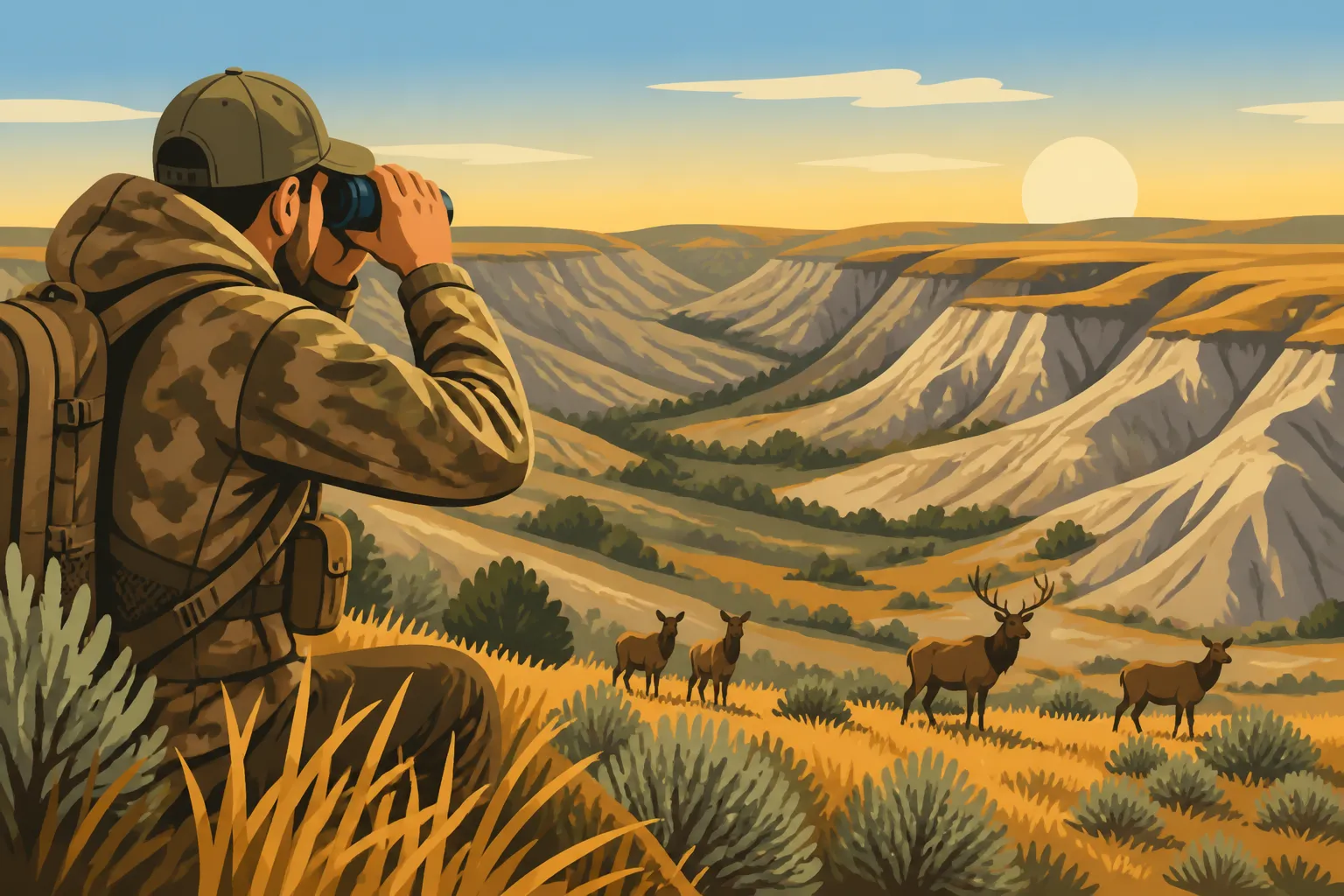
The mantra for glassing in the Badlands is "get high." To effectively peer into the depths of a coulee system, you need an elevated perspective. Ridgelines, buttes, and high plateaus that overlook expansive stretches of broken country are your best friends. These vantage points allow you to see into multiple coulees, draws, and drainages simultaneously, often revealing hidden pockets of timber or benches where elk might be bedded or feeding. When scouting, use topographic maps, aerial photos, or apps like GoHunt to identify potential glassing knobs and ridges that offer the widest, most effective fields of view. Access to these high points might involve a significant hike, so be prepared for the physical demands of Physical Prep for Badlands Elk Terrain. Remember, the higher you get, the more ground you can cover with your eyes.
Overcoming Environmental Obstacles
The Badlands are not always cooperative with your glassing efforts. Heat shimmer and mirages can be incredibly frustrating, distorting images and making it nearly impossible to identify animals at longer ranges, especially during midday. To mitigate this, try to glass earlier in the morning and later in the evening when temperatures are cooler. If you must glass during the middle of the day, try to find vantage points that put you closer to the areas you want to inspect, reducing the amount of air you're looking through.
Wind is another major factor. While a strong wind can help mask your scent during an approach, it can make holding optics steady, even on a tripod, a challenge. Seek out natural windbreaks like large rocks, clumps of trees, or the lee side of a rise to shield yourself. Additionally, pay close attention to the sun's position. Always try to glass with the sun at your back or to your side to avoid glare directly into your optics, which can obscure targets and cause eye strain. If the sun is in front of you, try to find a shaded position or use a lens hood on your spotting scope.
Mastering the Systematic Glassing Technique
Once you're set up on your chosen vantage point, the real work begins. Glassing isn't just idly staring at the landscape; it's a deliberate, systematic process that requires immense patience and keen attention to detail. This is where most hunters fail, giving up too soon or scanning too quickly.
The Art of Slow and Deliberate Scanning
After completing a section, shift your optics slightly and repeat the process. Don't rush. Spend at least 5-10 minutes on each small section before moving on. Sometimes, an elk will be perfectly still, seemingly blending into the background, and it's only after several passes that its form starts to resolve itself from the natural shapes around it. Using a quality app like GoHunt can help you define these sections on your map before you even arrive, making your glassing more efficient. This systematic approach is critical, as simply sweeping quickly will almost certainly cause you to miss animals.
Recognizing Elk Sign and Animal Parts
You're not always going to see a whole elk standing broadside. More often than not, you'll spot just a tiny piece of an animal, or a subtle indicator that something is out of place. Train your eyes to look for:
- Unnatural Lines: The Badlands are full of vertical and diagonal lines from erosion, but an elk's back or belly will create a horizontal line. Antlers will often create distinct, angular shapes.
- Contrasting Colors: Elk are typically brown or tan, but sometimes a lighter rump patch or the dark brown of a bull's mane can stand out against the grays and greens of the coulee.
- Subtle Movement: A flick of an ear, the swish of a tail, or a slight shift in a leg. These minuscule movements are often the first giveaways.
- Shadows: Look for dark, dense shadows in otherwise bright areas, especially under cedar trees. These often indicate a bedded animal.
- Glints: Rarely, but sometimes, sunlight can glint off an antler or a wet nose.
- Other Animals: Deer, especially mule deer, often share similar habitat. If you spot mule deer, there's a good chance elk aren't far off. Learning Where Badlands Bucks Bed can offer insights into similar bedding patterns for elk.
- White Patches: Though not always elk, a small white patch that doesn't quite look like a rock could be an elk's rump, especially when they're bedded and facing away from you.
Be patient and let your eyes relax. Don't force yourself to see an elk; rather, let the elk reveal itself to your patient gaze.
Here's a quick guide to a systematic glassing checklist:
| Step | Action | Details | Why it matters |
|---|---|---|---|
| 1. Choose Vantage | Get high, comfortable, and stable. | Use a tripod, sit down, shield from wind/sun. | Maximizes field of view, reduces fatigue, improves focus. |
| 2. Divide & Conquer | Break the landscape into small grids/sections. | Focus on one section at a time, from near to far, then left to right. | Prevents overlooking small details and systematic coverage. |
| 3. Slow Scan | Scan meticulously and deliberately. | Take 5-10 minutes per section, move eyes inch-by-inch. | Elk are masters of camouflage; subtle details reveal them. |
| 4. Look for Clues | Identify unnatural lines, colors, and movements. | Horizontal lines, ear flicks, tail swishes, distinct antler shapes. | You often see parts of an animal before the whole. |
| 5. Re-scan | Come back to promising areas multiple times. | After a full scan, re-check areas of thick cover or suspected movement. | Different light, wind, or elk movement can reveal what was hidden. |
| 6. Confirm | Once spotted, use a spotting scope to verify. | Assess size, identify species, confirm legality (if hunting). | Avoids "rock fever" and ensures you're pursuing a worthy target. |
What Happens After the Spot
Finding an elk with your glass is a huge accomplishment, but it's just the beginning of the hunt. The transition from spotting to planning your approach is critical and requires careful consideration of the terrain, wind, and the elk's behavior.
Verifying Your Target and Assessing the Opportunity
Congratulations, you've spotted what you believe to be an elk! But before you start hiking, you need to confirm. Switch to your spotting scope, dial in the magnification, and take your time. Is it definitely an elk, or is it a uniquely shaped rock or a mule deer? In the Badlands, differentiating can be surprisingly tricky. Once confirmed, assess the animal. Is it a legal bull for your tag? Is it an antlerless animal for an Hunting the Early Antlerless Elk Period opportunity? How many other elk are with it? Are there calves present?
Pay close attention to what the elk is doing. Is it feeding, bedded, or moving? If it's bedded, what direction is it facing? Is it alone or part of a herd? Understanding its current activity will help you predict its next move and plan your stalk accordingly. Jot down its precise location, perhaps marking it on your GoHunt app, and note any distinct landmarks.
Planning Your Approach Through Treacherous Terrain
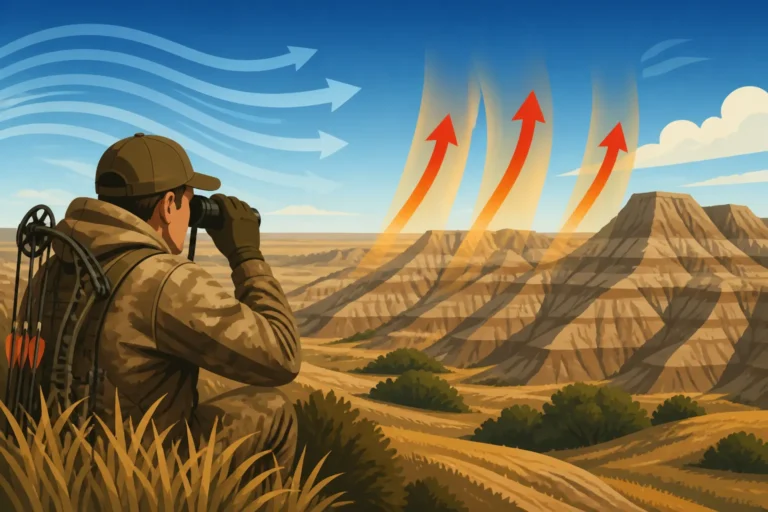
Now for the hard part: getting to the elk without being detected. This is where those hours of glassing become invaluable, as you've likely identified potential approach routes and obstacles during your initial scan. Your primary considerations are always wind and thermals. The Badlands can be notoriously tricky with shifting winds and unpredictable thermals, especially in coulees. Thermals generally rise in the morning as the sun heats the ground and fall in the evening as it cools. You absolutely must approach with the wind in your favor. If the wind isn't right, you often have two choices: wait for it to change (which might not happen) or abandon the stalk and try to re-locate the elk later from a different angle.
Study the terrain between you and the elk. Look for deep draws, timbered ridges, and natural folds in the land that can provide cover. Can you use a hidden ravine to drop into the coulee and approach from below? Can you use a ridgeline to get parallel to them and then drop down? Avoid skylining yourself on ridges or exposing yourself in open areas. Consider the noise you'll make. Badlands soil can be surprisingly crunchy, and breaking branches can alert elk from a long way off. Sometimes, the most direct route is the worst route. A longer, more circuitous approach that keeps you hidden and scent-free is almost always the better option. This detailed planning is a major component of Spot-and-Stalk Elk in the Little Missouri Badlands.
Common Mistakes and How to Avoid Them
When glassing and stalking in the Badlands, a few common errors trip up even experienced hunters:
- Rushing the Glassing: As discussed, patience is paramount. Don't let excitement or impatience lead you to rush through a scan. Give every square foot its due diligence.
- Poor Wind Management: Ignoring or misjudging the wind and thermals is the quickest way to bust an elk. Always carry a wind checker and be constantly aware of the air currents.
- Overlooking Terrain Features: Not using topographical maps or scouting apps to identify hidden draws, deep coulees, or thick timber pockets before you even get to your glassing spot. These are often where elk are hiding. Always perform some Reading Aerial Photos for Badlands Deer as a pre-hunt scouting task, which applies equally well to elk.
- Being Impatient After a Spot: Once you see an elk, the temptation is to immediately start moving. Instead, take a few minutes to watch them, understand their behavior, and confirm their exact position before you even take a single step.
- Not Having a "Plan B": What if the wind shifts mid-stalk? What if the elk moves? Always have an alternate route or a fallback position in mind. The Badlands are unpredictable, and flexibility is key.
- Underestimating the Physical Demands: Elk hunting in the Badlands is physically taxing. Ensure you've done your Physical Prep for Badlands Elk Terrain to handle the steep climbs, uneven footing, and long distances.
By focusing on these deliberate, systematic methods and learning from common mistakes, your chances of glassing up a North Dakota Badlands elk will significantly improve. It's a game of patience, strategy, and keen observation, but the reward of finding one of these magnificent animals in such rugged country is truly unparalleled.
Disclaimer
Hunting is an inherently dangerous activity. This guide provides general information for educational purposes only and should not replace professional guidance, local regulations, or personal judgment. Always prioritize safety, adhere to all North Dakota hunting laws and regulations, and obtain proper licenses and permits. Wildlife populations and access rules can change, so consult the North Dakota Game and Fish Department for the most current information before planning any hunt.