What Counts as Posted Land in North Dakota
One of the biggest headaches and sources of anxiety for any hunter, especially when you're exploring new territory in North Dakota, is figuring out exactly what counts as "posted land." It's not always as straightforward as a big, obvious "No Hunting" sign at eye level, and misunderstanding the rules can lead to serious legal trouble or, just as importantly, damage valuable relationships with landowners. This guide is all about breaking down the nuances of North Dakota's posted land laws so you can hunt confidently and ethically.
Understanding North Dakota's Posted Land Laws: It's More Than Just a Sign
Navigating private land in North Dakota as a hunter can feel like walking a tightrope. On one side, you have the incredible opportunities that vast tracts of private land offer, especially for species like pheasants, deer, and even waterfowl. On the other, you have the absolute necessity of respecting landowner rights and avoiding trespass. The foundation of this understanding lies in North Dakota's specific laws regarding "posted land." It's not just a general term; it has a very precise legal definition that every hunter needs to internalize before they ever step foot in a field.
The Legal Definition of Posted Land
In North Dakota, "posted land" isn't merely land where a landowner has decided they don't want hunters. The law sets out very clear criteria for how land must be marked to legally prohibit hunting, fishing, or trapping without permission. Essentially, land is considered legally posted if it has signs conspicuously placed on exterior boundaries and at normal points of entry. These signs need to be readable, at least five inches by eleven inches in size, and clearly state "no hunting," "no fishing," "no trapping," or a similar explicit prohibition. They also need to be spaced no more than 880 yards apart. Think of it as a clear line in the sand, but one that needs to be properly marked according to the rules.
Beyond just the signs, North Dakota also recognizes painted posts or fences as a method of posting. This is a crucial detail that often catches hunters off guard. If the property boundary is marked with posts that are painted distinctively, typically orange, yellow, or fluorescent green, it’s considered legally posted. The paint must be visible on the top eight inches of the post, or if there's no post, on the top eight inches of a fence line or other boundary marker, and these painted markers must be no more than 200 yards apart. It's a system designed to be highly visible and consistent, but it requires hunters to be observant and informed. The intent is to give clear notice, and as hunters, it's our job to heed that notice.
Common Misconceptions About Private Land Access
Many hunters, especially those new to North Dakota or coming from states with different trespass laws, hold onto a few common misconceptions that can get them into trouble. One prevalent myth is that if land isn't fenced, it's automatically open for hunting. This couldn't be further from the truth. Fences are a clear indicator of a boundary, but a lack of a fence absolutely does not mean the land is unposted or accessible. A field of standing corn, a stretch of native prairie, or a coulee can all be privately owned and legally posted without a single strand of wire around them. The key is the presence of signs or painted posts, regardless of whether a physical barrier exists.
Another misconception is the idea of "implied permission." Some hunters believe that if they've hunted a piece of land in the past without being told no, they have an ongoing right to do so. This is a risky assumption. Permission for one season or one hunt does not automatically roll over to the next. A landowner's wishes can change, and even if they don't, it's always best practice to seek explicit permission for each hunting season, or at least verify that no changes have occurred. Landowners appreciate the respect shown by asking, and it maintains a positive relationship, which is vital for Getting Private Land Permission in North Dakota. Always remember: when it comes to private land, explicit permission is king, and its absence means you shouldn't be there.
The Hunter's Responsibility to Know
Ultimately, the burden of knowing whether land is posted falls squarely on the hunter. There's no legal defense for claiming you "didn't see the sign" or "didn't know about the painted post rule." North Dakota law is clear: if the land is posted according to the specifications, and you're hunting on it without permission, you are trespassing. This means you need to be constantly vigilant, scanning property lines, fence rows, and points of entry for signs or painted markers. It also means educating yourself on the specific regulations each year, as slight changes can occur.
This responsibility extends to how you prepare for your hunt. Before heading out, especially to unfamiliar areas, it’s smart to utilize tools that help you identify land ownership and public/private boundaries. Knowing the general layout of an area, and where potential posted land might exist, allows you to plan your hunt responsibly. It also means recognizing when you might be approaching a boundary and taking the extra time to verify its status. If you are unsure about a boundary, or if a sign has fallen down, the safest bet is always to err on the side of caution and assume it's posted until you can confirm otherwise. That extra moment of due diligence can save you from a fine, a confiscated animal, or a very awkward conversation with a landowner.
Identifying Posted Land in the Field: What to Look For
When you're out in the vastness of North Dakota, whether you're chasing pheasants through CRP grass near Jamestown or still-hunting whitetails in the river bottoms by Bismarck, knowing how to quickly and accurately identify posted land is absolutely critical. It's not just about avoiding legal trouble; it's about being a respectful and responsible hunter. This means having a keen eye for specific markers and understanding their implications.
Signage Requirements and Specifications
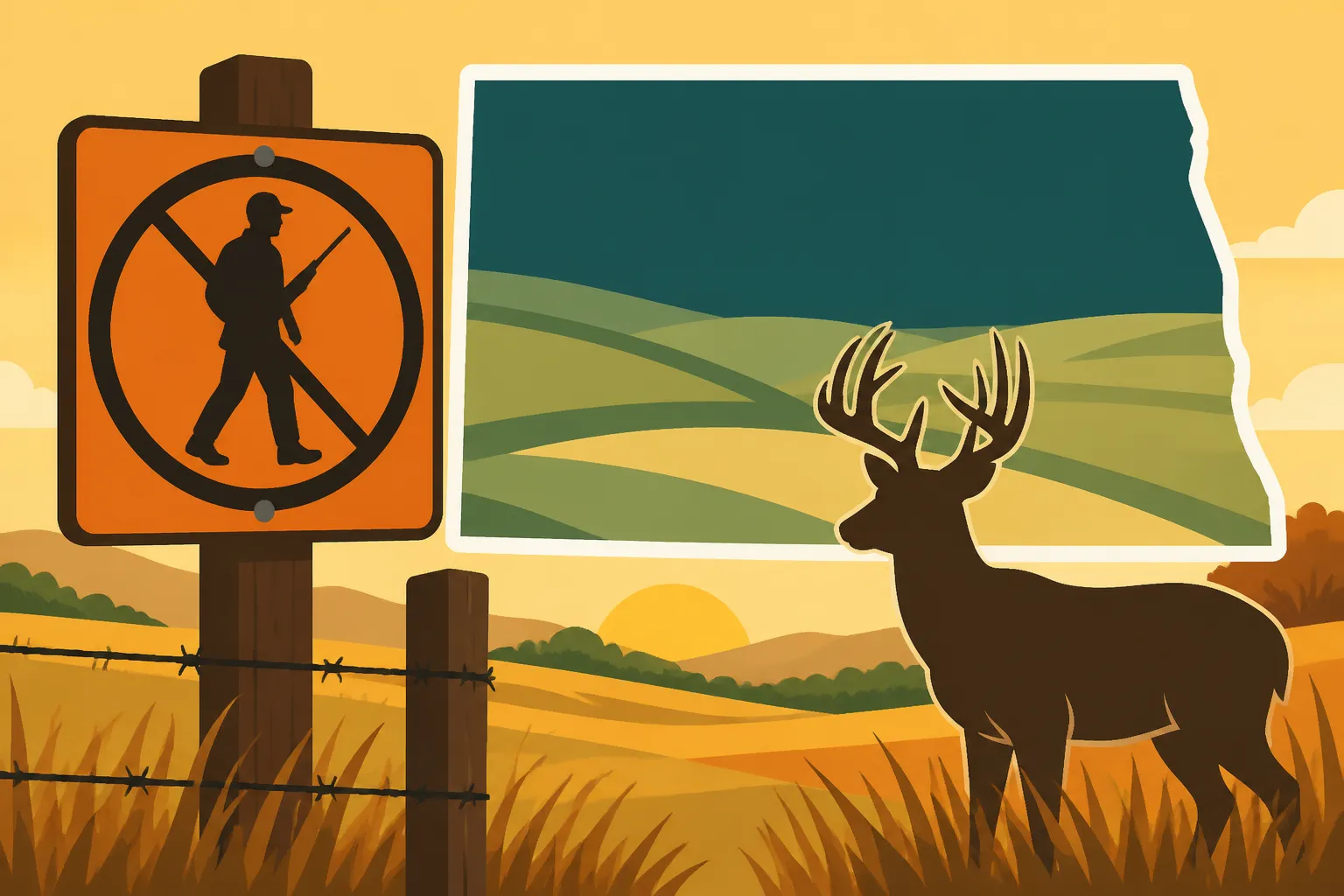
North Dakota law is quite precise about what constitutes a legal "no hunting" sign. It's not just any old piece of paper tacked to a tree. The signs need to be at least five inches by eleven inches in size, which is roughly the size of a sheet of notebook paper. This size is designed to be easily visible from a reasonable distance, giving you ample opportunity to identify the boundary. The lettering on these signs must also be clear and explicit, stating "no hunting," "no fishing," "no trapping," or a combination thereof. You won't see a vague "Private Property" sign counting as a legal posting for hunting; it needs to be specific.
Furthermore, these signs must be "conspicuously placed." This means they can't be hidden in thick brush or around a bend where they're impossible to see until you're already on the property. They need to be visible on the exterior boundaries of the land and at all normal points of entry, like gates or established trails. The spacing is also critical: signs must be no more than 880 yards apart. That's half a mile, which sounds like a lot, but when you're walking through rolling prairie or dense cover, it's easy to miss a sign if you're not paying attention. Always keep your head up and your eyes scanning the horizon and the immediate fence lines, especially as you approach what looks like a property boundary.
Painted Posts and Fences: A Key Indicator
This is where many hunters, particularly those from outside the region, can get tripped up. North Dakota has a specific provision for posting land using paint on fence posts or other boundary markers. If you see the top eight inches of a fence post, a tree, or even a rock along a property line painted with a distinct, bright color—often orange, but sometimes fluorescent green or yellow—that land is considered legally posted. This painted marker system is just as legally binding as physical signs. The paint must be clearly visible, and these painted markers must be placed no more than 200 yards apart.
The reason for the painted post system is practicality. In vast rural areas, especially where fence lines are already in place, it can be easier and more durable for landowners to use paint rather than constantly replacing paper or plastic signs that can be torn by wind, snow, or even curious cattle. It's a permanent and unmistakable method when understood. When you're Scouting PLOTS Land Before Season or just exploring new areas, train your eyes to not just look for signs, but for these painted markers as well. They are silent, but powerful, indicators of private land where permission is required.
Here's a quick reference table for the legal posting methods in North Dakota:
| Method of Posting | Minimum Size/Visibility Requirements | Spacing Requirements | Key Characteristic |
|---|---|---|---|
| Signs | At least 5" x 11", clearly stating "No Hunting," "No Fishing," etc. | No more than 880 yards apart | Must be conspicuously placed on exterior boundaries and at entries. |
| Painted Posts/Fences | Top 8 inches of post/fence painted a distinct, bright color | No more than 200 yards apart | Paint must be clearly visible. Common colors: orange, green, yellow. |
When Signs Aren't Present: Implied Posting
While the legal definition of posted land in North Dakota relies on clear signs or painted markers, there's also the concept of "unposted" private land. However, this doesn't automatically mean you can hunt it. North Dakota is a "permission required" state for all private land, whether it's posted or not. This is a critical distinction from some other states where unposted private land might be considered open for hunting unless specifically prohibited. In North Dakota, the default status of private land is closed to hunting unless you have express permission from the landowner.
What does this mean for hunters? It means that even if you're walking along a section line and you don't see a single sign or painted post, you cannot assume that the adjacent private field is open. You must obtain permission from the landowner before hunting any private property. The posting rules simply dictate how a landowner legally prohibits hunting, but the underlying requirement for permission remains universal for private land. This is why Knocking on Doors in North Dakota Farm Country and building relationships with landowners is so important; it opens up opportunities on both posted and unposted private land. Always be proactive in seeking permission, and never rely on the absence of signs as an invitation.
Tools and Tactics for Navigating Private Land Boundaries
In today's hunting world, especially in a state like North Dakota with its mix of vast public and private lands, relying solely on your eyes for boundary identification isn't enough. We have incredible technology at our fingertips that can drastically reduce the stress and uncertainty of figuring out where you can and can't hunt. Combining these tools with good old-fashioned communication and ethical judgment will make you a more successful and responsible hunter.
Utilizing Mapping Apps and GPS
Modern mapping applications have revolutionized how hunters approach land navigation. Brands like onX Hunt and GoHunt offer incredible tools that display property lines, landowner names, and public land boundaries right on your phone or GPS device. These apps layer satellite imagery with property data, allowing you to see exactly where you are in relation to private holdings, PLOTS land, or national grasslands. Before heading into an unfamiliar area, I always take the time to study the maps on my onX Hunt app, identifying potential access points and noting any areas that look like they might be challenging to distinguish in the field. This pre-hunt scouting, even from your couch, is invaluable.
It’s crucial to remember that while these apps are highly accurate, they aren't infallible. Property lines can be complex, and GPS signals can occasionally be a bit off, especially in heavy cover or deep coulees. Always use these apps as a guide, but confirm your location with physical markers on the ground whenever possible. If your app shows you close to a private boundary, actively look for signs, painted posts, or fences. Many of these apps also include layers for North Dakota PLOTS land, making it easier to pinpoint accessible areas and avoid inadvertently crossing onto posted private property. This proactive approach ensures you're hunting ethically and legally. You can even use these apps to verify your position if you're uncertain about Finding North Dakota Property Lines in the field.
Respectful Communication with Landowners
Even with the best mapping apps, nothing beats direct communication with landowners. North Dakota is a state built on neighborly goodwill, and many landowners are receptive to hunters who show respect, ask permission, and demonstrate an understanding of their property. When you identify a piece of private land that looks promising, and you've confirmed it's not managed by a commercial outfitter, take the time to seek out the landowner. A polite knock on the door, a brief introduction, and a clear request for permission can open up opportunities you might never find otherwise. Be prepared for a "no," and accept it graciously if that's the answer.
When you do get permission, make sure you understand any specific conditions the landowner might have. Are there certain fields they don't want you to enter? Specific gates that must be closed? Areas to avoid due to livestock or their own hunting plans? Clear communication upfront prevents misunderstandings down the road. It also helps to leave your contact information and let them know your hunting plans (e.g., "I'll be out this weekend for pheasants, usually sticking to the north shelterbelt"). Building these relationships is not only good for hunting access but contributes to a positive image of hunters in general. This dedication to respect is what truly embodies the spirit of hunting in North Dakota.
When in Doubt: Assume It's Posted
This is perhaps the most important tactic for ethical and legal hunting on potentially ambiguous land: when you are in any doubt about whether a piece of land is public, unposted private, or legally posted, assume it's posted private land that requires permission. It’s always better to walk around, back out, or seek clarification than to risk trespassing. Imagine you're tracking a deer and it crosses into a dense woodlot where you can't see the property lines clearly, and you haven't seen any signs or painted posts. The safe, ethical, and legal move is to stop, back out, and try to make contact with the landowner for permission to retrieve the animal.
This "assume posted" mindset protects you from legal penalties and helps maintain the reputation of hunters. It's an act of respect for private property rights. The consequences of trespassing, even accidentally, can range from a warning to significant fines, confiscation of your game, and even loss of hunting privileges. Beyond the legal aspects, it severely damages the relationship between hunters and landowners, potentially closing off access for everyone in the future. So, when in doubt, default to caution. Your reputation, and the future of hunting access, depends on it.
Consequences of Trespassing and Hunting Posted Land
Ignoring North Dakota's posted land laws isn't just a minor oversight; it's a serious offense that carries significant repercussions. As hunters, we have a responsibility to know and follow these rules. Failing to do so can lead to a cascade of negative outcomes, from legal penalties to long-term damage to the hunting community's reputation.
Legal Ramifications and Penalties
Trespassing on legally posted land to hunt, fish, or trap without permission is not a simple slap on the wrist in North Dakota. It's a criminal offense. The specific penalties can vary depending on the exact nature of the trespass and whether it's a first offense or a repeat violation, but they are never something you want to experience. You could face substantial fines, and in some cases, the court may order the forfeiture of any game animal you harvested while trespassing, along with any equipment used in the commission of the crime, such as your firearm or vehicle. Imagine losing a hard-earned deer or your favorite shotgun because of a preventable error.
Beyond monetary fines and forfeiture, a conviction for trespassing can also impact your hunting privileges. The North Dakota Game and Fish Department has the authority to suspend or revoke your hunting, fishing, and trapping licenses, not just in North Dakota, but potentially across multiple states through interstate compacts. This means a lapse in judgment could lead to you being unable to hunt anywhere for an extended period. North Dakota Wildlife Violation Penalties are designed to be a deterrent, emphasizing the seriousness with which the state views landowner rights. It’s a stark reminder that responsible hunting isn't just about safety; it's about strict adherence to property laws.
The Impact on Hunter-Landowner Relations
Perhaps even more damaging than the legal penalties is the lasting impact that trespassing has on the broader hunter-landowner relationship. When a landowner discovers someone has hunted their posted property without permission, it's a profound breach of trust. This single negative experience can lead that landowner, and potentially their neighbors, to become completely closed off to all hunters, even those who approach respectfully and follow the rules. This creates a ripple effect, shrinking the amount of private land accessible to ethical hunters across the state.
Many North Dakota landowners are farmers and ranchers who work tirelessly on their land. Their property is their livelihood, their home, and often a place they cherish. When a hunter disrespects that by trespassing, it breeds resentment and hostility. Building trust and maintaining positive relationships with landowners is absolutely crucial for the future of hunting in North Dakota. Every time a hunter asks permission, respects boundaries, and leaves the land better than they found it, they reinforce a positive image of hunters. Conversely, every trespasser chips away at that goodwill. Be a part of the solution by always respecting posted land and seeking proper permission. It's how we ensure that the rich hunting traditions of North Dakota continue for generations to come.
Disclaimer
This article is for general informational purposes only and does not constitute professional advice. Laws, prices and regulations vary by location and change over time. Consult a qualified professional for guidance on your specific situation.