Asking an Outfitter for Hunter References
It's a familiar feeling, isn't it? You've scrolled through countless photos, watched exciting highlight reels, and now you're finally ready to take the plunge and book that dream North Dakota hunt. But deep down, there's that nagging voice asking: "Is this outfitter really as good as they seem?" This guide is here to help you cut through the marketing hype and get to the honest truth by showing you how to effectively ask for and vet hunter references.
Why Hunter References Are Your Most Valuable Research Tool
Let's face it, the internet is a wild west of information. Every outfitter’s website naturally paints the most glorious picture possible of their operation. They showcase the biggest trophies, the happiest hunters, and the most pristine conditions. And while many of them are absolutely legitimate and fantastic, that glossy presentation doesn’t always tell the whole story. This is where hunter references become gold. They offer an unvarnished, boots-on-the-ground perspective that no brochure or Instagram feed can replicate. It’s about hearing directly from someone who has lived the experience you’re considering.
Beyond the Glossy Website
Think of a hunter reference as a direct pipeline to reality. When you're looking at a website that promises "guaranteed success" or "trophy animals around every corner," a past client can tell you what "success" actually meant for them. Did they fill their tag? More importantly, did they have a good time? Was the food decent? Were the guides friendly and knowledgeable? These are the nuances that pictures just can't convey. It's not just about the kill; it's about the entire hunting experience, from the morning coffee to the campfire stories. A reputable outfitter will understand this and be proud to connect you with previous clients who can speak to the quality of their service beyond just game taken.
Avoiding Common Pitfalls
Unfortunately, not all outfitters operate with the highest integrity. Some might overpromise and underdeliver, leading to frustrating and expensive disappointments. I’ve heard countless stories from hunters who arrived to find conditions far different from what was advertised – rundown lodges, inexperienced guides, or hunt areas that were clearly overhunted. Asking for references is your absolute best defense against falling into these traps. It’s an opportunity to identify red flags like misrepresentation, hidden fees, or even outright scams before you commit your hard-earned money and precious vacation time. A quick conversation with a past client can save you a world of headache and ensure your trip to North Dakota hunting doesn't turn into a nightmare. You're trying to prevent that gut-wrenching feeling of realizing your dream hunt isn't what you signed up for.
Setting Realistic Expectations
Even with the best outfitters, understanding what a hunt entails requires realistic expectations. North Dakota hunting for species like whitetails or mule deer, especially in areas like the Badlands, can be physically demanding. Hunting North Dakota's Badlands Mule Deer Country will be a different experience than Hunting a Shelterbelt Edge for Deer. A reference can tell you about the typical shot distances, the terrain you'll be covering, or the average number of animals they saw. They can shed light on whether the 90% success rate quoted actually means 90% opportunity, or 90% filled tags. They might tell you if they hunted from a ground blind versus a treestand, or how much walking they actually did. This feedback is invaluable for preparing yourself mentally and physically, and for ensuring the outfitter's offering aligns with your personal hunting style and capabilities. It ensures you know what you’re getting into before you arrive in rural North Dakota.
What to Ask For and How to Get It
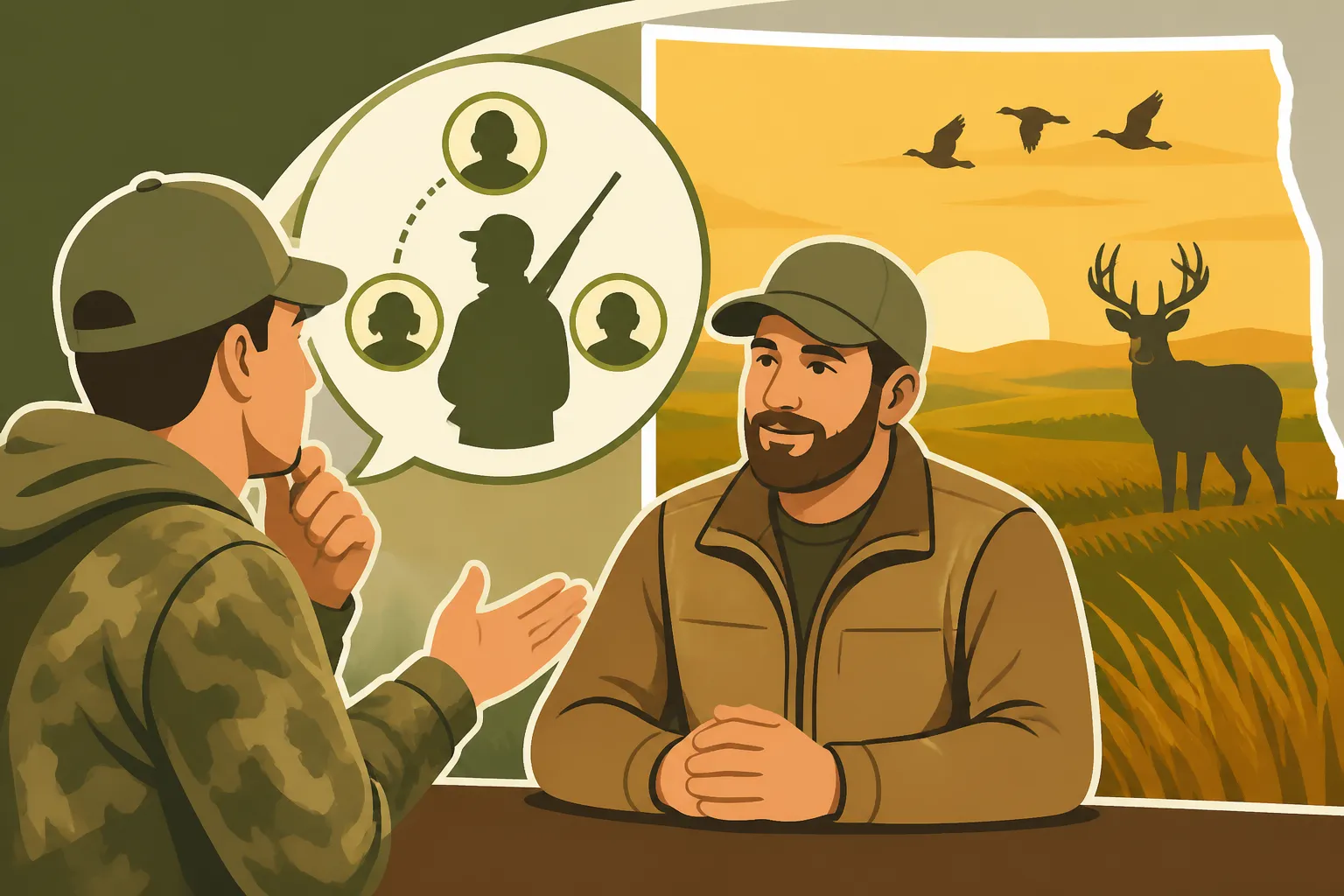
Once you've identified a few potential outfitters, the next step is to make that crucial request for references. Don’t be shy – this is a standard practice in the hunting industry, and any legitimate outfitter will expect it. How you ask, and what you ask for, can make a big difference in the quality of information you receive.
Requesting References Strategically
When you ask an outfitter for references, be specific. Don't just say, "Can I get some references?" Instead, ask for at least three to five recent references, preferably from clients who hunted the same species and type of hunt you're interested in (e.g., an archery deer hunt vs. a gun hunt). It's also wise to ask for references from different seasons or time periods if possible, to get a broader perspective. For instance, if you're planning a late-season goose hunt, ask for references who hunted geese in late fall or early winter. You might also specify that you'd like to speak with someone who didn't fill their tag, if possible. This isn't to look for a negative experience, but to understand how the outfitter handles adversity and client satisfaction when things don't go perfectly. A good outfitter will gladly provide these, demonstrating their confidence in their service, even when a hunter might have gone home empty-handed. Many reputable outfitters list testimonials, but always ask for direct contacts.
Crafting Your Questions
Having a list of specific, open-ended questions prepared before you call a reference is crucial. This will help you steer the conversation and get the most relevant information. Avoid "yes" or "no" questions. Instead, aim for questions that encourage detailed explanations. Here's a table of potential questions you might ask:
| Category | Specific Questions to Ask |
|---|---|
| Hunt Experience | Can you describe a typical day on your hunt? What kind of terrain did you hunt, and how physically demanding was it? What was the guide-to-hunter ratio? Did you feel the hunt was fairly priced for the experience? |
| Outfitter & Guides | How was your interaction with the outfitter and guides? Were they knowledgeable, friendly, and professional? Did they put in full effort every day? What was their communication like before, during, and after the hunt? Did they help you with Field Dressing a Deer in Cold Weather or retrieving game from difficult spots? |
| Accommodations | What were the accommodations like? Was the food good and plentiful? Was the gear (blinds, vehicles, decoys) well-maintained? Were there any unexpected issues with the lodging or facilities? |
| Game Quality/Quantity | How many animals did you see, and what was the quality like? Did the outfitter accurately represent the game numbers and trophy potential? What was the success rate for your group or the camp during your stay? Were you hunting in a unit with North Dakota's Expanding CWD Hunting Units? |
| Overall Impression | Would you book with this outfitter again? Is there anything you wish you had known before you went? What was the absolute best part of your trip, and what, if anything, would you change? Did you feel prepared for the Cold-Weather Sitting Strategy on the Prairie if you hunted late season? |
Remember to listen actively and take notes. The goal isn't just to get answers, but to gauge the overall sentiment and consistency of the feedback.
The Art of the Follow-Up
Sometimes, references can be busy, or their contact information might be slightly out of date. If you don't hear back from a reference within a few days, it's perfectly acceptable to send a polite follow-up email or make a second call. If you still don't get a response after a couple of attempts, inform the outfitter. A good outfitter will often offer alternative references or even reach out to their clients on your behalf. If an outfitter consistently provides non-responsive references, that’s certainly a yellow flag. This is also a good time to check other resources like online forums or platforms like BookYourHunt where client reviews are often posted. While not a direct reference, these broader public opinions can offer additional context and help you decide if you need to ask for different references or move on to another outfitter.
Red Flags and Green Lights During Your Reference Checks
Checking references isn't just about ticking boxes; it's about discerning patterns and trusting your instincts. What people don't say can sometimes be as important as what they do say. Learning to spot the subtle cues can save you from a disappointing experience.
Spotting Warning Signs
There are definite red flags to watch out for during your reference checks. If references are consistently vague, non-committal, or seem rushed to get off the phone without providing detail, that’s a concern. Similarly, if you find stark inconsistencies between what the outfitter told you and what the references describe, that's a major warning. For example, if the outfitter promised private land access and every reference talks about hunting crowded public land, something is amiss. Hunting Pressure on North Dakota Public Land can be a real issue, and you want to know if that's what you're signing up for. Another red flag is if an outfitter only provides references who always filled their tags with Boone and Crockett animals. While exciting, it might suggest they're cherry-picking the best stories, and you're not getting a realistic picture of the average hunter's experience. It’s important to remember that hunting involves variables, and not every hunt is a grand slam.
Identifying Positive Indicators
On the flip side, there are plenty of green lights that signal you're dealing with a reputable operation. References who speak with genuine enthusiasm, offer unsolicited praise, and provide specific, detailed anecdotes about their hunt are excellent signs. If they mention how the guides went the extra mile, adapted to tough weather conditions like a sudden cold snap, or helped them overcome a challenge, that speaks volumes about the outfitter's dedication. Consistency in positive feedback across multiple references is another strong indicator. For example, if everyone raves about the lodge's hospitality, the quality of the hunting areas, or the guide’s ability to locate Late-Season Food Sources for North Dakota Whitetails, you can likely trust that aspect of the operation. Honesty about challenges (e.g., "The weather was tough, but our guide worked tirelessly") combined with praise for how those challenges were handled, actually builds more credibility than a flawless, unbelievable story.
Contextualizing Feedback
It's also important to remember that every hunter has a unique perspective and different expectations. One person's "rustic" might be another's "dilapidated," and one person’s "challenging hunt" might be another's "unsuccessful." Try to understand the context of the feedback. Ask about the reference's own hunting experience level, physical condition, and what they consider a successful hunt. This allows you to weigh their feedback against your own preferences and capabilities. For instance, if a reference complains about the physicality of a Spot-and-Stalk Elk in the Little Missouri Badlands hunt, but you're an avid backcountry hiker, that might not be a deterrent for you. The goal isn't to find a perfect hunt (they rarely exist!) but to find an outfitter whose average client experience aligns well with what you're looking for.
Integrating Reference Feedback with Other Research
Collecting hunter references is a critical step, but it shouldn't be your only one. The most effective approach is to weave this invaluable personal feedback into a broader research strategy. Think of it like building a puzzle; each piece of information, from references to online reviews to direct communication, adds to the complete picture.
Cross-Referencing with Online Reviews
While direct references offer depth, online reviews provide breadth. Websites like GoHunt and BookYourHunt, along with various hunting forums and social media groups, are treasure troves of public opinion. After you’ve spoken with an outfitter’s provided references, take time to search for reviews about that outfitter online. Look for recurring themes – both positive and negative. Do the online reviews echo the sentiments of your references, or are there significant discrepancies? If your references all rave about the outfitter, but online reviews are filled with complaints about poor ethics or canceled hunts, that's a major red flag that warrants further investigation. Conversely, consistent positive feedback across multiple platforms reinforces the credibility of the outfitter. Remember that very few businesses have 100% positive reviews, and how an outfitter responds to negative feedback can be just as telling as the feedback itself.
Considering the Full Picture
Beyond references and online reviews, make sure you're doing all your due diligence. Check the outfitter's licensing and insurance (a reputable outfitter will gladly provide this). Look at their social media presence – does it appear authentic and consistent with their website? How long have they been in business? What are their booking and cancellation policies? Understanding North Dakota Outfitter Cancellation and Weather Policies is crucial, especially when planning a trip where weather can be unpredictable. Don't hesitate to engage in direct, detailed conversations with the outfitter themselves. Ask follow-up questions based on what you learned from references. For example, if a reference mentioned a particular challenge, ask the outfitter directly how they address that specific issue. The more comprehensive your research, the more confident you'll feel in your decision. Looking into Checking an Outfitter's North Dakota License is a crucial step that often gets overlooked.
Trusting Your Gut
After all the research, the phone calls, the online digging, and the direct conversations, there comes a point where you simply have to trust your gut feeling. If something feels off, even subtly, it’s usually worth paying attention to. You're investing significant time, money, and emotional energy into this hunting adventure. You deserve to feel excited and confident, not anxious or doubtful. If multiple sources, including your own intuition, are pointing to a particular outfitter as a solid choice, then it’s likely time to book your North Dakota hunting adventure. If you have lingering doubts, it's okay to step back and continue your search. There are many fantastic outfitters out there, and finding the right fit for you is worth the extra effort.
Disclaimer
This article is for general informational purposes only and does not constitute professional advice. Laws, prices and regulations vary by location and change over time. Consult a qualified professional for guidance on your specific situation.