Cold-Weather Sitting Strategy on the Prairie
That bone-chilling, relentless cold that North Dakota's prairie throws at you in the late season can make the thought of sitting still for hours on end feel utterly impossible. You envision yourself shivering uncontrollably, teeth chattering, and eventually calling it quits long before the prime hunting window even opens. It's a common frustration, but it doesn't have to define your cold-weather hunts. This guide will walk you through proven strategies, gear insights, and mental preparations to not just endure the elements, but to truly maximize your time afield and increase your chances of success when the mercury plummets.
Understanding the Prairie's Winter Chill
Hunting in North Dakota during the late season means confronting some of the most unforgiving cold conditions imaginable. It's not just a number on the thermometer; it's a deep, pervasive cold that demands respect and strategic preparation.
The Unique Challenges of North Dakota Cold
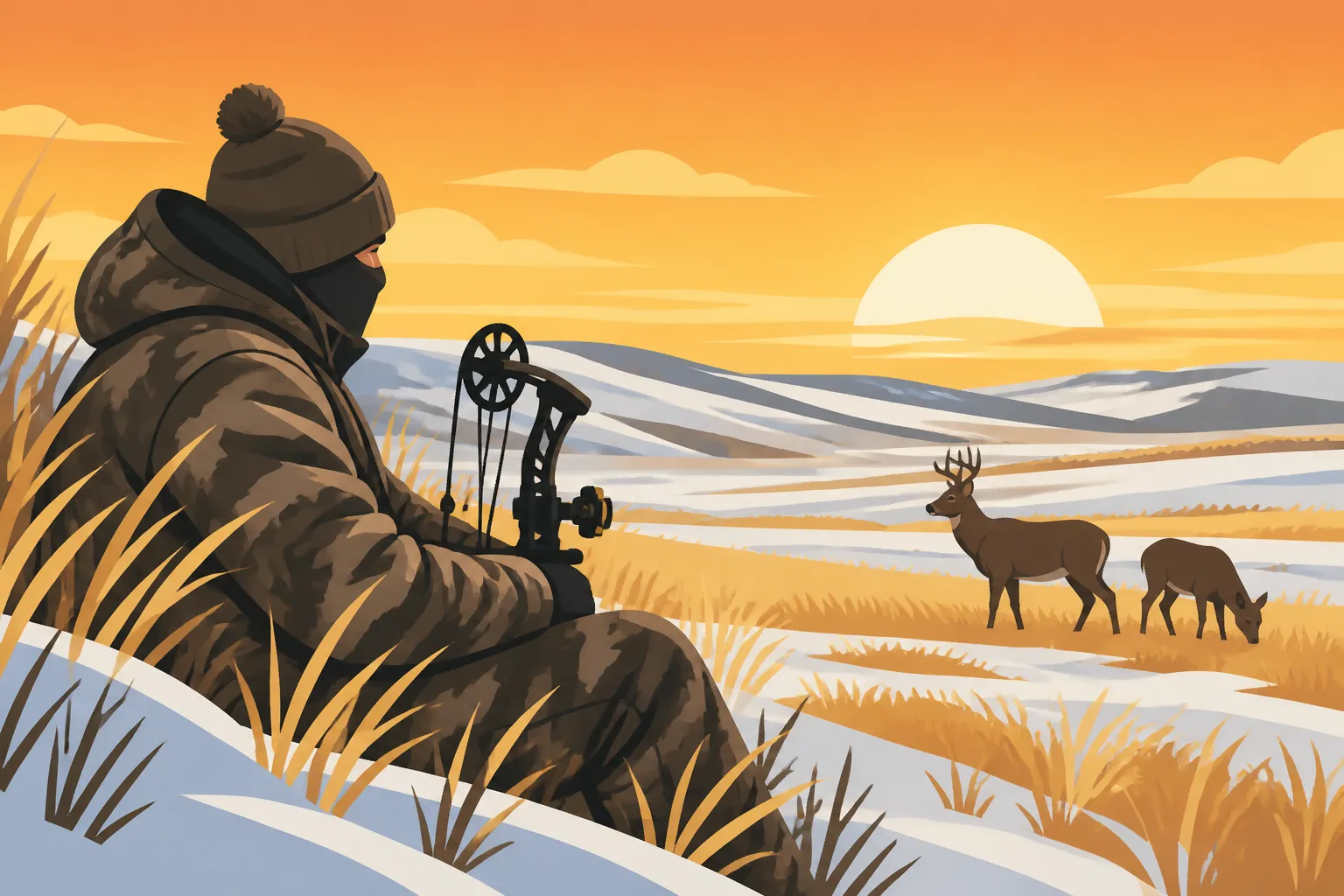
When we talk about North Dakota cold, we're really talking about a trifecta of factors that make it particularly brutal: low temperatures, often coupled with persistent, biting winds, and wide-open, exposed terrain. That notorious wind chill factor isn't just a suggestion; it's a stark reality that can make 0°F feel like -30°F, sucking the warmth right out of you in minutes if you're not adequately protected. Unlike timbered regions, the vast prairie offers precious little natural protection from the wind, leaving you exposed unless you actively seek out or create shelter. The weather here can also change on a dime, going from a relatively calm, frigid morning to a white-out blizzard by afternoon. This extreme variability means you can never really underestimate the conditions. It's a mental and physical battle, and anyone who has spent a late November or December day on a prairie stand knows precisely how quickly discomfort can turn into misery if you're not prepared.
How Cold Affects Wildlife Movement
Just like us, North Dakota's wildlife, especially deer, actively seeks ways to conserve energy and stay warm when temperatures drop. This deep cold dramatically influences their behavior, primarily pushing them towards two things: thermal cover and reliable food sources. You'll find deer becoming much more nocturnal, or at least moving during the warmest parts of the day, typically midday. They'll also be less willing to travel long distances between their bedding and feeding areas. This is where understanding their patterns becomes crucial. Instead of ranging widely, they’ll favor dense cover—think thick shelterbelts, deep river bottom timber, or brushy coulees—that offers protection from the wind and traps what little warmth the sun provides. Knowing how to identify late-season food sources for North Dakota whitetails like standing corn, winter wheat, or CRP fields becomes paramount, as deer will often bed very close to these areas. Your job as a hunter shifts from finding actively moving deer to essentially "still-hunting" or sitting directly on their travel corridors between these critical cold-weather resources.
Essential Preparation for the Cold Sit
Successfully enduring—and enjoying—a cold-weather sit on the prairie comes down to meticulous preparation. It’s not just about throwing on extra layers; it’s about a system.
Layering Like a Pro: Your Best Defense
Cotton is rotten, especially in cold weather. It absorbs moisture and loses all insulating properties once wet. Instead, think strategic layering with materials designed to wick moisture and retain heat. Start with a moisture-wicking base layer against your skin – merino wool or synthetic materials are ideal. This layer pulls sweat away from your body, which is critical because even a little moisture can rapidly chill you. Next comes your mid-layers, which are your primary insulators. Fleece, down, or synthetic puff jackets work wonderfully here. You might even layer a couple of these depending on the severity of the cold. Finally, your outer shell needs to be windproof and water-resistant (or waterproof if snow is expected). This shell protects your insulation from the wind, which, as we discussed, is the ultimate enemy on the prairie.
But don't stop at your core. Your extremities are often the first to get cold and can quickly end your hunt. Invest in quality insulated, waterproof boots, and consider heated socks, which can be a game-changer. For your hands, a layering system also works best: thin liner gloves for dexterity, covered by heavy insulated mittens or a hand muff with hand warmers. And never forget your head – a good balaclava or a warm stocking cap under a hood will prevent significant heat loss.
Here's a simple layering system to consider:
| Layer Type | Material Recommendations | Purpose | Key Considerations |
|---|---|---|---|
| Base Layer | Merino Wool, Synthetic (polyester, polypropylene) | Wicks moisture, provides initial warmth | Snug fit, no cotton. |
| Mid-Layer 1 | Fleece, Lightweight Synthetic Insulation | Primary insulation, breathable | Can be removed if activity increases. |
| Mid-Layer 2 | Down, Heavy Synthetic Insulation | Max insulation for static sitting | Compressible for packing, avoid moisture exposure. |
| Outer Shell | Windproof, Waterproof/Resistant Fabric | Blocks wind, sheds precipitation, protects other layers | Durable, quiet, good fit over other layers. |
| Extremities | Insulated Boots, Heated Socks, Layered Gloves/Mittens, Balaclava | Prevents heat loss from hands, feet, head | Chemical warmers, battery-heated options. |
Fueling Your Body and Staying Hydrated
It sounds counterintuitive in the cold, but staying well-fed and hydrated is incredibly important. Your body burns more calories to maintain its core temperature, so you need to provide it with enough fuel. Pack high-calorie, easily digestible snacks that won't freeze solid, like nuts, jerky, protein bars, and even some dark chocolate. A thermos filled with hot coffee, tea, or even just hot broth can be an absolute lifesaver, providing internal warmth and a morale boost. Dehydration is a silent killer in the cold; you might not feel thirsty because you're not sweating profusely, but your body still loses fluids through respiration. Ensure you're drinking water or electrolyte solutions throughout the day. A well-hydrated body functions better, and that includes its ability to regulate temperature.
Strategic Gear for the Stand or Blind
Beyond your clothing, specific gear choices can make or break a cold sit. A portable catalytic heater, like those from Mr. Heater, can transform a frigid ground blind into a tolerable oasis. Just be sure to use it safely and ensure proper ventilation. An insulated seat pad or a thick foam pad beneath you will prevent conductive heat loss to the frozen ground or stand platform. Even a small detail like a comfortable, well-insulated seat can dramatically extend your sit. If you're using a ground blind, take the time to brush it in thoroughly – brushing in a blind on a field edge not only breaks up your silhouette but also provides an extra layer of wind protection, which is invaluable on the open prairie. If you're on public land, remember the flexibility you have with using a ground blind on PLOTS land to gain that crucial shelter. For scouting and planning your setup, digital tools like GoHunt are indispensable. They allow you to analyze aerial imagery, identify prime thermal cover, locate potential late-season food sources, and even pinpoint subtle terrain features that might offer a hidden pocket of shelter from the wind or a natural travel corridor for deer moving between resources. GoHunt can highlight subtle elevation changes and vegetation types, helping you visualize where deer might be bedding and feeding.
Mastering the Cold-Weather Sitting Tactics
Once your gear is dialed in, it's time to refine your actual hunting approach to match the harsh prairie conditions.
Locating the Prime Cold-Weather Spots
Finding where the deer want to be in extreme cold is your biggest advantage. Forget about wide-open fields unless you're focused on hunting a standing corn field for late-season geese (and hoping deer follow for spilled grain). Instead, concentrate your efforts on areas that offer excellent thermal and wind protection combined with a nearby food source. This means focusing on dense shelterbelts, particularly the downwind side, thick river or creek bottoms with heavy timber, or deep coulees with south-facing slopes that catch the most sun. These areas act like magnets for deer in severe cold. Think about those sheltered corners where a tree row meets a brushy ditch – those are natural pinch points deer will use. Using an app like GoHunt to analyze these specific terrain features and identify entry and exit routes that minimize disturbance can dramatically improve your chances. It helps you find those subtle depressions or thickets that a deer will instinctively seek out when the wind howls. Don't be afraid to get off the beaten path a bit; often, the spots that offer the best shelter are also the ones that see less pressure.
Timing Your Movements and Minimizing Disturbance
In cold weather, deer are even more sensitive to pressure. Your movements need to be slow, deliberate, and minimized. When hunting into a December cold snap, deer are conserving every calorie, so spooking them once can send them into hiding for hours, or even days. If you're still-hunting, make every step count, pausing frequently to glass ahead. If you're sitting, consider your entry and exit routes meticulously to avoid blowing out deer in their bedding areas or on their way to food. It's often better to wait until mid-morning to walk into a stand or blind, especially if deer are mostly moving mid-day. Be mindful of North Dakota Public Land Hunting Hours and plan your approach and departure accordingly, utilizing the cover of darkness to your advantage without disturbing your hunting area. Even with careful planning, sometimes you’ll need to put boots on the ground to confirm sign, so knowing how to read North Dakota mud for fresh deer movement can give you real-time intel on current patterns.
Mental Fortitude and Patience
Let's be real: sitting still in extreme cold is as much a mental game as it is a physical one. The cold can wear you down, make you question your sanity, and whisper sweet nothings about warm coffee and a comfy couch. This is where mental fortitude and patience become your most powerful tools. Break your sit into smaller, manageable chunks. Tell yourself, "I'll sit for another hour, then I'll stretch," or "I'll try to focus on that distant tree line for the next thirty minutes." Small, subtle movements can also help keep blood flowing without alerting game. Wiggle your toes, clench and relax your fists, shift your weight. Having a clear objective, knowing that this focused effort will increase your odds, can help push through the discomfort. Remind yourself that the deer are also feeling the cold, and if you’re toughing it out, they’re likely doing the same, making them predictable and vulnerable to a patient hunter. Understanding North Dakota's Lottery-Based Deer Gun Season or North Dakota Deer Harvest Records can give you an appreciation for the long-term success that comes from this kind of dedication. It's a testament to the fact that success often favors those who can stick it out.
Safety First: Staying Safe in Extreme Conditions
While the goal is to hunt effectively, paramount to any cold-weather excursion is your safety. The prairie can be unforgiving, and understanding the risks is the first step in mitigating them.
Hypothermia and Frostbite Awareness
Hypothermia and frostbite are not just abstract concepts; they are very real, life-threatening dangers in North Dakota's winter environment. Hypothermia occurs when your body loses heat faster than it can produce it, leading to a dangerously low core body temperature. Symptoms start subtly with shivering, confusion, and clumsiness, but can quickly escalate to slurred speech, loss of consciousness, and even death. Frostbite, on the other hand, is the freezing of body tissue, most commonly affecting fingers, toes, ears, and the nose. It often starts with a prickling sensation and numbness, followed by a waxy or discolored appearance of the skin. If you suspect either, immediate action is crucial: get to shelter, remove wet clothing, and slowly rewarm the affected areas. Never rub frostbitten skin. A smart hunter carries an emergency space blanket and knows where their nearest warm refuge is. Regularly checking in with your body and being honest about how you feel is key to preventing these conditions from escalating.
Communication and Emergency Planning
In the vastness of the North Dakota prairie, cell service can be spotty at best, and help might be a long way off. Always, and I mean always, let someone know exactly where you are going, what time you expect to be back, and what your emergency plan is. Carry a fully charged cell phone, but don't rely on it as your sole means of communication. A satellite messenger or a two-way radio might be a worthwhile investment for deeper backcountry excursions. Your emergency kit should include a fire starter, extra high-calorie snacks, a small first-aid kit, a headlamp, and crucially, extra warm layers that you haven't been sweating in. Imagine having to track a deer in fresh prairie snow for miles, or worse, having to deal with recovering a deer from a coulee in fading light and dropping temperatures. These are scenarios where being prepared for an extended stay or an unexpected challenge is not just smart, it's essential. GoHunt can often show you cell service coverage maps, which can be invaluable when planning your hunt and understanding potential communication blackouts. Always hunt with a buddy if possible in these extreme conditions; there’s safety in numbers.
Disclaimer
The information provided in this guide is for general informational purposes only and does not constitute professional advice. Hunting involves inherent risks, and conditions can change rapidly. Always consult the latest regulations from the North Dakota Game and Fish Department and prioritize safety above all else. Proper training, experience, and good judgment are essential for any hunting activity.