Hanging a Stand on a Shelterbelt Edge
Hunting North Dakota’s vast, often-open landscapes can be a real head-scratcher when you’re trying to find a consistent deer stand location. Forget dense hardwoods; out here, deer rely on specific features for cover and travel, and shelterbelts are often overlooked goldmines. This guide will walk you through exactly how to effectively scout, set up, and hunt from a stand along these crucial prairie corridors, transforming frustrating hunts into successful ones.
Understanding Shelterbelt Dynamics for Deer
Shelterbelts, those lines of trees planted across the prairie primarily for windbreaks, are far more than just pretty scenery to a whitetail deer in North Dakota. They are vital pieces of habitat that can concentrate deer movement and provide consistent hunting opportunities. Understanding why deer use them is the first step to successful stand placement.
Why Deer Seek Shelterbelts
Imagine being a deer out on the expansive North Dakota prairie. When that infamous wind starts howling, or the mercury drops well below freezing, where do you go for relief? That’s right, the shelterbelt. These linear strips of trees, often a mix of evergreens and deciduous species, create microclimates that offer significant protection from the elements. They break the wind, providing a thermal sanctuary in winter and shade in early fall. This makes them prime bedding areas, especially on the downwind side, or crucial staging areas before deer move out into adjacent fields to feed. Deer will often bed deep within the thickest parts of a shelterbelt during the day, feeling secure and protected, only venturing out in low light. This cover is often the only dense structure for miles, making it an irresistible magnet for deer.
Travel Corridors and Food Source Connectivity
Beyond just offering shelter, these tree lines act as natural highways for deer. Picture a buck wanting to move from one bedding area to another, or from a secluded pocket of trees to a distant food source like a standing cornfield. Crossing wide-open terrain is risky, exposing them to predators (and hunters!). Shelterbelts provide continuous cover, allowing deer to travel unseen, feeling safe. They essentially connect the dots across the landscape. Often, you'll find scrape lines along a section line trail adjacent to a shelterbelt, marking these travel routes. Furthermore, many shelterbelts contain species like Russian olive, buffaloberry, or other shrubs that provide valuable browse, particularly in the lean late season when natural forage is scarce. This dual function of shelter and travel corridor, often leading directly to a prime food source like a neighboring soybean or wheat field, makes shelterbelts incredibly strategic locations for stand hunting.
Scouting and Identifying Key Stand Locations
You can’t just throw a stand up on any shelterbelt and expect success. Effective scouting, both remotely and on the ground, is absolutely critical. You need to identify the spots where deer are consistently using the shelterbelt, not just passing through occasionally.
Remote Scouting with Mapping Tools
Before you ever lace up your boots, start with a robust mapping tool. Platforms like GoHunt offer invaluable satellite imagery and public land overlays that can save you countless hours. Begin by identifying shelterbelts adjacent to agricultural fields (corn, beans, alfalfa, winter wheat) or native grasslands. Look for shelterbelts that connect larger blocks of cover, even if those blocks are small, isolated woodlots or creek bottoms. Pay close attention to corners where a shelterbelt might meet another timbered edge or a significant ditch – these often act as funnels. Use the terrain feature to look for any subtle elevation changes that could influence deer movement, even on the seemingly flat prairie. For instance, a slight rise might offer a thermal advantage or a better vantage point for deer. You can even identify potential entry routes through standing sunflowers or other crops that allow you to approach your chosen stand site undetected. Use these tools to identify potential access points that allow you to get to your stand without disturbing deer, considering prevailing winds for your approach.
On-the-Ground Reconnaissance
Once you have a few promising locations marked on your GoHunt app, it’s time for boots on the ground. Timing is crucial here; ideally, you scout during the off-season or well before hunting pressure builds, to minimize disturbance. Walk the edges of the shelterbelt, looking for obvious deer sign: heavily used trails entering or exiting, fresh tracks in the mud, rubs on smaller trees, and scrapes, particularly those under low-hanging branches. Pay attention to how deer are using the entire structure. Are they primarily traveling along the interior edge, where cover is densest, or are they skirting the outer perimeter near the field? Look for pinch points or bottlenecks within the shelterbelt itself, perhaps where the tree line narrows, forcing deer through a smaller corridor. Identify existing deer bedding areas – often dense thickets or the leeward side of the belt, where the sun hits just right in the morning. When checking for fresh sign, remember that Reading North Dakota Mud for Fresh Deer Movement can tell you a lot about recent activity and travel patterns. Your goal is to find the intersection of heavy deer sign, predictable travel, and a safe, undetectable approach and exit route for yourself.
Optimal Stand Placement and Setup Strategies
Once you've zeroed in on a specific location within a shelterbelt, the next critical step is positioning your stand for maximum effectiveness and minimal intrusion. This isn't just about climbing a tree; it's about making a strategic decision based on wind, sun, and shot opportunities.
Wind Direction and Scent Control
This is arguably the single most important factor when hanging a stand on a shelterbelt edge, or anywhere in North Dakota for that matter. The prevailing winds on the prairie are often strong and consistent, but they can swirl unpredictably, especially near cover breaks. You absolutely must position your stand so that your scent cone is blowing away from where you expect deer to approach or travel. This might mean having multiple stand locations for different wind directions, or at least understanding which winds make a particular stand unhuntable. When using a detailed mapping tool, you can often find features like Wind and Thermals in Badlands Terrain which, while focused on badlands, highlight the critical importance of understanding air movement in open and semi-open landscapes. Always err on the side of caution. Even with the best scent control regimen – showering with unscented soap, washing clothes in scent-free detergent, and storing them in airtight containers – deer have an incredible sense of smell. Never let your guard down. When hanging your stand, consider the wind not just at ground level but also at your elevated position, as currents can be different.
Entry, Exit, and Shot Opportunities
Your approach and departure from the stand are just as critical as the hunt itself. You need to plan a route that is as silent and scent-free as possible, avoiding known deer travel corridors. Ideally, your entry path brings you in from a direction that doesn't push deer already in the area. For a shelterbelt stand, this might mean walking along the field edge until you're directly parallel to your stand, then slipping straight into the tree line. Exiting is often best done during midday if possible, or well after dark once deer have moved off.
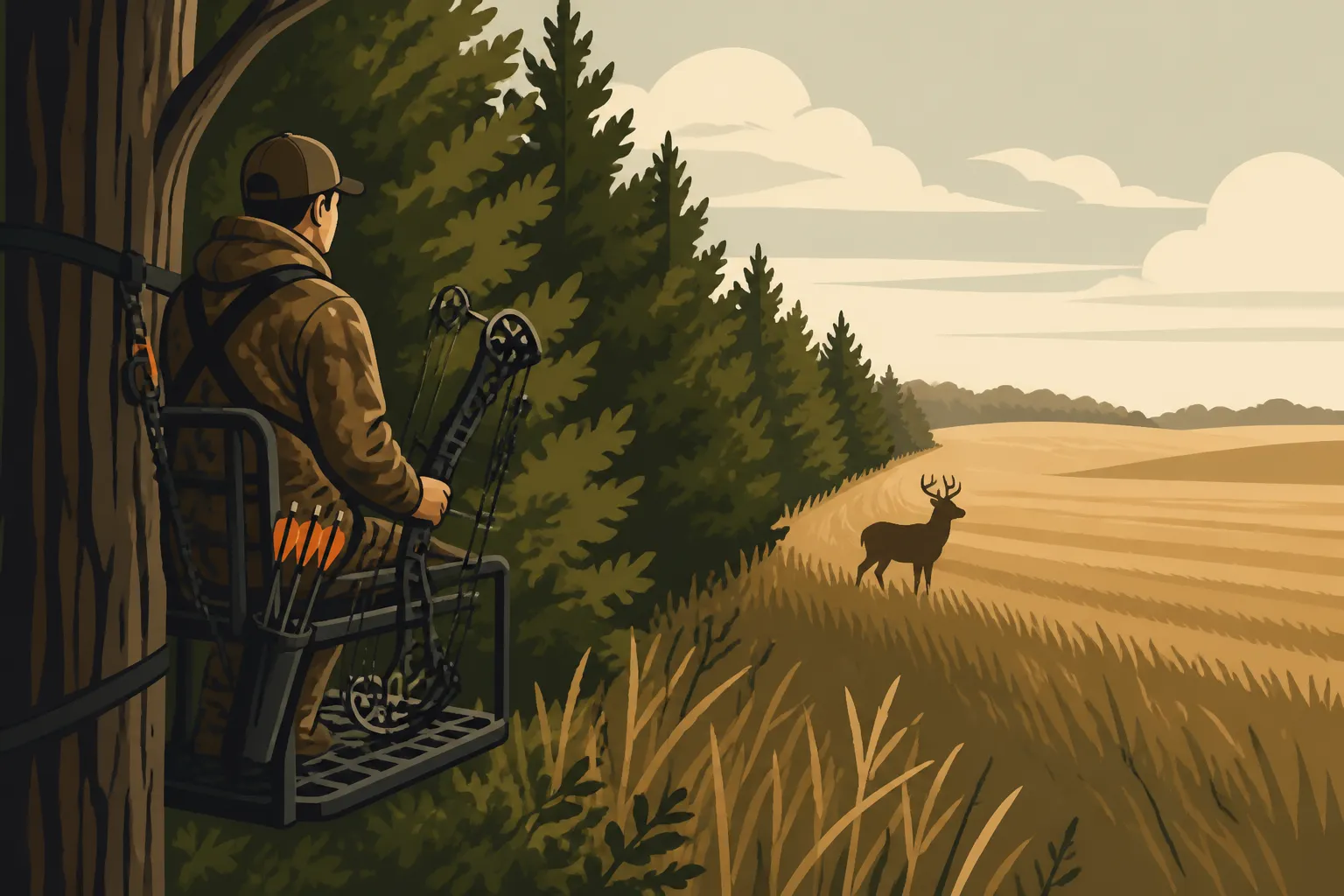
When choosing the specific tree for your stand, consider several things. First, height: aim for at least 15-20 feet for optimal concealment and scent dispersion. Second, cover: look for trees that offer natural breaks in your silhouette, or where you can add some artificial brushing for better camouflage. Third, shooting lanes: clear any necessary shooting lanes before the season, but be judicious. You don't want to over-cut and create an obvious void. Focus on paths where deer sign is heaviest, or where you anticipate a travel route. Think about the sun's position throughout the day; you don't want to be staring directly into the rising or setting sun. Always consider the potential for multiple shot angles, whether a deer is moving along the shelterbelt, cutting across the corner, or entering an adjacent Hunting a Standing Corn Field for Deer.
Here's a quick comparison of stand types for shelterbelt hunting:
| Stand Type | Pros | Cons | Ideal Shelterbelt Scenario |
|---|---|---|---|
| Ladder Stand | Stable, comfortable, easy access, good for long sits | Less portable, conspicuous, limited tree options | Thicker, more established shelterbelts, semi-permanent setup |
| Hang-on Stand | Versatile, portable, good concealment, allows height adjustment | Requires climbing sticks, less comfortable for all-day sits | Thinner, more irregular shelterbelts, adaptable to changing conditions |
| Climber Stand | Highly portable, quiet, great for scouting new areas | Limited to straight trees, can be noisy if not careful | Shelterbelts with uniformly straight, mature trees, high mobility needed |
| Ground Blind | Excellent concealment, comfortable, weather protection | Limited visibility, scent containment can be an issue, needs brushing in | Thickets too dense for tree stands, edge of shelterbelt into open field |
Hunting Considerations and Common Mistakes
Even with the perfect stand setup, your hunt isn't over. How you execute the hunt, handle unforeseen circumstances, and adapt to deer behavior will ultimately determine your success.
Patience, Persistence, and Adapting to Conditions
Deer, especially mature bucks, are notoriously unpredictable. Even in a prime shelterbelt location, they might not show up on your schedule. This is where patience truly becomes a virtue. Be prepared for long sits, especially during the rut. The weather in North Dakota can turn on a dime, from calm and sunny to a blizzard in a matter of hours. Having the right gear to stay comfortable and focused is key. Layers, hand warmers, and a good thermos of coffee or hot chocolate are your friends. If a hard prairie winter hits, deer patterns around shelterbelts can change dramatically as they seek critical cover and access to Late-Season Food Sources for North Dakota Whitetails. Adapt your hunting times; sometimes the midday lull can be surprisingly productive as deer shift bedding, especially on cold, clear days. Don't be afraid to change tactics if your initial strategy isn't producing.
Common Pitfalls to Avoid
One of the biggest mistakes hunters make when hunting shelterbelts is assuming deer will always follow the "rule book." While shelterbelts are travel corridors, deer might cut corners or veer off course unexpectedly. Don't get so fixated on one trail that you miss opportunities elsewhere. Another common pitfall is over-hunting a stand. If deer start to pattern you, they’ll quickly avoid your area. Limit your time in a stand, especially prime rut stands, to only the most favorable conditions. If you bump deer on your way in or out, take a break from that stand for a few days to let things settle down.
Noise is another major issue. The rustle of dry leaves, a creaking stand, or even the subtle sound of your backpack hitting the tree can alert deer. Be mindful of every movement. While calling can be effective in some situations, like using Grunt Calls in River Bottom Timber which might also work in a shelterbelt, don't overdo it. Sometimes less is more. Lastly, don't ignore the importance of scouting during the season. New scrapes might appear, rub lines could extend, or a new food source might become attractive. Stay vigilant and adapt your strategy. Remember, Hunting Pressure on North Dakota Public Land can shift deer patterns quickly, so always be ready to adjust.
Disclaimer
Hunting is an inherently dangerous activity. This guide is for informational purposes only and does not substitute for proper hunter education, safety training, or adherence to all local, state, and federal hunting regulations. Always prioritize safety, respect wildlife, and obtain all necessary licenses and permissions before hunting. The information provided herein is not a guarantee of hunting success.