Tracking a Deer in Fresh Prairie Snow
Few things are more disheartening for a hunter than making a good shot on a deer, only to have the animal vanish into the vastness of the North Dakota prairie, especially when fresh snow falls. The fleeting promise of a clear blood trail can quickly turn into a frustrating maze of faint tracks and disappearing crimson as the elements conspire against you. This comprehensive guide is here to walk you through the often-stressful, yet incredibly rewarding, process of tracking a deer in fresh prairie snow, equipping you with the knowledge and tactics to maximize your chances of a successful recovery in our unique hunting landscape.
The Unique Challenges of Tracking in Prairie Snow
Tracking a deer in North Dakota's prairie snow isn't like tracking through a quiet, dense timber stand somewhere else. Our landscape presents a very particular set of challenges that can make even a seemingly straightforward recovery a true test of grit and observation. It’s crucial to understand these distinctions before you even step foot in the field.
Why Prairie Snow is Different
First off, let's talk about the snow itself. Prairie snow, especially after a fresh fall, can be a fickle beast. It’s often light and powdery, easily disturbed by even a gentle breeze, let alone the persistent winds that are a hallmark of North Dakota. This means that what might start as a crisp, clear track can quickly become a blurred depression in the snow, or worse, completely disappear as wind sweeps across open fields or coulee rims. Unlike deep, settled snow in a wooded environment that might hold a blood trail well for hours, prairie snow can be very thin in spots, exposing vegetation or frozen ground beneath, making blood sign harder to see. Then there's the crust factor – a warm spell followed by a hard freeze can create a crunchy crust on top of the snow. While this sometimes makes tracks louder and easier to follow, it can also cause a deer to "punch through" inconsistently, leaving less distinct imprints and making blood splatter harder to discern.
The Elusive Blood Trail
Even with a seemingly ideal shot, the blood trail itself can be maddeningly elusive in prairie snow. Light bleeding, especially from a high lung hit or a muscle wound, might only leave tiny specks of blood that quickly melt into the snow or get covered by additional snowfall. If the deer is running hard, the force of its movement can spray blood, but this also means the individual drops are often smaller and more spread out. Furthermore, a deer's fur can soak up a surprising amount of blood, especially if the entry or exit wound is matted, making the initial signs harder to spot. On the open prairie, there aren't many natural surfaces like fallen leaves or thick moss to "catch" and hold blood, making the snow your primary canvas. And if the snow is particularly thin or uneven, it can be like looking for a needle in a haystack – the blood simply doesn't show up clearly against the varying textures of grass and stubble poking through. For a deeper dive into the immediate aftermath, you might find our guide on Blood Trailing After Dark in North Dakota particularly useful for those low-light scenarios.
Dealing with North Dakota's Wind
Perhaps the most formidable opponent when tracking in North Dakota is the wind. It’s not just an inconvenience; it’s a trail eraser. A fresh blanket of snow, perfect for tracking, can be scoured clean by an hour or two of sustained prairie wind. Tracks become indistinct, blurred, or vanish entirely. Small specks of blood are lifted and dispersed. If you're dealing with a gusty day, you'll feel the urgency to get on the trail quickly, knowing that every minute is a race against the elements. The wind also carries scent, making it harder for tracking dogs (if you choose to use one) to concentrate on the deer's specific path. It's a constant reminder that in North Dakota, you're not just hunting the deer; you're also battling Mother Nature's relentless forces.
Essential Gear and Preparations for Snow Tracking
A successful recovery in snowy conditions starts long before you ever pull the trigger. Having the right gear and being mentally prepared for a challenging track can make all the difference when a deer disappears into the white expanse. Think of it as a checklist for resilience, because out here, you'll need it.
The Right Optics and Lighting
When tracking in snow, your eyes are your most important tools, and good optics can significantly enhance their capabilities. A quality pair of binoculars, even low-power ones like 8×32 or 10×42, can help you scan ahead for subtle signs—a disturbance in the snow, a darker patch that might be blood, or even the deer itself bedded down. Look for brands known for their clarity and low-light performance, as many tracking efforts extend into dusk.
Speaking of low light, a powerful headlamp is non-negotiable. Look for models with adjustable brightness and a red light option to preserve your night vision. You’ll want something with a broad beam and a long throw distance. For really tough spots, a dedicated lantern or a secondary powerful handheld flashlight can illuminate a wider area, helping you pick up faint blood drops against the snow. Don't forget spare batteries or a portable power bank, as cold temperatures drain batteries faster. This becomes especially critical if you find yourself following a trail well after sunset, turning your efforts into a true test of endurance. Our guide on Blood Trailing After Dark in North Dakota offers more specific tips for navigating those challenging nighttime scenarios.
Cold Weather Apparel and Footwear
North Dakota winters are no joke, and sitting still or moving slowly while tracking means your body temperature can drop quickly. Layering is key: start with a moisture-wicking base layer, add insulating mid-layers like fleece or down, and top it off with a waterproof and windproof outer shell. Pay close attention to your extremities. Insulated, waterproof boots are essential, preferably a size up to allow for thick socks and good circulation. Chemical hand warmers and foot warmers can be a game-changer, especially during pauses in the track. Mittens are often warmer than gloves for periods of less dexterity, but keep a pair of thin, tactile gloves for when you need to handle your knife or other small items. Staying warm and dry isn't just about comfort; it's about maintaining focus and preventing dangerous conditions like hypothermia. You can find more advice on preparing for the harsh conditions by checking out Hunting Into a December Cold Snap.
Navigation Tools
Losing your bearings in the vast, often featureless, prairie can happen quickly, especially when your eyes are glued to the ground. A reliable GPS unit or a smartphone with a robust mapping app like GoHunt is absolutely crucial. These tools allow you to mark your starting point, drop waypoints along the trail, and most importantly, mark the last spot you found blood or tracks. This way, if you lose the trail, you can always return to your last confirmed sign. GoHunt is particularly helpful for its detailed satellite imagery, property line overlays, and the ability to download maps for offline use, which is vital in areas with spotty cell service. A physical compass and a topo map of the area are excellent backups, ensuring you're never truly lost. Having a pre-planned escape route or understanding the lay of the land can save precious time and effort if you have to regroup. Make sure you understand how to use these tools effectively before you're in a stressful tracking situation. For tips on maximizing your digital mapping, our article on Using the PLOTS App Without Cell Service might prove invaluable.
Field Dressing Kit Essentials
While not directly part of the tracking process, having a well-stocked field dressing kit ready is part of the overall preparation for a successful recovery. Once you find your deer, you’ll be grateful for sharp knives, a good bone saw (if needed), and plenty of disposable gloves to maintain hygiene and keep your hands warm and clean. Game bags are excellent for protecting the meat from dirt and snow during transport, especially if you have a long drag ahead. Don't forget flagging tape – a bright, biodegradable kind – to mark the trail in reverse, indicating your path back to the vehicle, or to highlight difficult sections of the trail you've already covered. A small first-aid kit for minor cuts and scrapes is also a smart addition, as tracking can involve navigating rough terrain and tangled brush.
Step-by-Step Tracking Techniques in Prairie Snow
Now that you're geared up and mentally prepared for the unique challenges of North Dakota's snowy prairie, let's break down the actual process of tracking. This is where patience, keen observation, and systematic effort truly pay off.
Locating the Initial Hit Site
This is the absolute first step, and it's critical to be methodical. After the shot, resist the urge to immediately rush in. Give the deer time, typically 30-60 minutes for a suspected good hit, or several hours for a questionable hit, especially if it was a gut shot. When you do approach, do so quietly and cautiously. Your primary goal is to find the exact spot the deer was standing when hit. Look for disturbed snow, a divot where it lunged, or any hairs, bone fragments, or stomach contents that might indicate the shot placement. This initial area is often where you'll find the most concentrated blood, and it provides the starting point for your trail. Mark this spot with flagging tape, a brightly colored hat, or a GoHunt waypoint. Don't just assume where the deer was; meticulously search a wide area around where you last saw it standing.
Interpreting Tracks in Snow
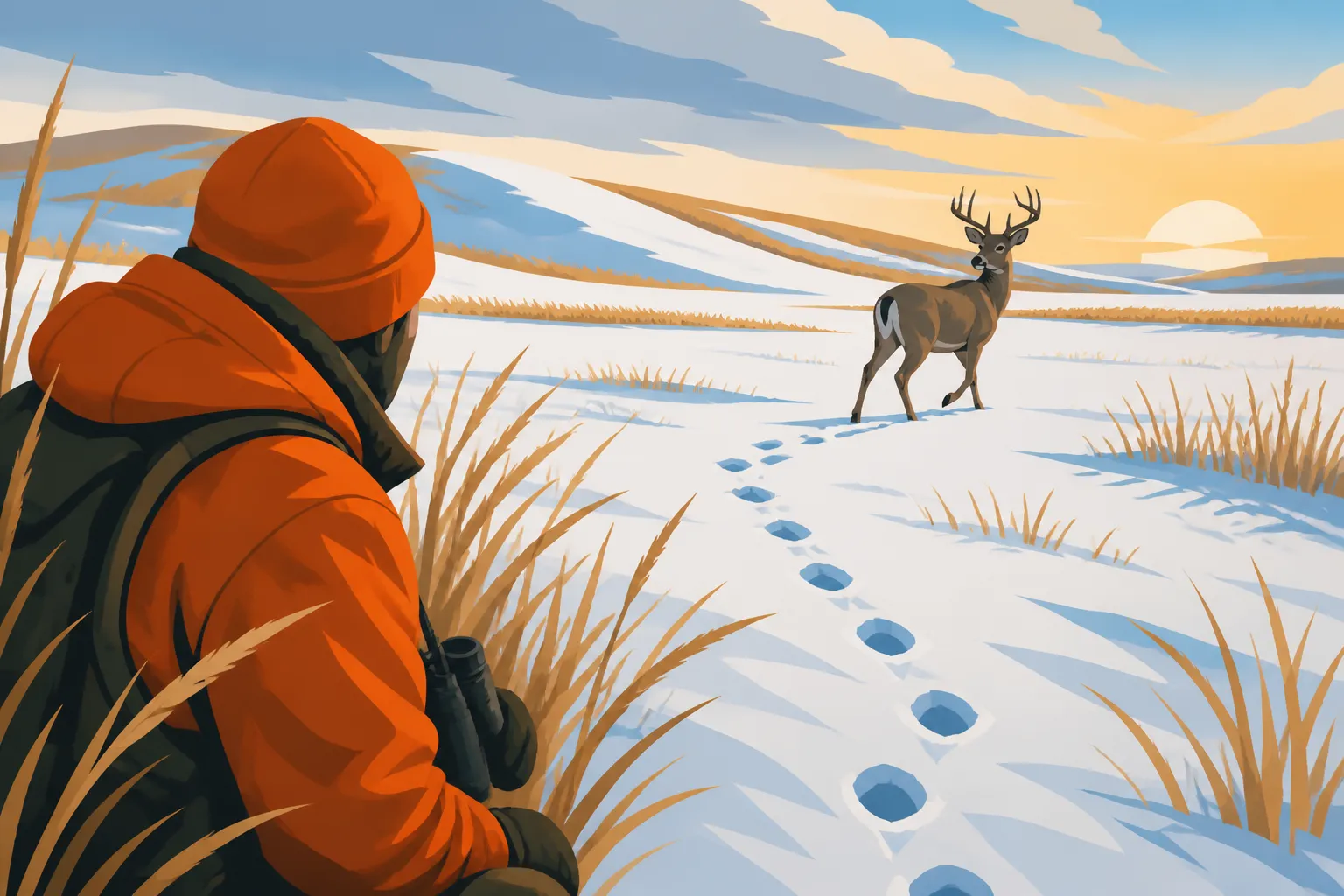
Once you have the hit site, you'll start following the tracks. Snow is a fantastic medium for showing a deer's behavior after being hit. Pay attention to more than just the hoof prints.
- Gait: Is the deer walking, trotting, or bounding? A consistent walk usually means it's not severely injured or is conserving energy. A bounding gait with long strides and deep prints often indicates a deer pushing hard, perhaps after a scare or a bad hit.
- Depth: Deep, widely spaced prints can suggest a deer that is running or stumbling. Shallow, uneven prints might mean it's struggling.
- Drag Marks: Look for any signs of a leg dragging in the snow. This is an undeniable indicator of a broken leg or severe muscle damage, and it's a huge clue that the deer is in distress. Even a slight scuff mark can be important.
- Stumbling: Are the tracks erratic? Are there places where the deer fell, or did it stumble and recover? Patches of disturbed snow or a sudden change in direction can indicate a weakening animal.
- Grouping of Tracks: Healthy deer typically walk with their hind feet landing close to where their front feet stepped. A wounded deer might have more widely splayed tracks, or its hind legs might overstep its front tracks, indicating a lack of coordination or balance.
Understanding these subtle nuances in the tracks can tell you a lot about the deer's condition and how far it might go.
Following the Faint Blood Trail
This is often the most challenging part in prairie snow. Even a good hit might not produce a gushing river of blood.
- Snow as a Canvas: Fresh snow can be your best friend, making even tiny drops of blood stand out. However, if the snow is thin, or if grass and stubble poke through, it can obscure the blood. Look for contrasts in color and texture.
- Small Drops and Specks: Don't expect a continuous line. You might be looking for individual drops, sometimes as small as a pinhead. Get down on your hands and knees if necessary. Use the broad beam of your headlamp, even during daylight, to catch the subtle sheen of blood.
- Maintaining Visual Contact: It's often best to have two or more people tracking. One person stays on the last confirmed blood sign, while the other moves forward in an arc, searching for the next sign. This prevents you from inadvertently losing the trail and having to backtrack. If alone, mark the last spot with flagging tape before moving forward more than a few steps.
- Look for Secondary Signs: Beyond blood, look for disturbed snow where the deer might have rubbed against brush or trees, or disturbed areas where it took a pause. Freshly broken twigs, displaced clumps of snow, or even hair on low-hanging branches can be subtle but crucial indicators.
The Grid Search Method
What happens when the trail completely vanishes? The wind picked up, a second snow fell, or the blood simply stopped. This is where a systematic grid search comes into play.
- Mark the Last Spot: Go back to the very last confirmed blood or track sign you found and mark it clearly with a piece of flagging tape. This is your anchor point.
- Expand in Circles: Start by searching a tight circle around that last spot, gradually expanding outward. Look for any change in the snow, any impression, any tiny speck.
- Establish Search Lanes: If the circle yields nothing, consider forming a line with your hunting partners. Space yourselves 10-20 yards apart, depending on visibility and terrain. Start walking parallel lines, slowly and meticulously, moving out from the last known spot in the direction the deer was generally headed. Use your GoHunt app to mark your search perimeter and keep your lanes straight.
- Cover the Area Thoroughly: Don't rush. Walk slowly, scanning every inch of ground. This method requires patience and discipline, but it can be incredibly effective when a trail has gone completely cold. Remember, even a small patch of disturbed snow can lead to the next clue.
Using Technology for Recovery
Beyond mapping apps, technology continues to offer hunters new tools.
- GoHunt: As mentioned, GoHunt is invaluable for marking waypoints, tracking your progress, and seeing property lines. Use it to record where you started, every blood sign, and where the trail went cold. This creates a digital breadcrumb trail that can be reviewed.
- Thermal Optics: While often associated with night hunting (which is illegal for deer in North Dakota), a handheld thermal monocular can sometimes pick up the body heat signature of a recently expired deer, especially if it's bedded down in thicker cover. This isn't a silver bullet, but it can be a last-ditch effort if you know the deer is very close.
- Drones: In some states and for certain situations, drones equipped with thermal cameras are becoming an option for recovery. However, regulations regarding drone use for hunting purposes vary widely and are often quite restrictive. Always check current North Dakota Game and Fish Department regulations before considering drone use for recovery. Generally, using drones to actively locate or pursue game is illegal.
What to Do When the Trail Goes Cold and When to Call for Help
It's an unfortunate reality that sometimes, despite your best efforts, the trail will go cold. The North Dakota prairie is vast, and a wounded deer can cover significant ground. Knowing when to persist, when to back out, and when to call in reinforcements is crucial for an ethical and successful recovery.
Marking the Last Known Spot
This cannot be stressed enough. The moment you realize you've lost the trail, mark that exact spot with something highly visible – flagging tape, a brightly colored piece of clothing, or a GoHunt waypoint. Do not take another step forward without marking this point. This is your critical reference. If you or your team decide to expand your search, you can always return to this precise location to restart or re-evaluate. Losing the last known spot is like losing your starting line in a race; it makes recovery exponentially harder. It’s also crucial if you decide to come back later or bring in more people; they'll need that exact starting point.
Patience and Persistence
Often, the biggest mistake hunters make is pushing a wounded deer too soon. If you suspect a gut shot, or a marginal hit that wasn't immediately fatal, backing out for several hours (4-6 for a gut shot, or even overnight if conditions allow and the temperature is cold enough to prevent meat spoilage) can be the best strategy. A deer that is pushed will often keep running, making its recovery far more difficult. If left alone, it may bed down and expire quickly. When you return, approach the last known spot quietly and slowly, ready for a follow-up shot if the deer is still alive. The decision to back out takes discipline, especially when adrenaline is high, but it drastically improves your chances of finding the animal relatively close to where you left the trail. Remember to consult local regulations on specific wait times, as these can vary. Our article on Hunting Deer After a Cold Front discusses how deer behave in adverse conditions, which might help in these scenarios.
Enlisting Help
There's no shame in admitting you need help. If the trail goes cold, don't hesitate to call friends, family, or other experienced hunters. More eyes on the ground can significantly increase your chances of finding the deer. Assign roles – one person stays on the last blood, others fan out. In North Dakota, you also have the option of certified tracking dog services in certain situations. These dogs are specifically trained to follow cold blood trails and can cover ground much faster and more efficiently than humans. Always research and understand North Dakota's specific regulations regarding the use of tracking dogs for deer recovery before you even head out hunting, so you know your options in advance. They are a powerful tool, but their use is highly regulated to ensure ethical hunting practices. When you do call for help, use your GoHunt waypoints to clearly communicate your location to your team, saving valuable time.
Ethical Recovery Considerations
As hunters, we have an ethical obligation to do everything in our power to recover any animal we shoot. This means exhausting all reasonable efforts. Don't give up just because the trail becomes difficult. The effort you put into tracking directly reflects your respect for the animal and the hunt. If you've truly done everything you can and the deer cannot be found, you should report it to the North Dakota Game and Fish Department, especially if it's a tagged animal. This helps with population management data and demonstrates responsible hunting. Understanding the nuances of retrieving game, even from different land types, is critical; our guide on Retrieving Game From Private Land in North Dakota can offer specific insights.
Tracking Conditions and Strategies
Here's a quick overview of how different snow conditions might influence your tracking strategy:
| Snow Condition | Characteristics | Tracking Strategy |
|---|---|---|
| Fresh, Light Snow | Powdery, easily wind-blown, good blood contrast. | Get on the trail quickly before wind erases signs. Focus on clear tracks and any distinct blood. Look for secondary disturbances. |
| Crusted Snow | Crunchy, deer "punches through" inconsistently. | Listen for deer movement. Look for deep punch-throughs and scrapes from hooves. Blood might be harder to see if deer isn't breaking the crust. |
| Light Dusting | Thin layer over ground or stubble. | Very challenging. Look for disturbed stubble, bent grass, or "ghost" tracks. Blood will be minimal and hard to spot. Use optics, get low, and be methodical. |
| Deep, Settled Snow | Consistent depth, holds tracks and blood well. | Ideal conditions. Follow clearly visible tracks and blood. Still be mindful of wind drifts in open areas. Maintain consistent pace, marking often. |
| Melting Snow | Slushy, inconsistent, blood quickly dilutes. | Act with extreme urgency. Blood will dissipate rapidly. Focus on track depth, drag marks, and disturbed areas rather than just blood. |
Remember, every situation is unique, and adapting your approach based on real-time conditions is crucial for a successful recovery.
Disclaimer
The information provided in this guide is for informational purposes only and is not a substitute for official regulations. Always consult the most current North Dakota Game and Fish Department hunting regulations and laws before heading into the field. Safety should always be your top priority.