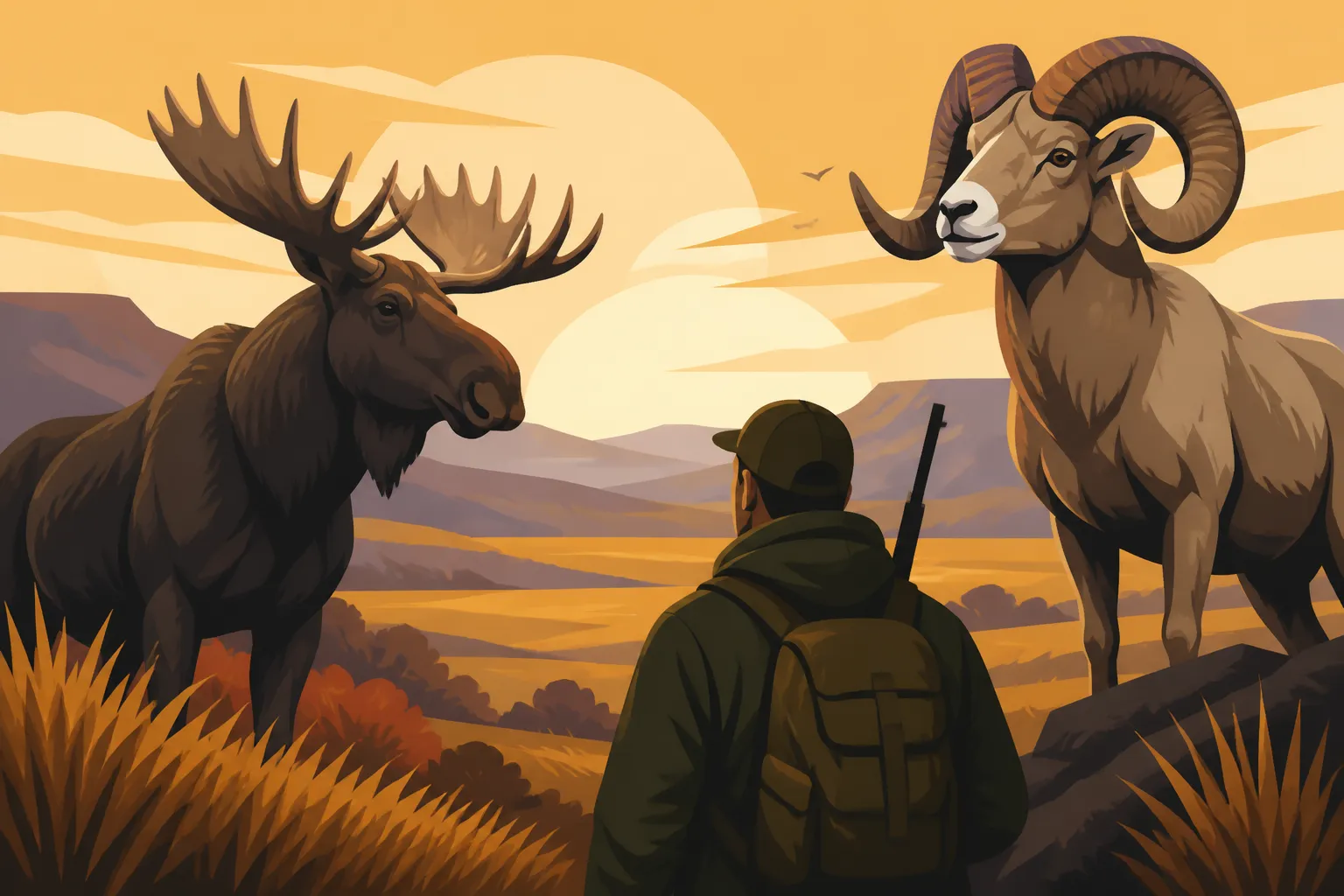
Moose and Bighorn Sheep Hunting in North Dakota
For many hunters, the thought of pursuing North Dakota's majestic moose or elusive bighorn sheep feels like a distant dream, an almost mythical quest. These aren't your typical deer tags; they are once-in-a-lifetime opportunities, a lottery win that can take years, even decades, to achieve. This guide aims to pull back the curtain on these incredible hunts, providing a realistic look at the application process, the challenges of the terrain, and what it truly takes to prepare for and execute a successful pursuit of these magnificent North Dakota big game animals.
The Rarity of North Dakota's Trophy Animals
Let's be honest, drawing a moose or bighorn sheep tag in North Dakota is akin to hitting the jackpot. These aren't hunts you plan for every year; they are the culmination of dedication, patience, and a healthy dose of luck. The sheer elusiveness of these tags contributes to their legendary status among hunters. It’s not just about the trophy; it’s about the unique experience of pursuing an animal that few others will ever get the chance to hunt in the Peace Garden State.
Why Moose and Bighorn Tags Are So Rare
The primary reason for the extreme rarity of these tags boils down to conservation and population management. North Dakota simply doesn't have the vast tracts of prime moose or bighorn habitat found in states further west or north. Our populations are smaller, more localized, and carefully managed by the North Dakota Game and Fish Department (NDGFD) to ensure their long-term health and stability. For moose, populations are found primarily along river corridors and forested areas, particularly in the northeast and north-central parts of the state, such as the Turtle Mountains and Pembina Hills. Bighorn sheep, on the other hand, are strictly confined to the rugged, broken badlands terrain of western North Dakota, in areas like the Little Missouri National Grassland.
Because these populations are relatively small and sensitive to environmental changes, disease, and habitat loss, the NDGFD issues a very limited number of tags each year. This cautious approach ensures that hunting pressure remains minimal, allowing these incredible animals to thrive. It’s a delicate balance: providing once-in-a-lifetime opportunities for hunters while fiercely protecting the future of the species. This commitment is why you hear so much about North Dakota's Once-in-a-Lifetime Big Game Licenses and the strict management protocols around them.
Understanding the Once-in-a-Lifetime Tag System
The "once-in-a-lifetime" designation isn't just a catchy phrase; it's a fundamental rule of North Dakota's big game lottery system for these species. If you are fortunate enough to draw and harvest a moose, bighorn sheep, or even an elk in North Dakota, you are ineligible to apply for that specific species again. Ever. This system is designed to spread the limited opportunities among as many hunters as possible, giving more people a shot at experiencing these truly special hunts. It means that when you do draw one of these tags, the pressure is on. This isn't just another hunt; it's the hunt.
This policy underscores the importance of being fully prepared, both physically and mentally, should your name be drawn. It also means that every decision you make during the application process—from choosing which species to apply for to selecting a specific unit—carries significant weight. For many, it's a strategic long-game, patiently building points or just hoping for that lucky break. Understanding What a Once-in-a-Lifetime Moose Tag Means or What a Once-in-a-Lifetime Bighorn Tag Means fundamentally changes your approach to the application and the hunt itself.
The Draw Odds: A Realistic Look
Let's not sugarcoat it: the draw odds for moose and bighorn sheep in North Dakota are astronomically low. We're talking about single-digit percentages, often less than 1%. For moose, the NDGFD typically offers around 100-150 licenses statewide each year, while bighorn sheep tags are even scarcer, usually in the low single digits, often just five or six total tags, sometimes even fewer depending on population surveys. These numbers highlight the intense competition and the sheer unlikelihood of drawing one.
Many hunters apply for decades without success, accumulating preference points (which we'll discuss later) in the hope that their time will eventually come. It's a testament to the allure of these hunts that people continue to apply year after year, undeterred by the daunting odds. For perspective, consider that North Dakota Moose Hunt Success Rates are often high once a tag is drawn, but drawing the tag itself is the real hurdle. This reality can be frustrating, but it also makes the success stories even more impactful. Don't let the low odds deter you, but approach the application with realistic expectations.
North Dakota Moose Hunting: A Hidden Gem
While North Dakota might not be the first state that comes to mind for moose hunting, it actually offers some unique opportunities for those lucky enough to draw a tag. These are typically forest-dwelling or river-bottom animals, thriving in areas with ample water and woody browse.
Moose Population and Habitat
North Dakota's moose population is primarily concentrated in the northeastern and north-central regions of the state. These areas, particularly the Pembina Hills and the Turtle Mountains, offer the dense timber, brushy cover, and wetland habitats that moose require. You'll also find smaller, more dispersed populations along major river systems like the Red River, the Souris River, and portions of the Missouri River corridor, where willow bottoms and forested stretches provide ideal conditions. These are not the vast, open landscapes often associated with prairie hunting. Instead, think of thick pockets of aspen, willow, and balsam poplar.
According to the NDGFD, How Many Moose Live in North Dakota varies year to year based on surveys, but the overall population has generally been stable or slightly increasing in their core range over recent years, allowing for a limited number of tags to be issued. When you look at maps of Where North Dakota Moose Concentrate, you'll see them hugging these specific eco-regions, distinct from the open prairies that dominate much of the state. Hunting here means still-hunting through thick cover, understanding wind currents in timber, and being prepared for a strenuous pack-out from remote areas.
Applying for a Moose Tag: The Lottery System
The only way to obtain a North Dakota moose tag is through the annual lottery. This isn't an over-the-counter license; it's a coveted draw. The application period typically opens in late spring, usually May, and runs for several weeks. You'll need to submit your application online through the NDGFD portal. It's crucial to double-check the specific dates each year, as they can shift slightly. The North Dakota Moose Lottery Application Process is straightforward but requires careful attention to detail, ensuring all your information is correct before submission.
When applying, you'll select a hunting unit. These units are specifically designated by the NDGFD to manage moose populations effectively. Your choice of unit can significantly impact your draw odds and the type of terrain you'll be hunting. Some units might have higher moose densities but also higher application numbers, while others might be more challenging but offer a slightly better chance at drawing. It's worth researching past draw statistics for each unit before making your selection.
Strategies for Hunting a Drawn Moose Tag
Congratulations, you've drawn a tag! Now the real work begins. Hunting North Dakota moose is a challenge that rewards patience and preparation. These animals are large, powerful, and often inhabit dense, difficult terrain.
- Scouting is Paramount: If you're serious about your once-in-a-lifetime moose hunt, pre-season scouting is non-negotiable. Spend as much time as possible in your chosen unit before the season opens. Look for heavily used trails, fresh browse, rub lines, and water sources. Identifying prime bedding areas and feeding grounds will be critical. Utilize tools like the ND Hunt App and aerial photos to pinpoint potential hotspots.
- Understand Their Movement: Moose are creatures of habit. They often move between bedding areas and feeding areas at dawn and dusk. During the day, they'll typically bed down in thick cover. Learning to anticipate these movements, especially in the thick timber of the Turtle Mountains or Pembina Hills, is key. Hunters often focus on still-hunting slowly and quietly through these dense areas, paying close attention to wind direction.
- Calling Strategies: During the rut (late September to October), calling can be incredibly effective. Cow calls and bull grunts can provoke a response from a bull looking for a mate or asserting dominance. However, practice is essential to sound realistic. If you're fortunate enough to draw an early season tag, you might even consider methods like Glassing for Moose in River Bottom Willows, though much of the moose habitat is too dense for extensive glassing.
- Be Prepared for a Pack-Out: A harvested moose is an enormous animal, weighing upwards of 800-1,000 pounds or more. Getting it out of thick timber or river bottomland can be a monumental task. You'll need a robust plan for field dressing, quartering, and packing out the meat. This often involves multiple people, game carts, or even hiring professional assistance if access allows. Having a reliable GPS unit, good communication devices, and first-aid supplies are crucial for such remote hunts.
Bighorn Sheep Hunting in the Badlands: The Ultimate Challenge
If moose hunting is a hidden gem, bighorn sheep hunting in North Dakota is the crown jewel. It's an aspiration for many, a reality for precious few, and an unparalleled adventure in the state's most iconic landscape.
Bighorn Population and Range
North Dakota's bighorn sheep population is entirely restricted to the rugged, awe-inspiring Badlands of western North Dakota. These sheep thrive in the steep, broken terrain, using the cliffs, coulees, and buttes for security from predators and access to forage. Their habitat is truly unique, characterized by dramatic erosion, exposed rock formations, and pockets of juniper and sagebrush. You'll find these herds in specific pockets within counties like McKenzie, Billings, and Golden Valley.
The NDGFD meticulously manages these herds, conducting aerial surveys to estimate How Many Bighorn Sheep Live in North Dakota each year. The population numbers are small, generally in the low hundreds, making the limited tag allocation understandable. The range of Where North Dakota's Bighorn Herd Ranges is distinct, confined to these specific, wild landscapes. Hunting here is as much about experiencing the raw beauty of the Badlands as it is about the pursuit itself.
The Bighorn Lottery Application Process
Just like moose, bighorn sheep tags are only available through North Dakota's lottery. The application window typically aligns with other big game draws, usually opening in May. Again, paying close attention to the North Dakota Bighorn Sheep Application Deadline is critical. Applying online through the NDGFD portal is the standard procedure.
Due to the extreme rarity, only a handful of tags are issued each year—sometimes just one or two ram tags, and occasionally an additional "auction tag" sold to raise funds for bighorn conservation, which is separate from the public lottery. This means that for the average hunter, the odds are even lower than for moose. It's a true long shot, but someone has to draw, right? Many applicants strategically use preference points, knowing it could be a multi-decade endeavor.
Hunting the Badlands for Bighorns
Drawing a bighorn tag is a life-changing event for a hunter. Now, the real work begins in North Dakota's most unforgiving yet stunning landscape.
- Physical Prowess: This is not a hunt for the faint of heart or out of shape. The Badlands terrain is incredibly steep, with loose shale, deep ravines, and dramatic elevation changes. You'll be climbing, descending, and traversing difficult ground, often at high altitudes (for North Dakota). Physical preparation, including extensive hiking with a pack, is absolutely essential. Think of it as similar to the Physical Prep for Badlands Elk Terrain, but often even more challenging due to the specific sheep habitat.
- Glassing is Your Best Friend: Bighorns have incredible eyesight and prefer to be in open, commanding positions. Your primary hunting method will be extensive glassing from high points. Invest in top-tier optics—a high-quality spotting scope, binoculars, and a sturdy tripod are non-negotiable. Spend hours, days even, meticulously scanning every ridge, coulee, and cliff face. This is where patience truly pays off. Many hunters use the GoHunt platform for its mapping tools and research features to aid in identifying potential glassing points and access routes.
- Spot and Stalk: Once a ram is spotted, the real chess match begins. The Badlands offer cover in the form of draws and terrain features, but closing the distance on a wary ram in open country requires exceptional stalking skills, wind awareness, and the ability to use every fold in the landscape to your advantage. This is where the skills honed in Hunting North Dakota's Badlands Mule Deer Country can translate directly, as the terrain is very similar.
- Navigating the Terrain: Not only is the terrain physically demanding, but it can also be disorienting. Always carry a reliable GPS, a map, and a compass. Let others know your hunting plan and expected return. The weather in the Badlands can also change rapidly, from blistering heat to sudden thunderstorms or early snow. Be prepared for anything.
- Shot Placement and Retrieval: Bighorn sheep are tough animals, and a clean, ethical shot is paramount. Be confident in your shooting abilities at varying distances and angles. Retrieving a harvested ram from a steep, rocky canyon will be an arduous task, requiring careful planning, strong ropes, and a dedicated team. Consider what it takes for Recovering a Deer From a Coulee and multiply that difficulty several times over.
Preparing for Your Once-in-a-Lifetime Hunt
Drawing a moose or bighorn sheep tag is just the beginning. The months leading up to the hunt are critical for preparation. This isn't just about practicing your shooting; it's about preparing your body, your gear, and your mind for an experience that will push your limits.
Physical Conditioning for Rugged Terrain
Whether you're slogging through thick, boggy river bottoms for moose or scaling the vertical faces of the Badlands for bighorns, these hunts demand peak physical fitness. Ignoring this aspect is a recipe for misery and potential failure.
- Cardiovascular Endurance: Incorporate activities like running, cycling, or stair climbing into your routine. For bighorns, hiking with a loaded pack up and down steep hills is crucial. Mimic the inclines and descents you'll face.
- Strength Training: Focus on core strength, leg strength, and back strength. You'll be carrying heavy packs, potentially quartered meat, and navigating uneven terrain. Lunges, squats, and deadlifts should be staples.
- Flexibility and Mobility: Don't overlook stretching and mobility work. This can help prevent injuries and allow you to navigate difficult obstacles more easily.
- Mental Toughness: These hunts can be mentally grueling. You might face long days of no sightings, challenging weather, or difficult terrain. Build mental resilience through challenging workouts and visualization. Think about how much effort goes into Packing for an Eight-Day North Dakota Elk Hunt; a moose or bighorn hunt requires similar, if not greater, dedication.
Essential Gear for Moose and Bighorn
Having the right gear is not just about comfort; it's about safety and success. Invest in quality items that can withstand the demands of a backcountry hunt in North Dakota.
- Optics: For bighorns, high-end binoculars (10x-15x) and a powerful spotting scope (20-60x or 20-70x) on a sturdy tripod are essential. For moose, good quality binoculars (8x-10x) will suffice for spotting in dense cover.
- Clothing System: Layering is key. Start with moisture-wicking base layers, add insulating mid-layers (fleece or down), and top it off with waterproof and windproof outer shells. North Dakota weather can be unpredictable, especially in the fall.
- Footwear: Sturdy, waterproof, and well-broken-in hiking boots with good ankle support are crucial for both species. For moose, waterproof rubber boots might also be beneficial in wet areas.
- Backpack: A comfortable, durable backpack with sufficient capacity for multi-day trips is a must. For a bighorn hunt, you might need a heavier pack capable of hauling meat.
- Navigation Tools: A reliable GPS unit (like a Garmin inReach or a handheld GPS), paper maps, and a compass are non-negotiable. Don't rely solely on your phone.
- Shelter and Sleep System: If you're planning a multi-day backcountry hunt, a lightweight tent, sleeping bag rated for cold temperatures, and a sleeping pad are vital.
- First-Aid and Survival: A comprehensive first-aid kit, fire starter, headlamp with extra batteries, water filter/purifier, and emergency signaling devices are mandatory.
- Weapon: Be proficient with your chosen rifle. For moose and bighorn, you'll want a caliber that delivers sufficient energy for clean kills, such as a .30-06, .300 Win Mag, or similar. Practice shooting from various positions and at different ranges, accounting for elevation and wind.
Scouting and Pre-Season Preparation
Your "once-in-a-lifetime" tag deserves once-in-a-lifetime preparation. This goes beyond physical training and gear lists.
- Digital Scouting: Before you even set foot in the field, spend countless hours on digital scouting. Utilize satellite imagery, topographic maps, and hunting apps like GoHunt. Identify potential access points, glassing knobs, water sources, bedding areas, and escape routes. Pay attention to changes in vegetation, terrain features that might funnel animals, and historical data on animal sightings.
- In-Person Scouting: If at all possible, make multiple trips to your unit before the season. This is invaluable. Familiarize yourself with the terrain, check potential water crossings, evaluate road conditions, and look for fresh sign. You’ll gain a much better understanding of the ground than any map can provide. You might find hidden pockets of cover or realize that a trail you saw on a map is impassable in person.
- Interview Local Experts: Talk to NDGFD biologists, local landowners (if applicable and you have permission), and other hunters who have experience in the area. They can offer invaluable insights into animal movements, historical patterns, and challenging aspects of the terrain. Remember that North Dakota’s Public Hunting Land in North Dakota can vary in access and pressure.
- Permit and Regulation Review: Thoroughly review all North Dakota hunting regulations, including those specific to your unit and species. Understand tagging requirements, CWD testing protocols (especially relevant if you’re in North Dakota's Expanding CWD Hunting Units), and any specific restrictions.
Navigating the Application Process and Increasing Your Chances
The application process for these rare tags can feel like a labyrinth, but understanding how it works is your first step towards success. While luck plays a huge role, smart application strategies can make a difference over time.
Understanding Preference Points
North Dakota utilizes a preference point system for its big game drawings, including moose, bighorn sheep, and elk. Here's how it generally works: For every year you apply for one of these species and are unsuccessful, you accrue a preference point for that specific species. When you apply the following year, your application is essentially weighted by the number of points you have. So, if you have 10 points, your application might be considered 11 times (your current application + 10 points) in the drawing. The more points you have, the better your mathematical odds become, relative to other applicants with fewer points.
However, it's not a guarantee. There's always a certain percentage of tags allocated to a random draw, regardless of points, to ensure new applicants still have a chance. Also, if you skip a year of applying, you typically lose all your accumulated preference points for that species. This system encourages consistent application over many years. It's a true test of patience, where hunters can spend decades accumulating points for North Dakota Elk Lottery Application Process, North Dakota Moose Lottery Application Process, or North Dakota Bighorn Sheep Lottery Application Process.
Application Deadlines and Key Dates
Staying on top of deadlines is non-negotiable. Missing a deadline means missing an entire year of potential preference point accumulation and, of course, a chance at a tag.
- Application Period: For moose, bighorn sheep, and elk, the application period generally runs from early May to early June each year. The exact dates can vary slightly, so always check the official NDGFD website or their hunting guide.
- Results Notification: Draw results are typically announced in early July. This is usually done via email notification, or you can check your status on the NDGFD website portal.
- License Purchase Deadline: If you are lucky enough to draw a tag, there will be a deadline to purchase the license. Make sure you don't miss this, or your hard-won tag could be forfeited.
It's highly recommended to mark these dates on your calendar well in advance, set reminders, and apply early in the window to avoid any last-minute technical glitches.
Utilizing Resources for Application Success
While the odds are long, there are resources that can help you navigate the application process more effectively and make informed decisions.
- NDGFD Website and Publications: The North Dakota Game and Fish Department's website is your primary source of official information. They publish annual hunting guides with detailed regulations, season dates, unit boundaries, and often, draw statistics from previous years. Diving into these statistics can give you an idea of which units are most competitive.
- Online Hunting Forums and Communities: Many online forums and social media groups dedicated to North Dakota hunting can be a great place to ask questions, share experiences, and learn from seasoned hunters. Just be sure to filter for reliable information and respect the privacy of specific hunting locations.
- Hunting Data Platforms: Services like GoHunt specialize in providing detailed drawing odds, unit breakdowns, and analytical tools for Western big game applications. While North Dakota isn't as heavily analyzed as some Western states, platforms like GoHunt can still offer valuable insights into historical draw success, point creep, and strategy, helping you make the most informed decision when selecting your unit. These tools gather the scattered data and present it in an easily digestible format, saving you hours of research.
- Talk to Biologists: Don't hesitate to reach out to NDGFD big game biologists, particularly those working in units you're interested in. They are a wealth of knowledge regarding herd health, habitat conditions, and specific challenges in their areas. They might not give you secret spots, but they can provide general guidance that's incredibly valuable.
Ethical Hunting and Conservation in North Dakota
Hunting these magnificent animals comes with a profound responsibility: to do so ethically, respect the wildlife, and contribute to their conservation. Our role as hunters extends far beyond pulling the trigger.
Respecting Wildlife and Habitat
Ethical hunting begins long before the hunt itself. It means understanding the species, its habitat, and its behavior.
- Fair Chase: Upholding the principles of fair chase is paramount. This means giving the animal a reasonable chance of escape, not using artificial means to track or locate game (outside of approved methods), and respecting the animal's natural instincts.
- Minimum Impact: When hunting in fragile ecosystems like the Badlands or sensitive river bottoms, strive to leave no trace. Pack out all your trash, minimize disturbance to vegetation, and avoid sensitive areas. Vehicle use on public lands often has strict regulations, especially on areas like the Little Missouri National Grassland.
- Respecting Landowners: If you are fortunate enough to gain permission to hunt private land, treat the landowner and their property with the utmost respect. This builds goodwill and ensures future opportunities for all hunters. Even on public lands, being a good neighbor to adjacent private landowners is essential.
- Conservation Contributions: Your license fees directly support wildlife management and habitat conservation efforts by the NDGFD. Many hunters also contribute to organizations like the Rocky Mountain Elk Foundation (RMEF), Mule Deer Foundation, and local conservation groups that actively work to protect and enhance habitat for species like moose and bighorns.
Mandatory Reporting and Sample Submission
After a successful hunt, your responsibilities don't end. North Dakota has specific requirements for reporting harvested big game and submitting biological samples, particularly for CWD surveillance.
- Harvest Reporting: All moose and bighorn sheep harvested must be reported to the NDGFD within a specific timeframe, usually within 24-48 hours. This can typically be done online or via phone. This data is crucial for biologists to monitor harvest success, population trends, and inform future tag allocations. Be aware of the North Dakota Deer Reporting Deadline as a general example of such requirements, though specific big game species often have their own rules.
- CWD Sampling: Chronic Wasting Disease (CWD) is a serious concern for cervids (deer, elk, moose). Depending on the unit you hunted, CWD testing might be mandatory or highly encouraged. You may be required to submit specific samples (e.g., lymph nodes or brainstem) at designated CWD sampling stations. Always check the current regulations, especially if you're hunting in North Dakota's Fourteen-Unit CWD Zone. Participating in CWD surveillance is a critical step in managing the disease and protecting North Dakota's wildlife.
- Skull and Horn Submission: For bighorn sheep, and sometimes moose, you may be required to present the skull and horns to the NDGFD for inspection and biological data collection. This allows biologists to collect age data and genetic samples, which are vital for herd management.
The Future of Moose and Bighorn in North Dakota
The future of moose and bighorn sheep hunting in North Dakota is intrinsically linked to ongoing conservation efforts and responsible management. Climate change, habitat alteration, disease, and human encroachment all pose potential threats to these delicate populations.
- Habitat Protection: Protecting and enhancing key habitats, especially in the Badlands for bighorns and the forested river corridors for moose, is paramount. This often involves working with landowners, land management agencies, and conservation groups.
- Disease Monitoring: Continuous monitoring for diseases like CWD (in moose) and pneumonia (in bighorns) is critical. Early detection and proactive management strategies are essential to prevent widespread outbreaks that could devastate populations.
- Research and Science: Ongoing scientific research helps biologists better understand population dynamics, habitat needs, and the impacts of various factors on moose and bighorn. This data-driven approach is the cornerstone of effective wildlife management.
- Hunter Support: The commitment of hunters, through license fees, volunteer efforts, and advocacy, plays a vital role in ensuring these species continue to thrive. By valuing these animals and participating in their conservation, we help secure these once-in-a-lifetime opportunities for future generations.
Post-Harvest Considerations for These Trophy Animals
Successfully harvesting a North Dakota moose or bighorn sheep is a moment you'll never forget. But the work isn't over. Proper care of the meat and trophy ensures that your hard-earned success is fully appreciated.
Field Dressing and Meat Care
Given the size of a moose and the remote locations for both species, proper field dressing and meat care are crucial to preserve the quality of the meat.
- Speed is Key: As soon as the animal is down, begin field dressing. Remove the entrails quickly to allow the carcass to cool down. In warmer temperatures, this is even more critical.
- Quartering in the Field: For a moose, and often for bighorns in steep terrain, quartering the animal in the field is necessary for transport. You'll need sharp knives, a bone saw, and game bags. Learning how to properly quarter an animal before your hunt is highly recommended.
- Cooling and Transport: Once quartered and bagged, the meat needs to be cooled as quickly as possible. This might involve hanging it in the shade, placing it on ice (if accessible), or using game bags designed for ventilation. If you're deep in the backcountry, this process requires careful planning regarding your pack-out strategy. Remember, North Dakota's seasons can often mean cold weather, which aids in cooling, but don't count on it.
- Butchering: Once transported, you can either butcher the meat yourself or take it to a professional meat processor. There are many excellent wild game processors across North Dakota.
Trophy Care and Taxidermy
Both moose antlers and bighorn sheep horns are magnificent trophies that deserve meticulous care.
- Cape Care: If you plan on a shoulder mount, proper caping (skinning the hide for taxidermy) is essential. This requires careful knife work and knowledge of how to properly separate the hide from the skull and neck. If unsure, take the entire head and neck to a taxidermist as soon as possible. Keep the cape cool, ideally on ice, or freeze it if you can't get it to a taxidermist within a day or two.
- Antler/Horn Care: For a moose, cleaning the skull plate and antlers is straightforward. For bighorn sheep, the horns are incredibly durable. However, care should still be taken to clean any blood or tissue from the base of the horns and around the skull. Many hunters choose to do a European mount (skull only) or a full shoulder mount to showcase the impressive horns.
- Choosing a Taxidermist: Research and select a reputable taxidermist well in advance. Discuss your desired mount, their process, and payment options. A good taxidermist will ensure your trophy is preserved beautifully for years to come. Consider that you might need to find a taxidermist who specializes in these less common North Dakota species.
The Experience Beyond the Harvest
Beyond the tangible trophy and the venison in the freezer, a North Dakota moose or bighorn sheep hunt leaves an indelible mark. It's an experience that transcends the harvest.
- Memories and Stories: These hunts are defined by the journey, the preparation, the challenges overcome, and the raw beauty of North Dakota's wild places. The stories you'll tell will be of the vastness of the Badlands, the quiet intensity of the timber, the camaraderie with hunting partners, and the sheer exhilaration of seeing such an incredible animal in its natural habitat.
- Connection to Nature: Pursuing these iconic animals fosters a deep connection to the natural world and a profound appreciation for North Dakota's diverse ecosystems. You become intimately aware of the subtle nuances of the land, the wildlife, and the forces that shape them.
- Sense of Accomplishment: Drawing one of these tags and successfully executing the hunt is a testament to perseverance, skill, and dedication. It's a lifetime achievement that few hunters will ever experience, and the sense of accomplishment is truly unparalleled.
This isn't just a hunt; it's an odyssey into the wild heart of North Dakota, an adventure that epitomizes the challenge and reward of big game hunting.
Disclaimer
Please note: Hunting regulations and season dates in North Dakota can change frequently. Always consult the official North Dakota Game and Fish Department (NDGFD) website or their annual hunting guide for the most current and accurate information before planning any hunt. This guide is for informational purposes only and does not supersede official regulations.