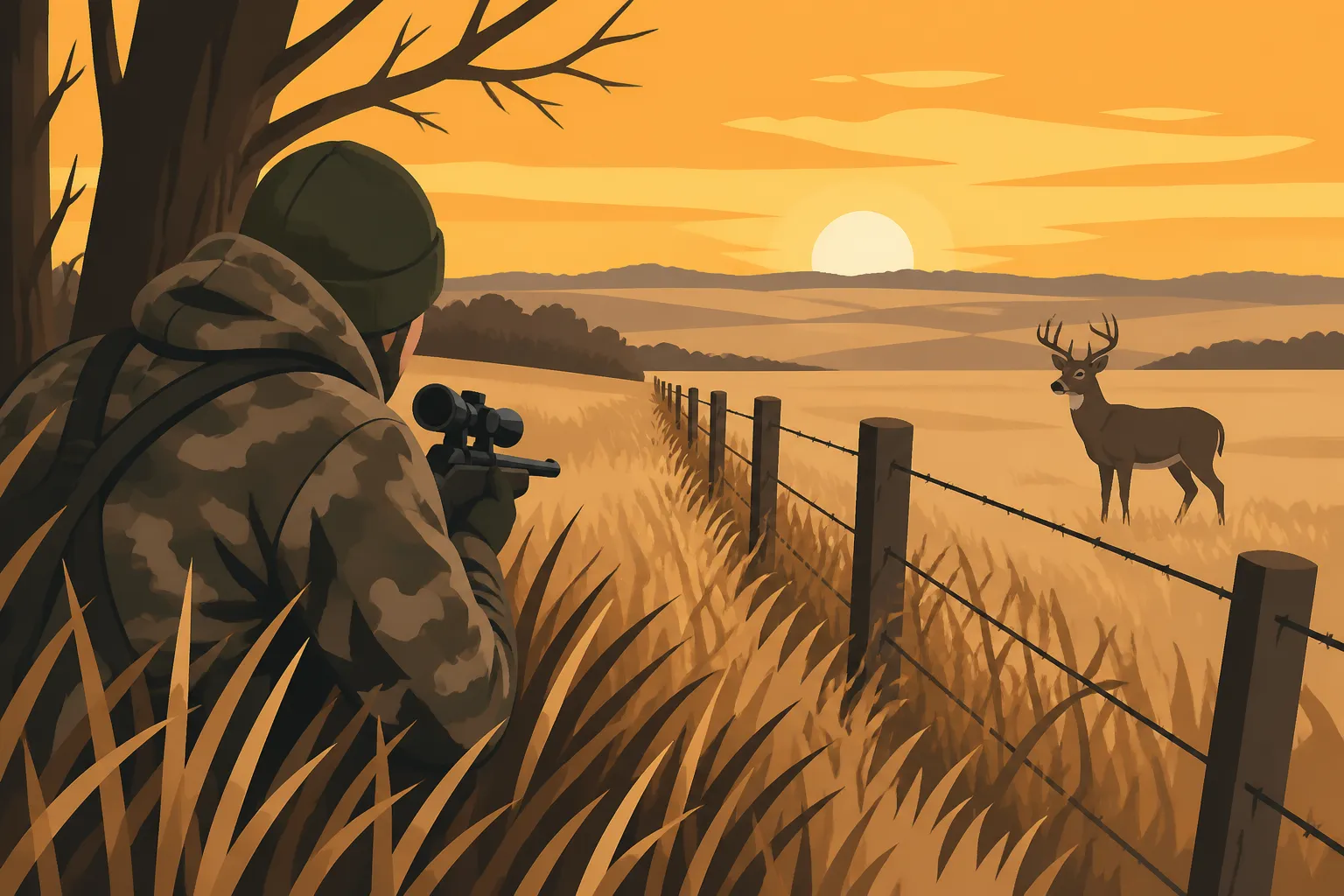
Working a Fencerow for Late-Season Deer
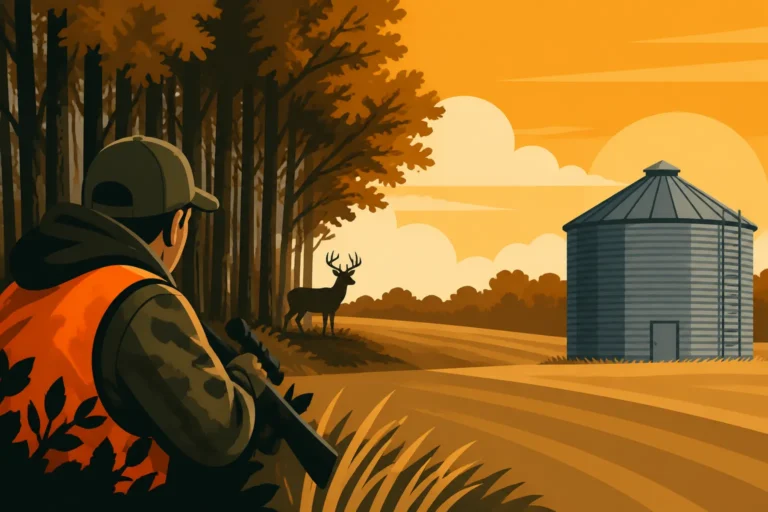
The late season in North Dakota can be a real grind. The deer have been pressured for months, the cover is sparse, and those once-hot spots might be completely devoid of activity. It’s a frustrating time when many hunters hang up their gear. But if you’re willing to think a little differently and put in some legwork, those seemingly insignificant fencerows can hold some incredible opportunities for a late-season whitetail. This guide will walk you through how to unlock their potential, offering insights into deer behavior and effective hunting strategies when the mercury drops.
Why Fencerows Become Late-Season Deer Magnets
When winter tightens its grip on the North Dakota prairie, deer become incredibly efficient with their energy. They’re looking for the path of least resistance, the warmest bed, and the easiest access to remaining food. Fencerows, despite their often narrow appearance, frequently check all these boxes, making them prime real estate for late-season whitetails seeking sanctuary and sustenance.
Natural Travel Corridors and Thermal Cover
Imagine a bitter December day, wind howling across miles of open fields. Where would you want to walk? Not exposed on the prairie! Deer feel the same way. Fencerows, even those with just a sparse line of brush and small trees, offer a significant break from the wind. This thermal cover is absolutely crucial for deer trying to conserve energy and stay warm. They’ll use these linear strips of cover as natural travel corridors, moving between larger blocks of timber, bedding areas, and agricultural fields. It's their highway system in a land otherwise dominated by wide-open spaces.
Think about a fencerow running between a standing cornfield and a CRP field. Deer will often choose to walk along the fencerow, utilizing the meager cover to stay out of sight and out of the wind, rather than exposing themselves in the middle of a field. These subtle advantages become even more pronounced as the temperature plummets and snow piles up. You might even find deer bedded right inside the fencerow itself, tucked into a thicket of buckbrush or a stand of cedars, precisely because it offers that crucial thermal protection that’s scarce elsewhere.
Overlooked Sanctuaries and Edge Habitat
One of the biggest reasons fencerows are so effective for late-season deer is that they're often overlooked by other hunters. Everyone's usually focused on big shelterbelts, sprawling tracts of river bottom, or large CRP fields, and for good reason—those spots hold deer. But that also means they get a lot of pressure. Deer, being smart and adaptive creatures, learn to avoid high-pressure areas. That’s where the humble fencerow comes in.
These narrow strips of cover, sometimes only a few yards wide, become sanctuaries. They offer just enough concealment to make deer feel safe, particularly when combined with proximity to food sources. This creates fantastic "edge habitat" – where two different habitat types meet. Deer love edges because they can quickly duck into cover while still being close to vital resources. A fencerow bordering a harvested soybean field, a standing cornfield, or even a winter wheat plot offers deer the best of both worlds: security and easy access to calories that are hard to come by in the late season. It's not about the sheer volume of cover, but the strategic placement and the lack of human disturbance that makes these unassuming lines so attractive.
Decoding Deer Sign in Fencerows
Finding a fencerow is one thing, but knowing which fencerow to hunt, and how deer are using it, is the real puzzle. In the late season, with snow often on the ground, deer sign can be incredibly apparent if you know what you’re looking for. This is where meticulous scouting, even during the season, pays off huge dividends.
Interpreting Tracks and Rubs
Fresh tracks are your best friends in the late season. Snow or soft mud along a fencerow will tell you immediately if deer are using it. Look for the size of the tracks – larger, deeper tracks often indicate bigger deer. Pay close attention to the direction of travel and the frequency of tracks. Are they just cutting across, or are they traveling lengthways down the fencerow? A consistent path of tracks suggests a preferred travel route. If you see tracks leading directly from a bedding area to a food source, you've hit paydirt.
Don't overlook rubs, even if they look old. While rutting activity is winding down, a big buck might still refresh a rub or make a new one out of habit or residual testosterone. More importantly, older rubs show historical use of that fencerow by a mature buck, giving you valuable insight into where a shooter might have passed in previous weeks. Connect the dots: if you find fresh tracks leading from heavy cover, passing old rubs, and heading towards a food source, you've found a consistent pattern. I've often used apps like GoHunt to mark these patterns on my map, helping me visualize how deer are moving through the landscape. Understanding Reading North Dakota Mud for Fresh Deer Movement can also provide critical insights when snow isn't present.
Locating Feeding and Bedding Areas
Beyond tracks, look for droppings and evidence of browsing. Piles of fresh droppings confirm that deer are not just passing through, but potentially feeding within the fencerow or in the immediate adjacent area. A browse line on brush and small trees indicates that deer are feeding on the available vegetation, which can be a key food source when other options are covered by snow.
Bedding areas in fencerows will often be subtle. Look for depressions in the snow or flattened grass, often on the south side of the fencerow where they can catch the sun's warmth and be shielded from northwesterly winds. Deer are experts at finding microclimates that offer comfort and protection. When you find these beds, observe their orientation. Where were the deer looking? What escape routes did they have? This intel is invaluable for setting up a strategic ambush. Mapping tools, especially those that layer satellite imagery and public land boundaries, are indispensable for connecting these dots. I always zoom in on potential bedding areas, often finding those subtle depressions or denser pockets of brush that might hold a deer. This level of detail helps significantly in Scouting PLOTS Land Before Season as well.
Effective Strategies for Hunting Fencerows
Once you’ve identified a promising fencerow and understand how deer are using it, it’s time to formulate your hunting strategy. The narrow, linear nature of fencerows often dictates specific tactics that differ from hunting larger timber blocks. Stealth, wind awareness, and precise timing are paramount.
Stand Placement and Ground Blind Tactics
For many, an elevated stand is the go-to. When hunting a fencerow, consider hanging a stand on the edge of the fencerow itself, facing into the expected deer movement. This allows you to shoot into the fencerow and potentially into the adjacent field. Wind direction is absolutely critical; never hunt a fencerow if your scent will blow into the expected travel corridor. Pay attention to the sun's angle, especially in late afternoon, to avoid silhouetting yourself. Often, the best stand locations are at subtle bends, intersections with other cover, or where a fencerow bottlenecks between two fields.
Ground blinds are another fantastic option for fencerow hunting, especially in areas with limited trees for stands. The key is to get them brushed in thoroughly and set up well in advance, if possible. Deer can be extremely wary of new objects. Place your blind slightly off the fencerow, allowing you to shoot into it and across the adjacent fields. A well-brushed-in ground blind offers excellent concealment and thermal protection for you during Cold-Weather Sitting Strategy on the Prairie. Consider using a quality blind from brands like Baronett Blinds or Primos, then spend extra time using natural vegetation to break up its outline. Sometimes, even just utilizing the natural topography and dense brush within the fencerow for a natural ground ambush can be incredibly effective.
Still-Hunting and Mini-Drives
If sitting isn't your style, or if deer aren't moving predictably, still-hunting a fencerow can be incredibly productive. This involves moving extremely slowly, taking just a few steps at a time, and then pausing to scan for deer. This tactic works best on windy days when the wind helps mask your movement and scent. Move directly into the wind, or with a slight crosswind, scanning ahead and to both sides of the fencerow. Pay close attention to any breaks in the cover, subtle rises, or thickets where a deer might be bedded. This method requires immense patience, but it allows you to cover ground and capitalize on deer that might be holding tight.
For those hunting with a small group, a "mini-drive" of a fencerow can be very effective. This isn't a massive push, but rather a coordinated effort with two or three hunters. One or two hunters can slowly push through the fencerow, making just enough noise to encourage deer to move, while one or two "post" quietly at the end or at strategic escape points. This is particularly effective for getting deer out of dense pockets of cover they're reluctant to leave. Just remember, safety is paramount with any drive; always know where your hunting partners are and have clear communication. Deer drives with Deer Drives With Three or Four Hunters can be tailored specifically for these linear features.
Capitalizing on Late-Season Food Sources
The late season is all about food. With fewer options available, deer will key in on whatever calories they can find. Fencerows often run alongside or through fields that offer critical late-season nutrition. This could be a standing cornfield, a picked soybean field with waste grain, or a lush winter wheat plot. Identifying these specific food sources and timing your hunts around when deer are moving to or from them is crucial.
Deer will often wait until low light conditions to enter open fields, so setting up on the fencerow that serves as their entry and exit point is a classic tactic. Pay attention to weather patterns – deer will often feed more heavily before a major cold front hits, or after a severe storm passes. Understanding Late-Season Food Sources for North Dakota Whitetails is essential; knowing if deer are hitting alfalfa, corn, or even woody browse can guide your setup. Utilizing GoHunt's satellite imagery can help pinpoint these fields and the fencerows adjacent to them, providing a visual map for your strategy.
Key Considerations for Fencerow Success
Hunting fencerows effectively in North Dakota's late season isn't just about finding the right spot; it's about understanding the nuances of the environment and the animals you're pursuing. From mitigating your scent in swirling winds to navigating property boundaries, every detail matters.
Wind, Weather, and Thermals
In North Dakota, the wind is a constant companion, and in the late season, it can be brutal. Deer use fencerows for thermal cover, but they also use them to their advantage with wind direction. They'll almost always try to keep the wind in their favor, using their incredible sense of smell to detect danger. This means you need to be hyper-vigilant about wind direction and how it carries your scent. A slight shift in wind can completely ruin a hunt in an open fencerow.
On extremely cold days, deer will seek out the sunniest, most protected sides of a fencerow. This might mean adjusting your approach based on the time of day. While thermals are typically less pronounced on flat prairie than in the rugged Badlands, they still play a role, especially in fencerows with even slight elevation changes or depressions. They'll often pull scent uphill in the morning and downhill in the evening. Hunting Into a December Cold Snap demands specialized gear and tactics to stay warm and minimize movement, while maximizing your ability to endure the elements long enough for a deer to appear.
Access and Permission Challenges
Fencerows, by their very nature, often delineate property lines. This makes obtaining permission paramount. Always know exactly where you are and whose land you are on. Using a reliable mapping app, like GoHunt, that clearly displays property lines and landowner information is a game-changer. Never assume public access just because a fencerow seems to run indefinitely. Many are on private land.
If a fencerow is on private property, do the legwork: knock on doors, be polite, and clearly explain what you're asking for. Often, landowners are more amenable to allowing access to a narrow fencerow than a large field. For public land options, search for fencerows bordering or within North Dakota's expansive PLOTS (Private Land Open To Sportsmen) areas or Wildlife Management Areas. These are fantastic resources, but always double-check the North Dakota PLOTS Guide Booklet Release Date or use the ND Hunt App for the most current information, as boundaries can change annually. Never violate North Dakota Trespass and Permission Law – it can lead to serious consequences and damage the reputation of all hunters.
The Role of Scouting and Persistence
I can't stress this enough: scouting, both pre-season and during the season, is the bedrock of fencerow hunting success. You need to know which fencerows are being used, and when. This means hiking them, glassing them from a distance, and carefully observing deer movement from a vantage point. The more time you spend scouting, the better your chances. This is true for any hunting, but even more so for these linear, often underestimated travel lanes. Finding Sign Along a Shelterbelt can be very similar to fencerows, indicating good deer traffic.
Finally, persistence is key. The late season is tough, and deer are not always cooperative. You might sit for hours in freezing temperatures and see nothing. You might still-hunt a mile of fencerow and only jump a few does. But the hunter who keeps at it, who adapts to the conditions, and who diligently works these overlooked fencerows is often the one who fills their tag when others have given up. The rewards of a late-season deer taken from a well-scouted fencerow are deeply satisfying, a testament to hard work and strategic thinking.
| Fencerow Type | Primary Deer Use Late Season | Ideal Hunting Strategy | GoHunt Map Feature Use |
|---|---|---|---|
| Brushy/Woody Fencerow | Thermal cover, bedding, travel corridor, some browse feeding | Still-hunting, ground blinds | Identify dense cover pockets, property lines |
| Sparse/Grassy Fencerow | Travel corridor, windbreak, quick concealment | Stand over adjacent field, mini-drives | Connect to larger cover/food, identify subtle depressions |
| Fencerow by Standing Corn | Entry/exit for feeding, quick escape cover | Stands/blinds on field edge, evening ambushes | Pinpoint standing crops, deer trails |
| Fencerow by Picked Field | Travel corridor, waste grain access, visual barrier | Still-hunting along edge, morning ambushes | Locate waste grain fields, subtle draws |
| Fencerow by Waterway/Draw | Enhanced thermal cover, natural funnel, travel | Stands at intersections, strategic drives | Mark riparian areas, topographical changes |
Disclaimer
Hunting is an inherently dangerous activity. Always prioritize safety, adhere to all local and state regulations, and obtain proper licenses and permissions before hunting. The information provided in this guide is for informational purposes only and should not replace professional guidance or personal judgment.