Setting Decoys on a Prairie Dugout Pond
Hunting ducks and geese on North Dakota's vast prairie can feel overwhelming, especially when you're staring at what seems like an endless expanse of land dotted with countless small water bodies. Many hunters struggle with how to effectively set up on these smaller, often overlooked prairie dugout ponds, wondering if their efforts will truly draw in wary waterfowl. This guide is dedicated to breaking down the art and science of decoy placement on these unique prairie gems, helping you maximize your success and experience the thrill of ducks committing to your spread.
Understanding the Prairie Dugout Environment
Prairie dugouts are fascinating features of the North Dakota landscape, often man-made, or at least heavily modified, to hold water for livestock or agricultural purposes. They’re essentially miniature reservoirs, typically deeper than a natural prairie pothole, and can be absolute magnets for ducks and geese, especially during migration or when natural potholes start to dry up later in the season. But their unique characteristics demand a thoughtful approach to decoying.
Why Waterfowl Use Dugouts
Dugouts, despite their often utilitarian origin, provide crucial resources for waterfowl. They offer a reliable water source, especially when the surrounding, shallower prairie potholes begin to evaporate under the late summer sun or freeze over in early winter. Because they are often deeper, they can stay open longer, becoming critical staging areas. These ponds also frequently collect runoff, which can bring in insect larvae, seeds, and other food sources. For migrating birds, a dugout can represent a safe, albeit sometimes exposed, resting spot. Birds might loaf here during the day, especially if they’ve been feeding heavily in nearby grain fields. Understanding this behavior is the first step in Decoy Spreads for Prairie Pothole Mallards.
Common Challenges of Dugout Hunting
The very nature of a dugout presents specific challenges. First, they are often isolated and exposed. Unlike a natural pothole surrounded by cattails or tall grass, a dugout might be in the middle of a pasture or next to a crop field, offering little natural cover. This means your concealment needs to be top-notch. Second, their relatively small size means any mistake in decoy placement or movement is easily spotted by incoming birds. Third, dugouts can be surprisingly deep right off the bank, making wader work challenging and limiting where you can effectively place standing decoys. Finally, because they are often near human activity (farms, roads), ducks can be incredibly wary. You need to present an utterly convincing picture to overcome their natural caution.
Essential Decoy Spread Strategies for Dugouts
When it comes to decoying, a "one size fits all" approach simply won't cut it, especially on a dugout. You need to be adaptable and think like a duck. While large, elaborate spreads work on bigger water, dugouts demand efficiency and realism.
The Landing Zone and Funnel Concept
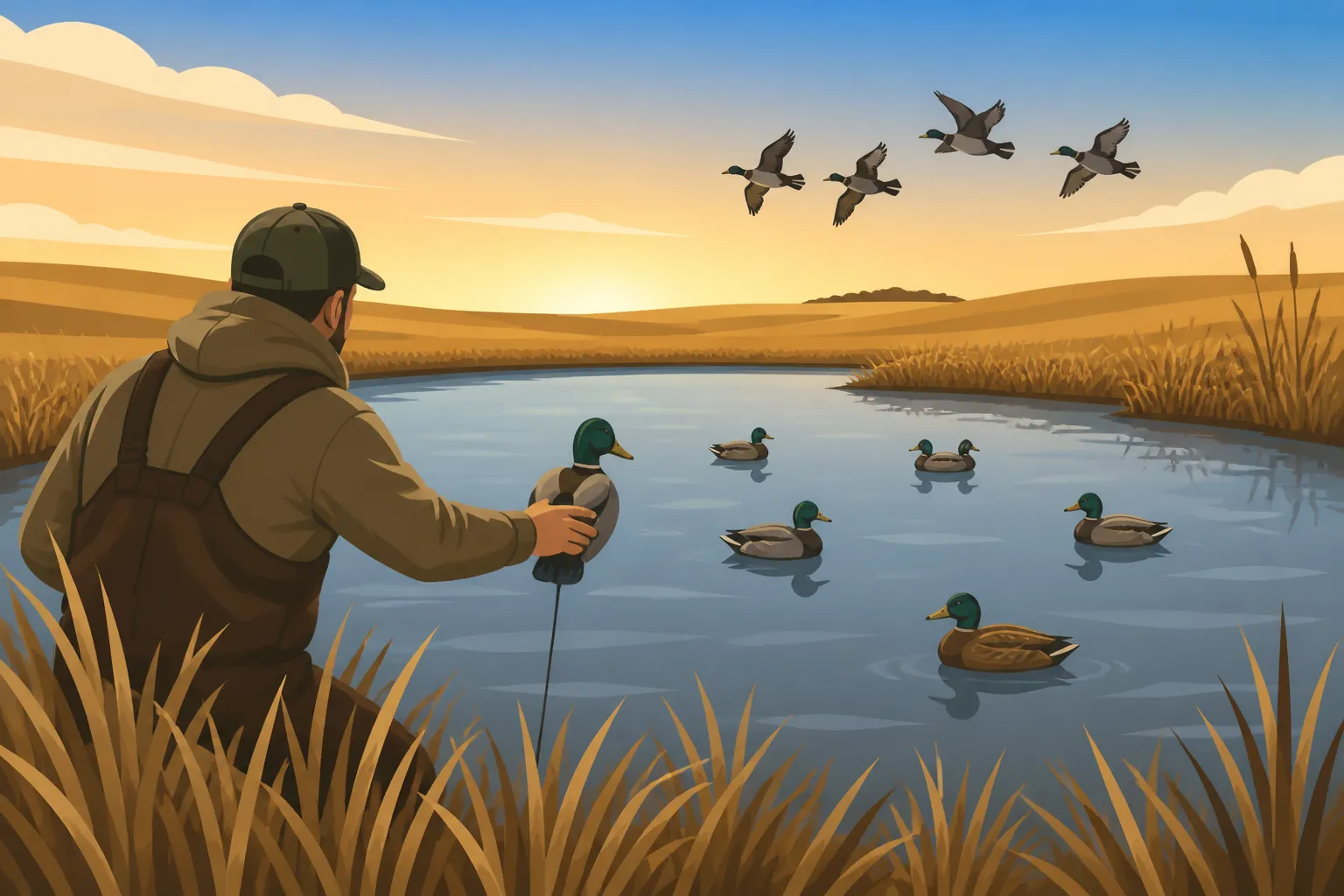
The most critical element of any decoy spread, particularly on a small dugout, is the "landing zone." This is the open patch of water you want the ducks to commit to. Think of it as their runway. Your decoys should be strategically placed to guide them into this zone, often creating a funnel shape. Imagine the wind direction: ducks almost always land into the wind. So, your landing zone needs to be downwind of your primary decoy mass, allowing them a clear, unimpeded approach directly into the wind and right in front of your blind.
- J-Hook or U-Shape: These are classic and effective for dugouts. The main body of decoys forms the base of the J or U, with a long "arm" extending upwind. The open part of the J or U is your landing zone. This works exceptionally well for species like mallards that prefer a clear approach. You're effectively saying, "Hey, here's a safe spot with plenty of friends!"
- Pocket Spread: On very small dugouts, simply create a large pocket or opening directly in front of your blind, with decoys forming a loose perimeter around it. This is straightforward and effective when space is truly limited.
- Pairs and Trios: Instead of a dense blob, consider breaking your duck decoys into smaller, natural-looking groups of two or three. Ducks often associate in these smaller family units or small flocks. This looks more natural and less like a giant, intimidating mass.
Species-Specific Considerations
While a general duck spread will often attract a variety, a few tweaks can make a big difference, especially if you're targeting specific birds or if you have mixed bags in the area.
- Mallards and Dabblers: These are often the primary targets on dugouts. They like shallow water, or at least the appearance of it, and clear landing zones. Mallard and pintail decoys are excellent choices. Consider adding a few feeder butt decoys to suggest contented feeding, which is a powerful signal of safety.
- Divers: While less common on small, shallow dugouts, deeper ones can attract divers like canvasbacks or bluebills. If you see them working the area, place some diver decoys further out in the deeper water, often in a more tightly packed "pod" formation, as divers tend to stick together more than dabblers. They’ll usually land right in the middle of their group.
- Geese: If Canada geese are using the dugout, they often prefer to land slightly separate from the ducks, almost on their own "island" of decoys. Place a small spread of goose decoys (half a dozen to a dozen) upwind or to one side of your duck spread, indicating a distinct, safe landing area for them. Remember, North Dakota Duck and Goose Bag Limits are important to keep in mind.
Using an app like GoHunt can be invaluable here. Before you even head out, you can check aerial maps to get a sense of the dugout's size, surrounding terrain, and potential approach angles. This can help you pre-plan your spread based on expected wind directions.
Strategic Decoy Placement and Wind Dynamics
The wind isn't just a nuisance; it's a critical tool in your decoying arsenal. Waterfowl rely heavily on wind for landing and taking off, and their approach will almost always be directly into it. Ignoring wind is a surefire way to have birds flare out of range.
Reading the Wind and Water
Before you set a single decoy, spend time observing the wind. A small flag or even tossing a handful of dry grass into the air can help. Watch how the wind plays across the dugout's surface. Your blind placement and, subsequently, your decoy spread must be downwind of where you expect the birds to commit. This ensures they fly over your spread and land into the wind, putting them directly in front of your gun. If the wind changes mid-hunt, be ready to adjust. It's better to spend 15 minutes repositioning decoys than to watch flock after flock skirt your setup.
Motion Decoys and Realism
Motion is a game-changer on prairie dugouts. Stagnant decoys on flat water can look lifeless and suspicious to wary birds.
- Spinning Wing Decoys (SWDs): Brands like Mojo Outdoors have revolutionized decoy spreads. A spinning wing decoy mimics a bird landing or flapping its wings, creating a visual beacon. On a dugout, one or two well-placed SWDs, especially upwind where they'll be seen from a distance, can significantly increase your drawing power. Just be mindful of local regulations on motorized decoys.
- Jerk Rigs: These are fantastic for adding subtle, natural motion without batteries. A jerk rig uses a main line connected to several decoys, run back to your blind, allowing you to create ripples and movement with a simple pull. This is especially effective on calm days or when trying to draw in birds that are hanging up.
- Water Keels and Swivel Attachments: Even static decoys benefit from natural movement. Decoys with heavy, balanced keels will ride the water more naturally, and using swivel attachments for your anchor lines allows them to swing freely with the wind, preventing them from bunching up unnaturally.
Remember, the goal is realism. Too much motion can sometimes spook birds if it looks unnatural. A judicious use of motion, mimicking happy, resting, or feeding birds, is the key.
Optimizing Your Hide and Shot Opportunities
Even the most perfect decoy spread is useless if the ducks see you first. Concealment is paramount, especially on exposed prairie dugouts.
Choosing and Building Your Blind
The type of blind you use will largely depend on the available cover around the dugout.
- Layout Blinds: If the dugout is surrounded by short grass, stubble, or a freshly tilled field, a layout blind (like those from Avery Outdoors or Rogers Sporting Goods) is often your best bet. These low-profile blinds allow you to lie flat, blending into the ground. Crucially, you must brush them in thoroughly with natural vegetation from the immediate area. Don't just pull out a green blind and expect it to disappear in a tan field. This is where scouting can inform your strategy, using tools like GoHunt to visualize terrain.
- Natural Cover Blinds: If there are clumps of cattails, willows, or taller weeds around the dugout, you can often build an effective blind using these natural materials. Bring a pair of clippers, a small saw, and some zip ties or bungee cords. The more natural your blind looks, the better. Consider a simple A-frame blind frame that you can cover with local brush.
- Edge Blinds: Sometimes, the best hide isn't right on the water's edge but slightly back, using a fence line, a small berm, or even a vehicle (if legal and well-camouflaged) as a backdrop. This can break up your silhouette more effectively than trying to hide in sparse cover right on the bank.
Always ensure your blind offers a clear shooting lane over your decoys. Nothing is more frustrating than having ducks land perfectly but being unable to get a shot because of an obstructed view.
Calling and Communication
Calling is the final touch to a convincing dugout setup. It brings the spread to life audibly.
- Realistic Calling: On small waters, less is often more. Aggressive, loud calling can sometimes spook wary ducks. Start with soft greeting calls, contented quacks, and feeding chatter. Only get more aggressive if birds are showing interest but still hesitant.
- Patience and Observation: Watch the ducks' reactions to your calls. Are they turning? Cupping their wings? Or are they flaring? Adjust your calling intensity and cadence accordingly. Sometimes, just a soft series of quacks is all it takes to convince them.
- Goose Calling: If you have goose decoys out, a few deep honks or clucks from a goose call can add another layer of realism, especially if geese are in the vicinity. Remember that Duck and Goose Hunting North Dakota's Potholes is about combining all these elements.
Ultimately, setting decoys on a prairie dugout pond is about creating a convincing illusion of safety and welcome. It requires scouting, understanding waterfowl behavior, adapting to the specific environment, and meticulous attention to detail. Don't be afraid to experiment and learn from each hunt. The North Dakota prairie offers incredible opportunities for those willing to put in the effort.
Here's a quick look at common dugout decoy spread options:
| Spread Type | Description | Ideal Conditions | Target Species | Pros | Cons |
|---|---|---|---|---|---|
| J-Hook | Decoys form a "J" with the bend upwind, leaving a clear landing zone. | Moderate to strong wind, smaller dugouts | Mallards, Pintails, Dabblers | Guides birds directly into landing zone | Requires consistent wind direction |
| U-Shape | Similar to J-hook, but symmetrical, creating a central open landing zone. | Moderate wind, slightly larger dugouts | Mallards, Wigeon, Mixed dabblers | Excellent for direct head-on approaches | Can be harder to adjust for changing wind |
| Pocket Spread | Decoys surround a central open area directly in front of the blind. | Light wind, very small dugouts, calm water | Any dabbler species | Simple, works in limited space | Less effective in strong crosswinds |
| Feeding Pods | Small clusters of decoys, often with feeder butts, scattered naturally. | Any wind, especially for wary birds | Mallards, Green-winged Teal, contented ducks | Highly realistic, conveys safety | Requires more individual decoy placement |
Navigating Public Access and Regulations
Hunting these prairie dugouts often means navigating public and private land. Many dugouts are on private land, requiring permission. However, North Dakota also offers fantastic public access opportunities.
Utilizing PLOTS Lands
The Private Land Open To Sportsmen (PLOTS) program is a hunter's best friend in North Dakota. Many PLOTS tracts include prairie potholes and dugouts, offering accessible hunting grounds. Always check the current PLOTS guide or use the GoHunt app to verify boundaries and specific rules before you head out. These lands are generally open to foot traffic, making them ideal for carrying in a simple dugout spread and a layout blind. Remember that Hunting a North Dakota Prairie Pothole Slough Edge might have different nuances than a dugout, so tailor your approach.
Waterfowl Production Areas
Another excellent resource is the Waterfowl Production Area (WPA) system. These federally managed lands are specifically designed to preserve crucial wetland habitat, and many feature numerous potholes and dugouts. They are open to public hunting and can be incredibly productive, especially during migration. Knowing where these are and scouting them pre-season can give you a significant advantage. Tools like GoHunt can display WPA boundaries, helping you plan your approach. For more on these areas, check out North Dakota Waterfowl Production Areas.
Timing Your Hunt
The timing of your hunt dramatically impacts decoy effectiveness. Early season might see birds less wary, but as the season progresses, they become educated and more sensitive to poor setups. Late season, when many smaller waters freeze, deeper dugouts can be absolute hotspots, but the birds using them will likely be the wariest of all. Understanding Duck Migration Timing Through North Dakota can help you hit the peak times.
Dugouts can be true gems on the North Dakota prairie, offering intimate, exciting waterfowl hunting experiences. By paying close attention to your decoy spread, understanding wind dynamics, prioritizing concealment, and utilizing effective calling, you can turn these unassuming ponds into productive hunting spots.
Disclaimer
The information provided in this guide is for general informational purposes only and does not constitute legal advice. Hunting regulations and laws can change frequently. Always consult the official North Dakota Game and Fish Department regulations prior to any hunting activity to ensure compliance with all current rules and statutes.