Reporting a Poacher in North Dakota
That sickening feeling, the one that twists your gut when you witness something clearly wrong in the field—a vehicle chasing down deer, someone spotlighting fields after dark, or a duck hunter with a pile far exceeding the legal limit—it's infuriating. It strikes at the very core of what ethical hunting stands for and directly harms the shared wildlife resources we cherish. We all agree that wildlife law violations are serious, and it’s natural to feel helpless or even angry when you suspect poaching. This comprehensive guide is designed to empower you with the knowledge and steps necessary to effectively report a poacher in North Dakota, ensuring you can act as a vigilant steward of our state's incredible outdoor heritage.
The Critical Importance of Reporting Poaching Incidents
When you decide to hunt in North Dakota, you're not just buying a license; you're agreeing to uphold a code of ethics and become a guardian of our wildlife. Seeing a violation and wondering whether to report it can be a tough call, but understanding the profound impact of poaching makes that decision clearer.
Why Poaching Harms Everyone
Let's be blunt: poaching isn't just a minor infraction; it's theft, pure and simple. It's theft from every law-abiding hunter, every wildlife enthusiast, and every citizen who values North Dakota's natural beauty. When someone illegally takes an animal, they're depleting a resource that belongs to all of us. This impact is especially felt in units where deer or elk tags are already limited, like those for specific deer units in the Badlands or the highly coveted elk tags. An illegally taken animal means one less opportunity for a legal hunter, and it can throw off population management strategies that took years to develop.
Beyond the immediate impact on game populations, poaching drains vital funds. The license fees, stamp purchases, and excise taxes on hunting equipment that ethical hunters pay are the lifeblood of our state's conservation efforts. These funds go directly to habitat restoration, wildlife research, and, yes, the enforcement efforts of our game wardens. Poachers bypass this system entirely, taking without contributing, and ultimately forcing the rest of us to shoulder the burden. It also paints a negative picture of hunting in general, making it harder for our community to advocate for hunting rights and responsible land use.
Your Role as a Wildlife Steward
You, as an ethical hunter, are often the first line of defense. You're out there, away from populated areas, observing nature with a keen eye. You notice things others might miss. This unique position comes with a powerful responsibility: to be the eyes and ears for our North Dakota Game and Fish Department (NDGFD). It's understandable to feel hesitant; no one wants to be labeled a "snitch," and there's a natural discomfort in confronting or reporting others. However, the greater good—the health of our wildlife populations and the integrity of our hunting traditions—demands that we overcome this hesitation.
Remember, ignoring a violation doesn't make it go away; it implicitly condones it. Your report, no matter how small it seems, contributes to a larger effort. It sends a clear message that illegal activity will not be tolerated, and it helps our game wardens build cases, identify patterns, and ultimately protect our wild places. It's about protecting the heritage we want to pass down to our children, ensuring they have healthy populations to pursue, just as we do.
Understanding What Constitutes Poaching in North Dakota
It's easy to have a general sense that "poaching is bad," but knowing the specific types of violations can help you identify when something is truly amiss. It's not your job to be an expert on every nuance of the law, but a basic understanding helps you distinguish blatant violations from what might simply be a hunter having a tough day.
Common Violations to Watch For
North Dakota has clear regulations designed to ensure fair chase and sustainable harvests. Here are some of the most common violations that fall under the umbrella of poaching or illegal hunting:
- Hunting Out of Season: This is one of the most straightforward. Shooting a deer in July, before bow season even begins (you can check exact dates in resources like When North Dakota's Archery Season Opens), or a pheasant in the spring, is a clear violation.
- Exceeding Bag Limits: Each species has specific daily and possession limits. For instance, taking more pheasants than the daily limit allows, or having more ducks in your cooler than legally permitted, is a common infraction.
- Hunting Without Proper Licensing/Tags: Every hunter, resident or nonresident, needs the appropriate licenses and tags for the species they are pursuing. You can find details on requirements in North Dakota Hunting Licenses and What They Cost. Hunting without these, or using someone else's tag, is illegal.
- Hunting at Night with Artificial Lights (Spotlighting): This dangerous and unethical practice involves using lights to stun or locate animals at night, making them easy targets. It's illegal for big game across North Dakota.
- Hunting from a Vehicle or Public Road: Discharging a firearm or bow from or across the traveled portion of a public highway, or from within a vehicle on a public road, is prohibited.
- Trespassing to Hunt: Hunting on private land without explicit permission from the landowner is illegal. While many North Dakota landowners are generous, it's their right to control access. For more context, you can review North Dakota Trespass and Permission Law.
- Taking Prohibited Species: Certain animals are protected and cannot be hunted. Knowing Game You Cannot Hunt in North Dakota is crucial.
- Illegal Baiting: Placing bait (like corn, apples, or other attractants) to lure deer or other game to a specific location is illegal for big game hunting in North Dakota, particularly strict within CWD hunting units. You can learn more about these areas in North Dakota's Expanding CWD Hunting Units.
- Waste of Game: Legally harvested game must be cared for and utilized. Leaving edible meat in the field without proper justification is considered waste of game.
- Use of Illegal Weapons or Methods: This can include using fully automatic firearms, certain types of ammunition for big game, or electronic calls for species where they are prohibited.
Distinguishing a Violation from a Mistake
It's important to approach every situation with a balanced perspective. Sometimes, what looks like a violation might be an honest mistake, or a hunter following a specific regulation you're not aware of. For example, someone retrieving a downed deer from private land with permission, compared to actively hunting it without consent, presents two very different scenarios. For example, seeing someone tracking a deer across a fence line might look like trespassing, but if they have permission to retrieve their animal, it's completely legal.
Your role isn't to be a judge and jury; it's simply to report the facts as you observe them. Let the trained professionals—our game wardens—investigate and determine if a law has been broken. Tools like the onX Hunt app or even the mapping features available through platforms like GoHunt can be invaluable in quickly determining land ownership and property lines if you're uncertain about a location. Understanding critical information about game species, season dates, and legal hunting hours, like those found in North Dakota Public Land Hunting Hours or detailed on platforms such as GoHunt, is paramount. If something truly feels off, and you have strong suspicions, it's always better to make a report and allow the NDGFD to investigate.
How to Effectively Report a Poacher in North Dakota
When you suspect poaching, the effectiveness of your report hinges on the quality of information you can provide. The more detail you can offer, the better equipped game wardens will be to investigate and potentially apprehend violators.
Gathering Critical Information
Think of yourself as a detective gathering clues. The goal is to provide enough verifiable details to give law enforcement a strong lead. Focus on the "5 W's": Who, What, When, Where, and potentially Why.
- Who: This is often the hardest, but most crucial.
- Vehicle Description: Make, model, color, and most importantly, the license plate number. Even a partial plate number is incredibly helpful (e.g., "blue Ford F-150, older model, with a North Dakota plate starting with 'ABC-1'"). Note any distinguishing features like stickers, dents, or aftermarket equipment.
- Number of Occupants: How many people were in the vehicle or involved in the act?
- Physical Description: If you can safely observe, note gender, hair color, clothing (e.g., "male, dark hair, wearing a green hoodie and camo pants"), approximate age, or any other unique characteristics.
- What: What specific illegal activity did you witness? Be precise.
- "Shot a deer from the road."
- "Was spotlighting deer."
- "Had too many mallards in their decoy spread."
- "Shot an antlerless deer during an antlered-only season."
- "Was dumping deer carcasses near the public road."
- Identify the species involved (e.g., whitetail deer, mallards, pheasants, turkeys).
- When: The exact date and time of the incident. "Around sunset on Saturday" is less helpful than "October 26, 2024, at 7:15 PM."
- Where: Pinpointing the location is incredibly important.
- GPS Coordinates: If you have a smartphone or GPS device, record the exact coordinates.
- Nearest Road/Intersection: "Hwy 10, two miles east of Gladstone, near the intersection with County Road 14."
- Landmarks: "South of Johnson's red barn," "near the old bridge over the Heart River," "along the shelterbelt edge south of the main PLOTS sign." Using mapping apps like GoHunt can help you get precise locations quickly, even if you don't have exact GPS coordinates memorized.
- Why (Optional): While you might not know their motive, sometimes an observation can hint at it, but primarily stick to observable facts.
- Witnesses: Were there any other people who saw the incident? Provide their contact information if they consent.
- Evidence: If it's safe to do so, discreetly take photos or videos. This can be powerful evidence. However, never put yourself in harm's way to get a picture. Your safety is paramount.
To help visualize, here's a table summarizing the key information to gather:
| Information Category | Specific Details to Collect | Example Scenario Detail |
|---|---|---|
| Suspect(s) | Vehicle make, model, color, license plate (partial OK); number of people; descriptions. | "Blue Ford F-150, older model, ND plate starts 'ABC-1', two males, one wearing a green hoodie, the other a blaze orange hat." |
| Violation | What illegal activity was observed. | "Shot a whitetail deer from the traveled portion of the road at dusk, then loaded it into the truck and left." |
| Date/Time | Exact date and time. | "October 26, 2024, at approximately 7:15 PM CST." |
| Location | GPS, nearest road, landmarks. | "Near GPS coordinates 47.123, -101.456, on County Road 14, 2 miles east of Gladstone, across from the old red barn." |
| Species Involved | What animal was involved. | "One antlered whitetail deer." |
| Direction of Travel | Direction vehicle/suspects headed. | "Headed west on County Road 14 towards Gladstone." |
| Additional Info | Any other distinguishing details, unusual behavior. | "The truck had a dog box in the back and a 'Duck Commander' sticker on the rear window." |
Channels for Reporting Wildlife Violations
North Dakota provides several easy ways to report suspicious activity, ensuring you can make your voice heard quickly and discreetly.
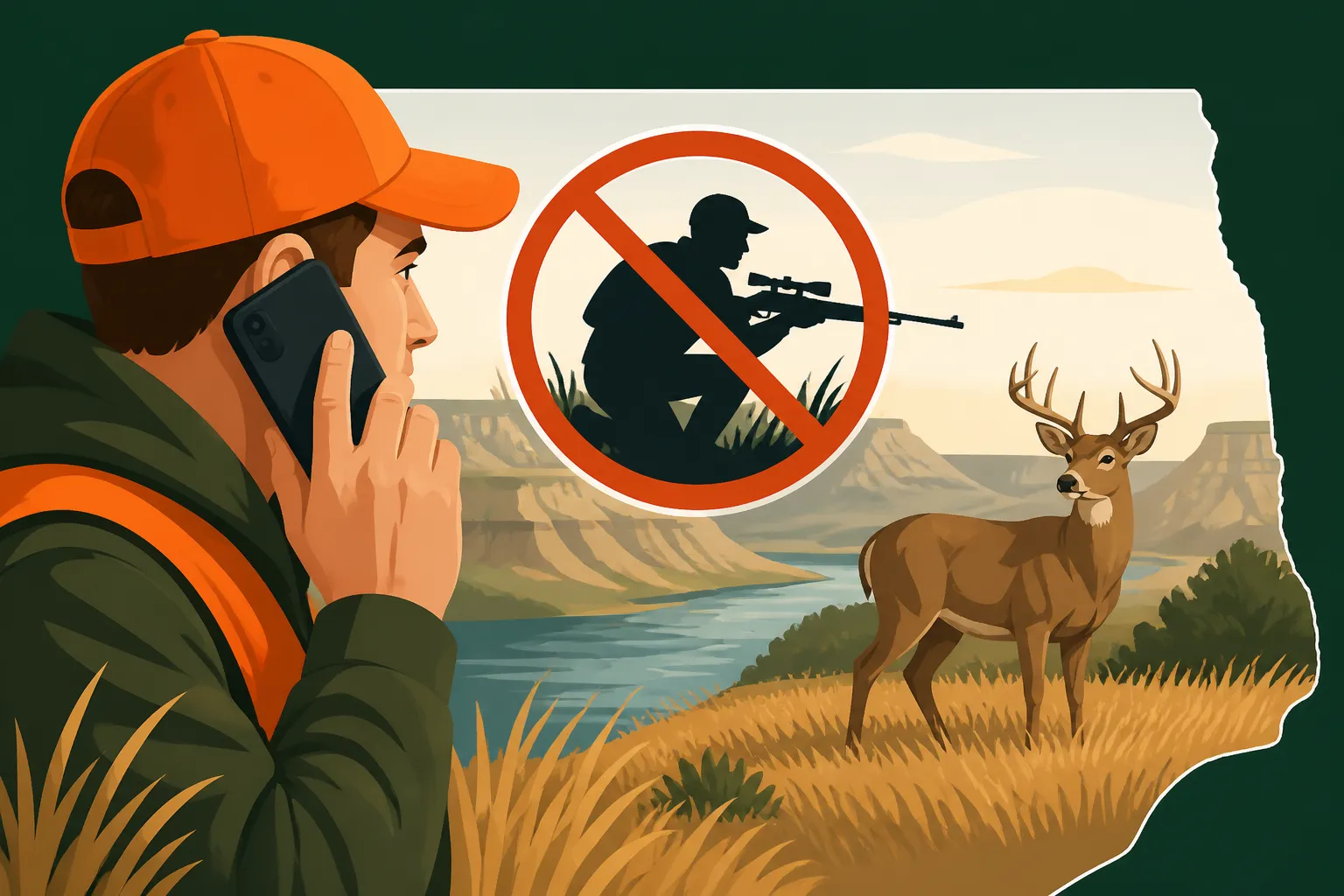
- RAP (Report All Poachers) Hotline: This is the primary and most effective channel for reporting wildlife violations in North Dakota. The hotline, 1-800-472-2121, is available 24 hours a day, 7 days a week. This number connects you directly to the NDGFD enforcement division. When you call, be prepared to provide as much of the information detailed above as possible. You can remain completely anonymous if you choose, and your identity will be protected.
- Online Reporting: For situations that are not immediate emergencies but still require attention, you can submit a report online through the North Dakota Game and Fish Department website. Look for their "Report a Poacher" or "Report a Violation" section. This method is excellent for less urgent observations or if you prefer to submit details in writing.
- Local Game Warden: If you happen to know your local game warden, or if you can easily find their contact information (often available on the NDGFD website by district), you can reach out directly. However, for immediate or time-sensitive incidents, the RAP hotline is usually the fastest route as it ensures broader dispatch capabilities.
- 911: In rare but critical situations where there's an immediate threat to public safety, an active crime being committed that puts people in danger, or reckless behavior (like shooting near homes or a major highway), don't hesitate to call 911. While not specifically for wildlife violations, 911 dispatchers can quickly route your call to the appropriate law enforcement agency, including game wardens, if necessary.
Remember, your report is valuable whether you choose to identify yourself or remain anonymous. The NDGFD values every piece of information that helps protect our wildlife resources. For younger hunters, it's also a crucial lesson in ethics, reinforced by regulations like the Minimum Age for Unsupervised North Dakota Hunting.
The Process After Reporting and What to Expect
Once you've made the difficult but important decision to report a suspected poacher, you might wonder what happens next. The process might not always be visible to you, but rest assured, your report is taken seriously.
Anonymity and Confidentiality
One of the biggest concerns for anyone reporting a violation is often their own safety and privacy. The North Dakota Game and Fish Department understands this completely. When you call the RAP hotline or submit an online report, you have the option to remain completely anonymous. Your identity will be protected, and it will not be shared with the suspected violators or become part of any public record. This commitment to confidentiality is critical because it encourages more people to come forward without fear of retaliation, which in turn leads to more effective enforcement.
In some cases, if your tip leads to a conviction, there might even be a reward offered. This is an added incentive, but for most ethical hunters, the reward is simply the knowledge that they've done their part to protect North Dakota's wildlife and uphold the integrity of our hunting traditions.
The Investigation and Follow-Up
After you submit a report, it's immediately forwarded to the appropriate game warden(s) for investigation. What happens next depends on many factors: the nature and severity of the alleged violation, the amount and quality of information you provided, the time of day, and the availability of wardens in the area.
It's crucial to understand that not every report will lead to an immediate apprehension, nor will you necessarily receive a phone call back with updates. Game wardens are highly trained professionals, but they have vast territories to cover and often juggle multiple complex investigations. They prioritize reports based on factors like potential danger, fresh evidence, and the impact on wildlife. Your information might be just one piece of a larger puzzle they're working on, perhaps helping to confirm suspicions they already had about specific individuals or areas. This includes understanding nuances like North Dakota Deer Harvest Records, which can be skewed by illegal kills.
Even if you don't hear back, your report is incredibly valuable. It helps build intelligence on illegal activities, identify poaching hotspots, and track trends in wildlife violations. For example, a single report about illegal baiting might not lead to an arrest on its own, but if several reports come in from the same area over time, it provides wardens with strong justification to dedicate resources to surveillance and enforcement in that specific location. Your contribution plays a vital role in ensuring that North Dakota Wildlife Violation Penalties are appropriately applied and that those who break the law are held accountable. It's important to remember that regulations even extend to captive animals, with rules like North Dakota Deer Farm Regulations in place to prevent the illegal trade and spread of disease, further demonstrating the wide scope of wildlife law.
Disclaimer
The information provided in this guide is for informational purposes only and is not intended as legal advice. Hunting regulations and laws are subject to change. Always consult the most current North Dakota Game and Fish Department regulations and official sources for definitive rules and guidelines.