North Dakota Deer Harvest Records
For any hunter in North Dakota, the sheer amount of information and the ever-changing landscape of deer populations can feel like trying to hit a moving target in a blizzard. You spend hours poring over regulations, scouting areas, and dreaming of that perfect buck, only to wonder if your effort is even pointed in the right direction. This guide is here to untangle the complexities of North Dakota's deer harvest records, helping you understand what these numbers truly mean for your hunting strategy, how to interpret them, and why they fluctuate so much from year to year.
Understanding North Dakota's Deer Harvest Data
It’s easy to look at a raw number, like "X number of deer harvested," and feel like you've grasped the whole picture. But the truth is, North Dakota's deer harvest data is a multi-layered beast, reflecting not just the health of the herd but also hunter effort, weather patterns, and even economic factors. To really make sense of it, we need to dig into what's being counted and how it’s presented.
What the Numbers Really Mean
When the North Dakota Game and Fish Department (NDGFD) releases its annual harvest reports, they're providing a snapshot of the season's success and, by extension, insights into the deer population. These reports typically break down the total harvest by species (whitetail, mule deer), sex (buck, doe), and even age class (fawn, yearling, adult). This granular detail is critical. For instance, a high antlerless harvest might indicate efforts to reduce the herd in certain areas, while a low buck harvest could suggest a younger age structure or increased hunting pressure on mature animals. It’s not just about the number of deer taken, but which deer were taken.
The numbers also tell a story about hunter success rates, often presented as a percentage. This metric can be incredibly validating if you had a tough season, seeing that many others faced similar challenges. Conversely, a high success rate in a particular unit might pique your interest for future applications. Understanding these nuances helps temper expectations and informs your planning for seasons to come. It’s about more than bragging rights; it's about realistic expectations for your time in the field.
Where to Find Official Harvest Reports
The North Dakota Game and Fish Department is your primary source for official, up-to-date deer harvest records. They typically publish detailed reports on their website after each season concludes, usually in late winter or early spring. These reports often include historical data, allowing you to track trends over several years. You'll find specific breakdowns by hunting unit, weapon type (archery, gun, muzzleloader), and sometimes even by public versus private land.
Navigating these reports can take a bit of practice. Look for sections detailing "Deer Harvest Summary" or "Deer Statistics." While the NDGFD website is invaluable, platforms like GoHunt can also aggregate and present this data in more user-friendly formats, often with visual aids and mapping overlays that help you connect the dots between harvest numbers and actual hunting areas. Always cross-reference with official sources, but these tools can definitely enhance your analysis and make the data more actionable. Taking the time to understand how to best use the ND Hunt App or other digital mapping tools for Scouting PLOTS Land With the ND Hunt App can really put this data into perspective for specific locations you might be considering.
Factors Influencing Deer Harvest Numbers
It’s a common frustration: one year, deer seem to be everywhere, and the next, they're like ghosts. This isn't just bad luck; it’s usually a direct result of various environmental, biological, and human factors that profoundly influence how many deer are harvested each season.
Weather Conditions and Their Impact
North Dakota is infamous for its harsh winters, and these conditions play a massive role in deer survival and, consequently, harvest numbers. A severe winter, with prolonged periods of deep snow and extreme cold, can lead to significant winterkill, especially among fawns and older or weaker deer. When this happens, the following season's harvest will almost certainly see a dip. Deer simply aren't as abundant, and those that survived might be in poorer condition. Conversely, mild winters generally mean higher fawn survival and a healthier, more robust deer population, which can lead to increased harvest opportunities.
Beyond winter, conditions during the hunting season itself matter. Heavy rain, blizzards, or even prolonged warm spells can dramatically affect deer movement and hunter success. A cold snap, particularly during the gun season, can get deer up and moving to feed, making them more visible. In contrast, unseasonably warm weather can make deer largely nocturnal, reducing daytime sightings and thus harvest numbers. Think about Hunting Into a December Cold Snap for example; deer are driven by necessity to move and feed, which benefits hunters.
Population Dynamics and Herd Health
Deer populations aren't static; they're constantly fluctuating due to birth rates, mortality rates, and habitat quality. A healthy, balanced herd generally means good fawn recruitment (fawns surviving to adulthood) and a strong buck-to-doe ratio, which contributes to successful breeding and population growth. Harvest limits, set by the NDGFD, are directly tied to these population estimates. If aerial surveys or ground counts suggest a declining population, fewer licenses might be issued, or more antlerless tags might be restricted, directly impacting harvest.
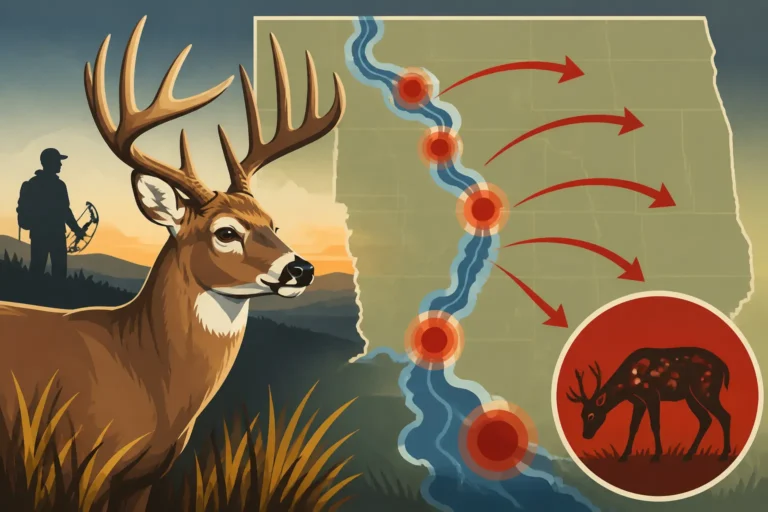
Disease outbreaks, particularly Chronic Wasting Disease (CWD) and Epizootic Hemorrhagic Disease (EHD), also heavily influence herd health and harvest. EHD, though not always fatal, can cause significant localized die-offs, drastically reducing deer numbers in affected units. CWD, while slower-acting, is a persistent threat that influences management strategies, including specific harvest regulations and mandatory testing in North Dakota's Fourteen-Unit CWD Zone. These diseases are a real concern, and their presence directly affects how many deer are out there for hunters. For example, understanding EHD Die-Offs in North Dakota Deer can explain sudden drops in harvest in certain areas.
Hunter Pressure and Access
The number of hunters in the field and where they can access plays a pivotal role in harvest statistics. Over the years, North Dakota has seen shifts in hunter numbers and license availability. When licenses are limited, as they were in recent years with Why 2026 Licenses Hit a Fifty-Year Low, fewer deer are taken, simply because fewer opportunities exist. Similarly, the popularity of specific hunting units can lead to concentrated hunter pressure, potentially making deer more wary and harder to harvest.
Access to land, both public and private, is another critical component. Programs like PLOTS (Private Land Open To Sportsmen) provide crucial access, and understanding How PLOTS Access Works and Scouting PLOTS Land Before Season can greatly influence a hunter's success. However, shifts in PLOTS acreage or changes in private land access can funnel hunters into smaller areas, intensifying pressure. Nonresident access also plays a role, with specific rules governing their ability to hunt public lands during certain periods, as detailed in How Many Days Nonresidents Wait for Public Land Bow Access. All these factors combine to create the complex picture of annual deer harvest.
Regional Differences in North Dakota Deer Harvest
North Dakota is a vast state, and its diverse landscapes—from the rugged Badlands to the fertile Red River Valley—mean that deer populations, habitat, and thus harvest numbers, vary significantly from one region to another. What works in one area might be entirely different in another.
Badlands Versus Prairie Pothole Deer
The Badlands of western North Dakota are renowned for their rugged beauty and, more importantly, for holding a significant portion of the state's mule deer population, alongside some whitetails. The terrain itself, with its deep coulees, buttes, and scattered timber, makes hunting a challenging but rewarding endeavor. Harvest numbers for mule deer in these units often reflect the success of hunters navigating this difficult landscape, often through spot-and-stalk tactics. Mule deer here can be harder to locate and approach, leading to different success rates compared to other regions.
In stark contrast, the Prairie Pothole Region, covering much of central and eastern North Dakota, is dominated by agricultural fields, shelterbelts, and numerous small wetlands (potholes). This area is primarily whitetail country, known for higher deer densities in many units. Hunters here often focus on hunting shelterbelts, field edges, or creek bottoms. The harvest numbers from these regions will largely consist of whitetails, and success rates can be influenced by crop rotations, snow cover, and the presence of accessible cover. It's a completely different game from the Badlands, and the data reflects that, with higher overall numbers but perhaps different buck-to-doe ratios in the harvest. You can learn more about Badlands Versus Prairie Pothole Deer to fully grasp these differences.
River Bottomland and Farmland Units
Along the major river systems, particularly the Missouri River, hunters find dense timber and riparian corridors that offer excellent whitetail habitat. These river bottomland units often hold some of the state's largest whitetails, and harvest numbers can be impressive. Deer concentrate in these areas for cover and food, especially as winter approaches. Hunting strategies like Still-Hunting North Dakota's Missouri River Bottomland or focusing on Late-Season Food Sources for North Dakota Whitetails are popular and can yield strong harvest results.
Conversely, units dominated by expansive farmlands, especially in the eastern part of the state, present their own unique harvest dynamics. Here, deer often rely on standing crops like corn or sunflowers for cover and food, leading to significant movement between these fields and available woodlots or shelterbelts. Harvest numbers in these units can be highly dependent on when crops are harvested and how much cover remains. Hunters might focus on Hunting Standing Corn for Late-Season Geese or deer, or target Hunting a Shelterbelt Edge for Deer. These areas see different types of hunting pressure and have distinct challenges and opportunities that manifest in the annual harvest reports.
Analyzing Long-Term Trends in Deer Harvest
Looking at a single year's harvest report is like reading one chapter of a long book. To truly understand the story of North Dakota's deer, you need to examine trends over many seasons. This long-term perspective reveals patterns, highlights significant events, and can even help predict future opportunities.
Identifying Population Health Cycles
Deer populations in North Dakota, like many wildlife populations, often follow cyclical patterns. These cycles are driven by a combination of severe winters, habitat changes, disease outbreaks, and management decisions. A series of mild winters might lead to several years of increasing harvest numbers, indicating a growing or stable herd. Conversely, a few tough winters coupled with EHD outbreaks could result in a noticeable decline in harvest, signaling a struggling population. The NDGFD uses these long-term trends to adjust license allocations and management strategies, striving for sustainable hunting opportunities while maintaining healthy deer numbers.
For example, tracking North Dakota Deer Population Estimate and comparing it with historical harvest data can reveal whether the population is above or below its management objectives. When you see a significant dip, like the one that led to Why 2026 Licenses Hit a Fifty-Year Low, it’s a red flag. These long-term analyses are crucial for both wildlife managers and informed hunters who want to contribute to conservation and maximize their own success. Tools like GoHunt can be invaluable here, offering historical data visualizations that make these trends much easier to spot.
The Impact of Regulation Changes
Every few years, the NDGFD reviews and sometimes adjusts hunting regulations based on population data, public input, and management goals. These changes can have a direct and sometimes immediate impact on harvest numbers. For instance, increasing the number of antlerless tags in a specific unit aims to reduce the doe population, which would show up as an increase in female deer harvested. Conversely, implementing antler point restrictions, though rare for whitetails in North Dakota, could reduce the harvest of young bucks.
Consider the ongoing challenges with CWD. Regulations requiring Mandatory Testing Inside a CWD Hunting Unit can influence where hunters choose to focus their efforts, potentially shifting harvest pressure. The specific rules for North Dakota's Lottery-Based Deer Gun Season or the availability of North Dakota Muzzleloader Unit Availability can also shape hunter participation and, by extension, the overall harvest. Understanding these regulatory changes is key to interpreting the harvest data and planning your own hunts effectively.
Table: North Dakota Deer Harvest Trends by Weapon Type (Hypothetical Data)
To illustrate how harvest numbers can fluctuate and show general trends, here's a hypothetical look at deer harvest across different weapon types in North Dakota over a few years. Please note: These numbers are illustrative for example purposes and do not represent actual historical data.
| Year | Archery Harvest (Whitetail) | Archery Harvest (Mule Deer) | Gun Harvest (Whitetail) | Gun Harvest (Mule Deer) | Muzzleloader Harvest (Whitetail) | Muzzleloader Harvest (Mule Deer) | Total Deer Harvest |
|---|---|---|---|---|---|---|---|
| 2022 | 8,500 | 550 | 28,000 | 2,100 | 1,200 | 80 | 40,430 |
| 2023 | 9,100 | 600 | 30,500 | 2,300 | 1,350 | 90 | 43,940 |
| 2024 | 7,900 | 480 | 25,200 | 1,800 | 1,100 | 70 | 36,550 |
| 2025 | 8,800 | 520 | 29,100 | 2,050 | 1,250 | 85 | 41,805 |
Interpretation: This table highlights potential variations. For instance, 2024 shows a dip, which could be attributed to a harsh winter in 2023-2024 impacting survival, or perhaps stricter tag allocations. Conversely, 2023 and 2025 show stronger harvests. This kind of data, when real, helps hunters see which seasons were productive and which presented challenges.
How Hunters Contribute to Harvest Records
You, as a hunter, are an integral part of generating these valuable harvest records. Your participation in reporting your harvest is not just a regulatory requirement; it's a vital contribution to wildlife management and the future of hunting in North Dakota.
The Importance of Deer Reporting
After a successful hunt, whether it's a hard-earned buck during North Dakota's November Gun Deer Season or an archery harvest during Bowhunting North Dakota's Long Archery Season, the excitement is palpable. But don't forget the final, crucial step: reporting your deer. North Dakota Deer Reporting Requirements are in place for a very good reason. Every reported deer contributes directly to the NDGFD's data collection, allowing them to accurately assess harvest rates, success rates, and the health of the herd in specific units. Without this information, their ability to make informed management decisions—like setting future license quotas—would be severely hampered.
Imagine if only half the hunters reported their deer. The data would be skewed, making the population appear smaller than it is, potentially leading to fewer licenses being issued in future years, or conversely, overharvest if the population is truly struggling. It's a collective responsibility, and every report helps paint a clearer picture for everyone involved. Promptly Registering a North Dakota Deer Online or via the app ensures your contribution is counted.
Participating in CWD Surveillance
Beyond general harvest reporting, hunters in specific units have another critical role: participating in CWD surveillance. In North Dakota's Fourteen-Unit CWD Zone, mandatory or voluntary CWD testing helps the NDGFD monitor the spread and prevalence of the disease. This often involves submitting lymph node samples at designated drop-off sites or check stations. While it adds an extra step to your post-harvest routine, it's incredibly important.
The data gathered from CWD testing informs critical management strategies aimed at containing the disease and protecting the long-term health of North Dakota's deer herds. It helps biologists understand North Dakota CWD Prevalence Rate Trends and adjust regulations for areas where the disease is detected. Your participation in these efforts is a direct investment in the future of hunting, helping to ensure that deer populations remain healthy and huntable for generations to come.
Using Harvest Data for Future Hunts
Once you understand the mechanics of North Dakota's deer harvest records, the real power comes in applying that knowledge to your own hunting strategies. This data isn't just for biologists; it's a powerful tool for the informed hunter.
Informing License Applications
One of the most practical applications of harvest data is in guiding your choices for the North Dakota Deer Gun Lottery Application Process. By reviewing historical harvest success rates for specific hunting units and weapon types, you can make more strategic decisions about where to apply. For instance, if a particular unit consistently shows high mule deer buck harvest success, it might be a highly sought-after tag. Conversely, if antlerless success rates are low in a unit you're considering for a second tag, you might rethink your strategy.
Consider the units that consistently produce "big bucks" or have a strong North Dakota Buck Age Structure. While these might be harder to draw, the harvest data can confirm their reputation. Tools, again, like GoHunt often compile this success rate data, sometimes even factoring in draw odds based on previous application cycles. This kind of research is invaluable, helping you manage expectations and improve your chances of drawing a desirable tag. It’s about more than just throwing darts at a map; it’s about making calculated choices based on historical performance.
Planning Your Hunting Strategy
Beyond license applications, harvest data can help you refine your actual hunting plan. For example, if you see consistent late-season harvest numbers from areas with standing corn or food plots, you know those are places to focus your efforts later in the year, particularly when considering Late-Season Food Sources for North Dakota Whitetails. If archery harvest data shows a strong peak during the Hunting the Rut in Early-to-Mid November, it reinforces the importance of being in the woods during that crucial window.
By analyzing the specific locations within units that yield high harvest numbers, you can often identify patterns in habitat use. For instance, understanding Reading a Missouri River Bottom for Deer or Hunting a Badlands Draw for Mule Deer can be further informed by seeing where successful harvests actually occur on a map, if such detailed data is available. This can help you scout more efficiently, focus on productive habitat types, and tailor your tactics to what has historically worked in a given area. It's about blending the official numbers with your on-the-ground scouting to create the most effective strategy.
Disclaimer
This guide is intended for informational purposes only and should not be considered legal advice. Hunting regulations and license requirements in North Dakota can change frequently. Always consult the official North Dakota Game and Fish Department website and current regulations booklet before planning or engaging in any hunting activities. Adherence to all state and federal laws is the hunter's responsibility.