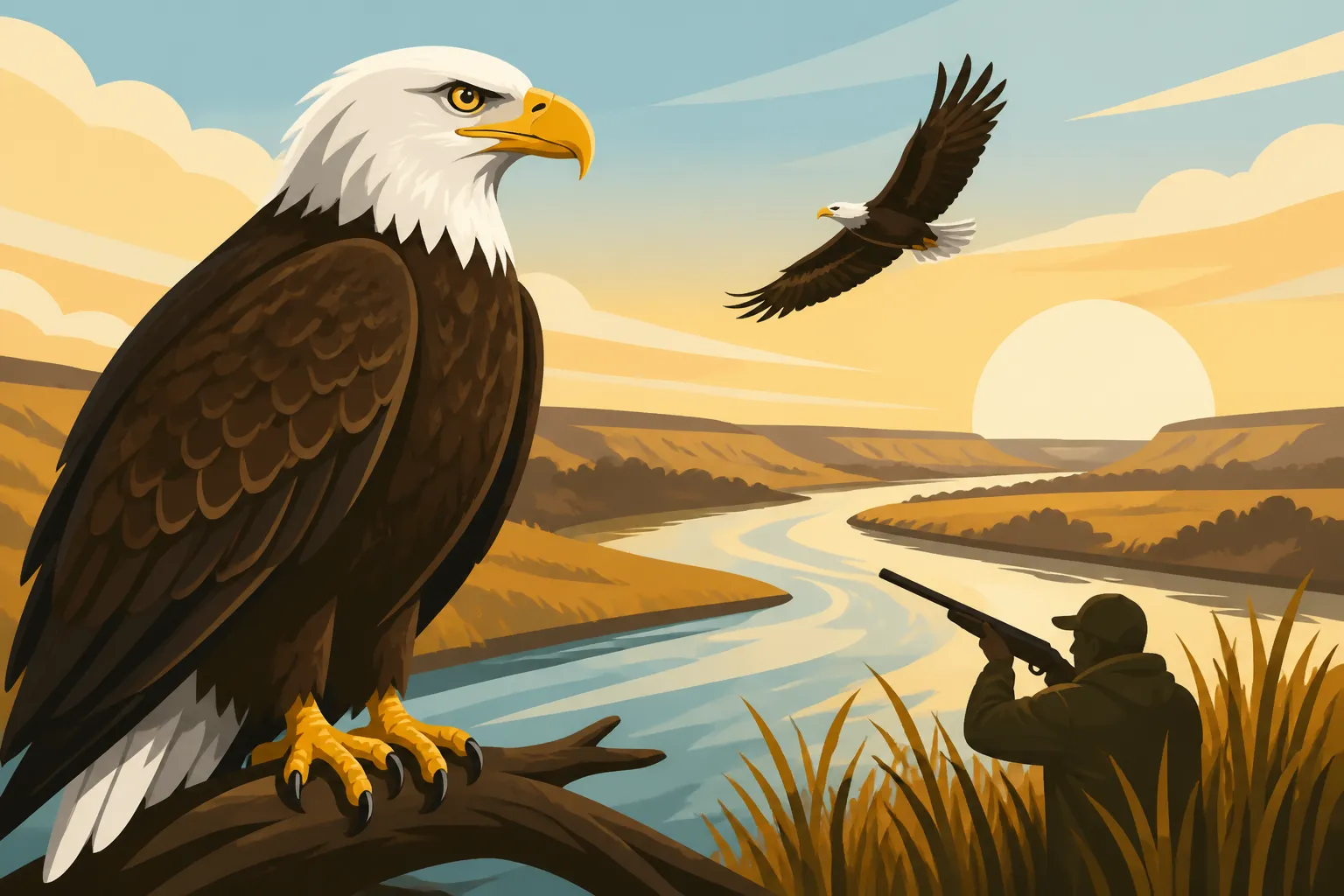
North Dakota Bald Eagle Recovery Near the Rivers
It wasn't that long ago that spotting a bald eagle in North Dakota felt like winning the lottery – a rare, exciting glimpse of a majestic bird that many of us only knew from pictures. For generations, their absence was a quiet heartache for anyone who loved the outdoors. But now, it's a completely different story. Our rivers and reservoirs, once sparsely populated by these iconic raptors, are seeing a magnificent comeback, and this guide is all about celebrating that journey, understanding how it happened, and where you can witness this incredible natural triumph for yourself.
A Historical Perspective: Where Did the Eagles Go?
It's easy to take for granted the sight of a bald eagle soaring over the Missouri River today, but there was a time when this magnificent bird was teetering on the brink of extinction. The story of their disappearance, and subsequent return, is a powerful lesson in conservation and environmental responsibility.
The Impact of DDT and Habitat Loss
The primary culprit behind the dramatic decline of bald eagles, not just in North Dakota but across much of North America, was a pervasive pesticide called DDT. Used widely after World War II to control insects, DDT seeped into waterways and accumulated up the food chain. Eagles, as apex predators, ingested highly concentrated levels of the chemical through the fish and waterfowl they ate. The devastating effect wasn't necessarily immediate death for the adult birds, but a far more insidious one: it caused their eggshells to become dangerously thin.
Imagine a mother eagle, building a nest high in a cottonwood, diligently incubating her eggs. With weakened shells, these eggs would often crack under the weight of the incubating parent, or simply fail to develop properly. Nest after nest failed, year after year, and the eagle population plummeted. On top of this chemical assault, early settlement of North Dakota brought widespread habitat alteration. Vast tracts of old-growth timber, crucial for nesting and perching, were cleared for agriculture or development. Rivers were dammed, changing natural flows and sometimes impacting fish populations. Plus, let's be honest, there was a period where eagles were actively persecuted, often mistaken for nuisances or predators of livestock, even though fish and carrion make up the bulk of their diet. It was a perfect storm of environmental degradation and misunderstanding that pushed them to the brink.
Early Conservation Efforts and Protection
Thankfully, people started to recognize the gravity of the situation. The bald eagle was officially listed under the federal Endangered Species Act, a landmark piece of legislation that provided critical protection. This listing wasn't just a label; it came with teeth, making it illegal to harm eagles, their nests, or their eggs. Perhaps even more impactful was the nationwide ban on DDT in 1972. This single act removed the primary poison from the environment, allowing eagles a chance to recover reproductive success.
Beyond these federal mandates, states like North Dakota began implementing their own protective measures and habitat restoration programs. Organizations dedicated to wildlife conservation sprang up, educating the public and working to protect remaining nesting sites. It wasn't an overnight fix. It took decades of consistent effort, vigilance, and a fundamental shift in how we viewed our role in the ecosystem, but these early conservation efforts truly laid the groundwork for the incredible recovery we witness today.
The Missouri River System: A Lifeline for Recovery
When we talk about the bald eagle's recovery in North Dakota, we absolutely have to talk about the Missouri River system. It's not just a river; it's a vibrant, thriving corridor that offered these magnificent birds everything they needed to bounce back.
Abundant Food Sources and Nesting Opportunities
Think about what a bald eagle needs: reliable food, safe nesting sites, and plenty of places to perch and survey their territory. The Missouri River, along with its extensive reservoirs like Lake Sakakawea and Lake Oahe, delivers on all fronts. These waterways are teeming with fish—carp, suckers, walleye, pike—all prime eagle fare. During migrations, the river corridor also funnels countless waterfowl, providing another crucial food source, especially for scavenging opportunities. Eagles are not above feasting on carrion, and the river system naturally provides this, too, whether it's a winter-killed deer or a fish washed ashore.
Beyond the buffet, the riverbanks offer exactly what bald eagles look for in real estate: towering cottonwood trees. These giants, often standing sentinel along the water's edge, provide ideal platforms for building their massive nests. These nests, often six feet wide and just as deep, need robust support. The cottonwoods offer excellent protection from the elements, a wide vantage point for spotting prey, and a relatively undisturbed sanctuary. You can find these crucial nesting areas nestled in quiet bends or along stretches of river that are less impacted by human activity. Hunting Missouri River Bluff Country is a great example of where these mixed habitats come together. The deep coulees and bluffs provide shelter, while the river itself is the pantry.
The Role of Reservoirs and Lake Sakakawea
While the free-flowing stretches of the Missouri are vital, the immense reservoirs formed by the river, particularly Lake Sakakawea, have played an undeniable role in the eagles' resurgence. These massive bodies of water create vast open spaces, ensuring a constant supply of fish. During the winter months, when smaller rivers and lakes might freeze solid, the sheer volume of water in Sakakawea often means larger areas remain open, offering critical access to food for eagles that choose to overwinter in North Dakota.
Picture an eagle perched on a snag along the shoreline of Lake Sakakawea, scanning the choppy waters for a meal. The sheer size of the lake also means there are countless miles of shoreline, bays, and islands, providing diverse habitats. These areas offer quiet coves for fishing, protected bluffs for nesting, and plenty of perching trees. The concentration of waterfowl on these reservoirs also provides abundant scavenging opportunities for eagles. It’s a testament to the resilience of nature and the effectiveness of conservation that these birds have reclaimed such significant territory. If you're out Hunting Divers on Lake Sakakawea's Open Water, you'll likely spot an eagle or two circling overhead, watching the same ducks you are.
Identifying and Observing Bald Eagles Responsibly
Seeing a bald eagle in the wild is truly a special experience, a moment that connects you to the wild heart of North Dakota. But to ensure these magnificent birds continue to thrive, it's crucial to observe them respectfully and responsibly.
Key Characteristics and Behavior
Identifying an adult bald eagle is usually pretty straightforward: that striking white head and tail, contrasted with a dark brown body, is unmistakable. Their immense size, with a wingspan that can reach seven feet, is also a dead giveaway. They often fly with deep, powerful wing beats, but also love to soar effortlessly on thermals, holding their wings in a slight dihedral (a shallow "V" shape).
However, not all bald eagles have that iconic white head and tail. Juvenile bald eagles, for the first four to five years of their lives, are mostly mottled brown, often with white blotches on their underwings and belly, and a dark bill. They gradually acquire their adult plumage, which can sometimes lead to confusion with other large raptors.
This is where distinguishing them from golden eagles, especially in western North Dakota, becomes important. Golden eagles are uniformly dark brown with a golden wash on the nape of their neck, and juveniles have a distinct white patch at the base of their primary feathers and a white tail with a dark terminal band. Golden eagles typically prefer more open, arid country and prey more on mammals, while bald eagles are primarily fish and waterfowl eaters, almost always found near water. If you're in the North Dakota Golden Eagle Range in the Badlands, you might see both, but the habitat often gives a clue. Bald eagles will be hugging the river, while goldens might be soaring over the open prairie or draws.
| Feature | Bald Eagle (Adult) | Bald Eagle (Juvenile) | Golden Eagle (Adult/Juvenile) |
|---|---|---|---|
| Head/Tail | White head, white tail | Mottled brown, gradually acquiring white | Dark brown head, dark brown tail (juveniles: white base, dark band) |
| Body | Dark brown | Mottled dark brown with white patches | Uniform dark brown |
| Beak | Large, yellow | Large, dark (gradually yellows) | Dark |
| Wingspan | Up to 7 feet | Up to 7 feet | Up to 7.5 feet |
| Habitat | Near large bodies of water (rivers, lakes, reservoirs) | Near large bodies of water | Open country, mountains, badlands, prairie |
| Primary Diet | Fish, waterfowl, carrion | Fish, waterfowl, carrion | Mammals (rabbits, prairie dogs), some birds |
| Flight | Powerful wingbeats, often soars with flat wings or slight dihedral | Similar to adults | Soars with wings in a distinct dihedral ("V" shape) |
Best Practices for Ethical Observation
The thrill of seeing an eagle is immense, but it's vital that our excitement doesn't become a disturbance. These birds are sensitive, especially during nesting season. Always keep a respectful distance. If you notice a bird changing its behavior – flying away, craning its neck nervously, or calling loudly – you're too close. Pull back. A good rule of thumb is to use binoculars or a spotting scope for close-up views, rather than trying to get physically nearer.
When seeking out eagles, focus on public lands along river systems. Places like North Dakota Wildlife Management Areas or state parks along the North Dakota's Missouri River Corridor are often excellent choices. Remember that even on public land, there are rules about access and hours, typically aligning with North Dakota Public Land Hunting Hours for general access. Tools like the GoHunt app, while primarily designed for hunters for scouting and navigation, can be incredibly useful for any outdoor enthusiast. They often provide detailed maps of public land boundaries, allowing you to identify access points along our rivers and reservoirs where you might find prime eagle habitat. Always consult official maps and signs to ensure you're in an area open to public access.
Avoid directly approaching nests or perching trees, especially during nesting season (typically late winter through early summer). Loud noises, sudden movements, or prolonged presence can stress the birds and even cause them to abandon a nest. Let's make sure our presence is a quiet appreciation, not an intrusion.
The Future of Eagle Conservation in North Dakota
The story of the bald eagle in North Dakota is one of incredible resilience and a true conservation success. But success doesn't mean the work is over. Protecting these magnificent birds requires ongoing vigilance and commitment from all of us.
Ongoing Monitoring and Management
The North Dakota Game and Fish Department plays a crucial role in the continued health of our bald eagle population. Through regular surveys and monitoring, they track nesting success, population trends, and identify potential threats. This data is vital for making informed management decisions, ensuring that regulations and conservation strategies remain effective. Researchers are constantly studying their movements, diet, and overall health.
While DDT is long gone, new challenges can emerge. Lead poisoning, for example, is a concern, as eagles are scavengers and can ingest lead fragments from gut piles left by hunters who use lead ammunition, or from discarded fishing weights. Habitat encroachment, pollution, and climate change also present ongoing threats that require constant attention. Protecting critical nesting and foraging habitats along our rivers and reservoirs remains a top priority, often involving cooperation with private landowners and other state and federal agencies. It's a never-ending task to ensure these birds have the space and resources they need to thrive.
How Hunters and Outdoor Enthusiasts Contribute
It might seem counterintuitive to talk about hunters contributing to bald eagle conservation, given that eagles are protected and not hunted. However, the conservation model in North America is largely funded by hunters and anglers. Revenue from hunting licenses, like those collected through North Dakota Hunting Licenses and What They Cost, and excise taxes on hunting and fishing equipment, directly funds habitat acquisition, management, and research for all wildlife, including non-game species like bald eagles. When hunters support public lands or responsible habitat management, everyone benefits.
Beyond funding, the broader outdoor community, including hunters, birdwatchers, and hikers, plays a critical role in being stewards of the land. This means practicing ethical outdoor behavior, such as packing out all trash, staying on designated trails, and reporting any suspicious activity that might harm wildlife. We all share a common goal: to preserve the incredible natural heritage of North Dakota. Seeing a bald eagle soaring overhead is a powerful reminder of what we can achieve when we work together to protect our wild places and the creatures that call them home. So, next time you're out exploring Public Hunting Land in North Dakota or a North Dakota Waterfowl Production Areas along one of our rivers, take a moment to look up. You might just catch a glimpse of this enduring symbol of wildness, a testament to what dedicated conservation can accomplish.
Disclaimer
This article is for general informational purposes only and does not constitute professional advice. Laws, prices and regulations vary by location and change over time. Consult a qualified professional for guidance on your specific situation.