Hunting Divers on Lake Sakakawea’s Open Water
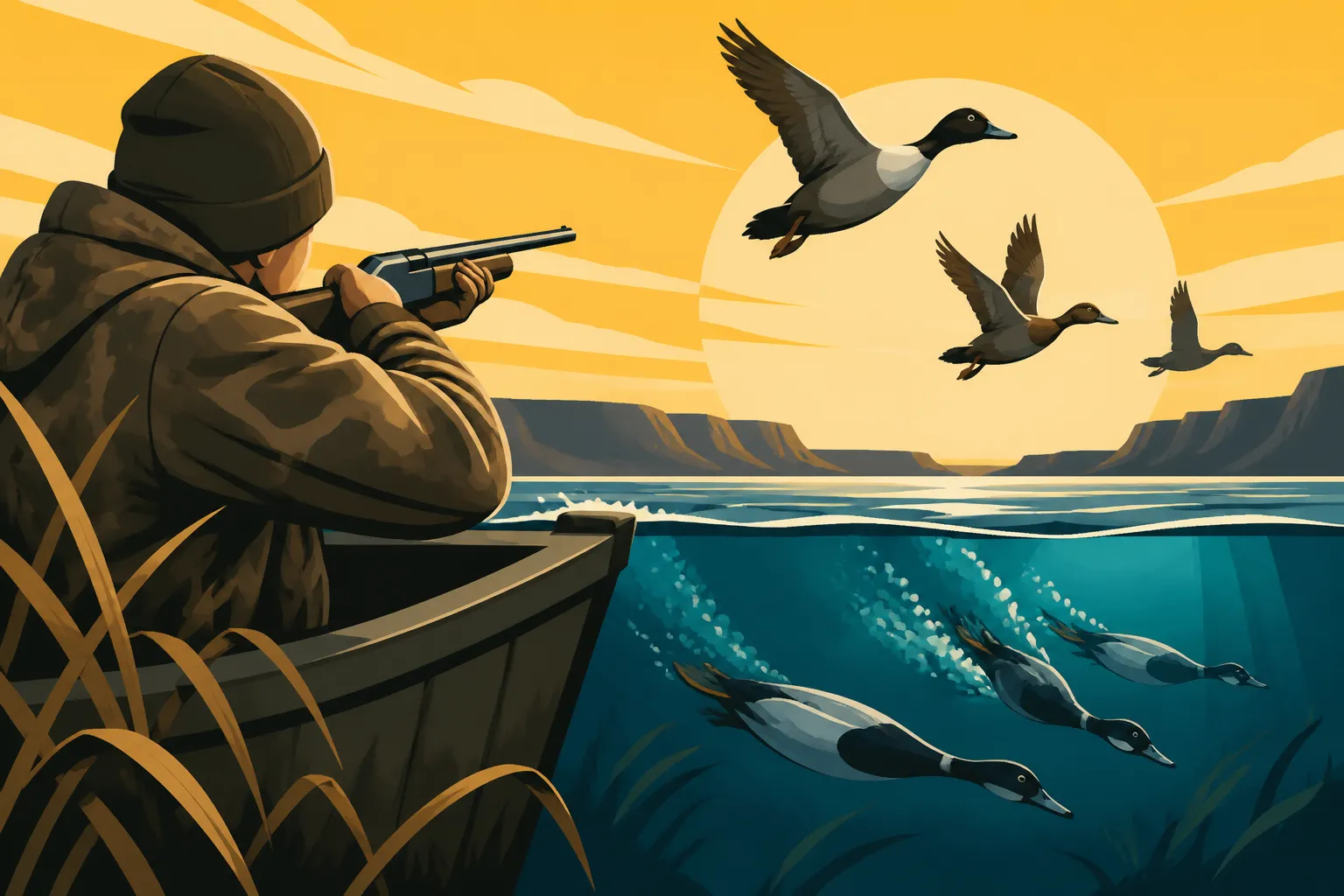
The vast, shimmering expanse of Lake Sakakawea can be both incredibly alluring and utterly intimidating for waterfowl hunters. It's a completely different animal than hunting the cattail-lined prairie potholes, with its sheer scale, unpredictable weather, and deep, open waters demanding a specialized approach. If you've ever felt overwhelmed by where to even begin targeting those fast-flying diver ducks out on North Dakota's big water, this guide is for you. We're going to break down everything you need to know to confidently and safely pursue divers like canvasbacks, bluebills, and redheads on the challenging, yet rewarding, waters of Lake Sakakawea.
Understanding Lake Sakakawea's Unique Challenges for Diver Hunting
Hunting divers on Lake Sakakawea isn't just duck hunting; it's big water duck hunting, which comes with its own set of rules and required respect. This colossal reservoir, formed by the Garrison Dam on the Missouri River, stretches for miles, offering habitat vastly different from typical prairie wetlands.
The Sheer Scale of the Water Body
One of the first things that strikes anyone looking at Lake Sakakawea is its immense size. With over 1,500 miles of shoreline and depths that can plunge hundreds of feet, it dwarfs most other hunting grounds. This scale isn't just impressive; it dictates almost every aspect of how you'll hunt. Wind, for instance, can whip up in minutes, turning calm water into formidable whitecaps that challenge even seasoned boaters. Finding birds in such a vast area requires dedicated scouting and a keen understanding of where divers prefer to feed and rest. Unlike a small slough where you can glass the entire area, on Sakakawea, you're looking for patterns, flyways, and specific habitat features that attract these open-water specialists. The currents, especially in the main river channel areas or near the dam, can also be surprisingly strong, affecting everything from boat positioning to decoy spread integrity.
Identifying Diver Species and Their Habits
Before you even think about setting a decoy spread, you need to know your target. Lake Sakakawea is a magnet for various diver species, each with slightly different habits. Bluebills (Lesser and Greater Scaup) are probably the most common, often seen in large rafts far from shore, feeding on mussels and aquatic insects. Canvasbacks, often called the "King of Ducks," are powerful fliers and highly prized, typically found where sago pondweed or wild celery are abundant. Redheads are another common sight, usually found in slightly shallower areas than 'cans' or bluebills, often associating with sago pondweed. Then you have the smaller, zippier goldeneyes and buffleheads, which also frequent the lake, often closer to shore or in protected bays, diving for crustaceans and small fish. Understanding these preferences is key to successful scouting. For example, if you're marking huge clouds of bluebills on your radar, you'll be setting up in deep, open water, whereas targeting redheads might mean looking for submerged vegetation in 5-10 feet of water. Knowing your species is also crucial for staying within the specific daily bag limits, which can vary by species. You can read more about North Dakota Duck and Goose Bag Limits to ensure you're always in compliance.
Navigating North Dakota's Weather Systems
North Dakota's weather is famously, or infamously, dynamic. On Lake Sakakawea, a beautiful, crisp fall morning can quickly morph into a treacherous, white-capped gale by midday. This isn't just an inconvenience; it's a serious safety concern that dictates when and where you can hunt. Cold fronts, often accompanied by strong northwest winds, are prime diver hunting conditions as they push birds south and often concentrate them on the larger bodies of water. However, these same fronts bring plummeting temperatures, freezing spray, and rapidly building waves. You need to be constantly monitoring marine forecasts, paying close attention to wind speed and direction changes. A rising barometer often signals clearing skies and colder temperatures, which can mean fantastic flight, but also extreme conditions. Always assume the weather can turn and prepare for the worst.
Essential Gear and Boat Setup for Open Water Divers
Hunting big water demands big water gear. Your typical prairie pothole setup simply won't cut it on Lake Sakakawea. Safety, durability, and capability are paramount when you're miles from shore.
The Right Boat for Big Water
Forget your small jon boat for this adventure. You need a reliable, seaworthy craft designed to handle significant waves and chop. A minimum of 16-18 feet is generally recommended, with a deep-V hull for cutting through waves and a wide beam for stability. Many serious Sakakawea diver hunters opt for larger, robust aluminum boats or even fiberglass models, similar to what you'd use for big lake fishing. Power is also essential; you'll want a strong, dependable outboard motor – often 90 HP or more – to get you out to your hunting spot quickly and, more importantly, back safely if conditions deteriorate. Redundancy is smart: consider a kicker motor for emergencies. Beyond the boat itself, make sure you have all required safety equipment: multiple PFDs (worn, not just stored!), a working bilge pump, navigation lights, a horn, and visual distress signals. Remember, the lake is vast, and help can be a long way off. Always check the forecast before heading out, especially if you plan on Hunting Divers on Lake Sakakawea's Open Water far from any protected bays.
Decoy Spreads for Deep Water
Diver hunting on open water is all about presentation. Divers are often found in large flocks, so your decoy spread needs to mimic that scale to be effective. This isn't the time for a dozen decoys. Most successful Sakakawea diver hunters run spreads of 50, 100, or even 200+ decoys. These should primarily be magnum or super magnum decoys to be visible from a distance on choppy water.
Here are a few critical considerations for your diver spread:
- Size Matters: Larger decoys have better visibility on big water. Look for magnum or even oversized diver decoys.
- Species Specificity: While a mix is fine, consider having a good representation of the species you're targeting. For bluebills, a large raft of scaup decoys. For canvasbacks, their distinctive white-backed profile is key.
- Tangle-Free Systems: Spreaders, gang rigs, or Texas rigs are invaluable for quick deployment and retrieval, especially when dealing with cold hands and high winds. A good gang rig can quickly put out a dozen decoys from a single anchor point.
- Heavy Duty Anchors: Standard weights won't cut it in deep water or strong currents. You'll need heavy lead weights (2-3 lbs each) or mushroom anchors to keep your spread from drifting. A common frustration is losing decoys to strong currents. Ensure every decoy has a solid anchor line, long enough for the deepest water you anticipate.
- Motion Decoys: While often associated with puddle ducks, motion decoys like spinning wing decoys can still attract attention from high-flying divers. However, ensure they are securely mounted and can withstand big waves. Another effective strategy is to create movement within your spread with a jerk cord system, mimicking active feeding ducks.
Setting up a robust and realistic spread is a critical component of Decoy Spreads for Prairie Pothole Mallards, and the principles can often be adapted for diver species on bigger water.
Choosing the Right Shotshells and Chokes
When hunting big, fast-flying divers, your ammunition and choke selection are crucial for ethical, clean kills. Divers are tough birds, often carrying a good layer of fat, and they fly at incredible speeds, making them challenging targets.
- Steel Shot is King: Lead shot is prohibited for waterfowl hunting across North America, so you'll be using steel shot or other non-toxic alternatives like bismuth or tungsten-iron. Steel shot, while effective, is lighter than lead, meaning you need to go up a size or two for equivalent pellet energy.
- Pellet Size: For divers, especially canvasbacks and bluebills, #2 or BB steel shot is a popular choice. For smaller divers like buffleheads, #3 or #4 steel can be effective at closer ranges. The larger pellets retain energy better at longer distances, which is often necessary for those open-water shots.
- Payload and Velocity: Look for shotshells with heavy payloads (1 ¼ oz or 1 3/8 oz) and high velocities. The extra pellets and speed increase your chances of connecting and delivering enough energy for a clean kill. Brands like Federal, Winchester, and Kent Faststeel offer excellent options specifically designed for waterfowl.
- Choke Selection: While tight chokes (Modified, Improved Modified, or Full) are often favored for distant waterfowl, on open water where birds are coming into a large spread, a more open choke might be beneficial. Improved Cylinder or Light Modified can provide a wider pattern, increasing your chances on fast-moving birds, especially if they are coming in hot and close. For longer shots at high-flying birds, a Modified or Improved Modified choke can still be a good choice, but avoid anything tighter than full with steel shot to prevent barrel damage. Test your patterns before the season to see what works best with your gun and chosen ammunition.
Mastering Diver Hunting Tactics on Lake Sakakawea
Once you have your gear sorted, it's time to talk strategy. Diver hunting on Lake Sakakawea requires a thoughtful approach, from pre-hunt scouting to the actual setup and concealment.
Scouting and Location Selection
This is perhaps the most critical step. You can have the best gear, but if you're not where the birds want to be, you won't be successful. Divers have specific needs that guide their movements on a large lake.
- Food Sources: Divers follow their food. On Sakakawea, this often means areas with abundant sago pondweed, wild celery, or large beds of freshwater mussels. Look for subtle color changes in the water that might indicate submerged vegetation beds, or use your depth finder to locate underwater humps and flats where mussels might congregate.
- Wind and Current: Divers prefer to land and take off into the wind. They also use currents to their advantage when feeding. Pay attention to prevailing wind directions. Birds will often raft up on the lee side of points or islands during strong winds for protection, only to move out to feed when conditions calm.
- Satellite Imagery and Mapping Tools: Modern technology is your friend here. Use satellite imagery and topographic maps (like those offered by GoHunt) to identify potential feeding flats, points, and protected bays. Look for areas where different depths meet, or where tributaries enter the main lake, potentially carrying in nutrients. GoHunt can provide invaluable insights into bathymetry (underwater topography), which is a game-changer for finding those hidden feeding grounds. You can use their app to mark potential spots, track weather patterns, and even gauge wind direction changes hourly, which is critical for planning your exact setup on such a dynamic body of water.
- Boat Scouting: Nothing beats time on the water. Run your boat through potential areas, looking for rafts of birds, active diving, or even just slicks on the water surface from feeding ducks. Pay attention to how birds react to wind and light. Observe their flight paths—are they flying over certain points or through particular saddles? This is how you find their preferred travel corridors.
Setting Up Your Spread Effectively
Once you've found a promising location, how you deploy your decoys will make or break your hunt. Remember, you're trying to replicate a large, natural raft of divers.
- Orientation with the Wind: Always set your decoys so that incoming birds will approach from downwind, landing into the wind right in your shooting hole. This means your "kill hole" should be upwind of your boat or blind.
- The "J-Hook" or "Fishhook" Spread: This is a classic diver setup. Most of your decoys form the long arm of the "J," extending downwind. The curve of the "J" creates a natural landing zone where birds will feel comfortable dropping in. This allows birds to see the large mass of decoys, circle, and commit to the open water pocket created by the hook.
- The "V" Spread: Similar to a goose spread, a "V" spread can also be effective. The apex of the V points downwind, guiding birds into the open space at the mouth of the V.
- Spacing: While divers often raft tightly, you still want some natural spacing in your spread. Don't clump them all together. Leave open lanes for birds to land. The key is to create a realistic, inviting landing zone.
- Consider Confidence Decoys: Sometimes a few coot or even goose decoys placed on the edge of your diver spread can add a layer of realism, making the area appear safer and more attractive to incoming ducks.
- Decoy Spreads for Prairie Pothole Mallards often differ significantly from those used on big water, primarily due to the scale and species. However, the principle of creating an inviting landing zone and orienting with the wind remains universal.
Boat Hiding and Concealment
Divers, like all waterfowl, are wary. Your ability to disappear into the landscape (or waterscape) is paramount.
- Layout Boats: These low-profile, coffin-like boats are the ultimate diver hunting tool. They sit almost flush with the water, making you virtually invisible to incoming birds. Layout boats are designed for open water and are incredibly effective when divers are working your spread. They require a tender boat to deploy decoys and pick up harvested birds.
- Blind Material: If you're not using a layout boat, a well-built boat blind is essential. It needs to blend seamlessly with the natural surroundings. On open water, this might mean using marsh grass, cattails, or camouflage netting that matches the subtle hues of the lake's edges or distant shoreline. Ensure the blind completely conceals you, your boat, and any gear. A good tip is to stand back and look at your blind from a duck's perspective—is anything glinting? Is your silhouette visible?
- Natural Cover: Sometimes, Mother Nature provides the best blind. If you can find a small island, a rock pile, or a reedy point that offers some natural concealment, use it. Just ensure you're positioned to shoot effectively into your decoy spread and have a safe exit route. This is where detailed scouting with tools like GoHunt comes in handy, as it allows you to identify these subtle features on the map before you even launch your boat.
- Minimize Movement: Once you're set up, stay still! Any sudden movement, a glint off a shotgun barrel, or a hunter standing up too soon will flare birds. Wait until the ducks are committed and in range before making your move. For tactics on more stationary blinds, consider reading about Layout Blind Hunting Devils Lake Fields, as many principles of concealment apply to boat blinds on big water.
Safety First on North Dakota's Big Waters
Hunting Lake Sakakawea's open water for divers is an incredible experience, but it demands an unwavering commitment to safety. The size, depth, and rapidly changing conditions mean that mistakes can have severe consequences.
Prioritizing Personal Flotation Devices and Cold Weather Gear
This isn't an option; it's a non-negotiable rule. Everyone in the boat should be wearing a properly fitted Personal Flotation Device (PFD) at all times. Modern PFDs are comfortable, lightweight, and won't hinder your hunting movements. For cold weather hunting, an inflatable PFD worn over your insulated layers is an excellent choice. Beyond PFDs, dressing in layers is critical. The air temperature might be mild, but the water temperature in Lake Sakakawea, especially in late fall, can be dangerously cold – cold enough to cause hypothermia in minutes.
Layering helps you adapt to changing conditions:
- Base Layer: Wicking material like merino wool or synthetic to pull moisture away from your skin.
- Mid-Layers: Insulating layers like fleece or down to trap body heat.
- Outer Layer: Waterproof and windproof shell to protect against the elements.
- Extremities: Insulated, waterproof gloves, a warm hat, and insulated, waterproof boots are essential. Bring spares!
It’s always better to be overdressed and shed layers than to be caught unprepared in a sudden cold snap. Think about what would happen if you unexpectedly ended up in the water. That's your baseline for preparation.
Communication and Emergency Preparedness
Being miles from shore on a vast lake means you need robust communication and an emergency plan.
- VHF Marine Radio: A VHF radio is indispensable. Cell phone service can be spotty or nonexistent in many areas of Lake Sakakawea, and even if you have it, a marine radio provides direct communication with other boaters and emergency services. Keep it charged and know how to use it.
- GPS and Charts: A reliable GPS unit (either dedicated or a robust app like GoHunt on a waterproof device) with detailed marine charts is crucial for navigation, especially in fog or low light. Mark your launch point, your hunting spot, and any known hazards.
- Emergency Kit: A dry bag stocked with essentials can be a literal lifesaver. Include:
- First-aid kit
- Flares or other visual distress signals
- Air horn
- Knife
- Duct tape
- Small tool kit
- Extra warm, dry clothing in a waterproof bag
- High-energy food and water
- A fully charged power bank for cell phones or other devices.
- Float Plan: Always tell someone responsible your float plan: where you're going, when you expect to return, and who is with you. If you don't check in, they know where to start looking. This simple step can drastically reduce search and rescue times.
Understanding Lake Sakakawea's Hazards
Lake Sakakawea has specific dangers you need to be aware of beyond just the weather.
- Submerged Obstacles: The lake was formed by flooding a river valley, which means there are countless submerged trees, old fence lines, and even structures that can pose a hazard to your boat, especially at lower water levels. Stick to marked channels if unfamiliar with an area, and always proceed with caution in unknown waters.
- Sudden Storms: As mentioned, North Dakota storms can materialize quickly. Pay constant attention to the sky. Darkening clouds, sudden shifts in wind direction, or a rapidly falling barometer are all signs to head for safe harbor. Don't try to "tough it out." The lake can go from flat calm to 3-foot whitecaps in an alarmingly short time.
- Hypothermia: Even on days that don't feel "that cold," exposure to cold water can be deadly. If someone falls overboard, immediate retrieval and warming are paramount. Knowing the signs and symptoms of hypothermia and how to treat it is a critical skill for any big water hunter.
- Ice Formation: Late in the season, ice can begin to form, especially in protected bays or shallow areas. Never venture onto ice that isn't absolutely safe. If you're running your boat, watch for skim ice that can damage your hull or prop.
For general rules and regulations related to hunting migratory birds in North Dakota, it's always wise to familiarize yourself with North Dakota's New Nonresident Waterfowl Rule and specific local requirements before embarking on your hunt.
| Diver Species | Key Identification Marks | Preferred Habitat (Sakakawea) | Primary Food Sources | Best Hunting Conditions |
|---|---|---|---|---|
| Canvasback | Red head (male), white back, long sloping profile | Open water, submerged vegetation beds, sheltered bays | Sago pondweed, wild celery, tubers, mussels | Windy, bluebird days after a cold front |
| Redhead | Red head (male), grey body, distinctive blue bill | Shallower open water, dense submerged vegetation | Sago pondweed, pondweeds, smartweed, insects | Moderate winds, early morning/late afternoon |
| Lesser Scaup | Purple sheen on head (male), grey back, white wing stripe | Large open water rafts, deep water | Mussels, aquatic insects, snails, plant seeds | Strong winds, choppy water where food is abundant |
| Greater Scaup | Green sheen on head (male), grey back, white wing stripe (more extensive) | Very open, deeper water, often coastal | Mussels, clams, aquatic insects, crustaceans | Similar to Lesser Scaup, often even further offshore |
| Common Goldeneye | Large white patch below eye (male), dark head, white side | Protected bays, near shore, deeper water | Mussels, crustaceans, small fish, aquatic insects | Calm to moderate winds, often in smaller groups |
| Bufflehead | Large white patch on side of head (male), small size | Protected coves, calmer, shallower water | Aquatic insects, crustaceans, small fish, snails | Calm weather, often closer to shore or protected inlets |
Disclaimer
Hunting is an inherently risky activity. This guide provides general information and recommendations. Always consult the official North Dakota Game and Fish Department regulations for the most current laws, seasons, and licensing requirements. Prioritize safety, be prepared for adverse conditions, and never hunt beyond your capabilities or comfort level.