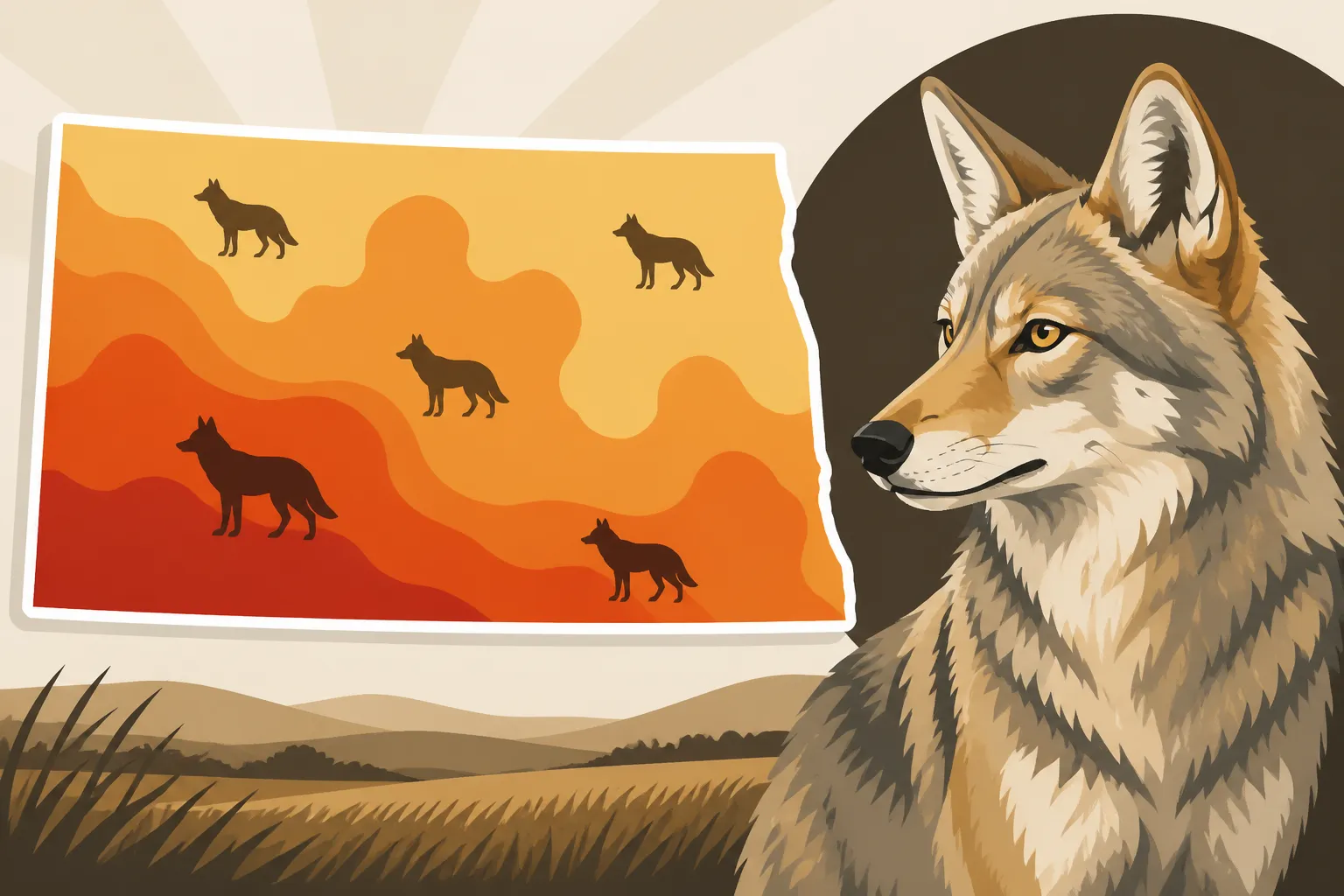
North Dakota Coyote Range and Density
If you've spent any time at all traversing North Dakota's vast landscapes, from the rolling badlands to the endless prairie, chances are you've either seen a coyote, heard their haunting evening chorus, or, like many of us, had a close encounter with their cunning. These highly adaptable predators are an integral part of our state's ecosystem, but for hunters, ranchers, and even just folks living in rural areas, understanding their movements and numbers can feel like trying to solve a cryptic puzzle. This guide aims to pull back the curtain on where coyotes live in North Dakota and what influences their population density, giving you a clearer picture of these intelligent canids.
Understanding the Coyote's Adaptability in North Dakota
Coyotes in North Dakota are survivors, plain and simple. They thrive in an incredible variety of habitats, making them one of the most widespread predators across the state. They're not picky; if there's food, water, and some cover, they'll make a home. This adaptability is precisely what makes them so successful and, at times, such a challenge to manage.
The Prairies and Farmlands: Prime Coyote Country
When most people picture North Dakota, they envision vast, open prairies stretching to the horizon, dotted with farms and fields. This is, in fact, prime coyote country, and it’s where you'll find a significant portion of the state's population. These environments offer an abundance of their primary food sources and plenty of room to roam, hunt, and raise their young.
Imagine a section of tilled farmland, bordered by a grassy ditch and a shelterbelt. During planting season, the fields might be barren, but those grassy margins are teeming with voles, mice, and ground squirrels – a coyote buffet. As the corn grows tall or the wheat ripens, it offers incredible cover for these opportunistic hunters to stalk their prey. You'll often find them working these field edges at dawn and dusk, almost invisible against the backdrop of the crops. Ranchers, in particular, often grapple with the frustration of seeing coyotes operating near their calving pastures, a stark reminder of the predator's presence and its potential impact on livestock. This isn't just theory; it's a real, ongoing challenge that many folks face year after year.
River Bottoms and Woodlands: Hiding in Plain Sight
While the open prairie offers hunting grounds, the denser cover of river bottoms and scattered woodlands provides crucial sanctuary for coyotes. Think about the Missouri River corridor, the Sheyenne River Valley, or even the small, isolated pockets of timber found throughout the state. These areas are vital for denning, raising pups, and offering escape cover when they feel pressured.
Along these waterways, the vegetation can be thick – stands of cottonwood, willow thickets, and dense undergrowth. A coyote can seemingly vanish into these landscapes, making them incredibly difficult to spot, let alone hunt effectively. They use these corridors for travel, moving between hunting grounds and safe havens, often unseen. This is where their stealth truly shines. You might never know they're there until you stumble upon a well-used trail or hear their calls echoing from the timbered banks. This ability to blend in and utilize diverse terrain highlights why a one-size-fits-all approach to coyote management just doesn't work in North Dakota. Hunters familiar with hunting North Dakota's Missouri River bottomland for deer will recognize how such dense cover can hide all manner of wildlife, including these clever canids.
Deciphering Coyote Density Across the State
Understanding where coyotes are present is one thing, but knowing their density—how many there are in a given area—is a completely different ballgame. It’s not uniform across North Dakota, and it can fluctuate wildly from year to year and region to region. This variability is driven by a complex interplay of environmental factors and human activity.
Factors Influencing Population Spikes and Dips
Coyote populations are incredibly dynamic. They can rebound quickly, but they can also experience significant declines. The biggest drivers are often food availability, severe weather, and human pressure.
When rodent populations boom, perhaps after a mild winter and a good growing season, you'll often see a corresponding increase in coyote numbers. More food means more pups survive, leading to a localized population spike. Conversely, a harsh winter with deep, crusted snow can devastate their food sources and make hunting incredibly difficult, leading to a dip in their numbers. This is particularly true for vulnerable pups or older, less robust animals. Additionally, the presence of deer, particularly in the form of vulnerable fawns during spring, provides another substantial food source that can support a healthy coyote population. For more on how deer herds fare, check out North Dakota Deer Population Estimate. Human efforts, like sustained trapping and hunting pressure, can also certainly impact local densities. If a particular area sees a lot of dedicated hunters out calling or trappers running lines, those local numbers will likely see a significant decrease.
Identifying High-Density Areas for Hunters and Trappers
So, where are these higher-density areas that hunters and trappers often target? Generally, you'll find more coyotes in areas with a mosaic of diverse habitats that offer both abundant prey and sufficient cover. This often means the transition zones between open prairie, croplands, and those aforementioned river bottoms or even the rugged terrain of the Badlands.
For example, areas in the central and eastern part of the state, with their mix of cultivated fields, grasslands, and numerous prairie potholes, tend to hold healthy populations. These are the places where coyotes can easily switch between hunting rodents in a field, snatching a pheasant out of heavy cover, or even scavenging on roadkill. The western Badlands, while seemingly desolate, offer plenty of draws and broken country for cover, and a good population of prey like rabbits and deer. Tools like the GoHunt app can be invaluable here. By using its mapping layers, you can identify these habitat mosaics, pinpointing areas where different terrain types meet, which are often coyote hotspots. Overlaying public land access, like PLOTS tracts or National Grasslands, with these habitat features, can help you strategically plan your hunts. You can even research historical harvest data, if available for specific units, to get a sense of where successful hunts have occurred. If you're planning a trip to the western part of the state, our guide on Predator Calling North Dakota's Badlands Draws might offer some insights into their tactics in that specific terrain.
Table: Typical North Dakota Coyote Habitats and Associated Density
| Habitat Type | Typical Coyote Density | Key Characteristics & Appeal to Coyotes | Hunting/Trapping Considerations |
|---|---|---|---|
| Open Prairie/Grasslands | Moderate to High | Abundant rodents, ground birds; less cover but good visibility for hunting. | Visibility for spotting, long-range shots; can be challenging for calling due to open spaces. |
| Agricultural Lands (Crop/Pasture) | High | Excellent food sources (rodents, deer, livestock carrion), good cover in standing crops. | Best along field edges, shelterbelts; daytime hunting can be challenging. |
| River Bottoms/Woodlands | Moderate to High | Dense cover for denning and travel, water access, ambushing prey. | Difficult to spot, requires patient still-hunting or targeted calling into thickets. |
| Badlands (Broken Terrain) | Moderate | Mix of open areas, draws, and dense pockets; good denning sites, diverse prey. | Wind and thermals are critical; calling into draws can be effective. |
| Prairie Pothole Region | High | Abundant small game (waterfowl, rodents), dense wetland vegetation for cover, water. | Can hold good numbers, but access can be difficult; great for opportunistic hunting. |
| Transition Zones | Highest | Where different habitats meet (e.g., field meets timber, prairie meets badlands). Concentrates prey. | Often the most productive areas; coyotes use these edges for travel and hunting. |
The Impact of Coyotes on North Dakota's Ecosystem
Coyotes are often viewed solely as a nuisance or a threat, particularly by those who depend on livestock or are passionate about game species. However, their role in the ecosystem is complex and multifaceted. It's a classic predator-prey dynamic, with both challenges and benefits to consider.
Predator-Prey Dynamics with Game Species
For many hunters, the first thought when it comes to coyotes is their impact on deer, pheasants, and other game. And yes, coyotes are opportunistic predators, and they absolutely take their share. Deer fawns, in particular, are vulnerable to coyote predation in the spring and early summer. A healthy doe can usually protect her fawns from a single coyote, but multiple coyotes working together can be a different story. This is a legitimate concern for anyone who values strong deer populations. It's not uncommon to find evidence of fawn predation, which only reinforces the idea that coyotes are directly impacting herd numbers. Our guide on North Dakota Fawn Survival Rates delves deeper into the challenges young deer face, and coyotes are certainly a factor.
Similarly, coyotes will readily prey on pheasants, grouse, and waterfowl, especially during nesting season when eggs and young chicks are easy targets. They'll also scavenge on birds injured by other predators or killed by vehicles. While they are just one of many predators that impact upland bird populations, their sheer numbers and widespread presence mean their cumulative effect can be significant in local areas. It’s a constant struggle for many species trying to survive and reproduce in the wild.
Their Role in Rodent Control
While their impact on game animals can be a sore point, it’s important to acknowledge the other side of the coin: coyotes are incredibly effective rodent control agents. Voles, mice, ground squirrels, and rabbits make up a substantial portion of a coyote's diet, especially in agricultural areas.
Farmers, while sometimes dealing with coyote predation on livestock, also implicitly benefit from coyotes keeping rodent populations in check. A boom in voles can cause significant damage to crops, equipment, and even pastures. Coyotes provide a natural, free pest control service, consuming thousands upon thousands of these small mammals throughout the year. Without predators like coyotes, rodent populations could explode, leading to widespread agricultural damage and potential disease vectors. It's a delicate balance, and while they can be problematic, they also play a vital ecological role that often goes unrecognized.
Strategies for Hunting and Managing Coyotes in North Dakota
Whether you're looking to reduce predation on your farm, protect local game populations, or simply enjoy the thrill of the hunt, managing coyotes in North Dakota requires a thoughtful and often strategic approach. It's not just about heading out with a gun; it's about understanding their behavior and adapting your tactics.
Effective Calling and Scouting Techniques
Calling coyotes is arguably one of the most popular and exciting methods of hunting them. The key is understanding why a coyote might respond and tailoring your call accordingly. Distress calls, mimicking a rabbit in trouble or a dying bird, are classic and often highly effective. Coyotes are opportunistic, and a free meal is hard to pass up. Challenge calls, on the other hand, mimic a territorial coyote, drawing in rivals who want to defend their turf. This is often more effective during the breeding season.
Scouting is just as crucial as calling. Before you even set up, look for coyote sign: tracks in the snow or mud, scat along trails, and even den sites if you’re looking to target a specific area. Look for pinch points, natural funnels, or areas with good cover that coyotes might use for travel. Understanding wind direction and thermals is paramount, especially in the varied terrain of the Badlands, or when hunting in river bottoms. You want the wind in your face, carrying your scent away from where you expect the coyote to approach. Using a mapping tool like GoHunt can help immensely in scouting. You can mark potential stand locations, identify terrain features like draws and ridges, and even track your movements to avoid spooking animals. For a deep dive into specific calling strategies in agricultural areas, check out Coyote Calling North Dakota Farm Country.
Best Practices for Trapping and Snaring
For those looking for a more sustained approach to coyote management, or simply enjoying the challenge of furbearer trapping, snares and traps can be incredibly effective. Trapping requires significant skill, knowledge of coyote habits, and an understanding of North Dakota's regulations. Setting traps along known travel routes, at pinch points, or near den sites can yield good results. Lure and bait are important for drawing coyotes to your set, but the subtlety of a well-placed trap is often the deciding factor.
Snaring, when allowed and used correctly, can also be highly selective and effective, particularly in areas with dense vegetation or along fence lines where coyotes consistently travel. It’s crucial to understand the legal requirements and best practices for both trapping and snaring to ensure humane and ethical operations. Trappers often focus on reducing localized populations where coyotes are causing specific problems, such as near calving pastures. This method can provide ongoing control throughout the season. Remember that there are specific license requirements to trap, which you can learn about in North Dakota Trapping License Requirements, and rules vary, so always check the current regulations before heading out.
Disclaimer
This article is for general informational purposes only and does not constitute professional advice. Laws, prices and regulations vary by location and change over time. Consult a qualified professional for guidance on your specific situation.