Coyote Calling North Dakota Farm Country
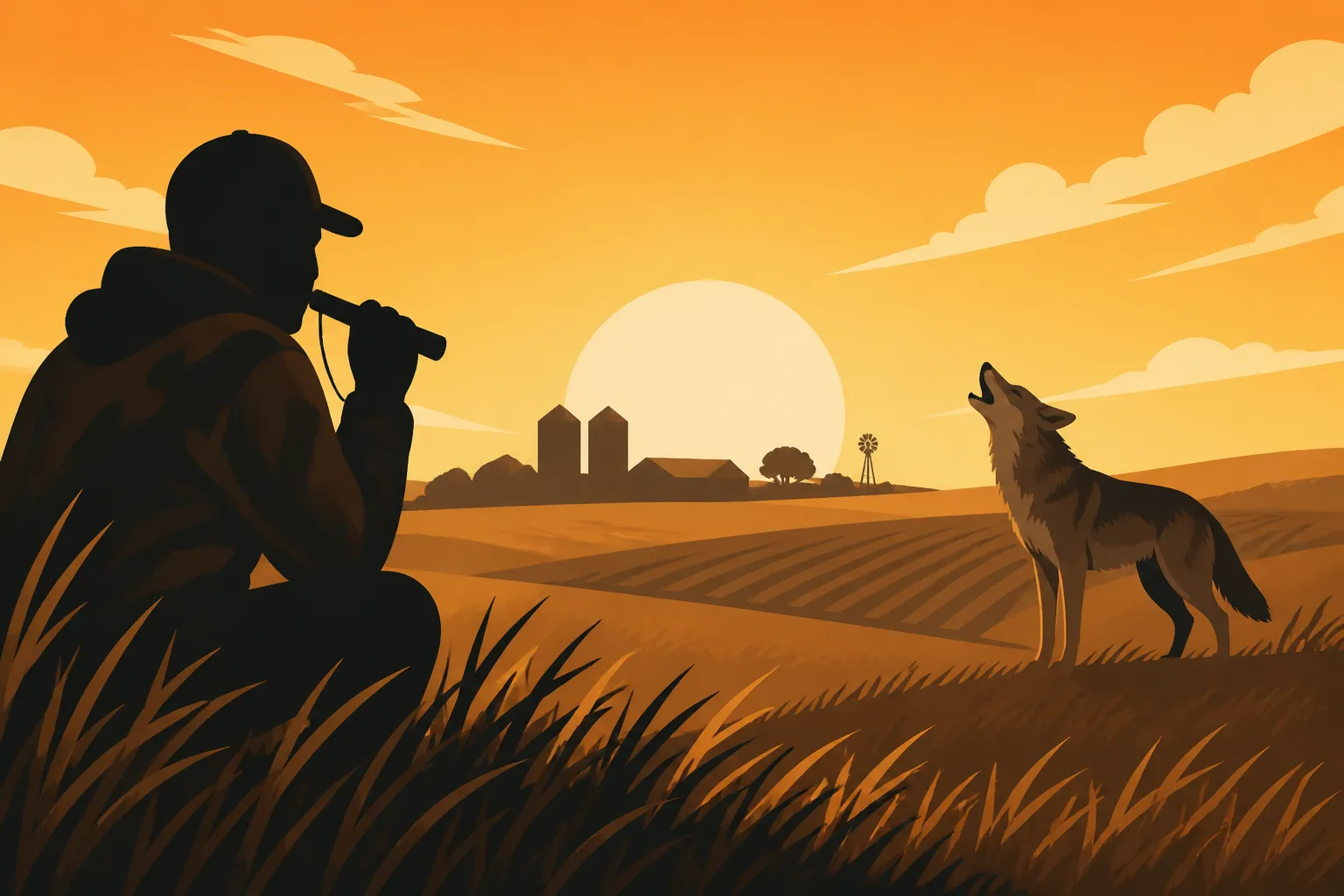
Trying to call in a coyote across vast stretches of North Dakota farm country can feel like an impossible task. These incredibly intelligent predators are constantly moving, adapting to human activity, and often seem to vanish into thin air, leaving many hunters frustrated after long, cold hours. This comprehensive guide will break down the specific challenges and proven strategies for successfully calling coyotes in the diverse agricultural landscapes of North Dakota.
Understanding the North Dakota Farm Country Coyote
Coyotes in North Dakota's farm country are survivors, perfectly adapted to a landscape that offers both abundant food and significant human presence. Their behavior is intrinsically linked to the rhythms of agriculture, making understanding their habits crucial for any caller.
Coyote Behavior in Agricultural Landscapes
In North Dakota's vast agricultural regions, coyotes operate within a mosaic of cultivated fields, shelterbelts, sloughs, and CRP grasslands. Their primary motivation, like any predator, is food, and farm country offers a smorgasbord. During planting and growing seasons, they'll target small rodents like voles and mice that thrive in crop residue or along field edges. Young deer fawns, newborn calves, and even vulnerable domestic poultry can become targets, especially if easy pickings are available. As crops mature, particularly corn and sunflowers, these fields become incredible havens – offering dense cover for stalking, thermal protection from the elements, and a buffet of rabbits, pheasants, and deer that also utilize the cover.
Coyotes are opportunistic and will follow the food. After harvest, when fields are bare, they shift their focus to remaining crop gleanings, dead livestock, or concentrate near thicker cover like shelterbelts and river bottoms where prey animals are forced to congregate. Their travel routes often follow fence lines, drainage ditches, and old farm tracks, providing both easy movement and a scent corridor. Understanding these patterns, like where deer move through a field, can also give clues as to where coyotes might cross or patrol, helping you predict potential ambush points. You can learn more about North Dakota Coyote Diet in Farm Country to really dial in your calling choices.
Seasonal Influences on Coyote Activity
The North Dakota seasons dictate more than just the weather; they fundamentally alter the farm country landscape and, consequently, coyote behavior.
- Spring and Summer: With planting underway and crops emerging, coyotes are often focused on denning and raising pups. This period can be excellent for calling, as adult coyotes are highly protective and aggressive towards perceived threats to their young. Distress calls mimicking pup distress or even rival coyote howls can be incredibly effective. However, the rapidly growing crops provide increasing cover, making visual spotting a challenge. Access might also be restricted due to active farming.
- Fall: Post-harvest, especially after small grains and corn are off the fields, coyotes become more visible. Their diets shift as rodents disperse and upland game birds are more exposed. As temperatures drop and hunting pressure increases, they become warier. This is a prime time for general distress calls (rabbit, bird) as coyotes look to fill up for the winter. This is also when young coyotes are dispersing, which can lead to a mix of naive and educated animals responding.
- Winter: This is often considered the prime calling season. Snow cover forces coyotes to concentrate around remaining cover and reliable food sources, making their tracks and travel patterns easier to decipher. The open, snow-covered fields provide excellent visibility, but also expose the hunter. Coyotes are often hungrier in the brutal North Dakota winters, making them more responsive to calls. However, they are also at their wariest, having evaded hunters for months. During this time, Coyote Calling at First Light can be exceptionally productive, as coyotes are often on the move before daybreak.
Essential Gear for Farm Country Coyote Calling
Successfully calling coyotes in the wide-open, often wind-swept fields of North Dakota requires specific gear choices designed for long-range engagements and effective concealment.
Calls: Electronic Versus Hand Calls
Choosing the right call is foundational to your success, and both electronic and hand calls have their distinct advantages and disadvantages in the farm landscape.
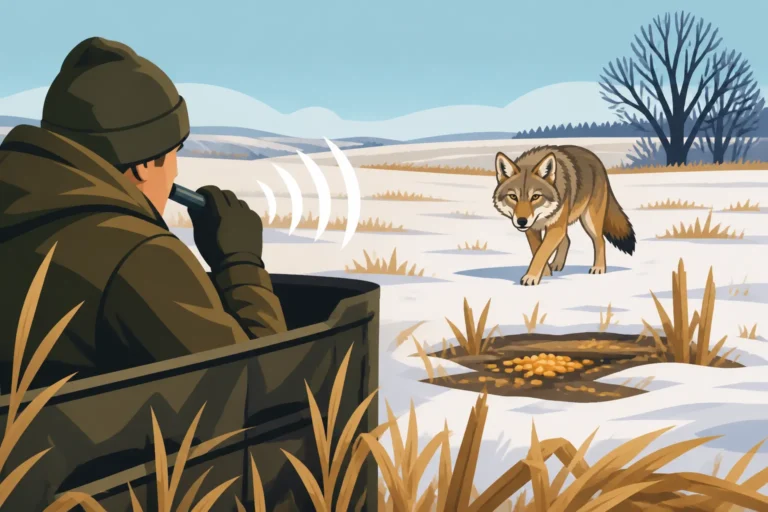
- Electronic Calls: These are often the go-to for many farm country hunters due to their volume, variety of sounds, and ability to project sound away from the hunter. Modern e-calls come pre-loaded with dozens, if not hundreds, of sounds, from various rabbit and bird distress calls to coyote howls, barks, and pup distress. This versatility allows you to adapt to whatever coyotes you encounter, whether they're wary adults or curious youngsters. Their powerful speakers can cut through the North Dakota wind, reaching coyotes across vast sections of open field. The ability to place the speaker away from your position, often 50-100 yards out, is a huge advantage, drawing the coyote's attention away from your hiding spot. Brands like Foxpro and Lucky Duck are popular choices, offering robust units built for demanding conditions. The main downsides are cost, battery life in extreme cold, and the learning curve for using their remote controls effectively.
- Hand Calls: While more challenging to master, hand calls offer a level of realism and nuance that e-calls sometimes struggle to replicate. They are less expensive, require no batteries, and are incredibly reliable. A skilled caller can create subtle variations in tone, volume, and rhythm that might entice a call-shy coyote. Open-reed calls are versatile for distress sounds, while closed-reed calls are often easier for beginners to get consistent rabbit squeals. Howler calls are essential for locating coyotes or challenging a dominant male. For close-in work or when trying to finish a wary coyote that's hung up, a hand call can be invaluable. However, projecting sound across a large field can be difficult, and you must make the sounds from your position, which can draw the coyote's eyes directly to you. A combination of both, using an e-call for initial attraction and a hand call for close-in enticement, is often the most effective strategy.
| Call Type | Pros | Cons | Best For |
|---|---|---|---|
| Electronic | High volume, wide sound variety, remote placement, hands-free operation | Expensive, battery-dependent (cold weather), less "natural" interaction | Long-range calling, windy conditions, covering large areas, drawing attention away from hunter |
| Hand Call | Realistic sounds, inexpensive, no batteries, subtle nuance, highly portable | Lower volume, requires skill to master, sound originates from hunter's position | Finishing wary coyotes, close-range setups, locating coyotes, backup call |
Optics and Concealment
In open farm country, coyotes have an incredible advantage: their eyesight. What might seem like minimal cover to you is often enough for them to spot movement from a quarter-mile away.
- Optics: A good pair of binoculars (10×42 or 12×50) is non-negotiable. You'll use them constantly to scan fields, identify incoming coyotes long before they see you, and confirm their direction of travel. A quality rifle scope with sufficient magnification (e.g., 3-9x, 4-12x, or even 4-16x) is also essential for those long shots across open fields. Reticles designed for holdover (BDC, Christmas tree) can be a major asset when dialing in shots at varying distances. Many hunters use a rangefinder to quickly determine distances to potential shooting lanes or landmarks before a coyote even shows up, ensuring confidence in the shot when the moment arrives.
- Concealment: Camouflage, and more importantly, how you use it, is critical. Full head-to-toe camo that blends with the dormant fields (tans, browns, grays in fall/winter) or green (spring/summer) is a must. A face mask or face paint breaks up the outline of your head, which is often the first thing a coyote will spot. More important than the pattern is the actual setup. Utilize whatever natural cover is available: a brush pile, the edge of a shelterbelt, the lee side of a hay bale, or even a slight rise in a field. Never set up on a skyline. Break up your outline, stay absolutely still, and avoid sudden movements. Even the slightest twitch can send a wary coyote backtracking. Consider using a ground blind if you plan to hunt from a stationary position for extended periods, especially if the available natural cover is sparse.
Firearms and Ammunition
Given the open nature of North Dakota farm country, shots on coyotes can range from close-quarters encounters to impressive long-distance engagements, demanding appropriate firearms and ammunition.
- Firearms: A flat-shooting, accurate rifle is paramount. Popular calibers include the .223 Remington, .22-250 Remington, .204 Ruger, and .243 Winchester. These cartridges offer excellent velocity and a relatively flat trajectory, making them suitable for shots out to 300-400 yards or more, which is common in open fields. Bolt-action rifles are favored for their inherent accuracy, while AR-platform rifles offer quick follow-up shots if multiple coyotes appear. Shotguns, particularly 12 or 20 gauge with specialized coyote loads (like buckshot or TSS), can be effective for closer range calling in thick brush or around farmsteads where rifle shots might be unsafe or illegal.
- Ammunition: For rifles, choosing the right bullet is crucial. Varmint-specific bullets like Hornady V-Max, Barnes Varmint Grenade, or Nosler Ballistic Tip are designed for rapid expansion and explosive energy transfer, ensuring quick, humane kills and minimizing ricochets in open terrain. Avoid bullets designed for large game, as they might pass through a coyote without expanding sufficiently. For shotguns, specialized coyote loads from manufacturers like Federal or Winchester offer tighter patterns and extended range, maximizing effectiveness at typical shotgun distances. Always confirm that your chosen ammunition performs well with your specific firearm by testing it at the range before heading afield. Consider how
Legal Firearms for Deer Huntingmight differ from coyote hunting, especially if you plan to hunt other species concurrently.
Strategic Calling Techniques for Open Farm Land
Calling coyotes in North Dakota's vast farm country isn't just about making noise; it's about understanding the nuances of the terrain, wind, and how coyotes use these elements to their advantage.
Setup and Approach
Your setup is perhaps the most critical component of a successful call, especially in open country where visibility works both ways.
- Wind Direction: Always approach and set up with the wind in your favor, blowing from the coyote's likely approach path towards you. Coyotes rely heavily on their sense of smell, and if they catch your scent, the hunt is over before it begins. Even a slight crosswind can carry your scent further than you'd expect. Use a wind checker constantly as you approach your calling location.
- Terrain Features: Scan the landscape for any natural advantages. A slight rise, a drainage ditch, the edge of a tree line (shelterbelt), or even a large rock can offer concealment. Set up so you have a clear view of the most likely approach routes while remaining hidden. Often, coyotes will circle downwind to confirm the source of the sound, so try to anticipate this and set up to intercept them before they get there. Positioning yourself near a fenceline or a break in vegetation where a coyote might hesitate or pause can give you a critical shot opportunity.
- Establishing an Advantage: Get to your spot quietly and carefully. Avoid skylining yourself. Once in position, quickly get comfortable and ready to shoot. Make sure your rifle is shouldered or on a rest, and your optics are adjusted. If using an e-caller, place it 30-70 yards out from your position, preferably in a spot where it's visible to an incoming coyote but slightly off to the side, drawing their attention away from you. Remember that coyotes are accustomed to human presence in farm country, but they are also incredibly wary. Minimizing your footprint and maintaining absolute stillness once the calling starts is paramount.
Calling Sequences and Volume
The art of calling involves knowing what to say, when to say it, and how loudly to say it. There's no single "magic" sequence, but understanding coyote psychology helps.
- Distress Calls: Rabbit (cottontail, jackrabbit) and bird (pheasant, crow) distress calls are staples. Start with soft, pleading cries for 30-60 seconds, then pause for several minutes. If no response, increase the volume and intensity slightly, mimicking a more frantic animal. Vary your calls; don't just stick to one sound. If coyotes are present in the area, they'll usually respond within the first 10-15 minutes, often circling downwind to investigate.
- Howls and Barks: Use howls to locate coyotes, especially at dawn or dusk, or to challenge a dominant male. Lone howls can signal a coyote looking for company, while group howls can simulate a territorial dispute. Intermittent barks can pique curiosity. If you hear a distant coyote howl back, gauge its direction and intensity, then decide whether to respond with a challenge howl or switch to distress to draw it in.
- Volume Control: In the wide-open expanse of North Dakota farm country, you'll generally need more volume than in timbered areas. The wind can carry sound away, but also mask your calls. Start loud enough to be heard across a quarter to half-mile, but not so loud that it sounds unnatural or blows out a close-by coyote. As the setup progresses, you can adjust. If you're hunting an area known for Hunting North Dakota's Prairie Pothole Region, sounds of waterfowl distress can also be surprisingly effective, as coyotes commonly prey on ducks and geese.
Decoy Use
Decoys can be a game-changer, especially for drawing a coyote's focus away from the hunter and creating a more convincing scenario.
- Motion Decoys: These are arguably the most effective. A small, battery-operated decoy that mimics a struggling rabbit or bird can captivate a coyote's attention, giving you precious moments to raise your rifle and make a shot. Place it near your e-caller, slightly out from your position. The movement is often enough to draw a wary coyote that's hung up at 200 yards an extra 50-100 yards closer, or to distract it just as it's pinpointing your setup. The
Lucky Duckbrand offers various effective motion decoys for coyote hunting. - Static Decoys: While less dynamic, a simple rabbit or bird silhouette decoy can still add realism to your setup, especially when combined with motion. They work best when visible from a distance. Some hunters use a "coyote decoy" – a small silhouette of a coyote – placed near their setup to draw in a territorial rival. This can be particularly effective during the breeding season. Regardless of type, decoys work by appealing to a coyote's visual hunting instincts, making the scene more believable and offering a critical distraction. Just remember to pack them in and out; leaving them out can create litter or confuse other hunters.
Navigating Access and Legalities in North Dakota Farm Country
North Dakota's landscape is predominantly private land, making landowner relations and understanding access regulations incredibly important for coyote hunters.
Gaining Permission
Unlike some western states, a vast majority of North Dakota's prime farm and ranch land is privately owned. Simply showing up and hunting can lead to trespassing charges and damage your reputation, and that of other hunters.
- The Importance of Landowner Relations: Building trust with landowners is fundamental. Many farmers and ranchers welcome coyote hunters, seeing them as allies in protecting livestock and game, but they value respect and communication above all else.
- Knocking on Doors: This is the traditional, and often most effective, method. Approach farmhouses politely, introduce yourself, and clearly state your intention to hunt coyotes. Be prepared to show your license. Offer to share your take, help with chores, or provide references. Ask specific questions: "Where can I park?", "Are there any cattle in this field?", "Are there any areas you'd prefer I avoid?" Respecting their property, closing gates, avoiding driving on wet fields, and picking up your spent casings are small gestures that build goodwill. Remember, permission is a privilege, not a right. Never assume that permission to hunt coyotes extends to other species, or to other properties the landowner might own. You might be surprised at how willing landowners are when approached respectfully, especially if coyotes are causing issues with livestock or game on their property.
Understanding PLOTS and Public Land
While private land dominates, North Dakota does offer some public access through various programs and designations that can provide valuable coyote hunting opportunities.
- The PLOTS Program Explained: North Dakota's Private Land Open To Sportsmen (PLOTS) program is a fantastic initiative where the state leases private land for public hunting access. These tracts are often found within or adjacent to farm country and can be excellent for coyotes. The key is to Scouting PLOTS Land With the ND Hunt App or using the physical PLOTS guide. Always adhere strictly to the rules posted at the PLOTS site and on the app – some might have specific restrictions on vehicle use or nighttime hunting. While PLOTS lands are a great resource, they can also experience heavier hunting pressure, making coyotes warier.
- Waterfowl Production Areas (WPAs) and Wildlife Management Areas (WMAs): Scattered throughout the prairie pothole region, these federal (WPAs) and state (WMAs) lands are primarily managed for waterfowl and other wildlife but are often open to public hunting for coyotes. They frequently feature excellent cover like cattail sloughs, dense grasslands, and shelterbelts, which can hold coyotes. Like PLOTS, these areas may have specific regulations to check before hunting. Tools like GoHunt's mapping layers can be invaluable for identifying these public parcels and understanding their boundaries.
- State School Lands: North Dakota also has scattered parcels of state school land that are generally open to public hunting. These often appear as quarter-sections within larger private holdings. They might be unmarked, so using a GPS mapping app like GoHunt or onX is crucial for identifying them and ensuring you don't accidentally trespass. These can sometimes be overlooked gems, offering less pressured opportunities.
Important Regulations
Being a responsible and legal hunter means understanding and adhering to North Dakota's specific hunting regulations.
- Shooting Near Buildings and Roads: North Dakota law has strict regulations regarding discharging firearms near occupied dwellings and buildings. Always know your target and what's beyond it. Never shoot across public roads. Road hunting is generally prohibited, meaning you cannot pursue game from a motor vehicle on a public right-of-way. Always confirm the exact setback distances and definitions in the current North Dakota Game and Fish Department (NDGFD) proclamation.
- Blaze Orange Requirements: While not always mandatory for coyote hunting outside of big game seasons, it's always a good idea to wear blaze orange, especially if other hunting seasons are open or if you're concerned about visibility to other users. Check the current year's regulations for specific requirements.
- Night Hunting and Lights: North Dakota has specific rules regarding hunting furbearers at night, including the use of artificial lights. Generally, coyotes can be taken at night with the aid of a light, but there are restrictions on where and how this can be done, and often, written landowner permission is required for private land. These regulations can change, so always consult the latest NDGFD proclamation or their website. Ignoring these rules can lead to significant penalties, so it's critical to be informed. You can review the North Dakota Coyote Hunting Season Rules for detailed information.
Advanced Tactics for Wary Coyotes
After you've got the basics down, you'll inevitably encounter coyotes that seem to have a Ph.D. in evasion. These intelligent animals quickly learn from pressure, making advanced tactics essential.
Hunting After a Cold Front
North Dakota is famous for its dramatic weather shifts, and a severe cold front can profoundly impact coyote behavior, often presenting prime hunting opportunities.
- Impact on Coyote Behavior: When a brutal cold front sweeps through, coyotes become incredibly energy-conscious. They'll seek shelter, conserve energy, and often concentrate near reliable food sources. Following a significant drop in temperature or a heavy snow, coyotes tend to be hungrier and more willing to investigate a call. The extreme cold forces them to move more to hunt and to generate body heat.
- Tactical Adjustments: After a cold front, target areas with dense cover, like thick shelterbelts, drainage ditches, or river bottoms that offer protection from the wind and snow. These are often where rabbits, pheasants, and deer will also be seeking refuge, creating a food hub for coyotes. Your calls might need to be louder to cut through the cold, still air or the lingering wind, but also more persistent, as coyotes might be slower to respond from deep cover. Consider using prey distress calls that mimic animals struggling in the snow or cold, tapping into their opportunistic instincts. Pay close attention to Hunting After a Hard Prairie Winter as these conditions often lead to desperate coyotes.
Dealing with Educated Coyotes
Nothing is more frustrating than a coyote that hangs up at 200 yards, circling downwind just out of range, having clearly "been to school" on calling.
- Switching Calls: If a coyote approaches cautiously or hangs up, immediately switch calls. If you started with rabbit distress, try a bird distress, rodent squeak, or even a pup-in-distress call. Sometimes a completely different sound can pique their curiosity enough to overcome their wariness. Avoid repeating the same call over and over if it's not working; coyotes quickly associate persistent, unchanging sounds with danger.
- Longer Setups and Silent Approaches: For educated coyotes, longer calling sequences with extended periods of silence can be effective. Try 5 minutes of calling, followed by 10-15 minutes of absolute silence, then another 2-3 minutes of calling. This mimics a real-life scenario where an injured animal might be struggling then resting. Also, consider a "silent approach." Instead of immediately calling, set up in a prime location downwind of likely bedding cover, give it 10-15 minutes, and simply wait. Sometimes a curious coyote will already be on the move.
- Using Decoys and Multiple Callers: Decoys, especially motion decoys, are critical for educated coyotes, drawing their attention away from your hiding spot. If hunting with a partner, try having one caller positioned further away from the shooter, using different calls, to create a more dynamic and confusing scenario for the coyote. For exceptionally wary coyotes, consider setups where you focus on natural travel corridors and ambushes rather than relying solely on calling to bring them into the open. Understanding North Dakota Deer Vehicle Collisions can also give clues, as coyotes are drawn to roadkill, making those areas potential calling spots.
Night Hunting Considerations
Night hunting coyotes, where legal, can be an incredibly effective tactic, as coyotes are often more active and less wary under the cover of darkness.
- Legalities: As mentioned previously, night hunting regulations in North Dakota are specific and can be complex. Always double-check the current NDGFD proclamation. In general, it often requires landowner permission on private land and has specific rules regarding weapon type, light sources, and whether the light can be attached to the firearm or vehicle.
- Specialized Gear: Night hunting requires specific equipment. A quality red or green LED light, often mounted to your scope or a separate scanning light, is essential. These colors are less disruptive to a coyote's night vision. Thermal optics or night vision devices are incredibly effective but come with a significant price tag. They allow you to spot coyotes (and other animals) long before they can see you.
- Safety and Ethics: Safety is paramount during night hunting. Ensure you have a clear understanding of your surroundings, backstops, and potential shot trajectories. Identify your target positively before shooting; it's easy to mistake other animals for coyotes at night. Hunt with a partner for added safety and to help with spotting. Always respect landowners' wishes and be extra cautious about disturbing livestock or residences with lights and noise. Remember to carry your North Dakota Hunting Licenses and What They Cost along with any necessary permits.
Disclaimer
Please consult the current North Dakota Game and Fish Department (NDGFD) hunting regulations and proclamations before engaging in any hunting activity. Regulations can change annually, and it is the hunter's responsibility to be aware of and comply with all applicable laws. This guide is for informational purposes only and does not supersede official state regulations.