North Dakota Sandhill Crane Migration
The sight and sound of thousands of sandhill cranes migrating across the North Dakota sky is truly one of nature's marvels, but understanding the intricate details of their journey – when they arrive, where they stop, and how their behavior shifts – can feel like trying to decipher a secret code. Many hunters and bird enthusiasts alike find themselves captivated, yet confused, by the nuances of this annual spectacle. This comprehensive guide will unravel the mysteries of the North Dakota sandhill crane migration, offering a detailed look at their routes, timing, and habits, and exploring the opportunities available for those wishing to pursue these majestic birds in the field.
The Basics of Sandhill Crane Migration Through North Dakota
North Dakota holds a truly unique and pivotal position in the annual migration of sandhill cranes. These magnificent birds undertake epic journeys, traveling thousands of miles between their northern breeding grounds and southern wintering habitats. For a significant portion of the continent's crane population, our state isn't just a flyover; it's a critical pit stop, a place where they can rest, refuel, and regroup before continuing their arduous voyage. Understanding this role is the first step in appreciating the sheer scale of the migration that unfolds over our prairies each year.
Why North Dakota is a Prime Migration Corridor
North Dakota sits squarely in the Central Flyway, one of the four major migratory bird routes across North America. This geographic placement alone makes it a natural funnel for vast numbers of waterfowl and other migratory birds, including sandhill cranes. What truly sets North Dakota apart, however, is its incredible abundance of crucial habitat. The state is dotted with countless wetlands, known as prairie potholes, which offer ideal undisturbed roosting sites—shallow water bodies where cranes can safely spend the night away from ground predators. These wetlands are often surrounded by expansive agricultural fields, particularly corn and small grains, which provide a rich and easily accessible food source. The combination of secure roosting areas and ample foraging opportunities creates an irresistible magnet for migrating cranes.
Imagine being a sandhill crane, having flown hundreds of miles, needing to replenish your energy reserves. North Dakota presents itself as an oasis. The vastness of the landscape means there are numerous options, reducing pressure on any single location. This is why you'll often see them in massive congregations in certain areas, particularly around larger lake systems or concentrations of wetlands. It’s not just random; it’s a strategic choice for the birds, and a predictable pattern for those who watch them.
Key Migration Timelines and Peak Movements
The sandhill crane migration through North Dakota typically unfolds in two distinct phases: spring and fall. The spring migration is often a swifter affair, as the birds are driven by the urgency to reach their breeding grounds further north. You'll usually start seeing the first signs of cranes returning in late March or early April, with numbers building throughout April. They push through relatively quickly, pausing only long enough to recover from long flights. While still impressive, the spring migration often lacks the prolonged, massive staging events characteristic of the fall.
The fall migration, however, is a different beast entirely. It's a more drawn-out process, influenced by weather patterns, food availability, and the gradual shortening of daylight hours. Cranes typically begin arriving in North Dakota in late August, with numbers steadily increasing through September. The peak migration usually occurs in late September and early October, when colossal flocks can be seen and heard across the state. These birds will stage for weeks, sometimes even a month or more, taking advantage of the abundant leftover grains in harvested fields. It's during this time that you witness the true spectacle: tens of thousands of cranes congregating, their distinct bugling calls echoing across the prairies. The migration will then gradually wind down through late October and into early November, with only stragglers remaining once sustained cold weather and snow push them south. Keeping an eye on weather forecasts and historical migration data, often found on resources like GoHunt, can give you an edge in predicting these peak movements.
Understanding Crane Behavior During Migration
Observing sandhill cranes during their migration reveals a fascinating set of behaviors driven by their immediate needs for survival and energy conservation. From their communal roosting practices to their foraging strategies, every action is finely tuned to ensure a successful journey. For anyone interested in these birds, whether for observation or hunting, understanding these patterns is absolutely essential for predicting their movements and finding them in the vast North Dakota landscape.
Roosting and Feeding Habits on the Prairie
During migration, sandhill cranes exhibit very specific daily patterns. They are creatures of habit, often following similar routines day after day once they've settled into a staging area. Their nights are spent in large, communal roosts, almost exclusively in shallow water. This could be a large prairie slough, a reservoir shoreline, or even a flooded portion of a field. The shallow water provides a natural barrier against predators like coyotes and foxes, allowing the birds to rest more securely. You can often locate these roosts by their sheer size, sometimes holding thousands of birds, and by the cacophony of their calls at dawn and dusk.
As the sun begins to rise, the cranes will break from their roosts in small groups and begin their flight to feeding grounds. These feeding areas are almost always agricultural fields, with corn being a particular favorite. They are gleaners, picking up leftover grain from harvested fields. They may also feed on other small grains, invertebrates, and even small amphibians or reptiles. They will spend the majority of the day feeding, slowly moving across the expansive fields, before regrouping and making their way back to the roost as evening approaches. Understanding this daily cycle—roost to feed, feed to roost—is key to locating them. Scouting for these patterns is often discussed on hunting forums, and tools like GoHunt can help pinpoint potential feeding and roosting zones by analyzing habitat features.
Identifying Crane Species and Sounds
When observing sandhill cranes in North Dakota, you'll primarily be seeing the Lesser Sandhill Crane, which is the most abundant subspecies migrating through the state. However, it's worth noting that the larger Greater Sandhill Crane can also be found, though in much smaller numbers and typically in eastern parts of the state. Distinguishing between them in the field can be challenging without a side-by-side comparison, but the Lesser is generally smaller and has a shorter bill. Both share the iconic overall gray plumage, reddish patch on the forehead, and long legs and neck. Their flight is majestic, with slow, deliberate wingbeats, and they often fly in large V-formations or undulating lines.
Perhaps the most distinctive characteristic of sandhill cranes is their vocalization. Their call is a loud, rolling, bugle-like sound that carries for miles across the open prairie. This unique sound is produced by their elongated trachea, which coils within their sternum. It's an unforgettable sound, and often the first indicator that a flock is approaching or staging nearby. You'll hear various calls within a flock, from alarm calls to unison calls between mated pairs. Learning to recognize these sounds is invaluable for hunters and bird watchers alike.
| Characteristic | Lesser Sandhill Crane | Greater Sandhill Crane |
|---|---|---|
| Size | Smaller (approx. 3-4 feet tall) | Larger (approx. 4-5 feet tall) |
| Wingspan | Shorter (approx. 5-6 feet) | Longer (approx. 6-7 feet) |
| Bill Length | Shorter | Longer |
| Primary Range in ND | Abundant, state-wide migration | Less common, often eastern ND |
| Plumage | Grey, reddish crown | Grey, reddish crown (indistinguishable from Lesser for this feature) |
| Voice | Loud, bugling call | Loud, bugling call (similar to Lesser) |
| Hunting | Primary target species in ND | Less common target, generally managed under same rules |
Hunting Opportunities for Sandhill Cranes in North Dakota
For many, the sheer spectacle of the sandhill crane migration eventually leads to an interest in hunting them. North Dakota offers excellent opportunities for sandhill crane hunting, providing a challenging and rewarding experience. However, like all migratory bird hunting, it comes with specific regulations and requires careful planning and execution. It’s important to understand the framework that governs this unique hunting experience, from licensing to the actual tactics employed in the field.
Licenses, Regulations, and Special Zones
Before even thinking about heading out to hunt sandhill cranes in North Dakota, you need to ensure you have all the necessary licenses and certifications. First, you'll need a valid North Dakota hunting license, typically a small game license. Beyond that, because sandhill cranes are migratory birds, you are also required to possess a Federal Duck Stamp, as well as a Harvest Information Program (HIP) certification. This HIP certification is crucial for all migratory bird hunters and is easily obtained when purchasing your hunting license. For non-residents, understanding the specific North Dakota Nonresident Small Game License Cost is important.
North Dakota manages sandhill crane hunting through a specific season, which generally opens in early September and runs for a set period. There are also specific management zones for cranes, and it’s critical to know which zone you are hunting in, as season dates and bag limits can sometimes vary slightly. Bag limits are typically quite conservative, usually one or two birds per day, reflecting the migratory status of the species. Always consult the most current North Dakota Game and Fish Department regulations booklet or their website before planning your hunt, as rules can change annually. The online portal for licenses is quite user-friendly, and information available via platforms like GoHunt often links directly to official regulations.
Essential Gear and Hunting Tactics
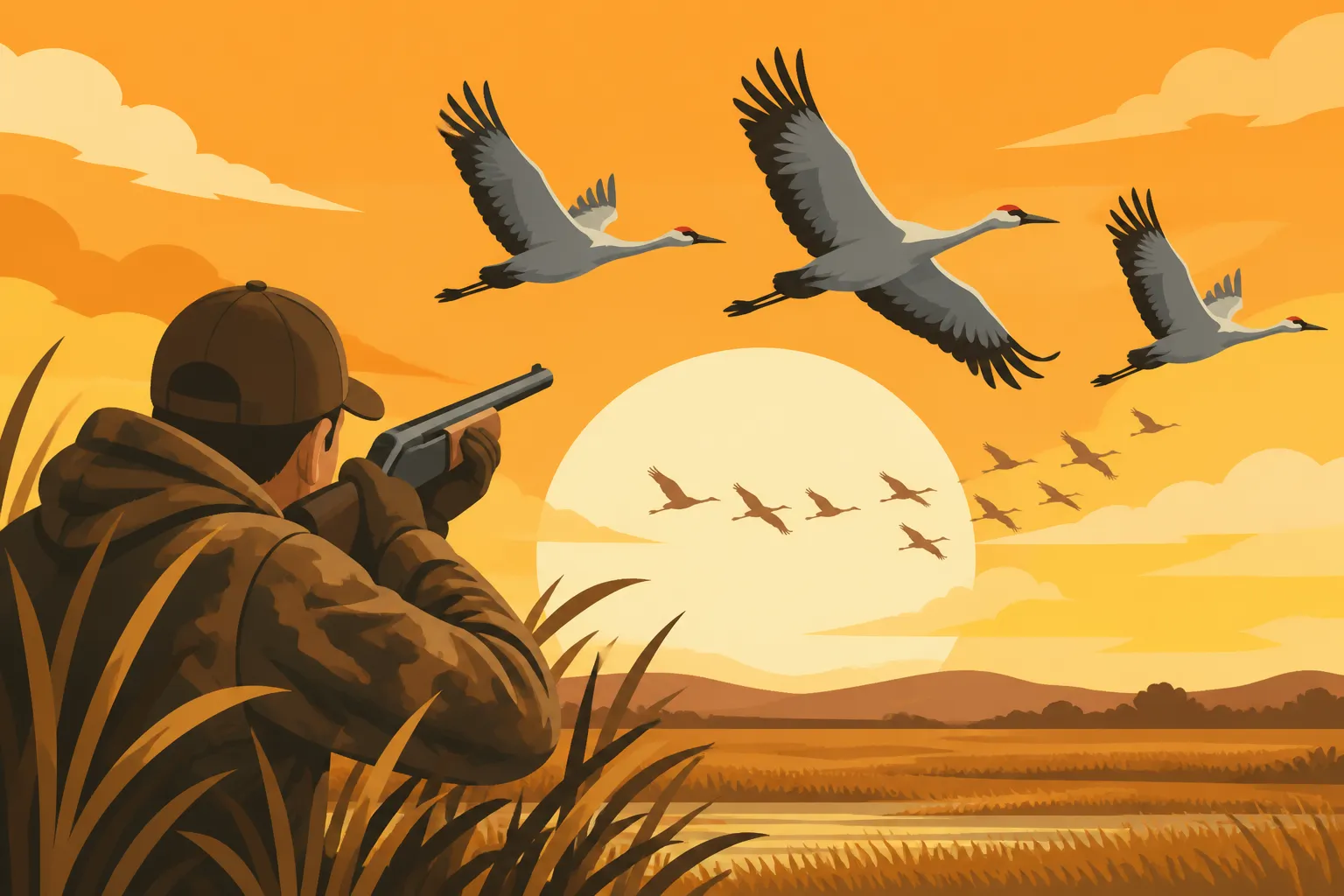
Successfully hunting sandhill cranes requires a combination of specialized gear and effective tactics. These birds are incredibly wary, possessing excellent eyesight and a natural wariness that makes them a formidable quarry. Decoys are perhaps the most essential piece of equipment. Full-body crane decoys, or even silhouette decoys, are critical for drawing birds into shooting range. You'll need a good spread, often at least a dozen, to effectively mimic a feeding flock. Cranes are also very sensitive to movement, so a well-camouflaged ground blind is absolutely necessary. Blinds that blend seamlessly into the harvested fields, such as layout blinds, are highly effective.
Calling plays a significant role in crane hunting. Learning to use a crane call to imitate their distinct bugling can help draw curious birds closer, especially those passing overhead. While they don't respond to calling in the same aggressive way some waterfowl do, a well-timed and realistic call can often pique their interest. Locating birds is often done by Spotting Pronghorn From a Section Road or other elevated vantage points, but for cranes, it's about finding those crucial roost-to-feed patterns. Scouting fields for fresh crane sign—tracks, droppings, and disturbed ground—is paramount. Once you've identified a consistently used feeding field, setting up before first light along the flight path from their roost, or directly in the feeding area, offers the best chance. Remember, these birds are large, requiring a larger shot size than ducks, typically steel BB or BBB, to ensure clean kills. Always prioritize ethical shooting and know your effective range. Hunting a standing corn field for late-season geese provides similar challenges in terms of field setup and camouflage.
| Tactic/Gear | Description | Importance for Crane Hunting |
|---|---|---|
| Decoys | Full-body, silhouette, or shell decoys mimicking feeding cranes. | Critical: Cranes are visual, need confidence in landing. |
| Camouflage Blind | Layout blinds or field blinds that blend into stubble. | Essential: Cranes have exceptional eyesight and spook easily. |
| Scouting | Locating active feeding fields and roost sites. | High: Patterning their daily routine is key to success. |
| Crane Call | A specialized call to imitate their bugling sound. | Moderate: Can draw curious birds, but not as aggressive as duck/goose calling. |
| Shotgun/Ammunition | 12-gauge or 10-gauge with larger steel shot (BB, BBB, T). | High: Large, tough birds require adequate stopping power. |
| Wind & Sun Position | Setting up with the wind at your back and sun in front. | Moderate: Helps birds finish into decoys and obscures hunter. |
Sandhill crane hunting provides a truly unique and engaging experience that stands apart from typical waterfowl pursuits. The sheer size and ancient calls of these birds make them an unforgettable quarry. By understanding their migration patterns, respecting their wary nature, and diligently applying effective hunting strategies, you can participate in a tradition that celebrates one of North Dakota’s most magnificent migratory visitors.
Disclaimer
This article is for general informational purposes only and does not constitute professional advice. Laws, prices and regulations vary by location and change over time. Consult a qualified professional for guidance on your specific situation.