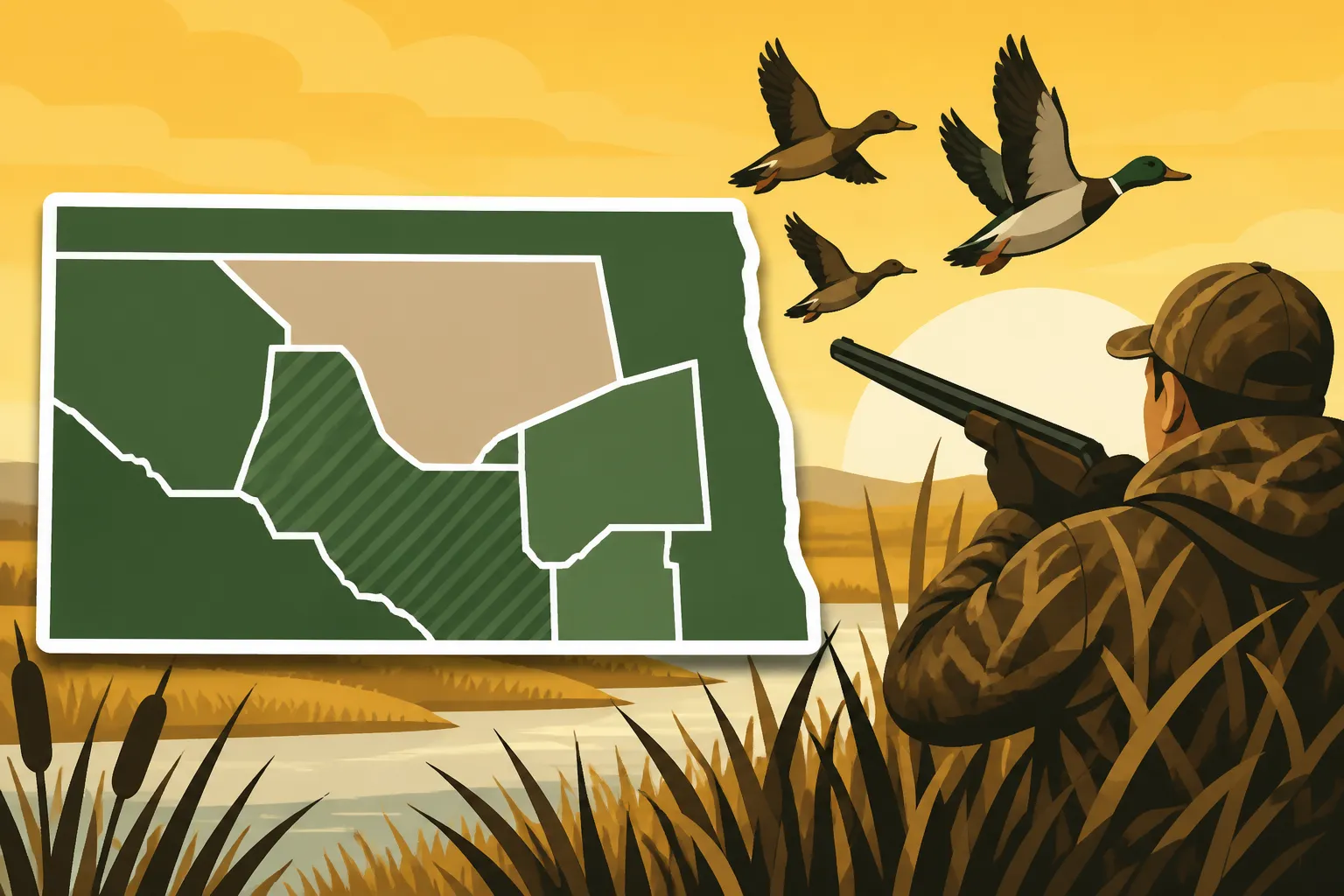
North Dakota’s Zone-Restricted Waterfowl License
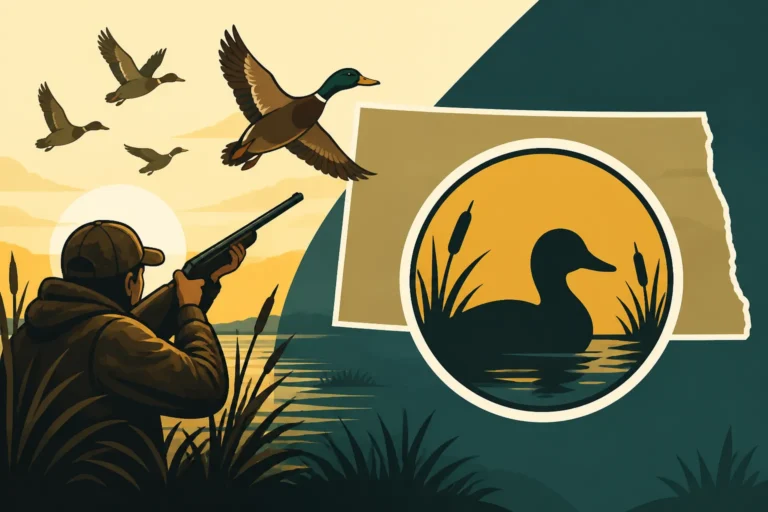
Navigating North Dakota's waterfowl hunting regulations can feel like trying to land a jumbo jet in a blizzard, especially if you're a nonresident. The unique zone-restricted waterfowl license often catches folks off guard, leading to confusion and potential legal missteps. This comprehensive guide is here to untangle the complexities of North Dakota's zone-restricted waterfowl license, ensuring you understand exactly what it is, who needs it, and how to stay on the right side of the law while enjoying some of the best waterfowl hunting in the country.
Understanding the Zone-Restricted Waterfowl License
For many years, nonresidents could purchase a general statewide waterfowl license and hunt ducks and geese anywhere in North Dakota during the open season. However, increasing pressure and a desire to manage hunting opportunity for residents led to significant changes. The introduction of the zone-restricted waterfowl license was a direct response to these pressures, aimed at spreading out nonresident hunting effort and preserving a quality experience for everyone. It's not just a minor tweak; it fundamentally reshapes how nonresidents approach a North Dakota waterfowl hunt.
The Purpose Behind the Restriction
At its core, the zone-restricted license was implemented to create a more equitable distribution of hunting pressure, particularly from nonresidents. North Dakota is renowned for its incredible North Dakota Waterfowl on the Prairie Pothole Flyway, drawing hunters from all corners of the country to its abundant sloughs, lakes, and fields. Without some form of regulation, certain highly productive areas could become overwhelmed. The North Dakota Game and Fish Department (NDGFD) recognized that concentrated nonresident hunting could impact local waterfowl populations, disturb resident hunting opportunities, and strain landowner relations. By dividing the state into distinct zones, the intent was to encourage nonresidents to explore different areas, reducing bottlenecks and promoting a more sustainable hunting environment. It's a balancing act, trying to provide access while protecting the resource and the experience for resident hunters. This system allows for more targeted management and ensures that the famed prairie potholes continue to offer exceptional hunting for generations.
Who Needs This Specific License
If you are a nonresident planning to hunt ducks, geese, mergansers, or coots in North Dakota, you absolutely need to pay close attention here. The zone-restricted waterfowl license is a mandatory requirement for all nonresidents pursuing migratory game birds in the state, with very few exceptions. It's not just an add-on; it replaces the former statewide nonresident waterfowl license entirely. This means that if you're coming from out of state, this license will be one of the foundational pieces of your hunting permit puzzle. Even if you're only targeting a specific species, say mallards on a local pond or Canada geese in a stubble field, this specific license is what you'll need. The only major caveat for nonresidents is the initial nine days of the waterfowl season, where nonresidents are prohibited from hunting public land and most state-owned or managed lands, regardless of license. You can learn more about North Dakota's Nine Resident-Priority Waterfowl Days for clarification. This distinction is crucial for planning your arrival and ensuring you don't inadvertently violate regulations during the early season.
Navigating the Zones and Their Boundaries
Understanding the physical boundaries of North Dakota's waterfowl zones is paramount. It’s not just an arbitrary line on a map; these lines dictate where you can and cannot hunt with your chosen license. The state is essentially split into two primary zones for nonresident waterfowl hunting: the Western Zone and the Eastern Zone. You, as a nonresident hunter, must select one of these zones at the time of purchase, and once you make that choice, you are restricted to hunting only within that designated zone for the entire season. There's no switching back and forth, no "Oops, I meant the other one" halfway through your trip.
Western vs. Eastern Zone Differences
The two zones offer distinct hunting experiences, largely due to their differing landscapes and waterfowl concentrations.
- Eastern Zone: This zone encompasses much of North Dakota's famous Prairie Pothole Region, including the vast stretches around Devils Lake, the James River Basin, and the Red River Valley. It's characterized by an abundance of wetlands, sloughs, and agricultural fields, making it a magnet for ducks and geese. Hunters often find themselves working decoy spreads on flooded fields, Layout Blind Hunting Devils Lake Fields, or targeting large migrations of snow geese. The eastern side typically sees heavier hunting pressure due to its high bird concentrations and historical reputation.
- Western Zone: While still offering excellent hunting, the Western Zone is generally drier and encompasses the more rugged terrain of the Badlands to the west and the Missouri River corridor. Waterfowl hunting here can be excellent, particularly along the Missouri River and its tributaries, as well as on various reservoirs and smaller prairie potholes. Hunters might focus on more localized duck populations, Canada geese, or even late-season diver ducks on larger bodies of water like Lake Sakakawea. This zone often offers a different kind of hunting experience, sometimes with less overall pressure than the east, but requiring a more intimate knowledge of the available water and feeding patterns.
It's vital to research both zones extensively before committing. Consider what type of hunting you prefer, the species you're most interested in, and the specific geographic areas you plan to visit.
Key Geographic Markers and Boundaries
The dividing line between the Eastern and Western Zones is critical to memorize or at least have readily accessible on your hunting maps or GPS. The boundary follows a clear path, generally running north to south.
The official boundary between the East and West Zones is defined as follows:
From the South Dakota border, it follows U.S. Highway 83 north to the city of Bismarck. From Bismarck, it continues north on U.S. Highway 83 to North Dakota Highway 37. It then goes east on Highway 37 to North Dakota Highway 14. North on Highway 14 to North Dakota Highway 19. East on Highway 19 to North Dakota Highway 3. North on Highway 3 to North Dakota Highway 66. East on Highway 66 to the Canadian border.
This means that if you are hunting east of this entire line, you need an Eastern Zone license. If you are hunting west of this line, you need a Western Zone license. A good analogy is thinking of it like a state border; crossing it without the proper authorization (or in this case, the right zone on your license) is a violation. Many mapping applications, including the GoHunt platform, incorporate these boundary lines, which can be incredibly helpful for visual confirmation when you're in the field. Double-checking your location against these established highways and roads is non-negotiable for compliance.
Impact on Non-Resident Waterfowl Hunters
The introduction of the zone-restricted license for nonresidents wasn't just a bureaucratic change; it fundamentally altered how many hunters plan and execute their North Dakota waterfowl trips. It added a layer of strategy and pre-scouting that wasn't as critical when a single license covered the entire state. For better or worse, it forces a more focused approach, which can be a good thing if you're prepared.
Planning Your Hunt Around Zone Rules
Successful nonresident waterfowl hunting in North Dakota now demands meticulous planning centered around your chosen zone. The days of freely chasing bird reports across the entire state are gone. Now, before you even leave home, you need to commit to an area. This means:
- Targeted Scouting: If you typically rely on last-minute intel or broad area scouting, you'll need to narrow your focus. Using tools like GoHunt or the NDGFD PLOTS guide and digital maps to identify potential hunting areas within your selected zone becomes essential. Look for Waterfowl Production Areas (WPAs), PLOTS land, and other public access points that fall squarely within your zone's boundaries.
- Logistics and Lodging: Your lodging and travel routes must also align with your zone. Booking a hotel in Jamestown won't do you much good if you've committed to the Western Zone. Consider the drive times to potential hunting spots within your chosen zone and ensure your base camp is strategically located.
- Flexibility (or Lack Thereof): While North Dakota is known for its mobile hunting, the zone restriction limits that mobility significantly for nonresidents. If the birds aren't cooperating in your chosen zone, you can't simply pack up and move to the other side of the state without being in violation. This emphasizes the importance of having backup spots and diverse hunting options within your selected zone. For example, if you plan on Decoy Spreads for Prairie Pothole Mallards in the east, make sure you have several sloughs or fields scouted within that zone, rather than just one.
This enhanced need for pre-planning isn't necessarily a bad thing. It often leads to a deeper understanding of a specific area, fostering better scouting habits and more consistent success for those who embrace the challenge.
Consequences of Non-Compliance
Hunting without the correct zone-restricted license, or hunting in the wrong zone, is a serious offense that can lead to significant penalties. This isn't just a slap on the wrist; wildlife enforcement in North Dakota takes these regulations very seriously.
- Fines and Fees: You're looking at substantial monetary fines. These can vary depending on the severity and whether it's a first offense, but expect hundreds of dollars, potentially even thousands.
- Loss of Hunting Privileges: Perhaps more impactful than the fine itself is the potential loss of your hunting privileges. Violations can lead to license revocation, not just for the current season, but potentially for multiple years. This revocation can often extend beyond North Dakota, impacting your ability to hunt in other states through interstate compacts.
- Confiscation of Game and Equipment: In some cases, game taken illegally might be confiscated. Your firearms, decoys, or other hunting equipment could also be seized.
- Reputation and Future Hunting Opportunities: Beyond the immediate legal consequences, a violation can damage your reputation as a responsible hunter and make future license applications or even private land access more challenging.
It's simply not worth the risk. Always double-check your license, confirm your location using GPS or maps, and if there's any doubt, err on the side of caution. Ignorance of the law is never an acceptable defense.
Purchasing and Carrying Your Zone-Restricted License
Getting your hands on the right license is the first tangible step toward a successful nonresident waterfowl hunt in North Dakota. The process is relatively straightforward, but understanding your options and what you need to have on hand is key to avoiding last-minute headaches. Remember, securing your North Dakota Nonresident License Options well in advance is always a good idea.
Online vs. In-Person Purchase Options
North Dakota offers convenient ways to purchase your zone-restricted waterfowl license:
- Online Portal (Recommended): The North Dakota Game and Fish Department's online licensing portal is by far the most popular and efficient method. You can access it 24/7, choose your desired zone (Eastern or Western), complete the application, and pay with a credit card. The system will guide you through all the necessary steps, including purchasing your general game and habitat license, small game license, and the federal duck stamp. You'll also need to acquire your Harvest Information Program (HIP) certification through this portal. Once purchased, you'll receive a digital copy of your license that you can print or display on your mobile device.
- Authorized License Vendors: For those who prefer a face-to-face transaction or need assistance, licenses can also be purchased at numerous authorized vendors across the state. These typically include sporting goods stores, bait shops, and some general stores in larger towns and smaller communities. Just be aware that if you wait until you're in a remote area, vendor options might be limited, and hours of operation can vary. Always confirm the vendor can issue nonresident waterfowl licenses and the specific zone you need.
Regardless of how you purchase, ensure you're selecting the correct zone. Mistakes happen, but a mis-selected zone means you'll either be hunting illegally or you'll have to purchase another license for the correct zone, effectively paying twice.
Required Documentation and Proof
When purchasing your license, whether online or in person, you'll need certain information and, crucially, you must be able to prove you possess valid licenses while afield.
- Personal Information: You'll need your full name, date of birth, address, and often a driver's license number or state ID.
- Federal Duck Stamp: A valid Federal Migratory Bird Hunting and Conservation Stamp (often called a "Duck Stamp") is required for all waterfowl hunters 16 years of age or older. When purchasing online, you'll usually be offered the option to buy an "e-stamp" which is valid immediately. The actual physical stamp will be mailed to you later. You must sign the face of your physical stamp once you receive it.
- HIP Certification: The Harvest Information Program (HIP) certification is mandatory for all migratory bird hunters. It's a quick survey about your hunting activity from the previous year and is typically integrated into the online licensing process.
- Proof in the Field: North Dakota law requires you to carry proof of your licenses, including your zone-restricted waterfowl license, federal duck stamp, and HIP certification, while hunting. A printed copy is always a safe bet, as is having it accessible on your smartphone. However, remember that cell service can be spotty in remote prairie areas, so don't solely rely on a digital version without a backup. Many hunters choose to carry a laminated copy or a clear screenshot of their digital license. You can find more details on what you need for North Dakota Migratory Bird Certification.
Summary of Key Waterfowl License Components:
| License Type | Requirement (Nonresident) | Purchase Method | Notes |
|---|---|---|---|
| General Game & Habitat License | Required | Online/Vendor | Foundational license for almost all hunting in ND. |
| Small Game License | Required | Online/Vendor | Covers waterfowl and other small game species. |
| Zone-Restricted Waterfowl Tag | Required | Online/Vendor | Must choose Eastern OR Western Zone. Non-transferable once chosen. |
| Federal Duck Stamp | Required (age 16+) | Online/Post Office | E-stamp valid immediately, physical stamp mailed. Must be signed. North Dakota Federal Duck Stamp Requirement |
| HIP Certification | Required | Online | Brief survey on previous year's migratory bird hunting. |
Ensure you have all these ducks in a row (pun intended!) before you head into the field.
Strategizing Your Hunt Within the Zone Limitations
While the zone restriction might seem like a barrier, savvy nonresident hunters learn to leverage it as an opportunity for more focused and often more successful hunts. Instead of spreading yourself thin across the entire state, you can become an expert in a specific zone.
Focusing on Specific Zone Opportunities
Once you've committed to a zone, your planning should shift to maximizing the opportunities within that area.
- Eastern Zone Focus: If you've chosen the Eastern Zone, you're likely targeting areas known for high bird densities and diverse habitat, particularly in the North Dakota's Prairie Pothole Region. This means studying the migration patterns for mallards, pintails, canvasbacks, and various goose species that funnel through this rich waterfowl factory. Explore the numerous Waterfowl Production Areas (WPAs) and state-managed areas that dot the landscape. These areas are specifically managed to benefit waterfowl and often provide excellent hunting access. Don't overlook the potential for snow goose hunting, especially during the spring conservation order, although the zone restriction still applies in fall.
- Western Zone Focus: In the Western Zone, the Missouri River and its associated reservoirs, such as Lake Sakakawea and Lake Oahe, become prime destinations. These larger bodies of water can hold impressive numbers of divers and puddle ducks, especially during colder weather when smaller potholes freeze. You might find more opportunities for river hunting or targeting birds staging on large water. Mule deer are also common in this zone, particularly around the Badlands, offering a unique combo hunt if you've drawn a deer tag. Researching local agricultural practices can also be beneficial, as grain fields often draw geese and ducks away from water sources.
By focusing your scouting and research on the specific characteristics and opportunities of your chosen zone, you increase your chances of finding productive spots and understanding local bird movements.
Utilizing Scouting Tools Effectively
Modern technology is a game-changer for hunting, and it's especially useful for navigating North Dakota's zone-restricted system.
- Mapping Applications (GoHunt, onX Hunt): These apps are indispensable. Platforms like GoHunt allow you to overlay public land boundaries, parcel ownership, and critical geographic features directly onto detailed satellite imagery. Most importantly, you can often find layers that clearly mark the Eastern and Western Zone boundaries, ensuring you stay compliant. Use these tools to:
- Identify Public Access: Locate Waterfowl Production Areas (WPAs), PLOTS (Private Land Open To Sportsmen) tracts, and Wildlife Management Areas (WMAs) within your selected zone.
- Scout from Afar: Look for open water, marshy areas, and agricultural fields that might attract birds. Identify potential access points, parking areas, and safe approaches to your hunting spots.
- Track Your Location: Use the GPS function on your phone to know your exact location relative to zone boundaries, especially when hunting near the dividing line.
- NDGFD Website and Resources: The North Dakota Game and Fish Department website is a treasure trove of information. Look for:
- Weekly Waterfowl Reports: These reports often provide general bird activity updates, migration trends, and sometimes even specific area reports, though they won't endorse specific zones.
- PLOTS Guide: The PLOTS guide, available online and in print, details private lands open to public hunting. Make sure any PLOTS land you plan to hunt falls within your chosen zone.
- Hunter Education: While not directly a scouting tool, understanding North Dakota Hunter Education Requirements helps ensure you're a responsible hunter, which is always good for public land access and relations.
- Aerial Photography and Topographic Maps: Beyond just property lines, studying aerial photos and topographic maps helps you understand the landscape. Look for natural funnels, roosting ponds, feeding fields, and areas that might hold birds. This is crucial for planning effective decoy spreads or jump-shooting routes.
Combine these tools with actual on-the-ground scouting once you arrive. Nothing beats seeing the birds, observing their flight paths, and checking water levels and field conditions firsthand.
Common Misconceptions and FAQs
Even with clear rules, misconceptions can creep in, especially when dealing with such specific regulations. Let's clear up some common misunderstandings about North Dakota's zone-restricted waterfowl license.
Distinguishing from Other North Dakota Waterfowl Rules
It's easy to conflate the zone restriction with other nonresident waterfowl rules, but they are distinct requirements.
- Not the Same as the Nine Resident-Priority Days: The zone restriction is separate from the rule prohibiting nonresidents from hunting on state-owned or state-managed lands (like WPAs, WMAs, or PLOTS) for the first nine days of the waterfowl season. You still need your zone-restricted license for private land hunting during those first nine days, and then for public land hunting after that initial period, but only within your selected zone. This distinction is critical and often a source of confusion. Nonresidents are allowed to hunt private land with permission during those first nine days, assuming they have the correct zone license.
- Not a Daily Restriction: Once you choose your zone, that's your zone for the entire waterfowl season. It's not a daily choice or something you can change week-to-week. The choice is made at the time of purchase and is permanent for that license year.
- Beyond Federal Regulations: The zone restriction is a North Dakota state regulation that applies in addition to federal waterfowl hunting laws, such as bag limits, shooting hours, and the requirement for a federal duck stamp. You still need to abide by all federal rules, as well as state-specific rules like North Dakota Duck and Goose Bag Limits.
Understanding these differences is crucial for complete compliance and a stress-free hunt.
What to Do If You Cross a Zone Line Accidentally
Let's be realistic: in the heat of the moment, or even with careful planning, mistakes can happen. You might inadvertently drive past a boundary sign, or your GPS might glitch.
- Immediately Cease Hunting: If you realize you have crossed into the wrong zone while actively hunting, the absolute first thing you must do is immediately cease all hunting activity. Unload your firearm, pick up your decoys, and pack up.
- Remove Yourself from the Area: Get yourself and your equipment out of the incorrect zone as quickly and safely as possible.
- Do NOT Attempt to Legally Hunt in the Other Zone: You cannot simply decide to start hunting in the new zone. Your license is tied to your original choice. Hunting in the zone for which you do not have a license is a violation.
- Contact Game and Fish (Optional, but Recommended for Clarity): If you are truly unsure or believe you may have made an honest mistake and want to clarify your situation, contacting the North Dakota Game and Fish Department enforcement division or a local game warden for advice before continuing to hunt can be a wise, proactive step. Be honest about what happened. They would much rather you call to ask for clarification than be found in violation later.
- Re-evaluate Your Plan: If you find yourself frequently near the boundary, it might be worth re-evaluating your hunting spots and choosing locations that are undeniably within your designated zone, far from any ambiguity. Always use your mapping tools, like GoHunt, to visually confirm your position relative to the zone line.
The key is to act responsibly and immediately correct any accidental boundary crossing. The goal is to hunt legally and ethically, ensuring a good experience for yourself and preserving the excellent waterfowl hunting opportunities North Dakota provides.
Disclaimer
Please be aware that hunting regulations, license requirements, and season dates can change. While this guide aims to provide accurate and up-to-date information, it is crucial to always consult the official North Dakota Game and Fish Department website or their printed regulations booklet for the most current rules and laws before planning or undertaking any hunting activity. This content is for informational purposes only and does not constitute legal advice.