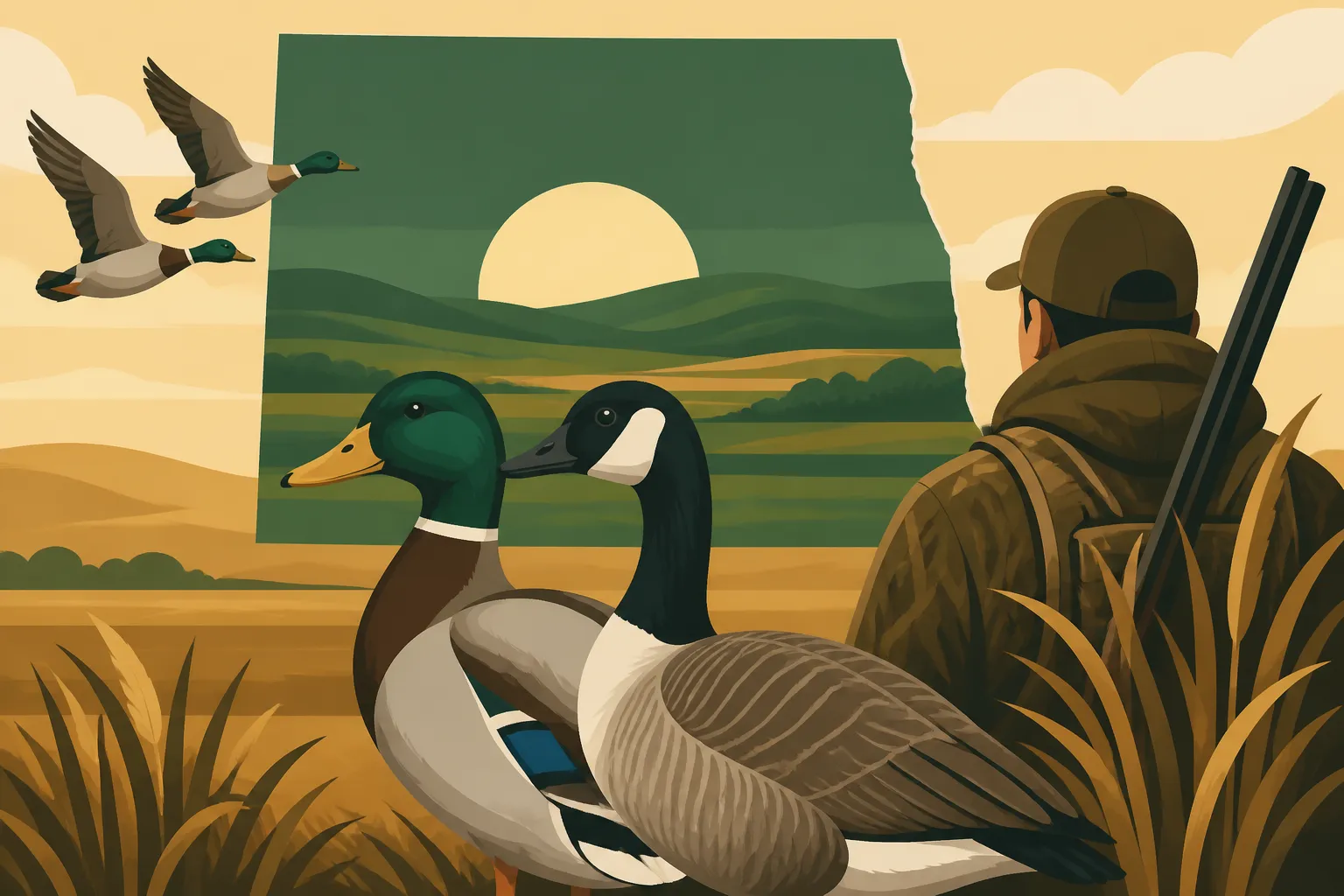
North Dakota Duck and Goose Bag Limits
The joy of a successful waterfowl hunt in North Dakota can quickly turn to a knot in your stomach when you start counting birds and wonder if you've stayed within the ever-changing and often confusing bag limits. It's a common frustration for hunters, trying to decipher the specific rules for different duck species and goose varieties, all while navigating federal and state regulations. This comprehensive guide will walk you through North Dakota's current duck and goose bag and possession limits, helping you avoid legal headaches and enjoy your time in the blind.
Understanding the Intricacies of Waterfowl Regulations
Navigating the world of waterfowl hunting regulations can feel like trying to untangle a particularly stubborn knot. It’s not just about how many birds you can shoot in a day; it’s about which birds, when, and where. Many hunters, both seasoned and new, often express frustration over the complexity, and honestly, it’s a valid complaint. These aren't simple "one size fits all" rules, and they can change season to season based on bird populations, nesting success, and migration patterns.
Why Waterfowl Limits Are So Tricky
The primary reason waterfowl limits are so intricate is that these birds are migratory. Unlike resident game animals like deer or pheasants, ducks and geese travel across state lines, international borders, and even continents. This means their management falls under the joint jurisdiction of federal governments (like the U.S. Fish and Wildlife Service, guided by the Migratory Bird Treaty Act) and individual state game and fish departments. Federal frameworks set the broad strokes, like the overall season length and maximum bag limits, but states like North Dakota get to fine-tune the specifics to best manage local populations and hunter opportunities. This multi-layered approach means you're dealing with a blend of rules, each with its own nuances. For instance, the general duck bag limit might seem straightforward, but then you encounter species-specific restrictions within that total, making you second-guess every bird you retrieve from the decoys.
The Interplay of Federal and State Rules
At its core, federal law dictates the overall framework for migratory bird hunting. The U.S. Fish and Wildlife Service, in conjunction with flyway councils (North Dakota is in the Central Flyway), determines how many birds can be harvested nationwide and sets broad season dates and limits. States then receive these federal guidelines and establish their specific regulations within those parameters. This is why you'll see consistency across states in some areas, but distinct differences in others. For example, the requirement to purchase a Federal Duck Stamp is a federal mandate for all migratory bird hunters over 16, no matter which state you hunt in. Similarly, participating in the Harvest Information Program (HIP) is also a federal requirement, crucial for gathering data on hunter activity. However, how North Dakota chooses to allocate its season dates, set daily bag limits for specific species, or implement zone-specific rules, like those for Canada geese in the Missouri River Zone versus the rest of the state, are decisions made at the state level. It's this delicate dance between federal oversight and state autonomy that often leads to the detailed regulations hunters must pore over each year.
Common Pitfalls for Hunters and How to Avoid Them
One of the biggest traps hunters fall into is assuming limits are the same as last year, or the same as a neighboring state. Always, always consult the current year's North Dakota Game and Fish Department waterfowl guide. Another common mistake is misidentifying species in the heat of the moment, especially when specific species have lower limits. For example, mallard hens often have a stricter limit than drakes, and distinguishing them quickly in low light or fast flight can be challenging. Some species, like pintails or canvasbacks, often have very restrictive limits due to population concerns. Using tools like the GoHunt app or other digital resources can be incredibly helpful for quickly pulling up regulations in the field. Before heading out, take the time to review field guides, practice identifying ducks and geese by silhouette and plumage, and understand the unique calls. Additionally, ensure you understand the difference between daily bag limits and possession limits, especially if you're hunting multiple days or transporting birds home. Keeping your birds separated by species and daily take can prevent a lot of confusion, especially if you get checked by a game warden.
North Dakota's Daily Duck Bag Limits
When it comes to ducks, North Dakota's regulations are designed to manage harvest pressure on various species, some of which are more abundant than others. It's not just a blanket number; you have a total daily limit, but within that, there are often sub-limits for specific species. This layered approach ensures sustainable hunting while still providing opportunities for hunters in the rich prairie pothole region.
The General Daily Duck Bag and Mallard Rules
For most of the regular waterfowl season, the general daily duck bag limit in North Dakota is typically six (6) ducks per hunter. This is the overarching number you need to keep in mind. However, this isn't simply "any six ducks." Within that six-duck total, there are crucial restrictions, especially concerning mallards, which are one of the most common and sought-after ducks on the prairie.
Specifically, you cannot take more than four (4) mallards in your daily bag. And to add another layer, only two (2) of those four mallards can be hens. This rule is particularly important because mallard hens are vital for reproduction, and protecting them helps ensure healthy future populations. Imagine you're hunting a classic Hunting a North Dakota Prairie Pothole Slough Edge and you've had a phenomenal morning. You might have six ducks in the bag, but if three of them are mallard hens, you've over-harvested. It's a critical detail that every duck hunter needs to internalize. Many experienced hunters make a conscious effort to identify drakes before shooting, especially when limits on hens are tight, or simply pass on shots they can't confirm. The ability to quickly and accurately identify duck species and gender in flight is a hallmark of a responsible waterfowl hunter.
Species-Specific Duck Limits and Identification Challenges
Beyond the general mallard rule, several other duck species have specific, often more restrictive, daily bag limits within the overall six-duck total. These limits are set to protect species that have lower populations or are experiencing conservation challenges.
Here’s a breakdown of some key species and their typical daily limits:
- Canvasbacks: Often limited to two (2) per day. These magnificent diving ducks are highly prized, and their populations are carefully monitored.
- Redheads: Usually restricted to two (2) per day. Another beautiful diver, redheads are often found on larger bodies of water.
- Pintails: Typically capped at two (2) per day. Known for their elegant appearance and distinctive long tail feather on drakes, pintails have seen fluctuating populations over the years, leading to more conservative limits.
- Wood Ducks: Generally two (2) per day. These stunning, colorful ducks prefer timbered sloughs and river bottoms, making them a special treat for hunters.
- Scaup (Bluebills): The limit for scaup is a bit unique. It often starts at one (1) per day for the first portion of the season and then increases to three (3) per day later in the season. This split-season approach is a direct response to conservation concerns and observed migration patterns. You absolutely need to check the specific dates in the North Dakota regulations each year to know when this change occurs.
- Mottled Ducks: If you're lucky enough to encounter one, the limit is typically one (1) per day. These are a more southern species but can sometimes wander into North Dakota.
- Black Ducks: Similarly, the limit is usually one (1) per day. These are largely an eastern species, but like mottled ducks, they can occasionally appear in the region.
The challenge, as any waterfowler knows, is proper identification. When a flock pitches into your Decoy Spreads for Prairie Pothole Mallards, and the adrenaline is pumping, distinguishing between a canvasback and a redhead, or even a pintail from other dabblers, requires practice. Tools like the GoHunt app often include visual guides, but nothing beats hands-on experience and studying identification guides pre-season. Misidentification could lead to an accidental violation, which is the last thing any responsible hunter wants. Take your time, confirm your target, and always err on the side of caution if you're unsure.
The Impact of Nesting Counts on Annual Limits
North Dakota's duck limits, particularly for abundant species like mallards, are heavily influenced by annual breeding population surveys. The state, situated in the heart of the North Dakota's Prairie Pothole Region Explained, is a critical nesting ground for many species. Each spring, biologists conduct extensive surveys, counting breeding pairs of ducks across vast transects of the prairie. These "breeding pair counts" provide vital data on the health and size of the duck population.
For instance, if nesting conditions are excellent – abundant water in the potholes and lush nesting cover – and the breeding pair counts are high, it generally bodes well for more liberal bag limits in the upcoming fall season. Conversely, a drought year with fewer wetlands and lower breeding populations might trigger more conservative limits to protect the resource. The scaup limit, with its often split season, is a prime example of how these population dynamics can directly translate into specific regulatory adjustments. The goal is always to manage the harvest sustainably, ensuring that enough birds return to the breeding grounds each spring to replenish the population. Understanding this ecological connection helps hunters appreciate why these limits are in place and reinforces the importance of adhering to them. It's a direct reflection of the health of the habitat and the birds themselves, especially in areas like North Dakota Waterfowl Production Areas which are crucial for nesting success.
North Dakota's Daily Goose Bag Limits
Geese in North Dakota offer a different set of challenges and opportunities, primarily because there are distinct categories: dark geese (Canada and white-fronted) and light geese (snow, blue, and Ross's). Each category has its own set of rules, often with varying limits and even special seasons.
Daily Limits for Dark Geese
Dark geese, primarily Canada geese and white-fronted geese (often called "specklebellies"), are managed with more conservative limits due to their different breeding success rates and populations compared to light geese. Hunters often encounter these birds in spread-out fields or over larger water bodies, requiring different tactics than duck hunting.
For Canada geese, the daily bag limit is typically five (5) birds. However, this can get a bit nuanced depending on where in North Dakota you are hunting. The state sometimes implements specific zones with varying limits or season lengths for Canada geese, particularly in the Missouri River Zone, to manage local populations more effectively. It’s always critical to check the current year’s regulations for any zone-specific rules that might affect your hunt. A classic scenario might involve Layout Blind Hunting Devils Lake Fields where you target Canada geese, but need to be aware if your chosen hunting spot falls into a special management zone.
For white-fronted geese, the daily limit is generally two (2) birds. These geese are known for their distinctive calls and excellent table fare, making them a favorite for many hunters. While they often mix with Canada geese, it’s essential to correctly identify them and ensure you don’t exceed their specific limit within your overall dark goose harvest. If you're out Pass-Shooting Geese on the James River, you might encounter both, so quick identification is key.
The total "dark goose" bag limit is the sum of these individual species limits. So, if you harvest five Canada geese and two white-fronted geese, you've reached your dark goose limit for the day. Remember, exceeding even one of these species-specific limits means you are in violation, even if your total number of dark geese doesn't seem excessive at first glance.
Daily Limits for Light Geese
Light geese, which include snow geese, blue geese (a color phase of the snow goose), and Ross's geese, present an entirely different management picture. Their populations are incredibly robust, and in many areas, they are considered overabundant to the point of causing significant habitat damage on their Arctic breeding grounds. Because of this, the hunting regulations for light geese are far more liberal.
During the regular waterfowl season, the daily bag limit for light geese (snow, blue, and Ross's geese combined) is a generous fifty (50) birds. This high limit reflects the conservation goal of reducing their numbers. Hunters often find themselves in massive fields, sometimes Hunting Standing Corn for Late-Season Geese, with huge decoy spreads, attempting to bring in thousands of birds.
Furthermore, North Dakota also participates in the Light Goose Conservation Order. This is a special hunting period, typically occurring in the late winter/early spring and sometimes extending into the fall, that allows for an even more liberal approach to light goose harvest. During the Conservation Order, there is no daily bag limit and no possession limit for light geese. Additionally, special methods not allowed during the regular season, such as electronic calls and unplugged shotguns, are permitted. This is an incredible opportunity for hunters to help manage a challenging species while experiencing some truly spectacular hunting. However, always remember that the Conservation Order is a separate season with its own rules, and you must adhere to those specific dates and regulations.
Early Versus Late Season Differences
It's important to recognize that goose limits and seasons can have different phases. While the daily bag limits for dark and light geese generally remain consistent throughout the established hunting period, the dates themselves can be variable.
For Canada geese, especially, some areas might have an "Early September Canada Goose Season" that precedes the main waterfowl opener. These early seasons are often designed to target local, resident Canada goose populations before the main migration of northern birds arrives. The bag limits for these early seasons can sometimes differ from the regular season, so checking the current regulations is paramount. For example, the early season might have a higher daily bag limit for Canada geese in certain agricultural zones to help mitigate crop damage.
Later in the season, as winter approaches and temperatures drop, waterfowl hunting dynamics change significantly. Birds become warier, and hunting pressure shifts. While the daily bag limits for ducks and geese generally don't change within the established regular season, the strategies and challenges certainly do. For light geese, the late season often transitions into the Conservation Order, as mentioned, where rules become significantly more relaxed. Hunters need to pay close attention to season closures and openers for different species and zones, as these are strict cut-off points. Using an app like GoHunt can help you keep track of these dynamic dates and ensure you're always hunting within the legal window for your chosen species.
Possession Limits and Transporting Your Birds
Understanding daily bag limits is only half the battle. Equally important are possession limits, which dictate how many birds you can legally have in your control after multiple days of hunting, and the rules surrounding the transport of your harvested game. Get these wrong, and you could face serious penalties.
What Possession Limits Mean for Multi-Day Hunts
A possession limit is the maximum number of legally harvested game birds you can have on your person, in your vehicle, at your temporary residence (like a motel or hunting lodge), or stored at home. It's not just about what you shoot today; it's about the cumulative total from all your hunting days. In North Dakota, for most migratory game birds, the possession limit is typically three times the daily bag limit.
Let’s break that down:
- Ducks: With a daily bag limit of 6 ducks, your possession limit is 18 ducks. This means if you hunt for three days and bag 6 ducks each day (adhering to all species-specific daily limits), you can legally possess all 18 of those ducks. If you hunt a fourth day and bag another 6, you'd then be at 24, which exceeds your possession limit of 18. This scenario highlights why careful tracking of your harvest is crucial for multi-day trips.
- Species within Possession: The species-specific daily limits also apply to your possession limit. For example, if the daily limit for mallard hens is 2, your possession limit for mallard hens would be 6 (3×2). So, if you had 6 mallard hens and 12 other ducks, you'd be at your limit for both.
- Dark Geese (Canada and White-fronted):
- For Canada geese, with a daily limit of 5, the possession limit is 15.
- For white-fronted geese, with a daily limit of 2, the possession limit is 6.
- Again, these are cumulative.
The purpose of possession limits is to prevent excessive commercialization of game and to ensure fair distribution of the harvest. If you're on an extended hunting trip, you need to be constantly aware of your running total. Many hunters will process and freeze birds daily, or even ship them home, to stay within these limits, especially during a successful Duck and Goose Hunting North Dakota's Potholes adventure. It's a key part of responsible hunting and ensures the resource isn't over-exploited.
Legal Requirements for Transporting Waterfowl
Transporting your harvested birds requires adherence to specific rules designed to aid law enforcement in verifying legal take and preventing illegal trade. You can't just toss a pile of unidentifiable birds into a cooler and drive off.
The most important rule for transporting migratory game birds in North Dakota, and generally nationwide, is that at least one fully feathered wing must remain attached to each bird while it is being transported from the field or temporary storage to your permanent residence or a processing facility. This rule is essential because it allows game wardens to easily identify the species and, in some cases, the gender of the bird, which is critical for checking against species-specific bag limits. If you've shot a duck and plucked it clean in the field, then you've essentially made it impossible to prove it was a legal bird within your limits.
Once you reach your permanent residence and the birds are processed for consumption or taxidermy, the wing no longer needs to be attached. However, until that point, keep those wings on! This applies whether you're driving across the county or across state lines. Additionally, any package of migratory birds being transported must be plainly marked on the outside with:
- The name and address of the person who killed the birds.
- The name and address of the person to whom the birds are consigned (if different).
- The number of birds, by species, contained in the package.
These rules ensure accountability and traceability, helping to maintain the integrity of waterfowl hunting regulations. Using a resource like GoHunt can help you double-check these requirements, ensuring your successful hunt doesn't turn into a legal problem on the drive home.
Tagging Requirements and Avoiding Violations
While North Dakota doesn't typically require individual tags on each duck or goose like some states do for big game, the rules for possession and transport effectively act as a tagging system. The attached wing and proper labeling of packaged birds are your "tags" for waterfowl.
However, there's another crucial element: you cannot possess birds belonging to another hunter unless those birds are properly tagged with the hunter's information. This means if your buddy shoots six mallards, and you shoot six teal, you can't just put all twelve ducks in your cooler and claim they're yours if checked. Each hunter is responsible for their own bag. If you are transporting birds for another hunter (perhaps they left early, or you're consolidating coolers), each bird or package of birds must be accompanied by a tag containing the original hunter's name, address, license number, the date the birds were killed, and the number and species of birds. This prevents someone from taking an over-limit by distributing birds among hunting partners.
A common violation stems from simple oversight or lack of awareness of these detailed regulations. Imagine hunting with a group and everyone throws their birds into a communal pile. If a game warden stops you, and someone in the group has exceeded their individual daily limit, or you're collectively over the possession limit without proper tagging, everyone in the party could be implicated. Always ensure each hunter manages their own bag, keeps a wing on their birds, and understands the transport and possession rules. Being proactive and organized, perhaps even designating a "bird counter" for the group, can help everyone stay legal and enjoy the hunt.
Federal Regulations and State Specifics You Can't Ignore
Waterfowl hunting in North Dakota isn't just about knowing the state's rules; it's also deeply intertwined with federal regulations. Ignoring these federal mandates, even unknowingly, can lead to serious legal consequences. It's crucial to understand how these two layers of law work together.
The Migratory Bird Treaty Act and Its Importance
The Migratory Bird Treaty Act (MBTA), enacted in 1918, is one of the oldest and most important wildlife protection laws in the United States. It implements four international treaties between the U.S. and Canada, Mexico, Japan, and Russia, protecting migratory bird species. For hunters, the MBTA is the foundational law that makes waterfowl hunting possible, but also sets the strict guidelines we must follow.
Essentially, the MBTA makes it illegal to hunt, capture, kill, or possess migratory birds, their parts, nests, or eggs, except as permitted by regulations issued by the U.S. Fish and Wildlife Service. This means that every waterfowl season, every bag limit, and every hunting method is ultimately authorized under the umbrella of the MBTA. It's why there are federal mandates like the Federal Duck Stamp and HIP certification. The Act is incredibly broad, covering everything from the protection of endangered species to the setting of hunting seasons for common game birds. Understanding its significance helps hunters appreciate the privilege of pursuing migratory birds and the responsibility that comes with it. Any violation of state waterfowl regulations is often, by extension, a violation of the MBTA, carrying potential federal penalties, which can be much more severe than state-level infractions.
HIP Certification and Federal Duck Stamp Requirements
Before you even step into a blind or put out a single decoy in North Dakota, there are two mandatory federal requirements you absolutely must meet if you plan to hunt migratory birds:
- Harvest Information Program (HIP) Certification: This is a federal program that requires all migratory bird hunters (including those pursuing doves, snipe, coots, and sandhill cranes, in addition to ducks and geese) to register annually. When you purchase your North Dakota Hunting Licenses and What They Cost through the North Dakota Game and Fish Department, you'll be asked if you plan to hunt migratory birds. Answering "yes" automatically adds your name to the HIP database. This isn't just a formality; it's a vital data collection tool. The information gathered helps the U.S. Fish and Wildlife Service estimate harvest numbers, which are crucial for setting future hunting seasons and bag limits. Without accurate data, proper management of these populations would be impossible. So, while it seems like a simple checkbox, it plays a huge role in conservation. You can find more details on North Dakota HIP Certification for Bird Hunters.
- Federal Duck Stamp: Every waterfowl hunter aged 16 or older is required to purchase and possess a valid Federal Migratory Bird Hunting and Conservation Stamp, commonly known as a Federal Duck Stamp. This stamp must be signed across the face by the hunter to be valid. The funds generated from the sale of these stamps are critically important for conservation; 98 cents of every dollar from Duck Stamp sales goes directly to purchasing or leasing wetland habitats for the National Wildlife Refuge System. These refuges provide essential breeding, nesting, and wintering grounds for migratory birds, including ducks and geese, and often offer public hunting opportunities. It's a direct investment in the very resource you're pursuing. You can find more information on North Dakota Federal Duck Stamp Requirement.
Failing to have either your HIP certification or a signed Federal Duck Stamp while hunting migratory birds is a federal offense and can result in fines and loss of hunting privileges. These aren't optional; they are fundamental to legal waterfowl hunting.
North Dakota's Zone-Specific Waterfowl Rules
While federal law sets the overarching framework, North Dakota implements specific zone rules to manage its diverse waterfowl populations more effectively. These zones can dictate different season dates, or even specific bag limits for certain species within those zones.
One of the most common examples of zone-specific rules in North Dakota applies to Canada geese. The state often has a distinct Missouri River Canada Goose Zone, which encompasses a portion of the state along the Missouri River. This zone might have slightly different season dates or bag limits for Canada geese compared to the "Rest of the State" zone. These variations are typically due to local population dynamics, migration patterns, or management objectives for resident Canada geese in that particular corridor.
Another area where zone-like considerations come into play, though not always formal "zones," is for nonresident hunters. North Dakota has specific rules, such as North Dakota's Zone-Restricted Waterfowl License, which dictate where and when nonresidents can hunt waterfowl, especially during the first portion of the season. There are also North Dakota's Nine Resident-Priority Waterfowl Days at the start of the season where nonresidents face restrictions on public land access. These measures are designed to prioritize resident hunters and manage pressure on popular public hunting grounds like North Dakota Waterfowl Production Areas.
Always consult the North Dakota Game and Fish Department's annual hunting guide for the most up-to-date zone maps and specific regulations. Relying on outdated information or assumptions could lead you into a situation where you unknowingly violate a zone-specific rule. Tools like GoHunt can often integrate these zone maps, providing a visual overlay that makes it easier to understand where these lines are drawn.
Special Considerations and Potential Changes
Waterfowl regulations are not static; they are dynamic, evolving each year based on biological data, conservation needs, and hunter feedback. As a North Dakota hunter, staying abreast of potential changes and understanding special hunting opportunities is key to continued success and compliance.
Youth Waterfowl Hunting Days
North Dakota, like many states, offers special Youth Waterfowl Hunting Days each year. These days are designed to introduce young hunters to the sport in a less pressured environment, often before the regular season opens. This is a fantastic opportunity for mentors to share their passion and knowledge with the next generation.
During these youth-only days, eligible young hunters (typically 15 years old and younger) can hunt ducks, geese, coots, and mergansers. Importantly, the daily bag limits and species restrictions for these days generally mirror those of the regular season. For example, the 6-duck daily limit with the 2-mallard hen restriction still applies. However, the unique aspect is that only youth are permitted to hunt migratory birds on these dates, though they must be accompanied by a non-hunting adult (who may not possess a firearm) or a licensed adult hunter who is not hunting. It's a designated time to focus on education, safety, and fostering a love for the outdoors. Be sure to check the specific dates and age requirements in the annual proclamation, as these can vary slightly from year to year. These special days are a vital part of preserving our hunting heritage and encouraging participation.
The Light Goose Conservation Order Explained
We touched on the Light Goose Conservation Order earlier, but it deserves a deeper dive due to its unique nature and significant impact on light goose hunting. This special season is authorized by federal regulations, specifically aimed at reducing the continent's overabundant snow, blue, and Ross's goose populations. These populations have grown so large that they are degrading their delicate Arctic breeding grounds, impacting other species that share the habitat.
North Dakota typically implements the Conservation Order in two phases: a spring season (late winter/early spring) and a fall season (often extending beyond the regular waterfowl season). During both phases of the Conservation Order, the hunting regulations are significantly relaxed:
- No daily bag limit: You can take as many light geese as you can legally shoot.
- No possession limit: You can possess an unlimited number of light geese.
- Expanded methods: Electronic calls are permitted to lure in large flocks, and shotguns can be unplugged (allowing for more than three shells in the magazine).
- No Federal Duck Stamp required: While HIP certification is still generally required for tracking, the Federal Duck Stamp is not needed during the Conservation Order, though state licenses are still necessary.
This is a high-volume hunting experience, often involving massive decoy spreads and intense calling. Hunters looking for an unparalleled goose hunting adventure, or simply wanting to contribute to a critical conservation effort, often flock to North Dakota for these seasons. It's a stark contrast to the more restrictive regulations for other waterfowl and highlights the adaptive nature of wildlife management when faced with overpopulation issues.
Future Outlook and How Limits Might Change
The world of waterfowl management is constantly evolving, driven by scientific data, habitat conditions, and shifting bird populations. So, what does the future hold for North Dakota's duck and goose bag limits?
Several factors could influence future changes:
- Prairie Pothole Habitat Conditions: The health of the North Dakota's Prairie Pothole Region Explained remains the single most important factor for duck production. Years of drought or excessive rainfall directly impact nesting success and brood rearing. Sustained periods of poor habitat conditions could lead to more restrictive duck limits in the future, while strong "water years" often support more liberal seasons.
- Climate Change: Long-term climate patterns affecting migration routes, wetland availability, and Arctic breeding grounds could subtly (or dramatically) alter waterfowl populations and, consequently, harvest regulations.
- Disease Outbreaks: Events like Avian Influenza can impact large numbers of birds, potentially leading to adjustments in hunting seasons or limits to protect recovering populations.
- Hunter Participation and Harvest Data: The data collected through HIP surveys directly informs management decisions. Changes in hunter numbers or success rates could also influence future regulations.
- Flyway Council Recommendations: North Dakota is part of the Central Flyway. Recommendations from the Central Flyway Council, based on regional data and modeling, often guide the U.S. Fish and Wildlife Service's federal frameworks.
For instance, the conversation around New 2026 North Dakota Nonresident Waterfowl Restrictions shows how regulatory bodies are constantly assessing and adjusting. It underscores that vigilance is key. Staying informed by regularly checking the North Dakota Game and Fish Department's official website, subscribing to their newsletters, and utilizing platforms like GoHunt that integrate up-to-date regulation summaries, are your best bets for being prepared for any changes. While we can never predict the future with absolute certainty, understanding these underlying dynamics helps prepare hunters for what might come next.
Summary of North Dakota Waterfowl Limits
To help you keep track of the often-complex rules, here’s a quick overview of the typical daily bag and possession limits for North Dakota, as of recent seasons. Always double-check the current year's official North Dakota Game and Fish Department regulations before heading afield, as these numbers can change.
| Species Category | Daily Bag Limit | Possession Limit (3x Daily Bag) | Special Notes |
|---|---|---|---|
| Ducks (Total) | 6 | 18 | Includes all species, with sub-limits below. |
| Mallards | 4 (no more than 2 hens) | 12 (no more than 6 hens) | Critical hen mallard restriction. |
| Canvasbacks | 2 | 6 | |
| Redheads | 2 | 6 | |
| Pintails | 2 | 6 | |
| Wood Ducks | 2 | 6 | |
| Scaup | 1 (early season), 3 (late season) | 3 (early), 9 (late) | Check specific dates for split season. |
| Mottled Ducks | 1 | 3 | |
| Black Ducks | 1 | 3 | |
| Dark Geese (Total) | Varies by species | Varies by species | |
| Canada Geese | 5 | 15 | Check for Missouri River Zone specifics. |
| White-fronted Geese | 2 | 6 | |
| Light Geese (Snow, Blue, Ross's) | 50 (regular season) | No limit (regular season) | No limits during Conservation Order. |
| Light Geese (Conservation Order) | No Limit | No Limit | Allows electronic calls, unplugged shotguns. |
This table provides a handy reference, but remember, the detailed explanations and specific season dates in the official guide are your ultimate resource. Staying informed is the best way to ensure your hunt is both successful and legal.
Disclaimer
Please be aware that hunting regulations are subject to change. While every effort has been made to provide accurate and up-to-date information, it is the sole responsibility of the hunter to review and comply with the most current official regulations published by the North Dakota Game and Fish Department and federal agencies before participating in any hunting activity. This guide is for informational purposes only and should not be considered a substitute for official legal documentation.