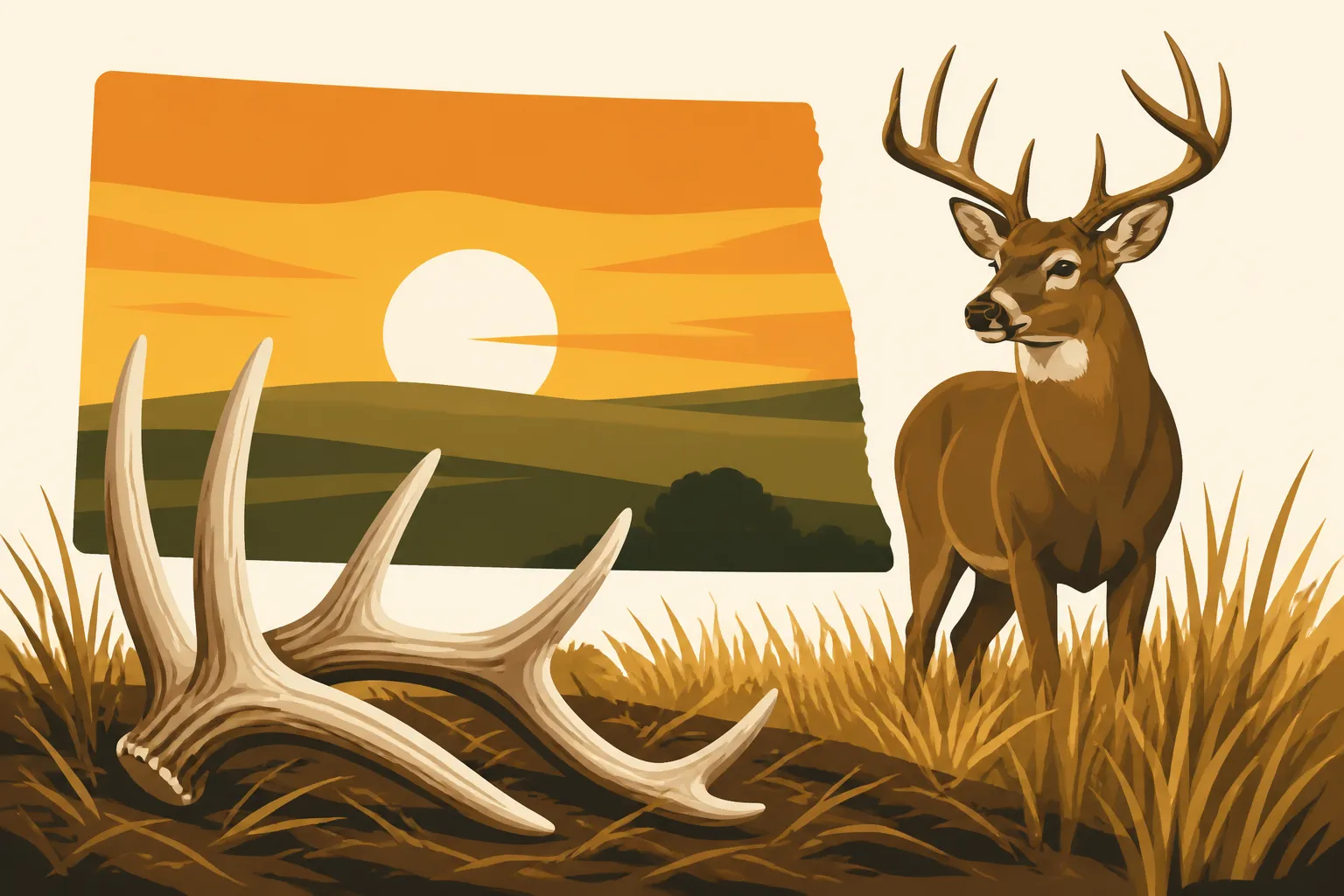
When North Dakota Bucks Shed Antlers
One of the most exciting mysteries of the whitetail world, especially here in North Dakota, is figuring out when those big bucks finally drop their headgear. It can feel like a guessing game, leaving many of us wondering when the perfect time is to hit the woods and prairie in search of those coveted shed antlers. This guide is all about demystifying the shedding process, helping you understand the "why" and "when" behind it so you can plan your shed hunts with confidence.
Understanding the Biology of Antler Shedding
Before we can pinpoint when North Dakota bucks shed their antlers, it's really helpful to understand why they do it in the first place. It’s not just some random act; it’s a complex biological process driven by hormones and environmental cues. These bony growths, unique to the deer family, are actually shed and regrown annually, a remarkable cycle that fascinates hunters and wildlife enthusiasts alike.
The Hormonal Rollercoaster and Photoperiod
At the heart of antler shedding is a dramatic shift in a buck's hormonal balance. Throughout the summer and fall, testosterone levels are sky-high, fueling antler growth, hardening, and sustaining the intense behaviors of the rut. Bucks are constantly fighting, chasing, and rubbing, using those hard antlers to establish dominance and attract does. Once the breeding season, or When the North Dakota Rut Peaks is largely over, typically around late November and early December here in North Dakota, the buck's mission is accomplished. As the days grow shorter and the amount of daylight decreases – what biologists call photoperiod – a buck’s testosterone levels begin to plummet.
This dip in testosterone is the key trigger. When the levels fall below a certain threshold, a specialized layer of cells forms at the pedicle (the base where the antler attaches to the skull). These cells, often referred to as the "abscission layer," begin to weaken the connection between the antler and the skull. Think of it like a tree leaf detaching in the fall; there's a natural breaking point. Eventually, the connection becomes so fragile that the antler simply falls off, often with little to no pain for the buck. It’s a completely natural, annual renewal, making way for a fresh set to grow in the spring.
Nutritional Impact on Antler Retention
While hormones are the primary drivers, a buck's nutritional state plays a significant supporting role in when those antlers hit the ground. A buck that went into winter in excellent condition, having access to abundant, high-quality food sources throughout the fall and early winter, tends to hold his antlers longer. Their bodies aren't as stressed, and they have more reserves to draw upon. This could mean a buck that spent the fall gorging on standing corn or lush alfalfa fields might shed later than one that struggled to find adequate forage.
Conversely, a buck facing a tough winter with limited food, especially during the critical post-rut period, might shed earlier. Their body is under immense stress, trying to conserve energy and recover from the strenuous breeding season. In such cases, shedding antlers becomes a priority for the body to reduce metabolic demands. Those antlers, while impressive, are metabolically expensive to carry, and dropping them allows the buck to redirect precious energy towards survival. This is why you often hear shed hunters talking about looking for antlers after a severe cold snap or prolonged period of deep snow. Access to Late-Season Food Sources for North Dakota Whitetails can make a real difference in when a buck finally decides to ditch his racks.
Typical Timing for North Dakota Bucks
Pinpointing an exact date for antler shedding in North Dakota is like trying to predict the weather a month out – you can get a general idea, but specifics are tricky. Generally, the bulk of antler shedding in North Dakota occurs from late December through February, but you’ll always find outliers.
Most bucks will shed their antlers during the heart of winter. The peak often falls in January, with many dropping their racks in the mid-to-late part of the month. However, it's not uncommon to find a few early birds dropping them right after Christmas, especially if they're older, stressed, or had a particularly intense rut. On the other end of the spectrum, some hardy individuals, often younger bucks or those in prime physical condition, might carry their antlers well into March, sometimes even into April, though this is far less common.
Regional and Individual Variations
North Dakota is a big state with diverse habitats, and these regional differences can slightly shift shedding timelines. Bucks in the rugged Hunting North Dakota's Badlands Mule Deer Country might face different stressors and food availability compared to those living in the rich agricultural areas of the eastern prairie or the thick cover of the Hunting North Dakota's Missouri River Bottomland. For example, bucks in the Badlands, often dealing with harsher terrain and potentially more limited, widely dispersed food sources, might be prone to shedding a bit earlier if winter conditions are severe.
Beyond geography, individual bucks within the same area can shed at different times. Factors like age, overall health, and the intensity of their individual rut experience all play a role. A mature, dominant buck that bred many does might be more physically depleted than a younger, less successful buck, potentially leading to an earlier shed. This is why when you're out shed hunting, you might find fresh drops from a variety of bucks over several weeks. Don't expect all the antlers to magically fall off on the same day!
Early Shedders vs. Late Shedders
Understanding the difference between early and late shed-ders can greatly inform your shed hunting strategy.
Early Shedders:
These are typically bucks that have experienced significant physiological stress. This stress can come from:
- Old Age: Older bucks sometimes shed earlier as their bodies prioritize basic survival over antler retention. Their prime breeding years might be behind them, and their bodies are less resilient.
- Injury or Sickness: Bucks that were injured during the rut, or are carrying an illness, will shed earlier as their body uses all available energy for healing and recovery.
- Intense Rut: While seemingly counterintuitive, bucks that put everything into the rut, becoming significantly depleted, might shed earlier to begin recovery.
- Poor Nutrition: As mentioned, a lack of consistent, high-quality food, especially if they entered winter in poor shape, can trigger an early drop. This is particularly true in areas where North Dakota Deer Population Estimate numbers might be high, leading to increased competition for forage.
Late Shedders:
These bucks are typically the picture of health and vitality:
- Younger Bucks: Often, two-year-old and three-year-old bucks, while participating in the rut, might not be as physically drained as older, dominant bucks, allowing them to hold antlers longer.
- Exceptional Health: Bucks in peak physical condition with excellent nutrition leading into and through winter will have the reserves to maintain testosterone levels just a bit longer.
- Mild Winter: A milder winter with less snow and consistent food availability means less stress, allowing bucks to retain their antlers for a longer period.
When you're out looking for sheds, remember that the early finds might clue you into areas with older, more dominant, or perhaps less healthy bucks, while the later finds could point to the younger, more robust individuals that held on longer. Keep an eye on deer behavior and body condition if you see bucks still carrying their antlers in late winter; it might tell you a lot about the health of the local herd.
Factors Influencing Early or Late Shedding
While the hormonal cycle sets the general window, several external factors can significantly influence whether a buck sheds on the earlier or later end of that spectrum. Think of these as the accelerators or brakes on the antler-dropping process.
The Role of Winter Severity and Stress
North Dakota winters are no joke, and their severity plays a huge role in antler retention. A long, harsh winter characterized by deep snow, extreme cold, and prolonged periods of below-average temperatures puts immense stress on deer. When resources are scarce and energy demands are high just to stay warm and move through snow, a buck's body will prioritize survival. Shedding antlers in these conditions becomes a necessary energy-saving measure. A buck carrying a heavy rack needs more energy to move, especially through deep snow, and that extra weight is a burden. In these scenarios, you can often expect an earlier general shed date across the herd.
Conversely, a mild winter with less snow cover and easier access to food can allow bucks to hold their antlers longer. Less energy is expended simply surviving, leaving more physiological reserves available to maintain those higher testosterone levels a bit longer. Deer can more easily access winter food sources like grain fields, browse, or even Hunting a Green Field Planted for Deer, which helps them maintain condition. This is why hunters often observe fluctuations in shedding dates year-to-year, directly correlating with the kind of winter we experience. Keeping an eye on weather patterns and snowfall totals through December and January can give you a significant advantage in predicting the upcoming shed season.
Age and Health of the Buck
As we touched on, a buck's age and overall health status are critical determinants of when he sheds.
Older Bucks: Generally, very old bucks, especially those past their prime breeding years, tend to shed earlier. Their bodies have simply endured more, are often more depleted from previous ruts, and their metabolic systems may be less efficient. This isn't a hard and fast rule, as some old giants can hold on, but it's a common trend.
Younger Bucks: Yearling bucks (1.5 years old) often shed later than mature bucks, as their first rut experience isn't as intense, and their bodies are still in a growth phase. However, by the time they reach 2.5 or 3.5 years old, they start to fall into the general shedding window of mature bucks.
Bucks in Poor Health: Any buck that is sick, injured, or simply in poor physical condition will almost always shed earlier. Their body views antler retention as a luxury it cannot afford when facing a more pressing health crisis. An injury sustained during a fight, a lingering infection, or a significant weight loss due to parasites or disease will redirect vital nutrients and energy away from maintaining the antler-pedicle connection. This explains why you might find a smaller, broken-off shed earlier in the season; it could be from a buck that needed to heal. Monitoring herd health, perhaps by observing deer during late-season hunts or through trail camera photos, can provide clues. Sites like GoHunt often have mapping features that can help you scout historical deer activity in specific areas, which can indirectly inform your understanding of local deer health patterns.
Here's a quick summary table of common shedding factors:
| Factor | Typical Impact on Shedding | Explanation |
|---|---|---|
| Photoperiod | Primary Trigger | Decreasing daylight reduces testosterone, initiating detachment. |
| Testosterone | Direct Cause | Plummeting levels after the rut weaken the antler-pedicle bond. |
| Overall Health | Early or Late | Healthy bucks hold longer; stressed/sick bucks shed earlier to conserve energy. |
| Nutrition | Early or Late | Abundant food allows longer retention; scarcity forces earlier shedding. |
| Winter Severity | Early or Late | Harsh winters (deep snow, extreme cold) lead to earlier shedding due to stress. |
| Age of Buck | Variable | Very old bucks and very young bucks (yearlings) can be outliers. |
| Rut Intensity | Early or Late | Highly depleted bucks from intense rutting may shed earlier. |
Strategies for Finding Shed Antlers
Okay, so now that we know when and why bucks shed, let's talk about the fun part: finding those beautiful pieces of bone! Shed hunting is a fantastic way to extend your time in the deer woods and learn more about the deer inhabiting your hunting areas. It's also a great way to Scouting PLOTS Land Before Season without the pressure of a tag.
Best Times and Locations to Look
The absolute best time to start shed hunting is generally mid-January through March in North Dakota. This covers the peak shedding period and gives you a good window to find fresh drops before they get too weathered or eaten by rodents. You don't want to go too early, as disturbing bucks that are still trying to recover from the rut can be detrimental, and you'll often come up empty-handed.
When considering where to look, think like a tired, hungry buck trying to conserve energy.
- Winter Food Sources: Deer spend most of their winter days trying to find food. Focus on areas adjacent to prime winter food sources such as standing corn fields, bean fields, or large hayfields. If you know a farmer left some corn standing for wildlife, that's a goldmine. Even Hunting a Standing Corn Field for Deer in late season can give you a clue where bucks are hanging out before they shed.
- South-Facing Slopes: Here in North Dakota, south-facing slopes get the most sunlight, melting snow faster and providing warmer bedding areas. Bucks love to bed down in these sun traps, especially on windy, cold days, and often drop antlers right there. Look for these slopes in the Badlands, along river breaks, or even smaller coulees in the prairie.
- Heavy Cover/Bedding Areas: Bucks will seek out thick thermal cover to escape the elements. This includes dense cattail sloughs, thick shelterbelts, cedar thickets, and deep draws. These are prime spots for them to bed down and often where they'll shake off an antler. Focus on the entrance and exit trails from these areas.
- Fencelines, Creek Crossings, and Obstacles: When a buck jumps a fence, crosses a creek, or navigates other obstacles, the impact can be enough to dislodge a ready-to-fall antler. Walk every fenceline and check every low-water crossing or downed log bridge you can find.
- Travel Corridors: Connect the dots between bedding areas and feeding areas. Deer will use the path of least resistance. These travel corridors, especially those offering some cover, are high-traffic zones where antlers can be dropped. Use apps like GoHunt to analyze aerial photos and identify these natural funnels.
Gear and Techniques for a Successful Shed Hunt
Shed hunting isn't just a leisurely walk; it's an active pursuit that can be physically demanding, especially in North Dakota's winter conditions. Having the right gear and techniques will significantly boost your success rate.
Essential Gear:
- Good Optics: Binoculars are invaluable, especially when glassing vast open areas or distant hillsides in the Badlands. They save you countless steps by allowing you to distinguish a stick from an antler.
- Warm, Layered Clothing: North Dakota winters are brutal. Dress in layers, including good base layers, a warm mid-layer, and a windproof, waterproof outer shell. Don't forget a warm hat, gloves, and neck gaiter.
- Waterproof Boots: Expect snow, slush, and possibly mud. Good, insulated, waterproof boots are non-negotiable for comfort and safety.
- Walking Stick/Trekking Poles: These help with balance in uneven terrain, deep snow, and can be used to poke at suspicious objects from a distance.
- Backpack: To carry water, snacks, extra layers, and, of course, any sheds you find!
- GPS/Mapping App: An app like GoHunt is a game-changer. It allows you to mark sheds, track your path, and identify property boundaries, which is crucial when hunting Public Hunting Land in North Dakota or navigating areas with mixed ownership.
Effective Techniques:
- Slow and Steady Wins the Race: Don't just rush through the woods. Walk slowly, scanning the ground 360 degrees, taking frequent pauses. Many sheds are found by slowing down and observing.
- Grid Search: In areas of high deer concentration, a grid search pattern can be highly effective. Walk in straight lines back and forth, covering every inch of ground methodically.
- Look for White: Your eyes are naturally drawn to the brown of the woods. Train them to look for the distinct white or off-white of an antler against the often darker background. The curves and points are also distinctive.
- Follow Trails: Deer use established trails, especially when moving between food and bedding. Walk these trails, paying close attention to both sides.
- Bring a Dog: A well-trained shed dog can be an incredible asset, using its superior sense of smell to locate antlers, especially those partially buried in snow or leaves.
- Go Out After a Snow Melt: Fresh snow can cover sheds, but as it melts, sheds can become much easier to spot against the darker, wet ground. This is a prime time to hit the woods.
- Revisit Productive Areas: If you found sheds in a particular area one year, chances are good bucks are still using that area, so revisit it in subsequent years. Deer often use the same wintering grounds year after year. Knowing North Dakota Deer Harvest Records for your area can also give you insight into where high-density areas might be.
Shed hunting offers a unique opportunity to connect with the landscape, understand deer behavior, and find a tangible piece of the incredible North Dakota whitetail. Happy hunting!
Disclaimer
This article is for general informational purposes only and does not constitute professional advice. Laws, prices and regulations vary by location and change over time. Consult a qualified professional for guidance on your specific situation.