Working a Fence Line for Deer
It's frustrating to know deer are in an area but struggle to pinpoint their exact travel routes, especially across the vast, open landscapes of North Dakota. Many hunters overlook one of the most consistent and often predictable pathways deer use: the humble fence line. This guide will help you understand why deer favor these linear features and how to effectively scout and hunt them to increase your success.
The Unseen Highways: Why Deer Use Fence Lines in North Dakota
You might think a fence line is just a barrier, something to keep livestock in or out, but to a deer, it often represents much more than that. In North Dakota, where vast agricultural fields meet stretches of CRP grass, shelterbelts, or river bottom timber, fence lines frequently become the subtle, unseen highways that deer rely on for daily movement. It’s an instinctual behavior for them to follow lines of least resistance or natural funnels, and a fence line fits that bill perfectly.
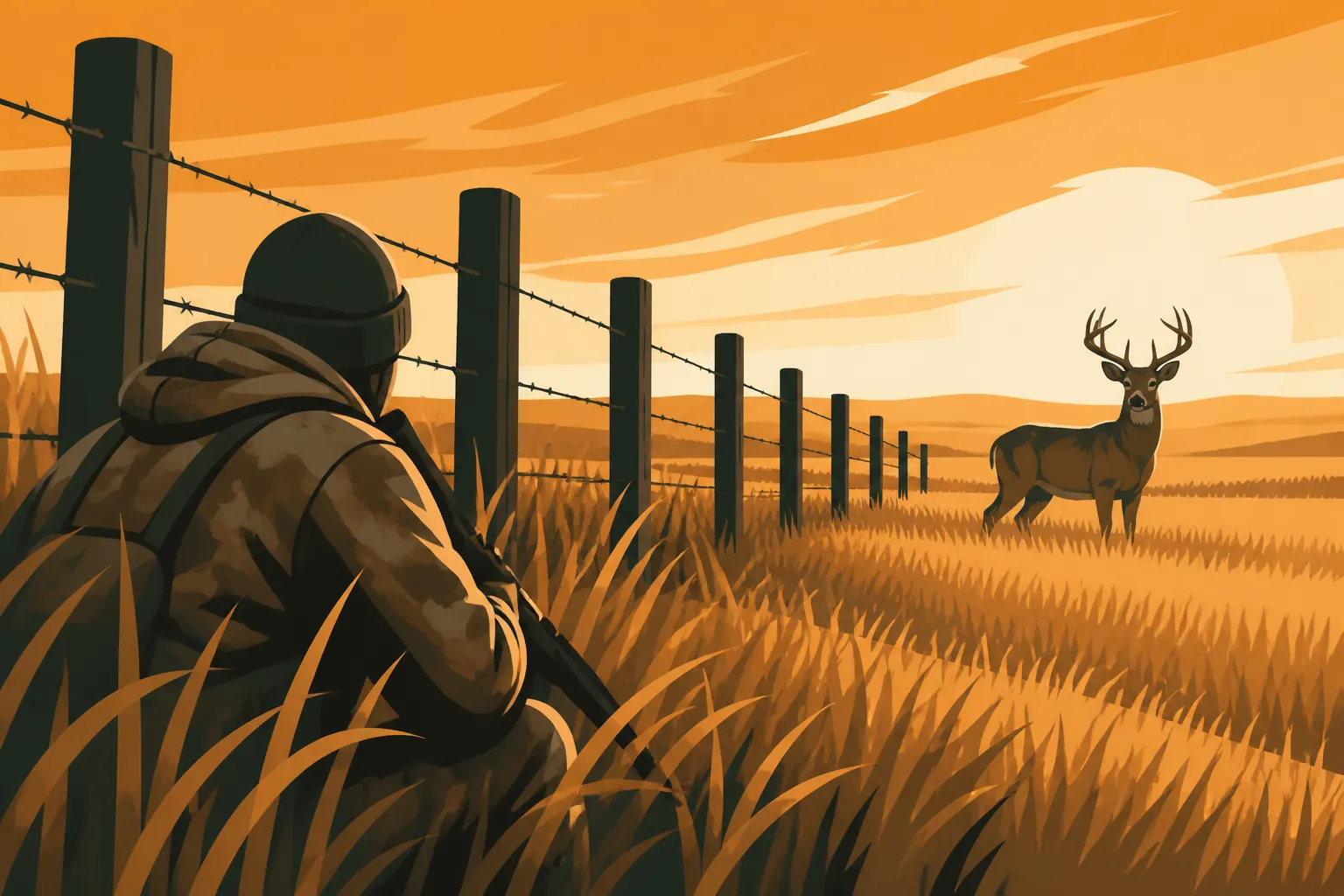
Think about it from a deer's perspective. Moving through thick cover can be noisy and energy-intensive. A fence line, even a simple barbed-wire one, often creates a slightly clearer path alongside it. They'll typically walk parallel to the fence, taking advantage of any perceived cover, however minimal. This is especially true where two different habitat types meet, like a standing cornfield transitioning into a dense cattail slough, or a cultivated field meeting a brushy draw. The fence acts as a definitive edge, a place where they feel a bit more secure and can navigate efficiently. For more on how deer use varied terrain, you might find insight in articles like Reading a Missouri River Bottom for Deer.
Beyond just ease of travel, fence lines provide a sense of psychological security. Even a small change in elevation or a thin line of brush along a fence can offer just enough visual break to make a deer feel less exposed in open country. This is crucial in the prairie pothole region or areas with extensive agricultural fields, where wide-open spaces dominate. These lines can also separate core bedding areas from feeding grounds, and deer will use the fence as a predictable corridor during their morning and evening commutes. They may not always jump it, but rather travel along it until they find a natural dip, a broken section, or a gate that allows for an easy crossing. Understanding these subtle motivations is the first step to truly hunting fence lines effectively.
Becoming a Fence Line Detective: Reading the Clues
Successful fence line hunting isn't about setting up on the first fence you see. It's about becoming a detective, meticulously scouting to identify the fence lines that deer actively use. This isn't just a pre-season activity; it’s something you should be doing constantly, even through the hunting season, as deer patterns can shift with pressure and food sources.
Start with your boots on the ground, walking both sides of potential fence lines. Look for fresh deer tracks. The size of the track can tell you if a mature buck is using the line, and the freshness indicates recent activity. If you see numerous tracks heading in one direction in the morning and the opposite in the evening, you've likely found a commute corridor. Pay close attention to how tracks converge or spread out near fence gaps, corners, or where a fence meets a heavy cover patch. For deeper insight into interpreting ground sign, check out Reading North Dakota Mud for Fresh Deer Movement.
Beyond tracks, keep an eye out for rubs and scrapes. Bucks often mark territory along fence lines, especially where they intersect with other natural travel corridors or transition zones. A series of rubs along a fence post or a freshly pawed scrape can be a huge indicator of a buck regularly using that specific stretch. These signs are often more concentrated where the fence line offers some vertical cover, such as small trees or brush. Learning more about Scrape Lines Along a Section Line Trail can enhance your understanding of buck sign. Also, don't overlook droppings; fresh piles mean recent activity, while older, dried droppings indicate historical use.
This is where modern technology, like the GoHunt app, really shines. Before you even leave the truck, you can use aerial photography and landowner information to pinpoint potential fence lines that connect different habitat types – a thick bedding swamp to an alfalfa field, for instance. Zoom in on satellite images to identify subtle dips or breaks in the fence that might be natural crossing points. GoHunt can overlay public and private land boundaries, which is absolutely critical when considering where a fence line lies and how you can legally access and hunt it. You can mark these potential hot spots on your digital map, then physically verify them during your scouting trips.
Look for areas where a fence creates a natural pinch point – perhaps it's the only clear path between two dense woods, or it forces deer into a narrow strip of cover. These are high-odds areas. Observe how deer cross. Do they jump, crawl under, or use a specific opening? Identifying these exact crossing points will be key to your stand or blind placement.
Strategizing Your Fence Line Hunt
Once you've identified an active fence line and understood its purpose to deer, it's time to devise your hunting strategy. This involves careful consideration of your approach, setup, and timing.
Stand or Blind Placement: Your location along the fence line is everything. You want to be downwind of where you expect deer to travel and cross. Pay attention to the sun's position throughout the day to avoid backlighting yourself. Consider any natural background that can help break up your silhouette. If the fence line runs alongside a dense shelterbelt, a tree stand placed strategically within the shelterbelt, overlooking the fence, can be a fantastic option. Find out more about Hanging a Stand on a Shelterbelt Edge. For more open prairie settings, a well-brushed ground blind can be incredibly effective, especially if you can nestle it into a clump of tall grass or a small draw near a known crossing point.
Access and Egress: How you get to and from your setup without spooking deer is paramount. Deer using fence lines are often accustomed to linear movement, so any deviation from typical activity can put them on high alert. Plan your route so you're not walking directly along the fence line itself, especially during prime movement hours. Utilize topographical features like ditches, slight rises, or the edge of a different field if possible.
Types of Fence Lines: Not all fence lines are created equal, and deer will react differently to them.
| Fence Type | Deer Behavior | Hunting Implications |
|---|---|---|
| Barbed Wire | Often crawled under, jumped over at low points. | Look for sag points, well-worn paths under wires. Good for stand setups. |
| Woven Wire | More of a barrier, deer seek breaks or gates. | Focus on gates, downed sections, or where it meets thick cover. |
| Electric Fence | Strong deterrent; deer will avoid. | They'll find the power break or go around the entire section. |
| Old/Abandoned | Often overgrown, providing more cover. | Can be excellent travel corridors within heavier brush. |
| New/Clean | Deer more wary, stick to the very edge. | Requires very subtle setups, focus on distant crossing points. |
Timing Your Hunt: Deer typically use fence lines most actively during low-light hours – dawn and dusk – as they move between bedding and feeding areas. During the rut, however, bucks might cruise fence lines at any time of day, scent-checking for does. If you're hunting during the peak of the rut, say Hunting the Rut in Early-to-Mid November, an all-day sit along an active fence line can be highly productive. Later in the season, after a hard prairie winter sets in, deer will often seek out fence lines adjacent to late-season food sources like standing corn or stubble fields. Understanding Hunting a Standing Corn Field for Deer in conjunction with fence lines can provide a significant advantage. The GoHunt app's weather overlays, showing wind direction and temperature, are invaluable for deciding when and where to hunt a specific fence line, ensuring you maintain the element of surprise.
Combining Features: A fence line rarely exists in isolation. Its true potential often comes alive when it intersects or runs parallel to other key habitat features. For example, a fence line that borders a thick shelterbelt offers enhanced cover and can become a high-traffic corridor. Similarly, a fence line running along the edge of a productive food plot or a patch of standing sunflowers provides an obvious travel route for deer heading to feed. Pay close attention to how deer move along a fencerow and how that ties into their broader movements.
Navigating the Nuances: Avoiding Common Fence Line Faux Pas
Hunting fence lines effectively requires attention to detail and avoiding some common mistakes that can quickly blow your hunt.
Mistake #1: Assuming All Fence Lines are Equal. Just because there's a fence, doesn't mean deer are using it. As discussed earlier, active scouting is crucial. A well-used trail along a fence line in an open pasture might be a deer highway, while another fence bordering two dense woods might see minimal use because deer can move freely elsewhere. Don't waste time on unproductive fence lines.
Mistake #2: Over-Hunting a Visible Fence Line. The convenience of a fence line can lead to over-hunting, especially on public land or easily accessible private land. Deer are incredibly sensitive to Hunting Pressure on North Dakota Public Land. If a fence line is easy to get to, and therefore easy for other hunters to access, deer will quickly become nocturnal or abandon it entirely during daylight hours. Focus on finding less obvious or harder-to-reach sections of fence lines, or those that offer unique cover advantages.
Mistake #3: Disregarding Private Property Boundaries. This is absolutely critical in North Dakota. Fence lines often denote property lines, and trespassing is a serious offense. Always know exactly where you stand. Tools like the GoHunt app are indispensable here, providing clear property ownership maps that show you precisely where you can and cannot hunt. Double-check Finding North Dakota Property Lines before you even step out of your vehicle. There’s nothing that ruins a hunt faster than a confrontation with a landowner over a boundary you weren't clear on.
Mistake #4: Ignoring Wind Direction. This applies to all deer hunting, but it's especially important along linear features like fence lines where deer movement is often funneled. Deer will absolutely detect your scent if you're upwind, and they will simply alter their path or move away. Always prioritize wind direction over any other factor when setting up. If the wind isn't right for your chosen fence line spot, move or hunt another location.
Mistake #5: Not Adapting to Seasonal Changes. Deer patterns aren't static. Early season deer might use fence lines differently than rutting bucks, or deer after a cold snap. For example, Hunting After a Hard Prairie Winter will show deer concentrating on very specific food sources, and the fence lines leading to those sources will be active. Stay flexible, keep scouting, and be ready to move your setup as the season progresses and deer behavior shifts with available food, cover, and hunting pressure. Observing how Late-Season Food Sources for North Dakota Whitetails influence movement along fence lines can lead to late-season success.
Disclaimer
Hunting is an inherently dangerous activity. Always prioritize safety, understand and follow all North Dakota hunting regulations, and ensure you have the proper licenses and permissions before heading afield. The information provided here is for educational and informational purposes only and should not replace professional guidance or personal judgment.