Scrape Lines Along a Section Line Trail
Finding consistent deer movement, especially mature bucks, can feel like searching for a needle in a vast North Dakota haystack. Hunters often overlook the subtle but significant signs right under their noses. This guide will take a deep dive into understanding, interpreting, and ultimately hunting scrape lines that appear along North Dakota's ubiquitous section line trails, offering practical strategies to increase your success.
Understanding Section Line Trails as Deer Highways
Section lines are more than just property boundaries; in the world of North Dakota deer, they're often invisible highways, bustling with activity if you know what to look for. These linear features, sometimes marked by faint trails, old fence lines, or subtle changes in vegetation, can be absolute goldmines for deer hunters.
Why Deer Favor Section Lines
Deer, particularly mature bucks, are creatures of efficiency and cover. Section lines often provide both. Think about it: a section line frequently runs along the edge of diverse habitats. You might have a sprawling cornfield on one side and a dense CRP (Conservation Reserve Program) field or a brushy coulee on the other. This creates an ideal "edge habitat" – a transition zone that deer absolutely love for travel. They can move quickly and quietly along these lines, often under the subtle cover of taller grasses or small shrubs, between their bedding areas and food sources without exposing themselves unnecessarily. It's a natural funnel, a ready-made corridor that minimizes energy expenditure and maximizes security. These trails provide a consistent path, day after day, year after year, offering predictable movement patterns that are crucial for successful hunting.
Furthermore, section lines sometimes follow slight topographical changes. A barely perceptible rise or a shallow drainage ditch can provide just enough cover for a buck to feel secure while moving. They're often less disturbed than field edges that see frequent human activity during planting or harvest, especially those lines that run through less agricultural ground or connect larger blocks of cover. The very human concept of a "section line" has, over generations, inadvertently shaped deer behavior, training them to use these pathways as preferred routes, turning them into predictable travel corridors that become even more important during the rut when bucks are actively searching for does.
Identifying Active Scrape Lines
Spotting a scrape might seem straightforward, but truly identifying an active scrape line requires a keen eye and an understanding of deer behavior. A scrape is essentially a deer's calling card, a combination of visual, olfactory, and tactile communication. You're looking for an area where a buck has pawed away the leaves and duff to expose bare soil, often several feet in diameter, usually under an overhanging branch – the "licking branch." This branch is critical; the buck will rub his forehead, preorbital glands, and often chew on it, depositing scent. The exposed earth of the scrape itself receives urine and gland secretions from the buck's interdigital glands.
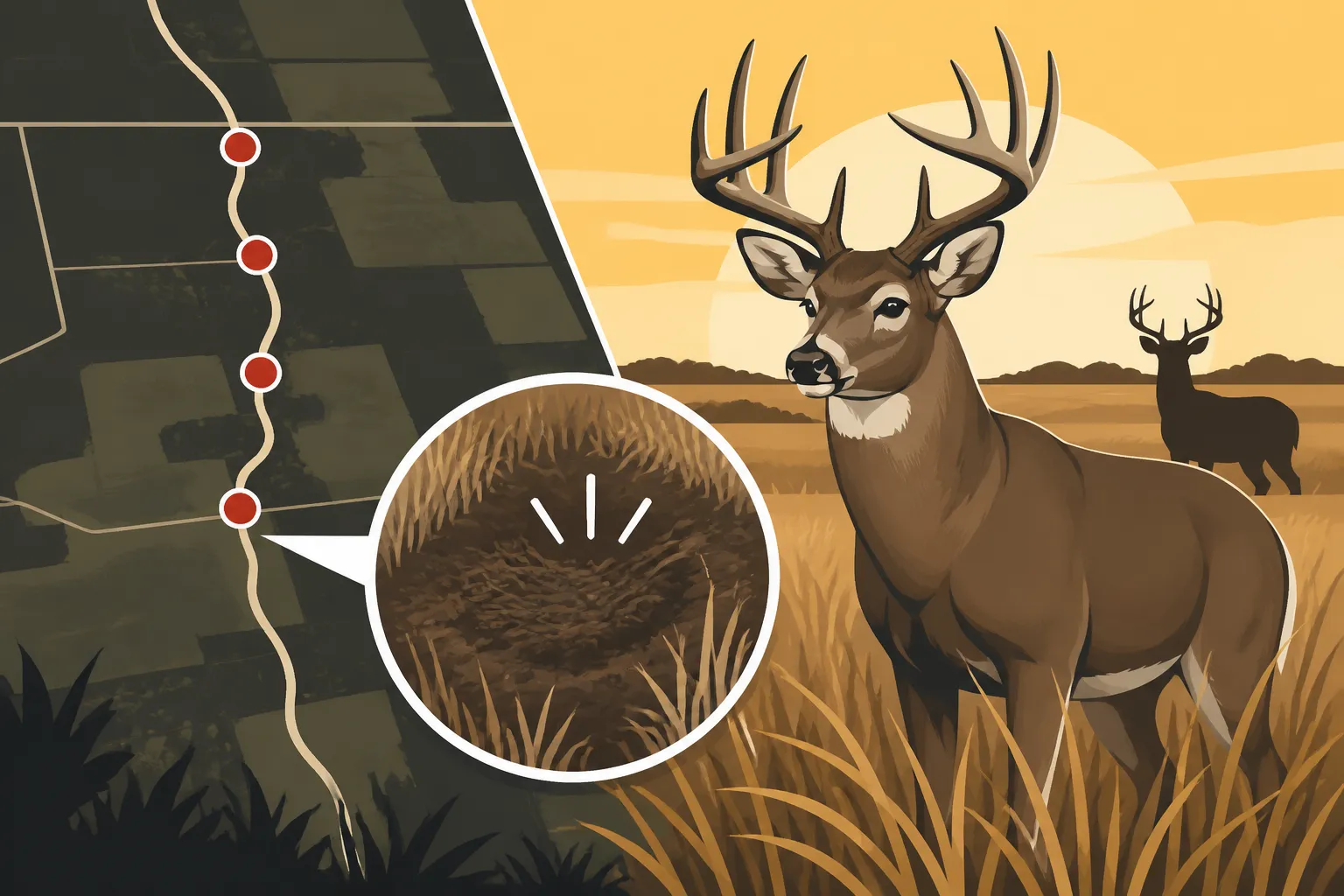
An "active" scrape will have freshly disturbed earth, potentially still damp if it's rained recently, and you might see clear tracks within the scrape or leading to and from it. The licking branch will often be frayed or even broken from repeated use. A "scrape line" is not just one scrape, but a series of them, often strung out along a common travel corridor, like a section line. These lines indicate a frequently used route where bucks are repeatedly checking for does and announcing their presence. Pay close attention to the size of the scrape and the tracks within; a large, well-used scrape with deep tracks is a sure sign of a dominant buck's presence. Sometimes, you'll find smaller "secondary" scrapes off the main line, which might be used by younger bucks or as satellite signposts.
Timing Your Scout for Scrape Activity
Knowing when to look for active scrape lines is just as important as knowing what to look for. The peak period for bucks creating and utilizing scrapes is primarily during the pre-rut and the early stages of the breeding season. In North Dakota, this typically means late October through mid-November, though you might start seeing early scrapes as soon as mid-October, especially from eager young bucks. As the days shorten and testosterone levels rise, bucks become increasingly focused on breeding, and scrapes become vital communication hubs.
Scouting before the season, or during the early bow season, can give you a baseline of where scrapes might appear, but checking again closer to the rut is essential to confirm activity. Fresh scrapes appearing after a rain are particularly telling, as the moisture helps to activate the scent. Weather also plays a significant role; a sudden cold snap can often kick off a surge in scraping activity as bucks become more active. If you want to dive deeper into the nuances of deer behavior during this critical time, you might find our guide on When the North Dakota Rut Peaks incredibly helpful. Keep in mind that scrape activity can fluctuate; some days they're ignored, other days they're magnets. Consistent monitoring, whether in person or via trail cameras, will help you identify peak usage times.
Interpreting Scrape Lines and Deer Movement
Finding scrapes is one thing; understanding what they're telling you about deer movement and behavior is where the real hunting strategy comes into play. Scrapes are not just random markings; they are integral parts of a buck's communication network, and interpreting them correctly can lead you straight to your target.
Deciphering the Story Scrapes Tell
Every scrape tells a story, and learning to read that narrative is a skill that separates average hunters from consistently successful ones. The freshness of a scrape is your first clue. Is the earth freshly disturbed, dark, and perhaps still moist? Are the tracks within the scrape clear and sharply defined, indicating recent use? Or is it covered in a thin layer of leaves, dry, and showing faded tracks? A fresh, actively worked scrape means a buck has been there very recently, making that spot a prime location for a setup. The size of the scrape and the tracks can also give you an idea of the buck's age and size. Larger, deeper paw marks often belong to more mature, heavier-bodied bucks.
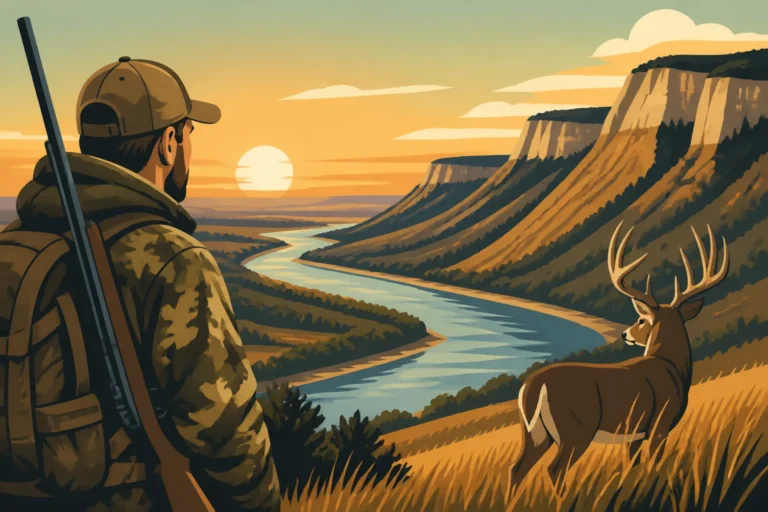
When you find a line of scrapes, you're not just looking at individual signposts; you're tracing a travel corridor. Where does this line lead? Does it connect a thick bedding area, like a brushy coulee or a dense stand of cattails, to a prime food source, such as a standing sunflower field or a picked bean field? Understanding these connections helps you predict when a buck might use that scrape line. Bucks often check scrapes en route to or from these key areas, typically during low-light hours. If the scrape line is part of a clear path from a bedding area to a known feeding location, you’ve identified a high-traffic zone where a shot opportunity is much more likely.
Integrating Other Deer Sign
Scrape lines are powerful indicators, but they rarely exist in isolation. To build a complete picture of deer movement, you need to integrate other deer sign you find in the area. Rubs, where bucks have rubbed their antlers on saplings or small trees, often accompany scrape lines. Rubs typically mark a buck's dominance and can indicate a parallel travel route or a staging area near bedding. If you find fresh rubs within close proximity to a scrape line, it reinforces the idea that a mature buck is frequently using that specific section line.
Additionally, look for well-worn deer trails leading into and out of the scrape line. These trails, along with droppings and even specific bedding areas, will confirm the overall movement pattern. For instance, if you find a series of fresh scrapes along a section line that then leads into a dense shelterbelt with fresh droppings and obvious bedding depressions, you can infer that deer are bedding in that cover and using the section line to move to and from feeding. Learning to read the subtle messages in the dirt and vegetation, like those discussed in our article Reading North Dakota Mud for Fresh Deer Movement, can give you an edge. Combining all these clues paints a much clearer picture of a buck's daily routine, helping you pinpoint the best ambush location. Our guide on Finding Sign Along a Shelterbelt also offers excellent tips for integrating various signs.
Using Technology for Strategic Placement
In today's hunting world, technology is an invaluable tool for enhancing your understanding of section line scrapes and strategic setup. Apps and online platforms like GoHunt provide incredibly detailed aerial and topographical maps that can reveal subtle features invisible from the ground. With GoHunt, you can easily identify section lines, property boundaries, and potential funnels formed by changes in habitat or topography where scrape lines are likely to concentrate.
Before you even set foot in the field, you can use these tools to virtually "scout" an area. Look for section lines that connect dense cover to open agricultural fields, or those that run along the edge of river bottoms or coulees. These are prime candidates for active scrape lines. GoHunt allows you to mark potential scrape locations, plan your approach routes, and identify ideal stand or blind locations based on prevailing wind directions, all from the comfort of your home. This digital reconnaissance saves you valuable time and physical effort, focusing your boots-on-the-ground scouting on the most promising areas. For more tips on leveraging technology, check out our piece on Scouting PLOTS Land With the ND Hunt App. The ability to see property ownership and land types also helps you understand potential hunting pressure and plan your entry and exit strategies accordingly, ensuring you don't spook deer before you even get to your setup.
Effective Hunting Strategies for Section Line Scrapes
Once you've located and interpreted an active scrape line along a section line, the next step is to formulate an effective hunting strategy. This involves careful consideration of your setup, how you interact with the deer's environment, and adapting to ever-changing conditions.
Setting Up Your Stand or Blind
The cardinal rule when setting up on a scrape line is wind direction. Deer rely heavily on their sense of smell, especially mature bucks checking scrapes. Your scent blowing into the scrape or directly into a deer's travel path will ruin your hunt before it even begins. Always approach and set up with the wind in your favor, ideally quartering away from the expected approach of the deer. This means having multiple setup options for different wind directions is crucial. For example, if a section line scrape is active, you might need a setup on the east side for a west wind and another on the west side for an east wind.
Your entry and exit routes are equally vital. Plan them meticulously to avoid walking through bedding areas or directly over other fresh sign. Use natural terrain features or existing cover to hide your approach. When choosing your stand or blind location, consider the distance from the scrape. You want to be close enough for an ethical shot, but far enough not to be immediately detected. Typically, 20-30 yards is a sweet spot. Elevated stands, like those described in Hanging a Stand on a Shelterbelt Edge, can give you a better view and help disperse your scent cone higher, while ground blinds, as explored in Using a Ground Blind on PLOTS Land, offer excellent concealment, especially in areas with limited trees. Ensure your setup provides clear shooting lanes to the scrape and the surrounding travel corridor.
Calling and Scent Strategies
While scrapes are primarily visual and olfactory attractants, you can enhance their drawing power with calling and scent strategies. Grunt calls can be highly effective, especially during the pre-rut and peak rut. A series of soft tending grunts can mimic a buck tending a doe or a rival buck, often enough to pique the curiosity of a cruising buck checking scrapes. Don't be afraid to experiment with rattling sequences as well, particularly during the peak rut. A short, sharp rattling sequence can simulate two bucks fighting, a sound that can travel surprisingly far on the open prairie and often draws in dominant bucks looking to assert their territory or find a receptive doe. Our guide on Grunt Calls in River Bottom Timber and Rattling Volume on the Open Prairie can provide further insights into these techniques.
Beyond calls, mock scrapes and scent application can be powerful tools. You can create a new scrape near an existing line, or freshen up an old one, by pawing the earth and breaking a licking branch. Then, apply synthetic buck urine or tarsal gland scents to the ground and the licking branch. During the rut, doe-in-estrus scents can be particularly enticing, suggesting a receptive doe is frequenting the area. Always apply scents carefully, avoiding direct contact with your hands, and be mindful of over-scenting. The goal is to create a realistic scenario that appeals to a buck's natural instincts, not to overwhelm them.
Dealing with Hunting Pressure and Changing Conditions
North Dakota's section lines, especially those adjacent to public access like PLOTS (Private Land Open To Sportsmen) land or easily accessible areas, can experience significant hunting pressure. Deer, particularly mature bucks, quickly learn to avoid areas with heavy human activity. If you notice signs of other hunters – tracks, old blinds, or excessive scent – you may need to adjust your strategy. Bucks might become nocturnal on heavily pressured scrape lines, or shift their activity to less accessible areas. This concept of deer adapting to pressure is well-covered in Hunting Pressure on North Dakota Public Land.
When conditions change, so should your tactics. A fresh snowfall can completely alter deer movement patterns, often pushing them to seek thermal cover and primary food sources more intensely. It also makes tracking deer movement incredibly easy. Conversely, a hard cold front, particularly one that follows a warm spell, can invigorate deer activity and spur bucks to actively cruise for does, making scrape lines hotter than ever. Understanding how deer react to these shifts, as detailed in Hunting After a Hard Prairie Winter, allows you to stay dynamic. Don't be afraid to pull up stakes and move if your current setup isn't producing results. Adaptability is key; deer are constantly responding to their environment and the threats within it, and you need to be able to respond to them.
| Scrape Characteristic | Active Scrape (Fresh) | Old Scrape (Inactive) |
|---|---|---|
| Soil Appearance | Dark, moist, recently disturbed | Dry, faded, often covered by leaves/debris |
| Licking Branch | Frayed, chewed, broken, fresh scent | Intact, no fresh damage, faded scent |
| Tracks | Clear, sharp, defined prints | Faded, indistinct, possibly filled with debris |
| Scent | Strong, musky, distinct deer odor | Faint or no noticeable odor |
| Surrounding Sign | Fresh rubs, droppings, distinct trails | Older rubs, faded trails, less fresh droppings |
| Time of Use | Recent (last 24-48 hours) | Days or weeks ago, or occasional use |
Disclaimer
Hunting is an inherently dangerous activity. Always prioritize safety, understand and adhere to all North Dakota hunting regulations, and ensure you have proper training and equipment. The information provided in this guide is for informational purposes only and does not guarantee hunting success. Always respect private property, obtain necessary permissions, and practice ethical hunting.