Vehicle Rules on North Dakota Public Land
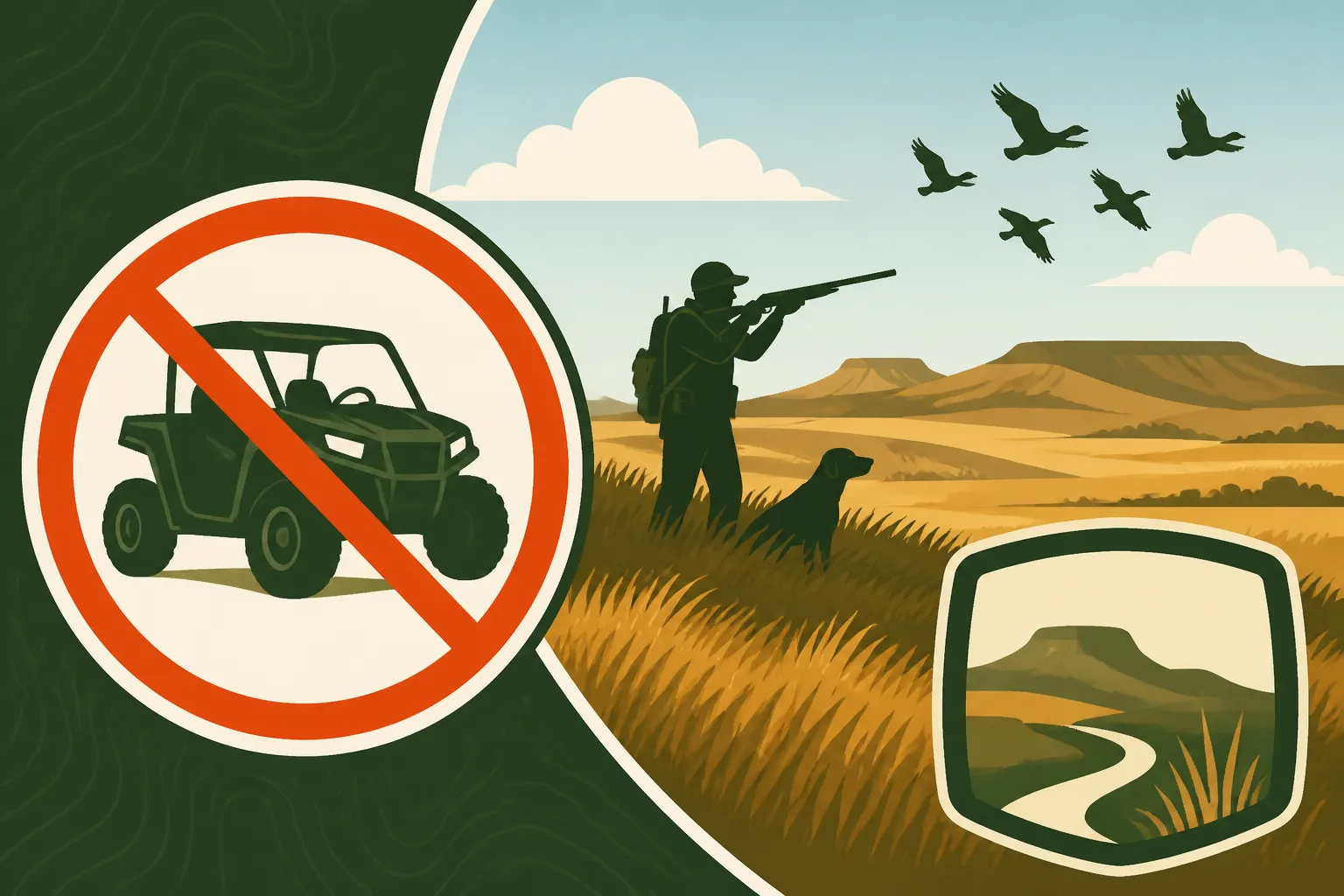
It can be incredibly frustrating when you're out in the field, maybe you've just spotted the perfect spot, or even better, recovered an animal, only to realize you're not sure if you can drive your vehicle to it. North Dakota's public lands offer incredible hunting opportunities, but navigating the specific rules and regulations around vehicle use can feel like trying to hit a moving target. This guide is here to break down those vehicle rules, demystify the different types of public land, and provide practical advice so you can hunt confidently and legally.
The Imperative of Vehicle Rules on North Dakota Public Lands
Before we dive into the nitty-gritty of where you can and can't drive, let's talk about why these rules exist in the first place. It's easy to feel like regulations are just there to make things harder, but when it comes to vehicle use on public land, there are genuinely important reasons that benefit everyone, including the wildlife we pursue. Understanding these underlying principles can help us all be better stewards of these precious resources.
Protecting Fragile Ecosystems and Wildlife
North Dakota's landscape, from the rolling prairies to the rugged Badlands, is a delicate balance of diverse ecosystems. Unrestricted vehicle use, especially off-trail, can cause significant damage. Think about a damp prairie soil: tires can churn it up, creating deep ruts that lead to erosion, disrupt natural drainage patterns, and destroy native vegetation that provides crucial food and cover for game species like pheasants, deer, and sharptail grouse. These ruts can last for years, becoming permanent scars on the landscape. Beyond the physical damage, vehicles create noise and disturbance, pushing wildlife deeper into cover and making it harder for hunters to access them ethically. Imagine a flock of turkeys trying to feed in a quiet draw, only to be constantly spooked by passing vehicles. It impacts their behavior and ultimately the quality of the hunt for everyone.
Ensuring Fair Chase and Respect for All Hunters
Another critical aspect of vehicle regulations revolves around the concept of fair chase and maintaining a positive experience for all hunters. When vehicles are allowed to drive anywhere, it fundamentally changes the nature of the hunt. It can give an unfair advantage to those who can cover more ground quickly, potentially pushing game off public land or making them harder to pattern. More importantly, the presence of vehicles everywhere can ruin the solitude and wilderness experience that many of us cherish when we head afield. No one wants to hike deep into a remote coulee, only to hear the rumble of a truck engine just over the next ridge. These rules are designed to create a level playing field, encourage traditional hunting methods, and preserve the "wild" in our wild places. It's about respecting the land, the animals, and your fellow hunters who are often seeking peace and quiet as much as they are game.
Navigating Common Public Land Types: What You Need to Know
North Dakota offers a fantastic array of public lands for hunting, each with its own character and, yes, its own set of vehicle rules. It’s crucial not to assume that what applies in one area will apply in another. A little homework before you head out can save you a lot of grief and potential fines. This section will walk you through the specifics for some of the most common types of hunting grounds you'll encounter. For a broader overview, check out our guide on Public Hunting Land in North Dakota.
Vehicle Rules on PLOTS (Private Land Open To Sportsmen) Areas
The PLOTS program is a true gem for North Dakota hunters, opening up thousands of acres of private land for public access. However, because it's still private land enrolled in a public program, the vehicle rules here are often more restrictive than other public land types. Generally, on PLOTS land, you should expect foot access only. This means you need to park your vehicle on a county road, minimum maintenance road, or an approved parking area, and then proceed on foot. You won't be driving your ATV or truck across a PLOTS field to retrieve a bird or check a distant shelterbelt. There might be exceptions, such as designated access roads to specific parking spots within larger PLOTS tracts, but these will be clearly marked. Always look for the specific PLOTS signage at each access point, which often details any unique rules for that particular parcel. When you're Scouting PLOTS Land With the ND Hunt App, pay close attention to the map layers for vehicle access points and boundaries. The spirit of PLOTS is to provide walk-in hunting, so embrace the hike!
Restrictions on Wildlife Management Areas (WMAs)
North Dakota's Wildlife Management Areas are owned and managed by the state Game and Fish Department, specifically for wildlife production and public recreation, including hunting. The vehicle rules on WMAs tend to be a bit more varied than PLOTS, but the general principle is still conservation-focused. Most WMAs will have designated parking areas at their entrances, and from there, access is often restricted to foot traffic. Some WMAs might have clearly marked "minimum maintenance" or "two-track" roads that you are permitted to drive on, but venturing off these established paths is almost universally prohibited.
It’s vital to understand that "two-track" doesn't automatically mean "open to vehicles." Always look for official signage. If a road is gated, cabled, or clearly signed as closed, it means just that. These closures are often implemented to protect sensitive habitats, prevent erosion, or reduce disturbance to nesting or calving wildlife. Violating these rules on WMAs is taken seriously, as these are critical areas for wildlife populations. Review the regulations specific to each WMA you plan to hunt; many can be found on the Game and Fish website, or on mapping apps like onX Hunt which often display WMA boundaries and access restrictions. North Dakota Wildlife Management Areas are fantastic resources, but respecting their rules is key to their continued success.
Understanding National Grassland Vehicle Regulations
Hunting the vast expanses of the Little Missouri National Grassland or the Sheyenne National Grassland is a quintessential North Dakota experience. These federally managed lands offer unique opportunities, but they also come with their own set of vehicle regulations. On National Grasslands, the general rule is to stay on established roads and trails. This includes county roads, Forest Service roads, and many two-track roads. However, "cross-country" or off-road travel is strictly prohibited in most areas. There are specific exceptions, often for game retrieval, but these are typically limited to certain distances from an established road and usually come with conditions like dry ground and minimal disturbance.
It's common to see gates on the National Grasslands. Often, if a gate is closed, it's there to prevent vehicles from entering, or to keep livestock contained. If you open a gate to pass through, always close it behind you. Leaving gates open can lead to livestock straying and can quickly sour relations with local ranchers who rely on these lands. Pay close attention to signage from the Forest Service. They often use symbols and specific colors to denote open roads, seasonal closures, or areas designated for administrative use only. Being prepared with detailed maps, perhaps using your GoHunt app, to identify these designated routes is absolutely essential when Hunting North Dakota's Little Missouri National Grassland.
State School Lands and Their Access Nuances
North Dakota also has tracts of State School Land, managed by the Department of Trust Lands, which are open to public hunting unless otherwise posted. These lands were granted to the state to support public education. Access to State School Lands generally follows North Dakota's trespass laws: you can walk onto unposted land. However, vehicle use is a different story. Just because you can walk onto State School Land doesn't mean you can drive on it.
Vehicle access on State School Lands is typically limited to established public roads that cross or border the property. Driving off these public roads, across fields, or on faint two-tracks that are not clearly public access routes is generally not allowed without explicit permission, which can be difficult to obtain for individual tracts. Treat State School Lands as walk-in access unless you see clear, official signage indicating vehicle access is permitted. If in doubt, park on a legal public road and proceed on foot.
Understanding What "Designated Trails" Really Means
The term "designated trail" can sometimes feel like a nebulous concept in the wide-open spaces of North Dakota. What one person considers a trail, another might see as just a faint path. Clarifying this distinction is crucial to staying on the right side of the rules and preserving the land.
The Difference Between a Two-Track and an Established Road
A "two-track" typically refers to an unimproved dirt path created by repeated vehicle use, often found on prairie or grassland. An "established road" usually implies something more permanent: a county road, a gravel road, or a well-maintained Forest Service road. On public lands, the critical distinction isn't just how well-worn the path is, but whether it is officially designated for vehicle use.
On National Grasslands, for example, many two-tracks are indeed designated routes. These will often be marked on official Forest Service maps or appear as discernible roads on mapping apps like GoHunt or onX Hunt. However, a faint two-track leading into a private parcel or a path that simply looks like someone drove there once or twice across a WMA is almost certainly not a designated route. The rule of thumb is: if it's not clearly marked as a road on an official map, or doesn't have signage explicitly permitting vehicle access, assume it is not a designated trail. Driving where you shouldn't, even on what looks like a path, can create new, unauthorized routes, leading to further habitat degradation and enforcement issues.
Gates, Cables, and Other Access Barriers
These physical barriers are perhaps the clearest indicators of where vehicle travel is restricted. A closed gate, a chain across a road, or even large rocks placed to block a path all mean the same thing: no vehicles beyond this point. It sounds obvious, but in the heat of the moment, or when you're trying to save time, it can be tempting to try to find a way around these barriers. Don't do it.
These barriers are placed for specific reasons, whether it's to protect a sensitive area, prevent vehicle damage during wet conditions, or manage livestock. Disregarding them is not only illegal but also shows a lack of respect for land managers and property owners. If you encounter a gate that is closed and unlocked, and you believe you are on an open, designated route, you may pass through, but always close the gate behind you. This is a fundamental courtesy and a critical part of maintaining access. If a gate is locked, that's a definitive "no entry."
The Impact of Muddy Conditions on Vehicle Use
North Dakota weather can change in an instant, and what was a dry, passable two-track one day can become a soupy mess after a rain or snowmelt. It's important to understand that even on designated routes, if conditions are muddy or excessively wet, driving on them can cause significant and lasting damage. Deep ruts tear up the roadbed, contribute to erosion, and make the trail impassable for others.
Many public land agencies will implement temporary closures or ask hunters to voluntarily avoid driving on muddy roads. Use good judgment. If the ground is soft and your tires are digging in, it's best to park and walk, even if the road isn't officially closed. The damage you do on a wet day can take years to heal and negatively impact everyone's access. Plus, getting your truck stuck miles from a paved road in a muddy field is an experience no one wants. Think ahead and consider walking, especially when dealing with spring thaw or heavy autumn rains.
Smart Strategies for Compliance and Ethical Vehicle Use
Nobody wants to get a ticket or, worse, damage the very habitat they love to hunt. Being prepared and proactive is your best defense against accidental violations and helps ensure you're hunting ethically and responsibly.
Pre-Season Scouting and Mapping Tools
The best way to avoid vehicle rule violations is to know before you go. Pre-season scouting, whether in person or from your couch, is invaluable. Drive the public roads around the areas you intend to hunt. Look for signage, gates, and parking areas. Pay attention to how locals access different tracts. More importantly, leverage modern mapping technology. Applications like onX Hunt and GoHunt are indispensable for North Dakota hunters. These apps provide detailed plat maps, public/private land boundaries, and often highlight designated trails and parking areas on public land.
Before your hunt, take the time to zoom in on your target areas. Identify legal parking spots, designated roads, and walk-in only zones. Mark these on your map. It’s also wise to check the website of the North Dakota Game and Fish Department or the Forest Service for the specific unit you're hunting; they often have detailed maps and regulations available. Don't rely solely on memory or what you think the rules are; verify them with current, reliable sources. This proactive approach will save you headaches and ensure you're making smart choices in the field. For tips on how to prepare, consider our article on Scouting PLOTS Land With the ND Hunt App.
Reporting Violations and Being a Good Steward
Sometimes, despite your best efforts, you might encounter others who are not adhering to the rules. It can be frustrating to see someone driving off-road in a sensitive area or creating ruts on a designated walk-in tract. While it's never a good idea to confront someone directly, you can and should report blatant violations to the proper authorities. The North Dakota Game and Fish Department has game wardens specifically tasked with enforcing these regulations.
Being a good steward of our public lands means doing your part to protect them. This includes respecting the rules yourself, but also helping to ensure others do the same. If you witness a vehicle violation, try to gather as much information as possible: license plate number, vehicle description, location, date, and time. Then, contact the Game and Fish Department's enforcement division. Your actions help preserve these lands for future generations and ensure that responsible hunters don't suffer the consequences of a few bad actors.
Planning for Retrieval and Game Hauling
One of the most common reasons hunters might be tempted to break vehicle rules is game retrieval. You've just dropped a deer or an elk deep in a coulee or across a large field, and the thought of dragging it out manually is daunting. This is where planning ahead becomes critical.
If you are hunting in a walk-in only area, you must be prepared to retrieve your game on foot. This might mean investing in a good game cart, recruiting hunting partners to help, or planning your hunts closer to legal access points. Some public lands, particularly National Grasslands, may have specific game retrieval permits or allowances that allow limited off-road vehicle use under very strict conditions (e.g., dry ground, specific routes, and often requiring permission beforehand). Always check these rules before you hunt that particular area. Don't assume. Assuming could lead to a hefty fine and a damaged reputation. Preparing for the haul is part of the hunting challenge, and it reinforces the fair chase aspect of your pursuit.
| Public Land Type | Typical Vehicle Access | Common Restrictions | Key Action for Hunters |
|---|---|---|---|
| PLOTS (Private Land Open To Sportsmen) | Walk-in Only | Foot traffic only beyond designated parking. No off-road vehicles. | Park legally, walk in. Check specific PLOTS signs. |
| Wildlife Management Areas (WMAs) | Designated Roads Only | Often foot traffic only from parking areas. Some marked two-tracks allowed. | Look for signage. Stay on clearly marked roads. |
| National Grasslands | Designated Roads/Trails | Stay on established roads/two-tracks. No cross-country travel. Gates must be closed. | Carry detailed maps (onX Hunt, GoHunt). Close all gates. |
| State School Lands | Public Roads Only | No off-road vehicle use without explicit permission. Generally walk-in. | Park on public roads, proceed on foot if no clear access. |
This article is for general informational purposes only and does not constitute professional advice. Laws, prices and regulations vary by location and change over time. Consult a qualified professional for guidance on your specific situation.