Hunting North Dakota’s Little Missouri National Grassland
For many hunters, the idea of chasing game across vast, wild landscapes is a powerful draw, but the reality of finding accessible public land can be a real headache. Often, it feels like all the prime spots are tied up in private leases or overrun with crowds. But here in North Dakota, we have a truly special gem that offers an expansive, rugged, and challenging public land hunting experience: the Little Missouri National Grassland. This guide is your deep dive into everything you need to know to confidently plan and execute a successful hunt in this incredible, untamed expanse.
Understanding the Little Missouri National Grassland
The Little Missouri National Grassland isn't just another parcel of public land; it's a vast, dynamic ecosystem that defines the wild heart of western North Dakota. Covering over a million acres across counties like McKenzie, Billings, and Golden Valley, it's the largest of the nation's 20 national grasslands and provides an unparalleled opportunity for those seeking a truly wild hunting experience. Understanding its unique character, from its rich history to its diverse habitats, is the first step in unlocking its hunting potential.
A Legacy of Conservation and Public Access
The story of the Little Missouri National Grassland is one of resilience and restoration. In the early 20th century, years of overgrazing and unsustainable farming practices, particularly during the Dust Bowl era, left much of this land severely degraded. The federal government stepped in, purchasing these marginal lands to restore them and manage them for multiple uses, including grazing, recreation, and wildlife. This history means that what we have today is a testament to long-term conservation efforts, and crucially for us hunters, a commitment to public access. Unlike some private holdings that might change hands and restrict access, the Grassland remains open, a steadfast beacon for those seeking adventure. It’s a place where you can still feel the spirit of the old West, a vast open canvas where your hunting skills are truly tested.
This commitment to public access is a huge advantage for hunters, particularly non-residents who might otherwise struggle to find ground. While North Dakota does have an excellent PLOTS Program Explained, the sheer scale of the Little Missouri National Grassland provides a different kind of freedom. You're not looking at a small, often rectangular tract but an undulating, sprawling landscape where you can literally walk for miles without encountering a fence. This freedom allows for a truly immersive hunt, where strategic planning and physical endurance replace the need to knock on doors for permission slips. It means you can focus on reading the land, interpreting animal sign, and executing your hunt plan, rather than worrying about boundary lines.
The U.S. Forest Service manages the Grassland, and they balance various interests, from cattle grazing to oil and gas development, all while maintaining crucial wildlife habitat. This means that hunters will encounter evidence of these other uses – cattle fences, stock tanks, and occasional oil well pads. However, these elements are generally integrated into the landscape and don't detract from the overall wild feel. In fact, understanding these elements can sometimes even aid your hunt; cattle trails can offer easier walking routes, and stock tanks can be vital water sources for game, especially during dry periods. It’s a dynamic, working landscape, and being a thoughtful and adaptable hunter within it is key.
Unique Topography and Habitat Diversity
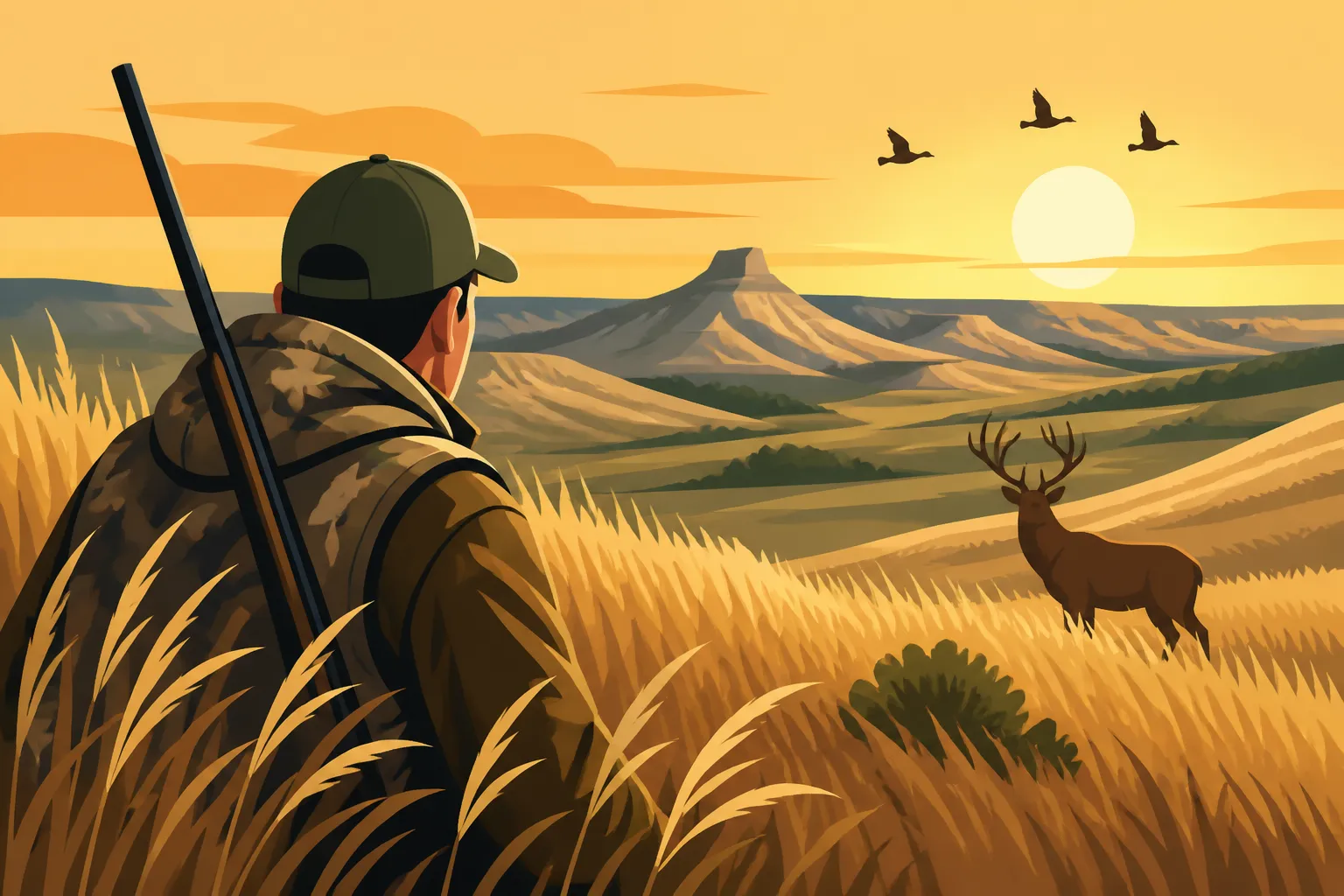
The topography of the Little Missouri National Grassland is what makes it truly special and challenging. This isn't flat prairie. This is Badlands country, characterized by dramatic buttes, deep coulees, rugged draws, and rolling plateaus carved by centuries of wind and water erosion. The Little Missouri River itself snakes through the heart of it, creating a lush riparian corridor that contrasts sharply with the arid uplands. This varied terrain means an incredible diversity of habitats, supporting a wide array of game species.
From the exposed, sun-baked clay buttes dotted with sagebrush and sparse grasses, to the dense pockets of juniper and cedar that cling to steep slopes, and the cottonwood and willow bottoms along the river, every corner of the Grassland offers something different. This habitat mosaic is critical for wildlife. Mule deer, for example, thrive in the broken, rugged country, using the steep draws for cover and the plateaus for feeding. Whitetails, on the other hand, often prefer the thicker cover of the river bottoms and the more sheltered coulees. Understanding these micro-habitats and how they relate to the larger landscape is paramount to successful hunting here.
The changes in elevation are constant and often steep, requiring a good pair of boots and a strong will. A simple walk across a section line might involve dropping into a deep wash, climbing a thorny ridge, and navigating eroded gullies. This isn't just a physical challenge; it's a mental one, demanding constant attention to terrain features and potential escape routes for game. The sheer scale of the terrain can also be overwhelming, making it easy to get disoriented without proper navigation tools. That’s where detailed maps come into play, helping you visualize the contours and plan your routes efficiently.
This diversity extends beyond big game. The upland plateaus, particularly those with good grass and shrub cover, hold populations of Sharptail Grouse and Hungarian Partridge in North Dakota. The river bottoms, especially during migration, can attract various waterfowl, though it’s less known for it than the Prairie Pothole Region. And of course, the entire ecosystem supports a healthy population of predators like coyotes and bobcats. This means that a hunt on the Little Missouri National Grassland can be a true multi-species adventure, offering opportunities beyond your primary target if you’re prepared to adapt.
Game Species You'll Find on the Grassland
The Little Missouri National Grassland is a hunter's paradise because of the incredible diversity of game it supports, all within a truly wild and challenging environment. From iconic big game species like mule deer and elk to abundant upland birds and predators, there's an opportunity for nearly every type of hunter. Understanding which species inhabit the different niches of this vast landscape is key to developing an effective hunting strategy.
Mule Deer and Whitetails: Badlands Royalty
When most people think of hunting the Little Missouri National Grassland, their minds immediately go to deer, and for good reason. Both mule deer and whitetails thrive in this rugged environment, offering distinct challenges and rewards. The Badlands are particularly renowned for their mule deer, which are perfectly adapted to the broken, open country. You’ll find mule deer often bedded on sunny slopes or within the deep, juniper-choked coulees during the day, emerging to feed on the sagebrush flats and grassy plateaus at dawn and dusk. Their ability to seemingly vanish into thin air, even in sparse cover, is legendary, making for an exciting spot-and-stalk hunt.
Whitetail deer, while also present throughout the Grassland, tend to gravitate towards the thicker cover found along the Little Missouri River bottom and in the deeper, more heavily vegetated draws. These areas provide more security cover and often richer forage, allowing them to remain hidden. Hunting whitetails here can be more akin to a traditional timber hunt, relying on still-hunting or setting up ambushes along their travel corridors. The challenge with whitetails in the Badlands is often accessing their preferred habitat, which can be dense and difficult to navigate, and spotting them before they spot you. Both species offer incredible opportunities, but require different approaches due to their distinct preferences for the terrain.
Successfully targeting either species requires extensive glassing and patience. The expansive, open nature of much of the Grassland means your binoculars and spotting scope will be your most valuable tools. You'll spend hours perched on a high point, systematically picking apart distant hillsides and coulee breaks, searching for a flick of an ear, the outline of an antler, or a patch of hide that doesn't quite match the rocks and shadows. Once a deer is spotted, the real work begins: planning a careful stalk through the unpredictable terrain, always mindful of the wind and the animal's keen senses. The Badlands landscape truly favors the hunter who is willing to put in the time behind the glass and the miles on their boots.
Elk and Bighorn Sheep: The Once-in-a-Lifetime Pursuits
While deer are abundant, the Little Missouri National Grassland also holds a small but growing population of elk, primarily in the northern reaches. Drawing an elk tag in North Dakota is often a once-in-a-lifetime opportunity, a testament to the limited numbers and incredible demand. If you are lucky enough to draw one of these coveted North Dakota Elk Lottery Application Process tags, hunting the Badlands offers a unique experience. Elk here behave differently than their mountain cousins; they often utilize the vast, broken country, moving between deep coulees for cover and grassy plateaus for feeding. Their elusiveness in this terrain is legendary, making an already challenging hunt even more so.
Similarly, the Badlands are home to North Dakota's truly iconic bighorn sheep herd. These magnificent animals, found exclusively in the roughest, most remote corners of the Badlands, are an absolute dream for any hunter. Like elk, bighorn sheep tags are exceedingly rare and considered a once-in-a-lifetime draw, making a successful hunt a monumental achievement. Targeting bighorns involves grueling climbs, extensive glassing, and an unwavering commitment to navigating the most extreme terrain. Their keen eyesight and ability to blend into the rocky outcrops make them one of the most challenging big game animals to pursue.
Both elk and bighorn sheep hunts in the Badlands demand exceptional physical fitness, meticulous scouting, and often, the help of experienced guides or local knowledge. The terrain they inhabit is unforgiving, and success often comes down to pure grit and determination. For those who do draw these tags, the Little Missouri National Grassland offers a truly wild, fair-chase hunt for some of North Dakota's most prized big game. Even if you don't draw a tag, the possibility of encountering these animals while deer hunting adds an extra layer of excitement to any trip into the Badlands.
Upland Birds and Predators: Opportunity Abounds
Beyond the big game, the Little Missouri National Grassland offers fantastic opportunities for upland bird hunters and predator callers. The expansive grasslands, particularly those with a mix of sagebrush and native grasses, are prime habitat for sharp-tailed grouse. These hardy birds provide fast-paced hunting and are often found in coveys in the more open areas, flushing explosively when approached. Hungarian partridge can also be found in certain areas, often preferring the edges of cultivated fields adjacent to the Grassland, or areas with more forb growth. Sharptail Grouse Hunting Mixed Grass Prairie is a classic North Dakota experience, and the Grassland is a premier location for it.
The numerous water sources, including dugouts and stock ponds scattered across the Grassland, can also attract migratory waterfowl during the fall. While not as concentrated as the state's prime pothole regions, a savvy hunter might find opportunities for ducks and geese, especially during periods of migration. Jump-shooting smaller ponds or setting up near larger water bodies can be productive, offering a diverse hunting experience within the same landscape. It's often a bonus opportunity, rather than a primary focus, but worth keeping in mind.
Finally, for those who enjoy the thrill of the chase and contributing to game management, the Grassland is teeming with predators. Coyotes are abundant across the entire landscape, offering year-round hunting opportunities. Calling coyotes, particularly during the colder months when their pelts are prime, can be an exciting and rewarding endeavor. Predator Calling North Dakota's Badlands Draws can be a particularly effective tactic here, using the natural acoustics and cover of the draws. Bobcat populations are also present, though they are much more elusive and require specialized tactics to pursue. These predator hunting opportunities can add an extra layer of excitement to any trip and are a great way to experience the wild side of the Badlands outside of the primary big game seasons.
Navigating Access and Regulations
Hunting the Little Missouri National Grassland is an incredible experience, but it’s a vast and complex landscape that demands careful planning. Simply showing up with a rifle and a dream isn’t going to cut it. Understanding how to navigate its boundaries, access points, and specific regulations is absolutely crucial for a safe, legal, and successful hunt. This isn't your average state park; it's a dynamic, working landscape with its own set of rules.
Mapping Your Adventure: Tools for Success
The sheer scale and ruggedness of the Little Missouri National Grassland can be overwhelming. Section lines, often unmarked or minimally maintained, crisscross the landscape. Private land inholdings are common, creating a checkerboard pattern that can be incredibly confusing, even for experienced hunters. This is where modern mapping tools become absolutely indispensable. Gone are the days of relying solely on paper maps, though a physical backup is always a good idea. Today, mobile mapping applications are your best friend.
Applications like onX Hunt are practically mandatory for hunting the Grassland. These apps provide detailed satellite imagery, topographic maps, and crucially, land ownership data, often color-coded to clearly delineate public land from private land. You can see precisely where you are in relation to property boundaries, preventing accidental trespassing and ensuring you’re hunting legally. Features like recording your tracks, marking waypoints for glassing points or water sources, and measuring distances are invaluable in this expansive country. Many seasoned hunters will download offline maps before heading out, as cell service can be spotty or non-existent in many remote draws and valleys. Having your hunting areas downloaded means you can navigate confidently even when completely off-grid.
Another excellent resource for planning is GoHunt, which provides detailed information about hunting units, draw odds, and often includes public land maps as part of its subscription services. While onX Hunt is superb for in-field navigation, GoHunt can be a powerful tool for pre-season scouting and understanding the nuances of North Dakota's lottery system and unit-specific information. Combining resources like these allows you to not only plan your approach to the Grassland itself but also to understand the broader hunting landscape of North Dakota. Trust me, spending a few hours with these tools before you leave home will save you countless headaches and wasted effort in the field.
Key Regulations and Season Dates for the Grassland
Hunting on the Little Missouri National Grassland falls under North Dakota Game and Fish Department regulations, with some additional rules from the U.S. Forest Service. It's absolutely vital to be intimately familiar with both. Generally, the Grassland follows state season dates for species like deer, pheasant, and coyote. However, specific units within the Grassland might have different tag allocations or restrictions, particularly for big game. For instance, deer units in the Badlands are often managed differently than those in the eastern part of the state due to habitat and population dynamics. Always check the current year's proclamation for exact dates, unit boundaries, and specific weapon restrictions.
One critical aspect of North Dakota hunting, particularly for non-residents, is the North Dakota's Lottery-Based Deer Gun Season. Many deer licenses are allocated through a lottery system, and success can vary greatly year to year and unit to unit. For mule deer in the Badlands, tags can be highly coveted. Make sure you understand the application deadlines and process if you're hoping to hunt with a rifle. Archery seasons, generally longer and offering more flexibility, are also popular. Regardless of your chosen method, verify that your license is valid for the unit you intend to hunt.
Beyond species-specific rules, general hunting regulations apply, such as blaze orange requirements during certain seasons, legal shooting hours, and tag validation procedures. For example, How Much Blaze Orange North Dakota Requires is something you must know if hunting during the gun season. It's also important to note that certain areas within the Grassland might have temporary closures or restrictions due to cattle operations, oil and gas activity, or specific wildlife management concerns. While rare, always be aware of any posted signs or official announcements from the Forest Service or Game and Fish. A thorough read-through of the current regulations is not just good practice; it's essential for a responsible and lawful hunt.
Vehicle and Camping Rules on National Grasslands
Unlike some state-managed lands, National Grasslands have specific rules regarding vehicle use and camping that hunters must adhere to. The general principle is "motorized vehicle use is allowed on designated routes only." This means staying on established roads and trails that are open to vehicular traffic. Cross-country travel with motorized vehicles, including ATVs and UTVs, is generally prohibited to protect the fragile Badlands soils and vegetation. Designated routes are usually marked on Forest Service maps, which can often be integrated into your onX Hunt app or found on the National Forest Service website.
The penalty for off-road vehicle use can be steep, so when in doubt, park and walk. This often means long hikes from your vehicle to your hunting spot, emphasizing the need for physical fitness and light packing. Planning your approach to specific hunting areas will frequently involve identifying where you can legally park and then determining the best foot-travel route from there. Remember, the challenge of access often helps to spread hunters out, meaning if you're willing to walk a few miles, you'll likely find more solitude and undisturbed game.
Camping on the Little Missouri National Grassland is generally allowed, often referred to as "dispersed camping" or "boondocking." This means you can typically camp anywhere on public land unless specifically prohibited by signs or regulations. There are no designated campsites with amenities, so you must be fully self-sufficient, packing in all your water, food, and gear, and packing out all your trash. Camping Rules on North Dakota National Grasslands typically require you to minimize your impact, practice Leave No Trace principles, and be mindful of fire restrictions, especially during dry periods. Always check current fire danger levels before starting any fire, and never leave a campfire unattended. For extended hunts, understanding these rules is crucial for setting up a comfortable and compliant base camp.
| Rule Category | Key Considerations for Little Missouri National Grassland |
|---|---|
| Land Access | Utilize mapping apps like onX Hunt; be aware of private inholdings; consult Forest Service maps for legal boundaries. |
| Vehicle Use | Strictly adhere to designated roads and trails; no off-road motorized travel. Park and walk for remote access. |
| Hunting Seasons | Follow ND Game and Fish proclamations; unit-specific dates and tag allocations for deer/elk/bighorn. Check lottery deadlines. |
| Weapon Restrictions | Adhere to state regulations for legal weapons (e.g., minimum bullet diameter for rifles). |
| Blaze Orange | Required during certain firearm seasons; consult current proclamation for specifics. |
| Camping | Dispersed camping generally allowed unless posted; practice Leave No Trace; check fire restrictions; be self-sufficient. |
| Firearms Discharge | Be aware of minimum setback distances from occupied dwellings or roads, as per state law. |
| Waste Disposal | Pack it in, pack it out; no littering. Proper disposal of game waste (off-road, away from water sources). |
Hunting Strategies for the Badlands Terrain
Hunting the Little Missouri National Grassland isn't like hunting anywhere else. The unique Badlands topography demands specific strategies, adaptability, and a willingness to embrace physical challenges. What works in a flat agricultural field or dense timber won't necessarily translate here. You need to understand how game utilizes this broken country and tailor your approach accordingly.
Spot-and-Stalk for Mule Deer and Pronghorn
The quintessential hunting method for mule deer and pronghorn on the Grassland is spot-and-stalk. The vast, open nature of much of the terrain, combined with the animals' natural inclination to feed and bed in areas with good visibility, makes this an incredibly effective, albeit demanding, technique. You'll spend a significant amount of time glassing from high points, patiently scanning distant slopes, draws, and plateaus with high-quality binoculars or a spotting scope. This isn't just a quick glance; it's a methodical, grid-like search, looking for subtle clues that indicate the presence of game. Spotting Pronghorn From a Section Road or from a distant ridge is often the first step in a successful hunt.
Once you spot a buck or a pronghorn, the real challenge begins: planning and executing the stalk. This involves carefully assessing the terrain, wind direction, and the animal's current behavior. You'll need to use every fold in the land, every clump of juniper, and every dried creek bed to conceal your approach. The Badlands are notorious for their optical illusions; what looks like a shallow dip on a map can be a deep, impassable gorge in reality, and a distant sagebrush might be a mature buck bedded down. This makes real-time adjustments to your stalk plan crucial. A successful stalk might take hours, cover miles, and involve crawling on hands and knees through prickly pear cactus, but the reward of getting within shooting range of an animal in this wild setting is truly incomparable.
For pronghorn, which are often found on the more open, rolling prairie sections of the Grassland, the stalk can be even more challenging due to their unparalleled eyesight. Every movement must be deliberate and concealed. Utilizing ground blinds or even natural depressions can sometimes be key to closing the distance. Mule deer, while still incredibly sharp-eyed, often offer more opportunities for broken terrain to aid a stalk. Patience, discipline, and a deep understanding of the wind and contours of the land are your best allies when pursuing these iconic Badlands animals. It's a game of chess, where the landscape is your board and every move matters.
Still-Hunting Coulees for Whitetails
While the Badlands are famed for mule deer, the Little Missouri National Grassland also offers fantastic whitetail hunting, particularly for those willing to embrace the challenge of still-hunting the dense coulees and river bottoms. Unlike the open country favored by mule deer, whitetails in this region often seek refuge in the tangled stands of cottonwoods, willows, and thick brush along the Little Missouri River, or within the deeper, more vegetated draws that snake through the uplands. These areas provide the security cover they crave, making them masters of concealment.
Still-hunting in these environments means moving incredibly slowly and deliberately, taking one or two steps, then pausing for several minutes to scan, listen, and observe. You're not trying to cover ground quickly; you're trying to become part of the landscape, an unmoving shadow that can pick out the subtle details – a horizontal line of a deer's back against vertical trees, a flick of a tail, or the glint of an antler. The wind is paramount here; always hunt into the wind, allowing your scent to be carried away from the deer. Focus on areas where coulees converge, or where dense cover transitions into more open feeding areas. These are natural travel corridors for whitetails moving between bedding and feeding sites.
Thermal currents also play a significant role in the Badlands, especially in the morning and evening. As the sun rises, thermals move uphill, carrying scent with them. In the evening, they reverse, moving downhill. Understanding and utilizing these thermals in conjunction with the prevailing wind can give you a critical advantage when Wind and Thermals in Badlands Terrain are constantly shifting. Setting up on a strategic pinch point, like a narrow crossing in a deep coulee or a saddle between two draws, can be highly effective. The key is extreme patience and an unwavering commitment to quiet, observant movement. This is a chess match where the deer have the home-field advantage, and only the most disciplined hunters will succeed.
Waterfowl and Upland Bird Tactics in the Grassland Edges
While not traditionally a waterfowl hotspot like the eastern part of the state, the Little Missouri National Grassland still offers opportunistic hunting for ducks and geese, particularly around the numerous stock ponds, dugouts, and the Little Missouri River itself. These water sources act as magnets for migratory birds, especially during the fall migration or in dry years when other water bodies might be scarce. The key here is mobility and scouting. Don't expect to find massive concentrations of birds, but if you're willing to explore, you can often find small flocks of mallards, teal, or even geese utilizing these isolated water bodies.
For ducks on smaller ponds, jump-shooting can be effective. This involves a stealthy approach to a pond's edge, using available cover to conceal your movement, then flushing birds off the water. For larger ponds or sections of the river, setting out a small spread of decoys and hiding in natural cover can entice passing birds. The sparse trees and brush around these water sources often provide natural concealment, though a portable blind can also be useful. Remember to check regulations for waterfowl hunting, including federal duck stamp and North Dakota Migratory Bird Certification requirements.
Upland bird hunting, specifically for sharp-tailed grouse, is a more consistent pursuit on the Grassland. These birds favor the wide-open prairie and mixed-grass habitats. Walking vast expanses of good grouse cover, either alone or with a dog, is the primary tactic. Sharptails often hold tight, bursting into the air with a distinct cackle, giving you a challenging shot. Focus on areas with a good mix of grasses, forbs, and low-lying shrubs. Early mornings and late afternoons are often the best times to find them feeding. For a classic experience, consider Running Pointing Dogs on North Dakota Pheasant and sharptail grouse – the dogs' ability to cover ground and locate scent is a huge advantage in this expansive terrain, though you'll mostly be focusing on sharptails here. It's a physically demanding hunt, but the thrill of flushing a covey of grouse from the Badlands prairie is a truly memorable experience.
Planning Your Trip: Logistics and Considerations
A successful hunt on the Little Missouri National Grassland hinges not just on hunting skill, but on meticulous planning and preparedness. This isn't a place where you can grab a few things and head out for the weekend unprepared. The ruggedness of the terrain, potential for extreme weather, and remoteness demand a comprehensive approach to logistics, from what you pack to how you plan your daily movements.
Packing Essentials for Badlands Conditions
The Badlands are beautiful but unforgiving, and coming unprepared can quickly turn a dream hunt into a nightmare. Your packing list needs to reflect the diverse and often extreme conditions you might encounter. Weather can swing wildly, from warm, sunny days to sudden cold fronts, strong winds, and even early snowstorms. Layered clothing is your absolute best friend. Think moisture-wicking base layers, insulating mid-layers like fleece or down, and a waterproof, windproof outer shell. Good quality rain gear is non-negotiable, even if the forecast looks clear. Packing for an Eight-Day North Dakota Elk Hunt offers a solid baseline for similar multi-day excursions here.
Footwear is paramount. You'll be covering miles over uneven, rocky, and often slippery terrain. Sturdy, broken-in hiking boots with good ankle support are essential. Consider waterproof options, especially if you plan to cross any wet areas or hunt after a rain. Bring multiple pairs of socks to prevent blisters, a common affliction in this country. Beyond clothing, a comprehensive first-aid kit is crucial, especially given the remote nature of much of the Grassland. Include basics like pain relievers, bandages, antiseptic wipes, moleskin for blisters, and any personal medications. Don't forget bug spray for ticks and mosquitoes, especially in early fall or near water sources.
Navigation tools, as mentioned earlier, are non-negotiable. Your charged phone with onX Hunt downloaded maps, a portable charger, and a physical compass and map are all vital backups. Water is another absolute must-have. You'll be expending a lot of energy, and natural water sources can be scarce or contaminated. Carry more water than you think you'll need, and consider a water filter or purification tablets for emergencies. Other essentials include a good headlamp, a sharp knife, fire-starting materials, signaling devices (whistle, mirror), and sufficient food for the duration of your trip, plus a little extra for unexpected delays. The mantra here is "prepare for the worst, hope for the best."
Finding Accommodations and Services Near the Grassland
While dispersed camping on the Grassland itself is an option and often preferred by many hunters for its immersive experience, it's not for everyone, especially for longer trips or those preferring more amenities. Fortunately, several towns bordering or near the Little Missouri National Grassland offer a range of services and accommodations. Dickinson, Medora, Watford City, and Beach are some of the larger communities that can serve as a base camp for your hunt. Each offers motels, restaurants, gas stations, and some hunting supply stores.
Medora, while a popular tourist destination for Theodore Roosevelt National Park, also serves as a gateway to the southern portions of the Grassland. It has hotels and dining, though it can be pricier during peak season. Dickinson is a larger city with more comprehensive services, including major retailers where you can stock up on groceries, gear, and fuel. Watford City to the north offers similar amenities and convenient access to the northern stretches of the Grassland. Public Ground Near Dickinson will give you some insights into accessing areas close to town.
For hunters looking for a bit more rustic comfort than tent camping but not wanting a full hotel, some of these towns might also offer cabins or RV parks. Always book accommodations well in advance, especially during popular hunting seasons, as availability can become limited. If you plan to process your game locally, inquire about meat processors in these towns; they often fill up quickly during peak deer season, so advanced arrangements are a good idea. Knowing where you can get a hot meal, a warm shower, or resupply your essentials can make a huge difference in maintaining morale during a challenging hunt.
Respecting the Land and Other Users
Hunting on public land like the Little Missouri National Grassland comes with a shared responsibility: to respect the land itself and all other users. This isn't just about following regulations; it's about embodying the principles of ethical hunting and good stewardship. The Grassland is a multi-use area, meaning you will encounter other people, including hikers, horseback riders, birdwatchers, cattle ranchers, and oil field workers. Being courteous and mindful of their activities is paramount.
Practicing Leave No Trace principles is non-negotiable. This means packing out everything you pack in, including spent shell casings, food wrappers, and any trash. Leave campsites cleaner than you found them. When field dressing an animal, do so away from water sources and popular trails, and distribute carcass remains to allow for natural decomposition without attracting unwanted attention near high-traffic areas. Remember, your actions reflect on all hunters, and showing respect helps maintain positive public perception of our sport.
Be especially aware of cattle grazing on the Grassland. While you can hunt in areas with livestock, it’s important to be cautious. Close all gates you open, avoid disturbing herds unnecessarily, and certainly never shoot in the direction of cattle or structures. Hunters often rely on landowners allowing access through their property to reach specific Grassland sections. Asking a North Dakota Farmer for Permission for this access means demonstrating respect and responsibility on their land as well as public ground. Taking the time to understand and adhere to these unwritten rules, as well as the explicit regulations, ensures that the Little Missouri National Grassland remains a pristine and accessible hunting ground for generations to come.
Challenges and Rewards of Grassland Hunting
Hunting the Little Missouri National Grassland is not for the faint of heart. It presents a unique blend of physical, mental, and logistical challenges that can push even experienced hunters to their limits. Yet, for those who embrace these difficulties, the rewards are equally profound, offering an authentic, wild hunting experience that few other places can match.
The Physical Demands of Badlands Hunting
One of the most immediate and significant challenges of hunting the Little Missouri National Grassland is the sheer physical demand it places on your body. This is rugged, unforgiving terrain. You'll be constantly ascending and descending steep buttes, navigating through deep, thorny coulees, and traversing miles of uneven ground. A "short walk" to a glassing point can quickly turn into a grueling climb through loose shale and prickly pear cactus. Your legs, lungs, and feet will feel every step. Physical Prep for Badlands Elk Terrain provides excellent advice that applies equally to deer or upland bird hunting here.
The altitude, while not extreme like in mountain ranges, is still a factor if you're coming from sea level, and combined with the constant elevation changes, it can be exhausting. Add to that the potential for extreme weather – scorching sun that dehydrates quickly, fierce winds that sap energy, or sudden cold snaps – and you have a recipe for a physically taxing hunt. Carrying a heavy pack, loaded with water, gear, and hopefully an animal quarter, back out of a deep draw is a task that will test your resolve.
Because of these demands, physical preparation before your hunt is absolutely essential. Don't just show up expecting to be able to conquer the Badlands without prior training. Focus on cardio, leg strength, and endurance. Spend time hiking with a loaded pack, climb stairs or hills, and wear the boots you plan to hunt in to break them in thoroughly. Being physically fit won't just make the hunt more enjoyable; it will increase your chances of success, enhance your safety, and allow you to stay in the field longer, pushing deeper into areas less accessible to others.
Overcoming Hunting Pressure and Finding Solitude
Like any productive public hunting ground, the Little Missouri National Grassland does experience hunting pressure, especially during opening weekends of popular seasons. You'll likely encounter other hunters, particularly on main roads, popular access points, and around areas known for game concentrations. This can be frustrating when you're seeking a wild, solitary experience. However, the sheer size and ruggedness of the Grassland offer a distinct advantage: if you're willing to work for it, you can almost always find solitude and undisturbed game. Hunting Pressure on North Dakota Public Land is a real factor, but it's manageable here.
The key to overcoming pressure is simple, yet demanding: go where others won't. This means walking further, climbing higher, and venturing into the deepest, most remote coulees and draws. Most hunters will stick to areas easily accessible from roads, or they'll only walk a mile or two from their vehicle. If you commit to pushing past these easily accessible zones, you'll enter country where game animals are less pressured and more likely to follow their natural patterns. This requires excellent navigation skills, physical endurance, and a mental toughness to keep pushing when others might turn back.
Strategic timing can also help. Mid-week hunts, especially outside of opening weekends, often see significantly less pressure. The late season, when temperatures drop and conditions become harsher, also weeds out many hunters, leaving the field open for those willing to brave the elements. By combining a willingness to go the extra mile with strategic timing, you can dramatically increase your chances of finding unpressured game and experiencing the true solitude and wilderness that the Little Missouri National Grassland promises. It's a place where hard work truly pays off in the form of unique and memorable hunting encounters.
The Unforgettable Experience of a Grassland Hunt
Despite the challenges, hunting the Little Missouri National Grassland offers an experience that is truly unforgettable and deeply rewarding. There's a raw, untamed beauty to this landscape that imprints itself on your soul. Watching a sunrise paint the Badlands buttes in hues of orange and purple, hearing the mournful howl of a coyote at dusk, or spotting a magnificent mule deer buck silhouetted on a distant ridge – these are moments that transcend the act of hunting itself. It’s a place where you feel profoundly connected to the wild, where every success feels earned, and every challenge overcome builds character.
The fair-chase aspect of hunting in such a vast, natural environment is a huge draw. There are no guarantees here; success is entirely dependent on your skill, preparation, and perseverance. This makes a harvest, whether it's a grouse or a trophy deer, all the more meaningful. You've outwitted an animal on its home turf, in an environment that demands your very best. This sense of accomplishment is a powerful reward that stays with you long after the hunt is over.
Beyond the harvest, the memories created on the Grassland are priceless. The camaraderie with hunting partners, the stories told around a campfire under a sky full of stars, the quiet introspection gained from hours spent in solitude – these are the true trophies of a Badlands hunt. It’s a place that strips away the distractions of modern life and allows you to reconnect with something primal and authentic. For those seeking an adventure, a challenge, and a truly wild hunting experience, the Little Missouri National Grassland stands as one of North Dakota's most precious and rewarding destinations.
Disclaimer
This article is for general informational purposes only and does not constitute professional advice. Laws, prices and regulations vary by location and change over time. Consult a qualified professional for guidance on your specific situation.