Best North Dakota Ground for Public Land Deer
Finding good deer hunting spots on public land in North Dakota can feel like searching for a needle in a haystack, especially with so much private property dominating the landscape. It's frustrating to drive past miles of prime habitat only to see "No Hunting" signs, leaving you wondering if any decent public ground is left. But don't despair! This guide is going to walk you through the very best public land opportunities for deer in North Dakota, helping you decipher where to focus your efforts and how to increase your odds of success.
Understanding North Dakota's Public Land Landscape for Deer Hunting
North Dakota is often perceived as a state primarily made up of private land, and in many respects, that's true. The vast majority of the state is privately owned, used for agriculture or ranching. This reality presents a unique challenge for deer hunters who rely on public access. However, while public land might be scattered, it definitely exists, and often holds some fantastic deer hunting opportunities if you know where to look and how to approach it.
The Reality of "Public" Land in North Dakota
When we talk about public land in North Dakota, we're not always talking about vast, contiguous blocks of forest like you might find out West. Instead, it's often a patchwork of different land types, each with its own set of rules and characteristics. You've got the immensely popular PLOTS (Private Land Open To Sportsmen) program, which are private lands voluntarily opened to public hunting. Then there are Wildlife Management Areas (WMAs), national grasslands like the Little Missouri and Sheyenne, and even state school lands. The scattered nature means hunters often have to do more research and be more adaptable in their approach. It’s easy to get discouraged when you see small, isolated parcels on a map, but sometimes those tiny spots can be goldmines, especially if they’re overlooked by others. The key is to shift your mindset from expecting huge wilderness areas to appreciating the smaller, diverse tracts that can hold deer.
Key Factors for Public Land Deer Success
Hunting public land successfully in North Dakota boils down to a few critical factors: diligent scouting, understanding and avoiding hunting pressure, and identifying quality cover and food sources. Since public land often sees more hunters, your ability to get away from the crowds becomes paramount. This means knowing how to read a map to find those tucked-away corners, or being willing to walk a little further than the next guy. Deer on public land, especially mature bucks, quickly learn to avoid easy access points and heavy human activity. They'll seek out thick thermal cover, remote draws, or river bottom tangles that offer security. Hunting Pressure on North Dakota Public Land is a real factor, and understanding it can make all the difference. Furthermore, deer need food and water, so identifying these resources, whether it's an unharvested corner of a PLOTS field, natural browse in a WMA, or a spring in the Badlands, is crucial. Tools like onX Hunt are invaluable for this, allowing you to layer land ownership with aerial imagery to pinpoint these vital resources and plan your approach.
Top Public Land Categories for Deer Hunters
North Dakota offers several distinct categories of public land, each with its own charm and challenges for deer hunters. Knowing the characteristics of each type will help you narrow down your search and select the best strategy for your hunt.
PLOTS (Private Land Open To Sportsmen) Program
The PLOTS program is a true gem for North Dakota hunters, often providing access to prime deer habitat that would otherwise be off-limits. These are private lands where landowners receive incentives to allow public hunting. The beauty of PLOTS is that it’s incredibly diverse; you might find anything from sprawling prairie grasslands and dense cattail sloughs to standing cornfields and mature shelterbelts. Deer absolutely thrive in these areas, particularly whitetails seeking sanctuary and food. The challenge, however, is that PLOTS acreage can change year to year, and some tracts are heavily hunted due to their accessibility. To maximize your success, it's essential to consult the most current PLOTS Guide Booklet and use a mapping app like onX Hunt to identify boundaries and potential access points. Look for PLOTS areas adjacent to large blocks of private land that might serve as deer bedding areas, or those with significant cover that provides refuge. By understanding How PLOTS Access Works, you can effectively scout and hunt these valuable parcels.
National Grasslands (Little Missouri and Sheyenne)
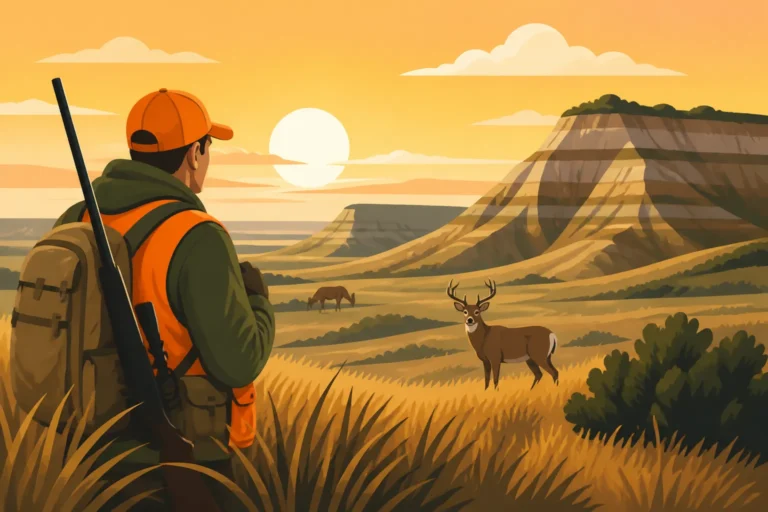
For hunters craving a more expansive, wilderness-like experience, North Dakota’s national grasslands offer significant opportunities, particularly in the western part of the state. The Little Missouri National Grassland, primarily located within the Badlands, is a phenomenal area for mule deer and whitetails. Its rugged coulees, cedar breaks, and sparse timber provide excellent cover and terrain that can be challenging but incredibly rewarding. Hunters here often employ spot-and-stalk tactics, using optics to pick apart distant hillsides. Hunting North Dakota's Little Missouri National Grassland requires physical stamina and a good understanding of wind and thermals, but the rewards can be significant, including opportunities for larger, more mature bucks. The Sheyenne National Grassland, in the southeastern part of the state, offers a different experience with its tallgrass prairie and interspersed woodlands. While perhaps not as renowned for trophy deer as the Badlands, it can hold good numbers of whitetails, especially in the timbered draws and creek bottoms. These areas tend to be less pressured than smaller PLOTS tracts, particularly if you're willing to venture deeper off the beaten path.
Wildlife Management Areas (WMAs) and State School Lands
North Dakota’s Wildlife Management Areas (WMAs) are tracts of public land managed specifically for wildlife habitat and public recreation, including hunting. These areas are strategically located throughout the state, often along river systems, around major lakes, or in prime upland bird and waterfowl country. While many WMAs are known for their bird hunting, they can also hold significant numbers of whitetail deer, especially those with good timber, dense brush, or wetland complexes. North Dakota Wildlife Management Areas are often smaller than national grasslands but offer concentrated habitat. State school lands are another public land category that many hunters overlook. These are typically scattered sections (640 acres) of land granted to the state to generate revenue for schools. They are generally open to public hunting unless explicitly posted otherwise. While they might appear as open prairie or agricultural fields, sometimes they contain crucial draws, shelterbelts, or sloughs that deer use as travel corridors or bedding areas. It's always wise to confirm boundaries and access rules using a reliable mapping system like GoHunt or onX Hunt, as these parcels can be interspersed among private holdings.
Regional Breakdown: Where to Find Deer on Public Ground
North Dakota's landscape is incredibly diverse, and so are its deer populations and public land opportunities. Breaking down the state into regions helps hunters focus their efforts on areas most likely to hold deer on accessible ground.
Western North Dakota (Badlands & Missouri River Breaks)
When most hunters dream of big North Dakota deer, their minds often drift to the rugged beauty of the Badlands in western North Dakota. This region is renowned for its trophy mule deer, though healthy populations of whitetails also thrive in the river bottoms and more timbered draws. Counties like McKenzie, Billings, Golden Valley, and Slope offer significant public land opportunities, primarily within the Little Missouri National Grassland. The hunting here is physically demanding, involving navigating steep coulees and open sagebrush flats. However, the effort can pay off with encounters with mature bucks that use the broken terrain for cover. Beyond the vast grasslands, the Missouri River Breaks also offer incredible public access. The steep, timbered bluffs and winding creek beds along the river provide ideal whitetail habitat. Hunters willing to hike into these areas, away from road access, often find less pressured deer. Remember that Reading Aerial Photos for Badlands Deer is absolutely essential here to identify hidden pockets of cover and potential travel routes.
Central North Dakota (Prairie Pothole Region & River Valleys)
Central North Dakota is a mosaic of prairie, agricultural fields, and the famous prairie pothole region, but it also boasts important river systems that offer prime whitetail habitat and public access. The Missouri River Corridor, running through counties like Morton, Oliver, and Burleigh, is a perennial favorite. Here, you'll find extensive timbered bottomlands, dense brush, and creek drainages that hold abundant whitetails. Public access in this corridor comes from WMAs, PLOTS tracts, and some Corps of Engineers land bordering Lake Sakakawea and Lake Oahe. Hunting North Dakota's Missouri River Corridor often involves still-hunting through river bottoms or setting up stands along known travel routes. Farther north and east, the Sheyenne River and James River basins also provide linear oases of cover in otherwise open agricultural landscapes. While the public parcels might be smaller, they are crucial for deer movement and bedding. Look for PLOTS and WMAs that border these river systems, as they often concentrate deer traveling between food sources.
Eastern North Dakota (Red River Valley & Turtle Mountains)
Eastern North Dakota, particularly the Red River Valley, is characterized by vast agricultural fields and much less contiguous public land. However, this doesn't mean there are no deer or public hunting opportunities. Hunters here need to be more strategic and often focus on smaller, isolated pockets of cover. The Turtle Mountains, straddling the Canadian border in north-central North Dakota, offer a unique forested landscape with excellent whitetail hunting. Here, you’ll find blocks of state forest land and WMAs that provide extensive timber cover, unlike much of the surrounding prairie. While it requires a different hunting approach than the Badlands, the Turtle Mountains can be productive for those willing to learn the timber. Elsewhere in eastern North Dakota, focus your efforts on WMAs and PLOTS tracts that feature shelterbelts, dense sloughs, or small woodlots adjacent to agricultural fields. These areas act as critical bedding and feeding locations for whitetails. Even a small, overlooked WMA can hold surprising numbers of deer, especially if it’s surrounded by productive fields. Remember, persistence and thorough e-scouting with tools like onX Hunt or GoHunt are key to finding these hidden gems.
Strategies for Maximizing Public Land Deer Success
Hunting public land for deer in North Dakota demands a thoughtful and adaptive approach. With limited and often pressured access, hunters who employ smart strategies are the ones who consistently find success.
Pre-Season Scouting and E-Scouting
The work for a successful public land deer hunt in North Dakota starts long before you ever step foot in the field. Pre-season scouting, both physical and digital, is absolutely non-negotiable. Begin with extensive e-scouting using satellite imagery on mapping apps like onX Hunt or GoHunt. Look for key features that attract and hold deer: dense thermal cover (cedar breaks, thick river bottom timber, cattail sloughs), natural funnels (narrow strips of cover connecting larger blocks), water sources (springs, potholes, creek beds), and food sources (unharvested crops on PLOTS land, natural browse, green fields). Pay close attention to subtle changes in elevation, pinch points, and areas that are difficult to access, as these often hold less pressured deer. Once you've identified potential hotspots, a physical scouting trip can confirm your suspicions and reveal fresh sign like rubs, scrapes, and deer trails. Scouting PLOTS Land Before Season is particularly important to understand the lay of the land and how deer are using it. Don't be afraid to put in the miles; the deer that are hard to get to are often the ones you want to pursue.
Hunting Pressure and Finding Seclusion
North Dakota's public lands, especially the easily accessible ones, can experience significant hunting pressure. Deer quickly learn to adapt to this pressure, becoming more nocturnal or seeking out areas where hunters are less likely to venture. Your strategy should revolve around finding seclusion. This often means being willing to walk further than most hunters. Look at your maps and identify those areas that are a mile or more from the nearest road or parking area – these are your best bets. Hiking in before dawn or staying out until after dusk can give you an edge, as many hunters head in and out at peak daylight. Consider hunting midweek if possible, when pressure tends to be lower. Using a ground blind on PLOTS land or setting up on a shelterbelt edge that funnels deer away from other hunters are tactical considerations. Understanding human behavior is almost as important as understanding deer behavior on public land. Finding PLOTS Ground Others Walk Past is about identifying those overlooked corners where a smart buck might feel safe.
Adaptability and Persistence
Deer hunting, especially on public land in North Dakota, is rarely a straightforward affair. Conditions can change rapidly, from weather patterns that shift deer movement to unexpected hunting pressure that pushes deer out of a preferred area. Therefore, adaptability is a critical trait for successful public land hunters. Be prepared to change your game plan on the fly. If your planned stand location isn't producing, don't be afraid to pack up and try a new area, perhaps focusing on a different type of cover or food source. Pay attention to the wind, using an app to monitor it constantly, as scent control and playing the wind are paramount for avoiding detection. Wind and Thermals in Badlands Terrain are especially tricky to navigate, so understanding how they influence scent is crucial. Persistence is equally important; sometimes, it takes multiple days of effort, adjusting your approach, and covering ground to finally connect with a public land buck. Don't get discouraged by slow periods; keep learning, adapting, and putting in the time. The reward of harvesting a deer on public ground is often sweeter because of the challenge involved.
| Public Land Type | Primary Deer Species | Typical Habitat | Key Advantages | Potential Challenges |
|---|---|---|---|---|
| PLOTS | Whitetail, some Mule | Crop fields, shelterbelts, sloughs, creek bottoms | Abundant food, varied cover, often accessible | Can be heavily pressured, acreage changes, scattered |
| National Grasslands | Mule Deer, Whitetail | Badlands coulees, open prairie, cedar breaks, draws | Expansive, less pressure if you hike, unique terrain | Physically demanding, deer can be sparse, CWD zones |
| Wildlife Management Areas | Whitetail, some Mule | River bottoms, dense timber, wetlands, brush | Concentrated habitat, managed for wildlife, diverse | Can be smaller, popular for birds, varying regulations |
| State School Lands | Whitetail, some Mule | Open prairie, small draws, agricultural fringes | Often overlooked, can surprise with good cover | Scattered, lack of extensive cover, minimal habitat |
Disclaimer
This article is for general informational purposes only and does not constitute professional advice. Laws, prices and regulations vary by location and change over time. Consult a qualified professional for guidance on your specific situation.