Reading Between the Lines of Outfitter Reviews
Oh, the quest for the perfect hunting outfitter in North Dakota! It's an exciting time, full of anticipation, but let's be real—it can also be incredibly daunting. You spend hours poring over websites, dreaming of that epic prairie pheasant flush or a quiet sit for a Badlands mule deer. Then you hit the reviews, and suddenly, you're swimming in a sea of opinions, trying to figure out which ones are genuine gold and which are just… well, fluff. This guide is all about helping you read between those lines, so you can make an informed decision and set yourself up for an unforgettable North Dakota hunting adventure.
The Initial Spark: Why Reviews Matter (and Why They Can Be Misleading)
When you're dreaming of a North Dakota hunt, whether it's chasing ringnecks across a CRP field or glassing for a whitetail along a river bottom, reviews are often your first peek behind the curtain. They promise insight, a sneak preview of what your experience might be like. But just like a good decoy spread, they can sometimes be more about presentation than the whole truth. Understanding both their power and their pitfalls is the first step in making smart choices.
The Lure of a Five-Star Average
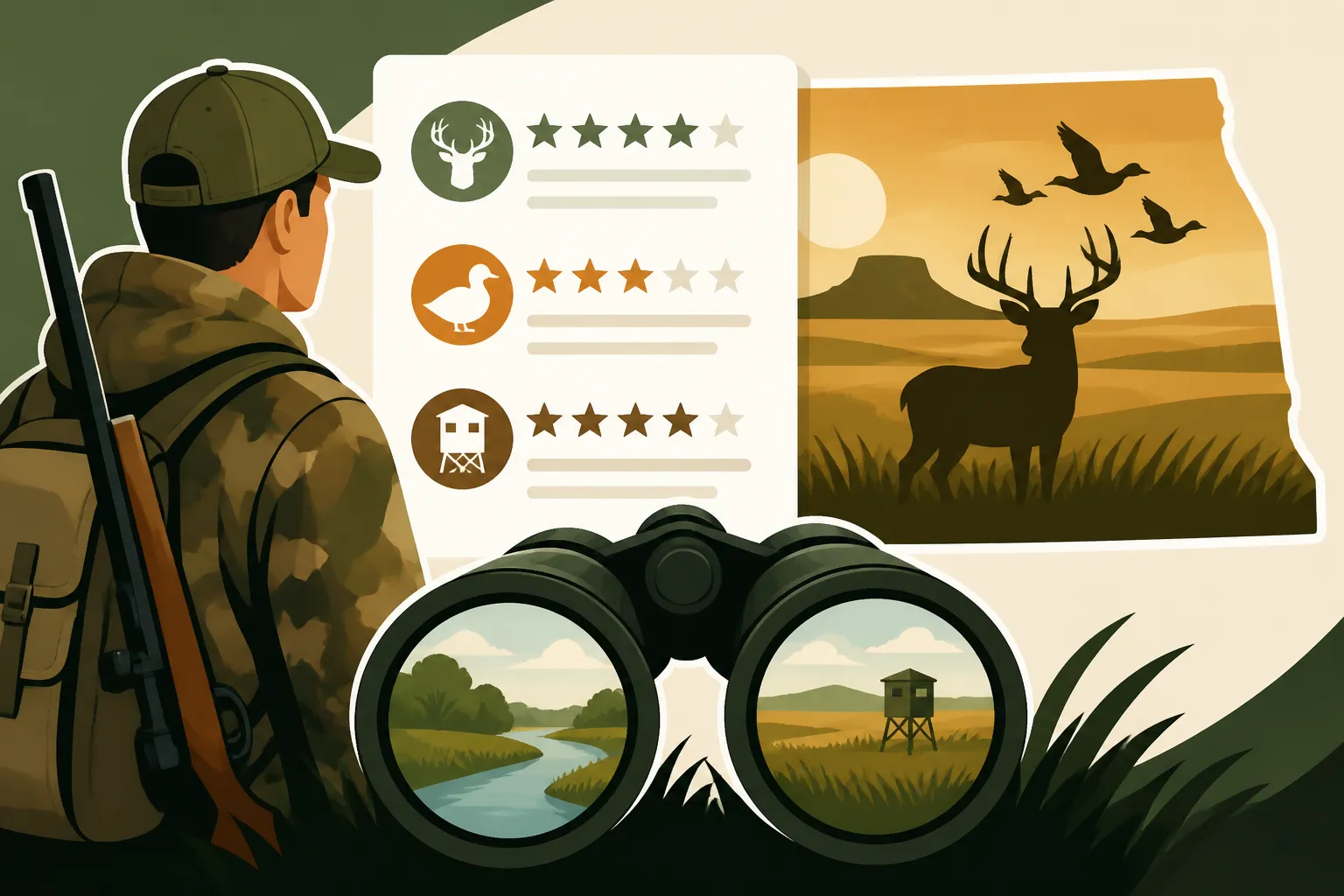
It's natural to be drawn to those shining five-star averages, isn't it? We see a string of perfect scores and think, "Bingo! This is the one!" Our brains are wired to trust high numbers and positive social proof. It feels safe. We envision ourselves having that same perfect experience, bagging that monster buck, or limiting out on ducks, all while enjoying gourmet camp meals and top-notch guiding. This initial emotional connection can be powerful, often overshadowing any small, niggling doubts we might have. We want to believe the hype because we want the dream hunt.
However, the reality of hunting, especially in a wild, unpredictable place like North Dakota, rarely conforms to a perfect five-star script. There are weather changes, animal movements that defy logic, and just plain bad luck. An outfitter can do everything right, provide incredible service, and still, the hunter might go home empty-handed due to factors beyond anyone's control. A string of perfect reviews might indicate consistent excellence, or it might suggest a carefully curated narrative that doesn't fully capture the nuanced reality of hunting in the field. This is where your critical eye becomes your most valuable tool.
Understanding the Review Ecosystem
Reviews don't just magically appear; they come from a variety of sources, each with its own biases and levels of credibility. You'll find testimonials directly on an outfitter's website, often hand-picked and polished. Then there are third-party booking platforms like BookYourHunt, which aggregate reviews from verified clients. Hunting forums, Facebook groups, and even casual conversations at the local diner also contribute to an outfitter's reputation, sometimes informally. Each of these environments has different rules for who can post, what they can say, and how their experience is verified.
What a hunter expects from an "experience" versus what an outfitter can realistically provide often creates a disconnect that shows up in reviews. Some hunters prioritize the trophy above all else, while others value the camaraderie, the challenge, or simply spending time in the stunning North Dakota landscape, whether it's the badlands or the vast prairie pothole region. An outfitter might deliver a fantastic experience in terms of hospitality, effort, and knowledge of the terrain, but if the hunter's sole measure of success is a big kill, a perfectly good hunt might get a less-than-stellar review. It's crucial to consider the source, the platform, and the likely motivations behind each piece of feedback you read.
Decoding the Language: What to Look For (and Through)
Once you move past the initial star rating, the real work begins. You need to become a detective, sifting through adjectives and anecdotes to find the concrete facts and genuine experiences. This means looking beyond the surface, questioning assumptions, and understanding what certain terms really imply, rather than what you hope they mean.
The "Success Rate" Trap
Few things are as alluring on an outfitter's page as a high "success rate." It sounds like a guarantee, a promise that you'll be posing with your trophy. But what exactly does "success" mean in this context? For a hunter, it usually means harvesting an animal. For an outfitter, it might mean something subtly different, and that difference can be a huge trap if you're not paying attention. An outfitter might count "opportunity" as success, meaning they got you on animals, even if you couldn't close the deal or passed on shots. They might mean a "100% shot opportunity" on a specific class of animal, not a 100% kill rate. This distinction is critical.
Imagine reading a review that praises an outfitter for "seeing deer every day" and "plenty of chances." That sounds great, right? But if the hunter never mentions taking a deer, or explicitly states they passed on smaller bucks to wait for a specific trophy, then the outfitter's "success" was in providing the opportunity, not necessarily the harvest. This isn't inherently bad, but it needs to align with your personal definition of a successful hunt. Always ask outfitters directly how they define their success rates: Is it opportunity? Is it animals harvested? Is it a certain percentage of clients leaving with a trophy? Clarity on this point can prevent major disappointment. Questions to Ask a North Dakota Outfitter can really help here.
Here's a quick look at how "success" can vary:
| Outfitter's "Success" Definition (Often Implied) | Hunter's "Success" Expectation (Often Assumed) | Implications for Reviews |
|---|---|---|
| Opportunity to harvest (e.g., "saw animals daily," "put on a stalk") | Actual harvest (e.g., "shot a buck," "filled my tag") | A hunter might review negatively if they didn't shoot, even if the outfitter delivered ample opportunities. Reviewers focusing on "seeing lots of game" but not explicitly stating a harvest might indicate a gap. |
| Positive experience (e.g., "great food, good company," "beautiful scenery") | Hunting results first, experience second | A review focusing only on camp life or friendly guides, without mentioning hunting outcomes, might mask a lack of animals or difficult hunting conditions. |
| Animal seen within range (even if passed) | Animal taken legally and ethically | A review might praise seeing a giant, but if the hunter passed on it for various reasons, it still counts as an "opportunity" for the outfitter, while the hunter might still be seeking a specific outcome. |
Red Flags in Glowing Testimonials
While positive reviews are what we seek, an abundance of overly glowing, generic testimonials can sometimes be a red flag. Be wary of reviews that sound boilerplate – "Great hunt, great guide, great time!" without any specific details. If every review could apply to any hunting trip anywhere, it lacks the authenticity and specificity you need to gauge a North Dakota outfitter. Are there details about the particular species, the terrain (was it Hunting North Dakota's Badlands Mule Deer Country or Hunting a Shelterbelt Edge for Deer?), the dates, or even the names of the guides? A truly authentic positive review will often mention these specifics because they made the experience memorable.
Another concern is the source of the review. Are they all from the outfitter's personal friends or family? While good relationships are fine, a lack of diverse reviewers from different regions or backgrounds might suggest a limited client base or a selective approach to testimonials. Also, be mindful of reviews that pop up in a short burst, all with similar phrasing. This could indicate incentivized reviews or, worse, manufactured ones. It's smart to cross-reference reviews found on an outfitter's website with those on independent platforms. Sites like BookYourHunt often have processes for verifying clients and their reviews, which adds a layer of credibility. You’re looking for genuine feedback from genuine hunters who've actually spent time in the North Dakota field with this specific outfit.
Finding Gold in the Grumbles: Negative Reviews
It might sound counterintuitive, but negative reviews can actually be a treasure trove of information, often more revealing than the purely positive ones. No outfitter, no matter how good, can please every single client, every single time. A few honest grumbles are normal and, frankly, expected in an endeavor as unpredictable as hunting. The key isn't to dismiss an outfitter solely because of a negative review, but to critically analyze what the complaint is about and how the outfitter responded.
Look for patterns. Is it one person complaining about an isolated incident, or are multiple reviews highlighting the same issue, such as disorganization, lack of scouting, or poor communication? A single complaint about bad weather is irrelevant (outfitters can't control the forecast!), but several complaints about consistently poor food or unenthusiastic guides point to systemic issues. Furthermore, pay close attention to how the outfitter responds to criticism, if their responses are visible. A professional, empathetic response that acknowledges the feedback and explains what was done to resolve it (or even just politely disagrees while upholding their standards) speaks volumes about their character and commitment to client satisfaction. Conversely, defensive, aggressive, or dismissive responses are major Red Flags When Booking a North Dakota Hunt. Sometimes, the negative reviews, when understood in context, provide the most realistic picture of an outfitter's strengths and weaknesses. Beyond direct reviews, research tools like GoHunt provide deeper insights into hunt units, strategies, and a broader community perspective that can indirectly validate or question what you read in a review by providing a realistic outlook on a particular hunt.
Beyond the Stars: Deeper Dive Techniques
While reviews are a great starting point, they shouldn't be your only source of information. Think of them as clues that lead you to a deeper investigation. To truly vet an outfitter, you need to dig for specifics, ask pointed questions, and consider the broader context of their operation.
The Power of Specificity: Digging for Details
General praise is nice, but specific details are what truly build a trustworthy picture of an outfitter. When you read reviews, hunt for concrete information. Did the reviewer mention the specific unit or area they hunted? Did they describe the type of terrain, like "the draws of the Little Missouri Badlands" or "the cattail sloughs of the prairie potholes?" Did they mention the specific species they were targeting and the tactics used, such as Rattling and Decoying Prairie Pothole Bucks or Spot-and-Stalk Elk in the Little Missouri Badlands? These details confirm that the hunter actually experienced the hunt and provides context you can compare to your own expectations.
Furthermore, look for mentions of specific guide names, camp conditions, food quality, or even the unexpected challenges of the hunt (e.g., "The cold snap made it tough, but Guide Dave worked his tail off to keep us on birds"). These specifics paint a much clearer picture than generic compliments. They tell you about the outfitter's operational style, the guides' dedication, and the overall atmosphere you can expect. An outfitter who consistently gets reviews filled with these kinds of granular details is likely delivering a consistent, well-executed experience, allowing you to properly assess what's included in an outfitted package hunt.
Contacting References and Direct Questions
One of the most powerful tools in your arsenal is asking the outfitter for references from previous clients. Any reputable North Dakota outfitter should be happy to provide contact information for several past hunters, ideally from the most recent season. Don't just settle for one; ask for three or four. When you speak to these references, go beyond surface-level questions. Ask them about the things that typically don't show up in a short online review.
- "What was the biggest challenge of the hunt?"
- "Was the camp as advertised?"
- "How did the outfitter handle unexpected issues, like bad weather or difficult hunting conditions?"
- "Would you hunt with them again?"
- "Was the overall value reflective of the cost?"
These direct conversations can provide invaluable insights that you simply can't glean from a written review. They help bridge the gap between what's advertised on a website or implied in a glowing review, and what was actually delivered in the field. This direct feedback is crucial for understanding the nuances of their operation.
Considering the Source and the Platform
The platform where you find reviews can significantly impact their reliability. Reviews on an outfitter's own website are naturally going to be curated to present the best image. While not necessarily dishonest, they are unlikely to show any negative feedback. Third-party booking sites, like BookYourHunt, often have verification processes for bookings and reviews, making them generally more reliable as they aren't controlled by the outfitter directly. Public hunting forums or social media groups can also be good sources, though these require even more discernment as anyone can post, and anonymity can sometimes lead to exaggerated claims or personal vendettas.
Beyond specific reviews, consider the outfitter's overall longevity and reputation. How long have they been operating in North Dakota? What's their standing in the local hunting community? You might even consider their licensing; understanding North Dakota Outfitter License Requirements can confirm they are a legitimate operation. An outfitter with a long, consistent history and a generally positive reputation across various independent sources is likely a safer bet than a brand new operation with only a handful of reviews on their own site. This comprehensive approach helps you filter out the noise and focus on the information that truly matters for your hunt.
Integrating Reviews into Your Decision-Making
Ultimately, reviews are just one piece of a larger puzzle. Your goal isn't to find an outfitter with universally perfect reviews (which is probably impossible), but to synthesize all the information available to you and make a decision that aligns with your personal hunting goals and expectations.
Balancing Expectations with Reality
It’s easy to get caught up in the excitement and set unrealistic expectations. Reviews, especially the overly positive ones, can sometimes fuel this. Remember that hunting in North Dakota, whether it's for waterfowl or big game, involves wild animals and wild country. Success is never guaranteed. An outfitter can guarantee effort, expertise, safety, and a quality experience, but they can't guarantee a trophy animal. Acknowledging this reality before you even book your trip will help you interpret reviews more fairly and avoid disappointment. A truly "good" outfitter will always prioritize safety, ethical hunting, and a genuine effort to put you on game, even when conditions are tough.
For example, a review complaining about not seeing anything during a massive blizzard might be unfair, while a review highlighting a guide's unwavering effort in those conditions, even without a harvest, is far more telling. Understand what the outfitter can control (logistics, equipment, scouting, guide knowledge, camp comfort, adherence to North Dakota Trespass and Permission Law) and what they cannot (weather, migration patterns, animal behavior, Hunting Pressure on North Dakota Public Land). This balance of understanding will help you filter out reviews based on unreasonable expectations from those pointing to legitimate issues.
The Holistic View: Combining All Your Information
Your best approach to choosing an outfitter is to take a holistic view, combining the insights from reviews with every other piece of information you can gather. This means:
- Direct Communication: Have detailed conversations with the outfitter. Ask your Questions to Ask a North Dakota Outfitter. Pay attention to their communication style, responsiveness, and how transparent they are about hunt details, pricing, and what's included.
- Website & Social Media: Explore their online presence. Are their photos recent? Do they show real hunters and realistic trophies? Is their information consistent across platforms?
- References: Speak to past clients. Ask those specific, probing questions that get to the heart of their experience.
- Your Own Research: Arm yourself with knowledge about the species you're hunting, the unit you're considering, and the typical conditions in North Dakota. Sites like GoHunt are great for this. The more you know about what's typical, the better you can judge the claims and experiences shared in reviews.
By synthesizing all these different sources—the glowing testimonials, the cautionary tales, the direct conversations, and your own due diligence—you'll build a comprehensive picture. This allows you to make an informed decision that goes beyond a mere star rating, helping you choose an outfitter who can truly deliver the North Dakota hunting adventure you've been dreaming of, whether it’s for White-Tailed Deer Across North Dakota or Ring-Necked Pheasants in North Dakota.
Disclaimer
This article is for general informational purposes only and does not constitute professional advice. Laws, prices and regulations vary by location and change over time. Consult a qualified professional for guidance on your specific situation.