Shipping a Trophy Home From North Dakota
You've just wrapped up an incredible hunt here in North Dakota, maybe you finally tagged that monster whitetail you've been dreaming about, or perhaps a beautiful mule deer from the Badlands. The hard part is done, the photos are taken, and the memories are made. Now comes the often-overlooked logistical challenge: how do you get that magnificent trophy home safely and legally? This guide is here to walk you through every step of shipping your hard-earned North Dakota trophy, ensuring it arrives back home in prime condition for your taxidermist.
Understanding North Dakota's Regulations for Trophy Transport
Before you even think about boxes and dry ice, you absolutely need to be squared away with the legalities. North Dakota has specific rules for tagging, registration, and transportation, especially concerning Chronic Wasting Disease (CWD). Skipping any of these steps can turn your celebratory journey into a real headache, potentially resulting in fines or even forfeiture of your trophy. It's not just about getting the animal, it's about respecting the game and the regulations designed to protect it.
Initial Tagging and Registration Requirements
The moment your animal is down and you've confirmed it's ethically harvested, the clock starts on proper tagging. In North Dakota, your license tag must be immediately and securely attached to the animal. This tag usually has several parts: one to be attached to the animal itself, and another portion to be kept with you as proof of possession. Make sure you fill out all required information accurately and legibly on the tag—things like date, time, species, sex, and the unit where it was harvested. This initial tagging is your primary proof that the animal was taken legally. Without it, you’re in a tough spot from the get-go.
Beyond the physical tag, deer harvested in North Dakota, for instance, must be reported. This can often be done conveniently online or through a mobile app. It's a critical step that validates your harvest with the state's game and fish department. You'll typically need to enter your license number, the unit harvested, the date, and other details. This electronic registration creates a record that is essential if you're questioned about your trophy's origin, particularly when crossing state lines. Always carry proof of your license and registration confirmation with you, even if it's just a screenshot on your phone, because enforcement officials often ask for it. For more details on reporting, see North Dakota Deer Reporting Requirements.
CWD Considerations and Testing
Chronic Wasting Disease is a serious concern for wildlife agencies across the country, and North Dakota is no exception. This neurological disease affects cervids (deer, elk, moose) and can be spread through infected animal parts. Because of this, strict regulations are in place regarding which parts of an animal can be transported out of certain areas, and sometimes even within the state. It’s absolutely crucial to know if the unit you hunted in is part of a CWD management zone.
If you harvested an animal in a designated CWD unit, mandatory testing might be required. This usually means submitting the animal's head to a sampling station within a specific timeframe. The results will determine if it's safe to transport certain parts. Even if testing isn't mandatory, it's a responsible practice to get your animal tested, especially if you plan to transport the meat or parts that could harbor the prions causing CWD. Remember, state laws often restrict the transport of high-risk parts like the brain, spinal cord, spleen, and lymph nodes. Only specific parts, often referred to as "low-risk," are generally allowed to cross state lines. Ignorance of these rules is not a defense, and violations carry significant penalties. Understanding North Dakota's Expanding CWD Hunting Units is vital before your hunt even begins.
Legally Prepared Parts for Interstate Transport
To legally transport your trophy across state lines from North Dakota, you need to ensure the animal parts are processed correctly. Generally, the skull plate (antlers or horns with the skull cap attached, often cleaned of brain matter), hides (capes), and boned-out meat are considered low-risk and are usually permissible. Full skulls, especially those with brain and nervous tissue intact, are often prohibited. This means you might need to have your trophy caped and skull-plated right there in North Dakota, either by yourself or a local meat processor or taxidermist.
For European mounts, the skull needs to be thoroughly cleaned. This means removing all brain tissue, hide, and muscle, and often boiling or beetle-cleaning the skull. For capes, ensuring they are properly salted and dried or frozen solid is paramount to prevent spoilage and potential disease transmission. Any raw meat should be boned out—meaning no bone attached to the meat—and packaged for transport. If you're transporting venison, remember that specific rules apply to Handling Venison From a CWD Hunting Unit, especially if harvested in a CWD-positive area. Always double-check your home state's regulations, too, as they might have additional import restrictions. A little research beforehand can save a lot of grief.
Preparing Your Trophy for Shipment
The quality of your mounted trophy starts long before it ever reaches the taxidermist's studio. Improper field care and packaging can lead to hair slippage, freezer burn, or even complete ruin of your hide and antlers. Think of this as the critical bridge between the field and your wall – every step here matters.
Field Care: The First Step to a Quality Mount
Proper field care is absolutely non-negotiable for a quality mount. As soon as you've tagged your animal, the priority shifts to preserving the cape and antlers. For deer, this means an accurate incision pattern if you plan on a shoulder mount. You want plenty of hide, so the "Y" incision behind the front legs and down the back is crucial. Don't cut too far forward on the brisket! The skin needs to be cooled as quickly as possible. If temperatures are above freezing, getting the hide off the animal and cooling it down is paramount to prevent hair slippage.
Once the cape is removed, it needs to be thoroughly fleshed to remove as much fat and muscle tissue as possible. This is where a sharp knife and some patience come in. After fleshing, generously salt the hide—non-iodized salt is best—making sure to rub it into every crease and fold, especially around the ears and face. Let it sit for a day or two, then shake off the old salt and apply a fresh layer. This process draws out moisture and begins the preservation process. If you can freeze it solid before shipping, even better. For helpful tips on initial processing, consider looking at guides like Field Dressing a Deer in Cold Weather or Butchering a Deer at Camp.
Packaging and Preservation Techniques
Once your cape is salted and dried (or frozen), careful packaging is essential. For salted capes, once they are dry and stiff, they can be folded skin-to-skin, hair-to-hair, and placed into sturdy, double-bagged plastic bags to prevent moisture transfer. Then, place these in a strong cardboard box or a hard cooler. If you've opted to freeze your cape, ensure it's frozen solid, then wrap it in multiple layers of heavy-duty plastic and insulation (like a sleeping bag or thick blankets) before placing it in a well-insulated cooler or freezer box. Dry ice can be added for longer journeys, but handle it with care and ensure adequate ventilation.
Antlers or horns need protection from breakage. If they are still attached to the skull plate, secure them in a wooden crate or a heavy-duty box with plenty of padding to prevent movement. Wrap the points to prevent them from piercing the box or getting chipped. A common method is to cut a piece of plywood that fits inside your cooler or box, zip-tie the skull plate to it, and then pack around it. This ensures the antlers don't shift during transit. Even for a once-in-a-lifetime animal like a moose or bighorn, proper packing is key. Think about the entire journey your trophy will make, especially if it involves multiple handlers.
Choosing a Reputable Taxidermist or Shipping Service
Deciding whether to use a local North Dakota taxidermist or ship your trophy to your preferred taxidermist back home is a big decision. Many hunters prefer their local taxidermist because they've built a relationship and trust their work. If you go this route, you'll need to focus heavily on the shipping logistics. Alternatively, some hunters opt to have a North Dakota taxidermist do the initial caping and skull plating, then ship those prepared components to their home taxidermist.
When choosing a shipping service, whether it's a commercial freight company or a specialized game carrier, reputation is everything. Look for companies with experience in handling perishable and fragile goods. Ask about their insurance policies, estimated transit times, and what kind of packaging they recommend. Platforms and communities catering to hunters, like those you might find through BookYourHunt or GoHunt resources, often have recommendations for reputable game shippers or can help you connect with local processors who handle shipping regularly. Always get a clear quote and understand what it includes, from handling fees to potential fuel surcharges. Also, consider the option of working with a local North Dakota taxidermist for the entire process. They are well-versed in state regulations and often have established shipping channels, potentially simplifying the process for you. For insights on finding local experts, refer to Finding a Taxidermist Near Your Hunt.
Shipping Options and Logistics
Once your trophy is properly prepared and packaged, it's time to choose the best way to get it home. Each option has its own set of considerations, from cost to convenience and peace of mind.
Commercial Freight and Specialized Carriers
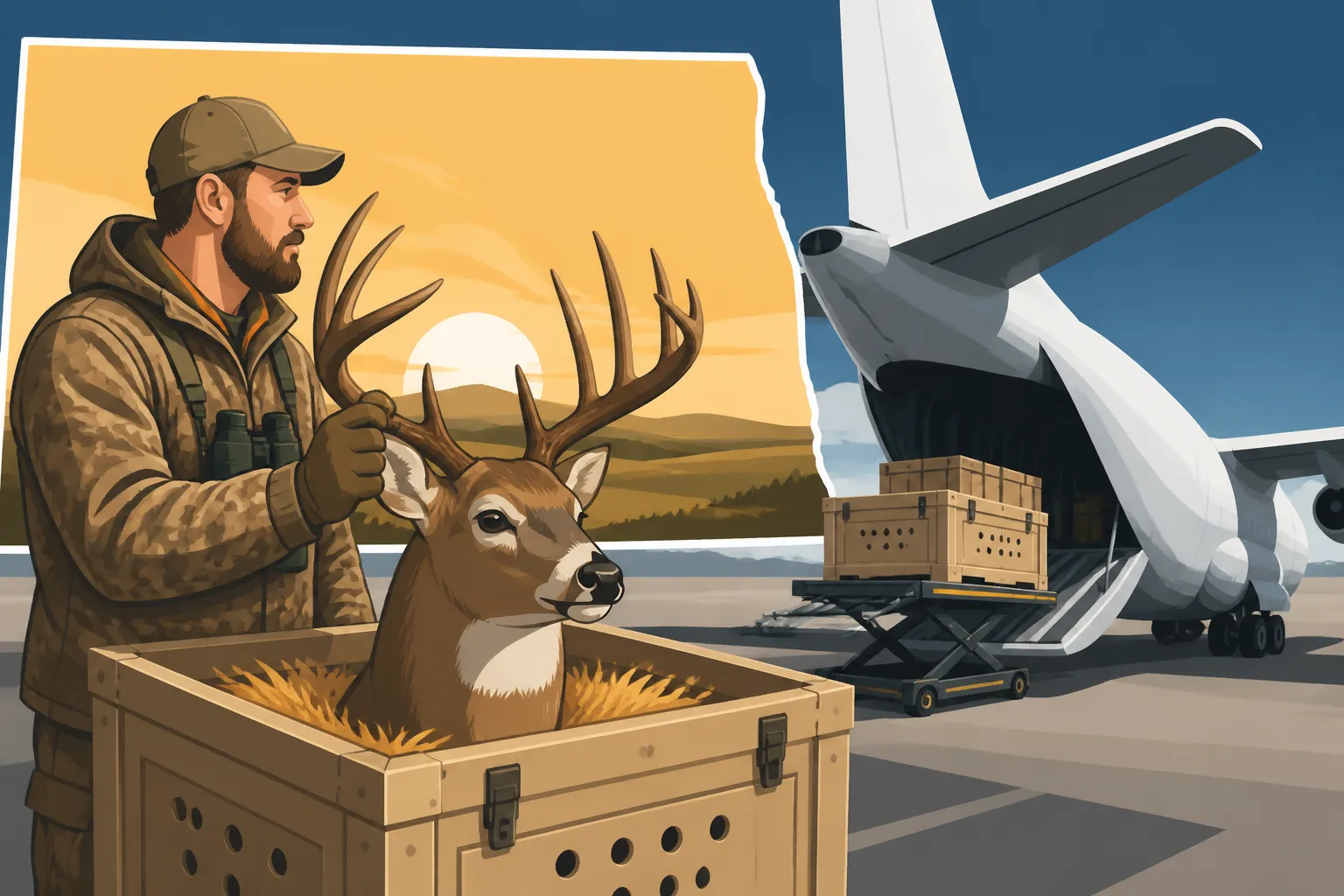
For many hunters, especially those traveling by air, commercial freight or specialized game carriers are the go-to. Airlines will often transport antlers as oversized baggage, and capes/meat can be shipped as cargo. However, there are strict rules regarding packaging, weight, and contents. You'll need to check with the specific airline or freight company regarding their policies for game animal parts. They may require specific labeling, temperature controls, or even advance notice. Dry ice regulations are particularly stringent for air travel, so understand the limits and proper venting.
Specialized game carriers are often a better, albeit potentially more expensive, option. These companies are set up specifically to transport game meat and trophies across state lines. They understand the regulations, have temperature-controlled vehicles, and are experienced in handling these unique shipments. They often offer door-to-door service, which can be a huge convenience. The downside can be scheduling (they might only run specific routes on certain days) and cost. Always get references, check reviews, and ensure they are properly licensed and insured. Compare options like this:
| Shipping Method | Pros | Cons | Best For |
|---|---|---|---|
| Airline Cargo | Often quickest for distant destinations | Strict rules, potential for mishandling, costly | Capes/meat for hunters flying without a vehicle |
| Airline Oversized Baggage | Convenient if flying anyway | Antlers only, size/weight limits, higher risk | Antlers/skull plates for direct flights |
| Commercial Freight (e.g., FedEx, UPS Freight) | Wide availability, tracking, various service levels | Less specialized for game, packaging critical | Well-packaged, non-perishable parts (skulls) |
| Specialized Game Carrier | Expertise in game transport, temperature-controlled | Fewer routes/schedules, can be expensive | Full service for capes, meat, and antlers |
| Self-Transport | Full control, cost-effective for close trips | Time commitment, vehicle space, legal checks | Driving within reasonable distance |
Self-Transport: Pros and Cons
If you drove to North Dakota and have adequate vehicle space, self-transporting your trophy can be a viable and often preferred option. The primary benefit is complete control over your trophy's handling. You know how it's packed, how it's stored, and you don't have to worry about it being mishandled by third parties. It also often saves on shipping costs, which can add up significantly, especially for larger animals.
However, self-transport also comes with its challenges. You'll need sufficient cooler space for capes and meat, and a way to keep them cold (ice, dry ice, or a powered cooler). Antlers can take up a lot of room and need to be secured to prevent damage to them or your vehicle's interior. You also need to be acutely aware of CWD regulations for every state you drive through. Some states have stricter rules than North Dakota, prohibiting certain parts from being transported through their borders, even if you don't intend to stop. Always map out your route and check the CWD transport regulations for each state along the way. Planning is key for an eight-day elk hunt, and it's no different for transporting your trophy. Consider reviewing resources like Packing for an Eight-Day North Dakota Elk Hunt for general preparation insights.
Paperwork and Permits for Interstate Travel
Even if you're driving yourself, paperwork is essential. Always carry your North Dakota hunting license, your filled-out physical tag, and proof of harvest registration. If your animal was taken in a CWD management unit and underwent testing, you absolutely must have the CWD test results with you. These documents prove the legality of your harvest and adherence to North Dakota's rules.
Additionally, some states might require an interstate transport permit or declaration for certain game parts, even if they are low-risk. It's rare, but checking beforehand can save you a roadside stop and potential headache. Most importantly, familiarize yourself with the regulations of your home state regarding the importation of game from other states. They may have specific rules about CWD-susceptible species. Remember, wildlife laws are taken seriously, and failure to comply can lead to severe penalties. For a broader understanding of legal implications, you might find information in North Dakota Wildlife Violation Penalties useful.
Common Challenges and Troubleshooting
Even with the best planning, things can sometimes go awry. Knowing how to anticipate and react to potential problems can make all the difference in ensuring your trophy makes it home safely.
Dealing with Delays and Unexpected Issues
Life on the road, especially with valuable cargo, is rarely straightforward. Flights get delayed, freight trucks break down, and sometimes weather throws a wrench into even the most meticulously planned schedules. If you encounter a delay while transporting perishable items like capes or meat, immediate action is critical. If you're driving, find a facility with commercial freezers or a locker plant where you can temporarily store your items. Many small towns in North Dakota have these services available. If shipping commercially, maintain open communication with your carrier. Ask about their contingency plans for delays and if they have cold storage options at their hubs.
For antlers, delays are less about spoilage and more about security and potential damage. Ensure your crating is robust enough to withstand extra handling. If a significant delay occurs, confirm with the carrier that your package is being stored in a secure location. A good relationship with your taxidermist back home can also be a lifesaver; they might have advice or be able to contact the shipping company on your behalf if you're stuck in a remote area.
Insurance and Damage Protection
A trophy represents not just an animal, but an investment of time, money, and passion. Insuring it during transport is a smart move, especially for truly exceptional specimens. While standard shipping insurance might cover the "value" of the package, it often doesn't adequately compensate for the sentimental or aesthetic value of a unique trophy.
When using a commercial carrier, inquire specifically about their coverage for game trophies. You might need to purchase supplemental insurance that covers the actual replacement cost of the mount (which is often much higher than the raw material cost) or the estimated value of the trophy itself. Document your trophy meticulously with photos before packing, noting any existing imperfections. This documentation will be invaluable if you need to file a claim. Even if you're self-transporting, it's worth checking if your personal auto or home insurance policy offers any coverage for valuable items in transit. It's better to be over-insured than to face the devastating loss of a irreplaceable trophy without recourse.
Understanding Costs: A Realistic Outlook
Shipping a trophy home isn't cheap, and it's important to have a realistic understanding of the potential expenses. These costs can vary wildly based on the size of the animal, the method of transport, the distance, and the services you choose.
Here's a breakdown of potential costs to consider:
- Processing Fees: If you hire a local butcher or taxidermist to cape, skull plate, or bone out meat, expect fees for their time and expertise.
- Packaging Materials: Quality coolers, dry ice, sturdy boxes, and crating materials all add up.
- Shipping Charges: This will likely be the largest expense. Airlines, commercial freight, and specialized game carriers all have different pricing structures based on weight, dimensions, and destination. For larger antlers, oversized fees can be substantial.
- Permit Fees: While North Dakota usually doesn't have an export permit fee for legally harvested animals, always confirm. Your home state might have an import permit fee.
- Taxidermy Deposit: Many taxidermists require a deposit upfront, even before the trophy arrives.
- Insurance: The cost of additional insurance for high-value trophies.
Factoring these costs into your overall hunt budget from the start will prevent sticker shock after a successful harvest. A great hunt shouldn't end with unexpected financial burdens. Always ask for itemized quotes and compare services carefully. Knowing the typical harvest numbers and success rates in an area, like those detailed in North Dakota Deer Harvest Records, can sometimes influence decisions on how much to invest in shipping.
Disclaimer
This article is for general informational purposes only and does not constitute professional advice. Laws, prices and regulations vary by location and change over time. Consult a qualified professional for guidance on your specific situation.