Spotting Pronghorn on North Dakota’s Open Prairie
Trying to spot a pronghorn on North Dakota's vast, often featureless prairie can feel like searching for a needle in a haystack, especially when they blend so perfectly with their surroundings. That immense open space, while beautiful, can make locating these swift creatures a monumental challenge for any hunter. This comprehensive guide will equip you with the essential knowledge, equipment strategies, and patient techniques needed to effectively spot pronghorn on North Dakota's expansive grasslands, turning those frustrating hunts into successful observations.
Understanding Pronghorn Behavior and Habitat
To spot pronghorn consistently, you first have to think like one. These animals are truly unique to North America, often mistakenly called antelope, but they are in a class of their own, built for speed and survival on the open plains. Understanding their daily routines and preferred hangouts is the first step in narrowing down your search.
Prairie Dynamics and Pronghorn Preferences
North Dakota's western half is prime pronghorn country, characterized by vast, undulating grasslands, sagebrush flats, and scattered badlands buttes. This isn't dense timber hunting; it's a completely different game. Pronghorn thrive in areas where they have an unobstructed view of their surroundings, which is their primary defense mechanism against predators. They'll often be found grazing on forbs, grasses, and sagebrush in open areas, especially those with gentle rolling topography that still offers some visual breaks and slight elevation changes. They rarely linger in thick cover, preferring areas where they can see danger coming from a mile away.
During different times of the year, their preferences might shift slightly. Early season, when vegetation is lush, they might be more spread out. As the season progresses and forage changes, they could concentrate more in specific fields or draws where preferred browse is still available. Think about water sources too; while pronghorn can go without direct water for extended periods by getting moisture from plants, a nearby stock dam or natural spring can often be a magnet, especially in drier conditions. Understanding these subtle shifts in their daily patterns, driven by food, water, and security, is paramount. You might find them lounging on a south-facing slope in the morning, soaking up the sun, then moving to a different draw to feed in the afternoon.
Their Keen Senses and What That Means for Hunters
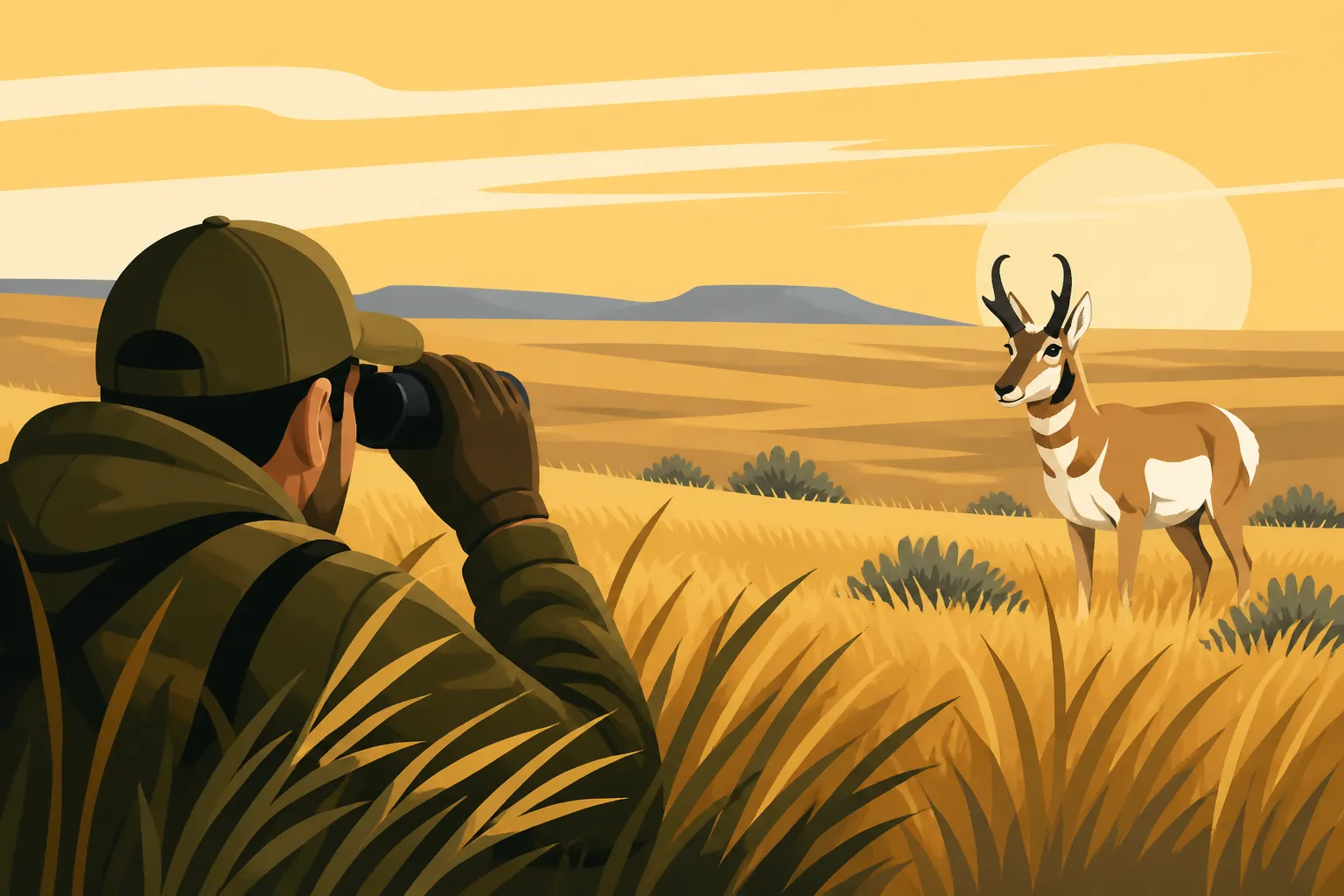
Pronghorn possess perhaps the most incredible eyesight in the animal kingdom, often compared to an 8x binocular. They can spot movement and detect anomalies from incredible distances – we're talking miles, not just hundreds of yards. This incredible vision is their superpower, allowing them to detect predators and threats long before they themselves are detected. This means that as a hunter, your visual discipline is critical. Any sudden movement, the glint of a scope in the sun, or an exposed silhouette on a ridge can send them bolting across the prairie at speeds approaching 60 miles per hour.
Beyond their eyesight, their sense of smell and hearing are also highly developed, though not quite on par with their vision. They'll pick up human scent carried on the wind, and sharp, unnatural sounds can certainly put them on alert. The implication for spotting them is clear: you need to be doing your spotting from a long distance, often a mile or more away, and be extremely conscious of your profile and movement. This isn't a game of sneaking up on them by foot initially; it's a game of patient, methodical observation from afar. Understanding this helps you appreciate why long-range glassing techniques, which we’ll dive into, are not just helpful but absolutely essential for success.
Essential Glassing Equipment and Techniques
Spotting pronghorn on the vast North Dakota prairie is almost entirely a game of optics. You can't just drive around hoping to stumble upon them; you need to systematically pick apart the landscape. This requires having the right tools and knowing how to use them effectively.
The Right Optics for Wide-Open Spaces
When it comes to glassing for pronghorn, quality optics are non-negotiable. Forget about that cheap pair of binoculars you use for birdwatching in your backyard; these animals demand serious glass. Your primary tool will be a good pair of binoculars, ideally 10×42 or 12×50. The higher magnification will give you the reach needed to cover vast distances, while the larger objective lens diameter will gather more light, crucial for early morning and late evening spotting. Brands like Vortex, Leupold, and Zeiss offer excellent options across various price points, providing clarity and durability that stand up to prairie conditions.
However, binoculars are just the start. A high-quality spotting scope, typically 15-45×60 or 20-60×80, mounted on a sturdy tripod, is your secret weapon. This allows you to scrutinize distant objects, confirm if that light-colored patch is a rock or a bedded pronghorn, and then evaluate its size and sex without pushing the animals. A good spotting scope can literally save you miles of walking. Many seasoned hunters swear by models that offer exceptional low-light performance, ensuring you can pick out subtle details even as the sun dips below the horizon. The tripod is equally important; hand-holding high-magnification optics for extended periods is a recipe for shaky images and missed details. Look for a lightweight, stable carbon fiber tripod that can handle the prairie wind.
Effective Grid Searching and Scanning
Once you have your optics, knowing how to use them is the next crucial step. The "grid search" method is your best friend on the prairie. Instead of randomly scanning, pick a distant landmark and systematically work your way across a section of land, much like mowing a lawn. Start at the furthest point of your visible area, slowly moving your binoculars or spotting scope across a horizontal line. Once you reach the end of that line, drop your view slightly, and move back across in the opposite direction. Repeat this process, meticulously covering every inch of terrain. This ensures you don't miss anything.
Patience is key here. Don't rush. Spend time picking apart shadows, looking for unusual shapes, or anything that doesn't quite fit the natural landscape. A white rump patch, the curve of a horn, or even a subtle glint of light off an animal's coat can be the giveaway. Pronghorn will often bed down in depressions or behind small rises, making them surprisingly difficult to spot, even in open country. It's often the small, out-of-place detail that catches your eye. Remember to vary your scanning speed; sometimes a quick pass will catch movement, while other times a slow, deliberate sweep is needed to identify a bedded animal. You can gain valuable insights from tools like GoHunt, which often provides detailed topographic maps, helping you identify potential bedding areas or travel corridors that warrant closer inspection.
Strategic Scouting and Approach Methods
Spotting pronghorn isn't just about seeing them; it's about seeing them first and then being able to make a move. This involves a combination of pre-season scouting, reading the land in real-time, and using the natural contours of the prairie to your advantage.
Reading the Landscape for Pronghorn Sign
Even before you set foot on the prairie, you can start scouting from your desk. Satellite imagery and topographic maps are invaluable. Look for vast stretches of open grassland, but also pay attention to subtle elevation changes – small ridges, coulees, and draws that might offer a bedded animal some protection from the wind or a visual break from predators. These slight depressions are often where you'll find pronghorn resting during the heat of the day. Identify potential water sources like stock dams or natural springs, as well as areas where different types of vegetation meet, as these "edges" can be prime feeding zones. The GoHunt app, for example, offers excellent layering capabilities that allow you to analyze terrain, vegetation types, and even historical animal sightings, giving you a serious leg up.
Once you're in the field, look for actual sign. While it might not be as obvious as deer rubs or scrapes in the timber, pronghorn droppings and tracks are distinct. Their tracks are small, sharp, and resemble a miniature deer track. Droppings are typically small, dark pellets often found in clusters. More importantly, observe how they use the land. Are they always crossing a particular ridge? Do they seem to prefer grazing in one specific field every morning? Over time, you'll start to recognize patterns of movement and behavior within a given area. Remember that Spotting Pronghorn on North Dakota's Open Prairie isn't just a physical act; it's an intellectual one, a continuous process of learning the landscape and its inhabitants.
Using Terrain to Your Advantage
The key to successfully spotting and then closing the distance on pronghorn is mastering the art of using the terrain to hide yourself. North Dakota's prairie, while appearing flat, is anything but. There are countless subtle rises, swales, and coulees that can be utilized for concealment. When you spot a pronghorn from a distance, your next move isn't to walk directly at it. Instead, plan a circuitous route that keeps you hidden behind topography as much as possible. This means walking along the backside of ridges, dipping into draws, and always keeping a piece of terrain between you and the animal's line of sight.
This can be a slow, painstaking process, requiring constant re-evaluation of your route. Periodically, you'll need to crawl to a crest, just enough to peek over and re-acquire the animal's position with your binoculars, then drop back down and continue your hidden approach. Wind direction is also incredibly important here; always try to approach with the wind in your face or across your body to prevent your scent from spooking the animal. This kind of careful, methodical movement is especially critical when Stalking Pronghorn on Open Grassland. This method of using natural cover is also vital in many other types of hunting; for instance, understanding Wind and Thermals in Badlands Terrain is equally important for a successful elk hunt.
Timing Your Pronghorn Spotting Efforts
The time of day and prevailing weather conditions play a huge role in pronghorn activity and, consequently, how easy or difficult they are to spot. Being out there at the right time can significantly increase your chances of success.
Best Times of Day for Activity
Pronghorn are most active during the cooler parts of the day – early mornings and late afternoons/evenings. As the sun begins to rise and cast long shadows across the prairie, pronghorn will often be up and grazing, moving from their bedding areas to preferred feeding grounds. This is a prime time for spotting, as their movement makes them easier to pick out against the landscape. They'll continue this activity until the sun gets high and the temperatures begin to climb. During the midday heat, especially in the early season, pronghorn will typically bed down in a slight depression or behind a small rise, seeking whatever meager shade or thermal relief they can find.
As the late afternoon approaches and the heat begins to dissipate, they'll become active again, often feeding until just before dark. This twilight period is another fantastic opportunity for spotting. Not only are they moving more, but the lower angle of the sun can create different lighting conditions that might highlight their forms. When the light is just right, their unique coloration can pop against the golden hues of the prairie. Many hunters find that focusing their most intense glassing efforts during the first two hours after sunrise and the last two hours before sunset yields the best results.
Weather's Impact on Pronghorn Visibility
Weather is another critical factor. Calm, clear days might seem ideal, but they can sometimes make pronghorn more wary as there's less cover for you and less natural noise to mask your approach. Overcast days, however, can be a godsend. The diffused light reduces harsh shadows and glare, making it easier to pick out animals that might otherwise be hidden in deep shade or washed out by bright sunlight. A slight breeze is often beneficial, as it can help carry your scent away and provide some natural noise to cover your movements.
Extremely windy conditions, on the other hand, can be a mixed bag. While the wind can certainly help mask your presence and dull the pronghorn's sense of smell, it can also make spotting incredibly difficult. High winds make it tough to hold binoculars steady, and mirage – the shimmering effect of heat rising from the ground – can distort distant images, making it nearly impossible to confirm what you're seeing. Pronghorn themselves might seek more sheltered areas during strong winds, often bedding in deep coulees or behind substantial rises. After a hard prairie winter, pronghorn numbers can be impacted, making them harder to find, so knowing Why a Hard Winter Hurts Pronghorn Numbers can help manage expectations.
Leveraging Technology for Spotting Success
In today's hunting world, technology is no longer a luxury but an indispensable tool. For spotting pronghorn across North Dakota's vast public lands, modern gadgets can give you a significant advantage, helping you locate animals more efficiently and plan your approach more effectively.
Mapping Apps and Satellite Imagery
Gone are the days of relying solely on paper maps, though a good physical map is always a smart backup. Modern mapping applications are absolute game-changers for pronghorn hunting. Apps like GoHunt, onX Hunt, and BaseMap provide detailed satellite imagery, topographic maps, and crucial land ownership overlays. Before you even leave home, you can spend hours "e-scouting" an area, identifying potential pronghorn habitat. Look for key features: long, sweeping plains, networks of coulees and draws, water sources, and areas with particular vegetation types. The ability to mark waypoints, measure distances, and track your movements in real-time is invaluable when navigating unfamiliar prairie landscapes.
These apps also help you understand access points and property boundaries, ensuring you don't inadvertently trespass, which is a major concern on mixed public and private lands in North Dakota. Many of these apps also feature layers that show things like historical fire burn areas, which can lead to new forage and attract pronghorn, or even public land boundaries. The GoHunt app, in particular, offers robust data layers that can highlight everything from vegetation density to historical harvest data, helping you prioritize where to focus your efforts. For areas where cell service might be spotty, downloading offline maps beforehand is a non-negotiable step, preventing you from being caught without navigation in the middle of nowhere. This is also critical for Using the PLOTS App Without Cell Service.
Rangefinders and Wind Meters for Accuracy
Once you've spotted a pronghorn, the next critical step is to accurately assess the distance and conditions. This is where a quality rangefinder becomes indispensable. On the open prairie, distances are incredibly deceptive. What looks like 300 yards through your binoculars can easily be 500 or more. A good rangefinder will give you an exact reading, which is absolutely vital for making an ethical shot if you're hunting. Look for a model that performs well at long distances (up to 1,000 yards or more) and has angle compensation features, as even subtle inclines or declines on the prairie can affect shot placement. Brands like Vortex, Leupold, and Sig Sauer offer excellent rangefinder options.
In addition to distance, understanding the wind is crucial, not just for stalking but also for shot accuracy. A small, portable wind meter (anemometer) can provide real-time wind speed and direction, which is especially important for long-range shooting. Pronghorn, as we've discussed, have incredible eyesight and are very wary, so misjudging the wind on your approach can quickly lead to a busted stalk. When it comes to taking a shot, even a moderate crosswind can push a bullet significantly off target at long ranges. Incorporating a rangefinder and wind meter into your gear ensures you have the data needed to make informed decisions both during the spotting phase and the potential follow-up stalk.
Common Mistakes and How to Avoid Them
Even seasoned hunters can make errors when it comes to spotting pronghorn. The unique environment of the North Dakota prairie presents its own set of challenges that, if not respected, can lead to frustration and missed opportunities.
Rushing the Glassing Process
One of the most common mistakes hunters make, especially those new to pronghorn country, is rushing the glassing process. It's easy to get excited and quickly scan an area, decide nothing is there, and move on. However, pronghorn are masters of concealment, even in plain sight. Their fawn-colored bodies blend remarkably well with the dry grasses and sagebrush, and they often bed down in small depressions or behind a low rise, making them almost invisible to the casual observer. Rushing means you're likely to overlook a bedded buck, a group of does, or a subtle movement far in the distance.
To avoid this, cultivate patience. Set up your spotting scope on a tripod, get comfortable, and commit to meticulously grid-searching an area for at least 15-20 minutes, sometimes longer for prime habitat. Don't just look for whole animals; look for pieces: the flash of a white rump, the black horn tips silhouetted against the sky, a flicker of an ear, or an unnatural horizontal line in a vertical world of grass. Think about it: if you're covering hundreds or thousands of acres, a few extra minutes spent glassing from a vantage point is far more efficient than walking miles only to realize you missed an animal from your original spot. Remember that Hunting North Dakota's Nine-and-a-Half-Day Bow Restriction often means precious few days to get it right, so patience in glassing pays dividends.
Ignoring Wind and Thermals
Another critical error is underestimating the impact of wind and thermals. Pronghorn might have incredible eyesight, but their noses are still excellent detectors of danger. Approaching an animal with the wind blowing your scent towards them is almost a guaranteed bust. They will typically pick up your scent long before you get within range, especially if you're not paying attention to subtle wind shifts. Many hunters only consider the wind direction at their current location and forget how it might be swirling in draws or changing over distant ridges.
Thermals, which are rising or falling air currents caused by temperature differences, also play a significant role, particularly in the mornings and evenings. As the sun heats the ground, warm air rises (updrafts), carrying your scent uphill. In the evenings, as the ground cools, air descends into valleys (downdrafts), carrying scent downhill. Always try to position yourself so that the wind, and thermals, are carrying your scent away from the animals you're trying to spot or stalk. Using a small powder bottle or a wind checker constantly will help you stay informed about localized air currents. It’s an essential part of any hunt, whether you're trying to spot Mule Deer in North Dakota's Badlands or a pronghorn on the prairie.
Poor Approach After Spotting
Spotting a pronghorn is only half the battle; the other half is getting into a position for a shot or a closer look. A common mistake is to make a direct, visible approach after spotting an animal. On the open prairie, anything that looks like a direct, head-on threat will send pronghorn scattering. They are constantly scanning their surroundings, and any sustained, obvious movement in their direction will trigger their flight response.
The key to a successful approach is stealth and using available cover. Once you’ve located a pronghorn, take your time planning your route. Look for every fold in the terrain, every low ridge, every wide coulee, or even clumps of sagebrush that can provide concealment. Move slowly and deliberately. Often, this means taking a much longer, circuitous route that keeps you out of the animal’s line of sight for as long as possible. If you must cross an open area, do so quickly and while the animal's head is down feeding or looking in another direction. When you near a crest to peek, do so very slowly, keeping a low profile, even crawling if necessary. Any sudden movement, silhouetting yourself against the skyline, or exposing yourself for too long will alert those keen eyes. Patience in your approach, just like in your glassing, is what turns a spotted animal into a successful encounter.
| Aspect | Best Practice for Pronghorn Spotting | Common Mistake to Avoid | Recommended Gear |
|---|---|---|---|
| Glassing | Use tripod-mounted spotting scope for grid searching. | Quick, random scanning with hand-held binoculars only. | 10-12x Binoculars, 15-60x Spotting Scope, Sturdy Tripod |
| Timing | Focus on first 2 hours after sunrise, last 2 hours before sunset. | Hunting exclusively midday in direct sun. | Watch, sunrise/sunset app |
| Stealth | Utilize terrain for concealed, circuitous approaches. | Direct, straight-line approach across open ground. | Camouflage, quiet clothing |
| Wind/Scent | Always approach with wind in your face or across you. | Ignoring wind direction, approaching downwind. | Wind checker/powder bottle, GoHunt app |
| Distance | Spot from 1+ mile away, confirm with high-power optics. | Assuming short distances, pushing animals by approaching. | High-power optics, rangefinder |
Disclaimer
The information provided in this guide is for informational purposes only and is not a substitute for official regulations. Always consult the North Dakota Game and Fish Department's current hunting proclamations and regulations before planning any hunt. Hunting ethics, safety, and respect for wildlife and private property are paramount.