Glassing for Moose in River Bottom Willows
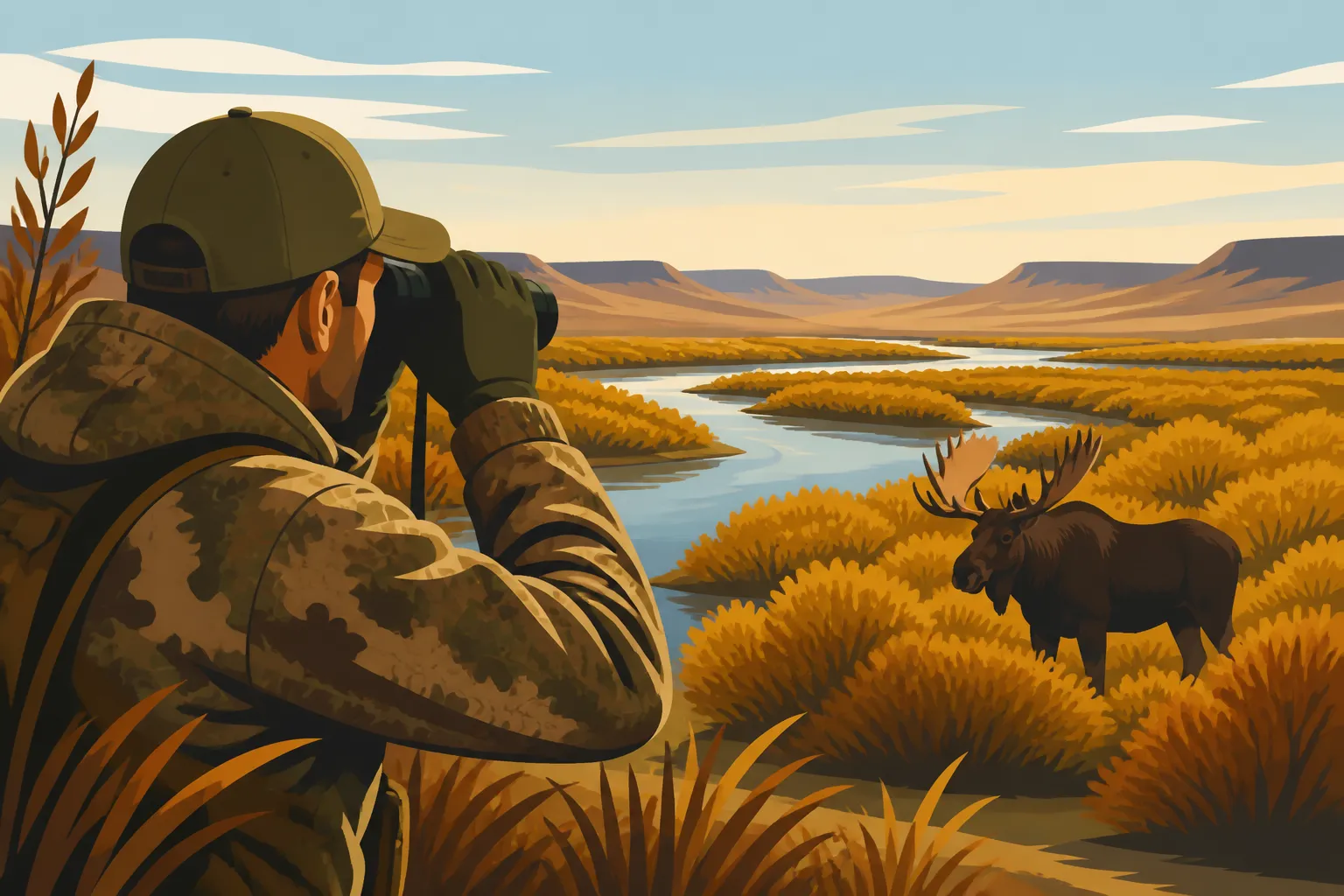
Hunting moose in North Dakota's dense river bottom willows presents a unique and often frustrating challenge. These elusive giants are masters of concealment, disappearing into thick cover that can seem impenetrable, leaving hunters wondering if they're even in the right spot or if they'll ever get a clear visual. This comprehensive guide will walk you through the art and science of glassing for moose in these demanding environments, equipping you with the knowledge and techniques to spot these magnificent animals where they prefer to hide.
Understanding North Dakota Moose Habitat in River Bottoms
North Dakota might not be the first place people think of when they imagine moose hunting, but the state holds a healthy, albeit smaller, population, primarily concentrated in the northern and eastern river corridors and the Turtle Mountains. These areas, particularly the larger river drainages, offer the perfect blend of dense cover, water, and forage that moose crave. When you’re looking to find a moose, you have to think like one, and that means understanding their specific habitat preferences within these challenging river bottoms.
Identifying Key Willow Features
River bottoms in North Dakota, like those along the Red, Sheyenne, and Pembina Rivers, are often characterized by a diverse mix of trees and shrubs, but it’s the willows that are truly king for moose. These aren't just any willows; we're talking about incredibly dense, often intertwined thickets that can be several feet high, providing not only excellent cover from predators and hunters but also a substantial food source. Look for areas where the willows form impenetrable mazes, often right along the water's edge or in low-lying depressions that might hold standing water. These areas are moose sanctuaries. The transition zones, where willows give way to taller timber like cottonwoods or aspens, are also prime spots, as moose will often move between these different cover types. Don't overlook oxbow lakes and old river bends that are now cut off from the main channel; these often have exceptionally thick, mature willow growth.
It's also crucial to identify distinct breaks or openings within these willow systems. Moose, despite their size, are surprisingly adept at moving through seemingly impossible cover, but they still utilize game trails or natural clearings. These could be small pockets of sedges, alder thickets, or even just slightly less dense patches of willows. Learning to spot these subtle variations from a distance is a key aspect of effective glassing. Think of it like a puzzle: the willows are the main picture, and these subtle features are the critical pieces that reveal where a moose might be hiding or moving.
Preferred Feeding and Bedding Areas
Moose are browsers, and willows are a primary food source, especially in winter. But even in the green season, they'll be munching on young willow shoots, dogwood, aspen, and other woody vegetation. Within the river bottom, you'll find them concentrating their feeding efforts in areas with abundant young growth. This often means edge habitat – where the willows meet an open field, a slough, or a different timber type. They'll also feed heavily in beaver ponds and marshy areas, where aquatic vegetation is a seasonal delicacy. Understanding these food sources is paramount, as it dictates where moose spend a significant portion of their day.
When it comes to bedding, moose seek security and comfort. In river bottoms, this often means deep within the densest willow thickets, especially those near water sources. They'll bed down in areas that offer protection from the elements – a deep snowdrift in winter, shade on a hot summer day – and from human disturbance. During hunting season, this means they'll be even more inclined to bed in the nastiest, most overgrown spots you can imagine. Sometimes, a moose will bed right on a slight rise within the river bottom, giving it a better vantage point, or tucked into a depression that offers maximum concealment. Pay close attention to areas that offer both cover and proximity to water, as moose often don't stray far from hydration. Learning to Picking Out a Bedded Moose in Willow Cover is a skill that only comes with hours of practice.
Essential Glassing Gear for Success
Glassing for moose in river bottom willows isn't like glassing wide-open plains for antelope. The dense, broken terrain demands specific optical tools and a thoughtful approach to comfort, as you'll spend extended periods squinting into thick cover. Your gear choices can make or break your hunt, so investing wisely here is a game-changer.
Optics Selection: Binoculars, Spotting Scopes, and Tripods
For the type of detailed scrutiny required in river bottom willows, your binoculars are your primary tool. Forget the tiny pocket binos; you need serious light-gathering capability and magnification. A good pair of 10×42 or even 12×50 binoculars are ideal. The extra magnification of the 12x will help punch through some of the clutter, while the larger objective lens (50mm) will gather more light in the often shadowy river bottom. Brands like Swarovski, Zeiss, and Vortex offer exceptional clarity and low-light performance, which is crucial when moose are most active at dawn and dusk. You'll be picking apart individual branches, looking for an antler tip or a patch of hide, so crisp, clear glass is non-negotiable.
While binoculars are your workhorse, a spotting scope can be incredibly valuable for confirming what you think you see. A 20-60x80mm scope, paired with a sturdy tripod, allows you to resolve detail from a distance, differentiating a stump from a moose ear, or a branch from a leg. You might not use it constantly, but when you spot something ambiguous, a good spotting scope can save you countless hours of walking to investigate false positives. Crucially, a tripod for both your binoculars and spotting scope is an absolute must. Hand-holding even 10x binoculars for extended periods leads to fatigue and shaky images, making it nearly impossible to detect subtle movements or distinguish details in dense cover. A solid tripod provides a stable platform, allowing you to meticulously grid-search an area without muscle strain. Many hunters find the ability to quickly transition between binos and scope on the same tripod head to be a major advantage.
Here's a quick comparison of typical optics suitable for glassing:
| Optic Type | Magnification | Objective Lens (mm) | Key Advantages | Best Use Case | Approximate Price Range |
|---|---|---|---|---|---|
| Binoculars | 10x – 12x | 42 – 50 | Wide field of view, good light gathering, portable | Initial scanning, detailed willow scrutiny | $300 – $2,500+ |
| Spotting Scope | 20x – 60x | 65 – 85 | High magnification, superior detail resolution | Confirming distant objects, assessing antler size | $500 – $4,000+ |
| Tripod | N/A | N/A | Essential for stability, reduces fatigue | For all extended glassing with binoculars & scope | $100 – $500+ |
Clothing and Comfort for Extended Glassing Sessions
Glassing for moose often means sitting still for long periods, sometimes in unpredictable North Dakota weather. Your clothing needs to be adaptable. Layers are your best friend. Start with a moisture-wicking base layer, add an insulating mid-layer (fleece or down), and top it with a waterproof/windproof outer shell. Even on a mild day, sitting motionless can lead to a chill, and the temperature can drop quickly, especially during early morning or late evening glassing sessions. Good quality insulated gloves and a warm hat are also critical for retaining body heat, as you'll lose a lot through your extremities and head.
Comfort isn't just about staying warm; it's about staying focused. A small, lightweight foam pad or sit-cushion can make a huge difference in comfort when perched on a damp log or frozen ground. Hydration and snacks are also important. You don't want to cut a productive glassing session short because of a rumbling stomach or a dehydration headache. Pack a thermos with hot coffee or tea on colder days; it's amazing what a little warmth can do for morale. Remember, the longer you can comfortably stay put and glass effectively, the higher your chances of spotting a moose that eventually reveals itself. Don't underestimate the mental game involved in prolonged glassing, and comfort plays a massive role in maintaining your patience and concentration.
Mastering Strategic Glassing Techniques
Spotting a moose in the labyrinth of river bottom willows requires more than just pointing your binoculars in a general direction. It demands a systematic approach, an understanding of light, and an almost meditative focus. You're not just looking at the willows; you're looking through them, seeking the anomalies.
The Grid Search Method in Dense Cover
The most effective way to glass dense cover is by employing a grid search. This isn't just for open country; it's arguably even more crucial here. Pick a starting point, perhaps the closest visible clump of willows, and systematically scan a small section, moving your optics slowly, inch by painful inch, from left to right, then dropping down slightly and moving right to left. Don't skip areas. Imagine drawing an invisible grid over the landscape and making sure every single square is examined. The key is to be excruciatingly slow. Many hunters scan too quickly, allowing their eyes to gloss over details. A moose could be standing broadside just 50 yards away, and if you sweep too fast, you'll miss the subtle curve of its back or the outline of an ear.
When conducting your grid search, don't just look for an entire moose. You're looking for parts of a moose: the dark patch of hide, the white blaze on its nose, a tell-tale antler tine, the shine of an eye, the flicker of an ear, or a horizontal line that doesn't quite fit the vertical and angular patterns of the vegetation. Moose are big, but they can disappear in this cover. Patience is your ultimate weapon here. Take breaks, rest your eyes, and then restart your grid. Sometimes stepping away for a few minutes and coming back with fresh eyes will reveal something you initially missed.
Utilizing Elevation and Vantage Points
While river bottoms are generally flat, any slight elevation can offer a significant advantage. Seek out subtle rises, old river banks, or even the top of a large beaver lodge or fallen tree. Even an extra five or ten feet of elevation can change your perspective dramatically, allowing you to see over or into the tops of willow thickets that were previously obscured. Don't just look for high points on the main river channel; explore the surrounding terrain, including any adjacent timbered ridges or bluffs. Sometimes, hiking up to the edge of the river valley will give you a bird's-eye view into the entire bottomland system.
Using tools like GoHunt maps or similar mapping applications can be incredibly helpful for identifying potential vantage points. These apps allow you to study contour lines and terrain changes from home, helping you plan your glassing locations before you even step foot in the woods. Pay attention to how the wind might shift at different elevations, as moose will often use slight changes in topography to their advantage for scenting danger. A high vantage point might be perfect for glassing, but you'll also need to consider your scent cone.
Low-Light Glassing and Thermal Considerations
Moose, especially pressured moose, are most active during low-light conditions – dawn and dusk. This is when they'll be moving from bedding to feeding areas or vice versa. Your quality optics truly shine here, gathering what little light is available. As the sun begins to rise or set, pay extra attention to the shadowy edges of the willows, where the contrast between light and dark might reveal an outline. The first and last rays of sunlight can create beautiful, yet challenging, dappled light patterns that can either hide or highlight an animal.
While traditional optics are king, the increasing accessibility of thermal imaging can be a game-changer for identifying moose in low light or extremely dense cover where visual confirmation is difficult. A thermal monocular, like those offered by Pulsar or FLIR, can detect the heat signature of an animal even if it's completely obscured by thick willows or fog. It won't help you with shot placement or antler identification, but it can confirm the presence of an animal, allowing you to then move into a position for a closer, visual inspection with your binoculars. While still a significant investment, thermal devices are becoming more common and can drastically increase your detection rate in the challenging conditions of North Dakota's moose country. Remember, however, that these are detection tools, not identification tools for ethical shot selection.
Interpreting Moose Sign and Behavior
Glassing isn't just about spotting the moose itself; it's about understanding the subtle cues and patterns they leave behind. The more you can interpret their world, the better you'll become at predicting their movements and finding them in their favored hiding spots.
Reading Tracks, Rubs, and Browsing Sign
Before you even see a moose, you'll likely see their sign. Fresh tracks are a gold mine of information. Look for large, distinct hoof prints, often accompanied by dewclaws, especially in soft mud or snow near watering holes or along game trails. The size of the track can give you a rough idea of the animal's size, and the freshness tells you how recently it passed through. Are the edges crisp, or are they weathered? Are there leaves or debris in the print? Following a fresh track in river bottom mud or light snow can often lead you directly to a feeding or bedding area. Remember to constantly check your surroundings, as the moose might be bedded nearby, observing you.
Rubs and browsing sign are also critical. Moose, particularly bulls during the rut, will rub their antlers on small trees and shrubs, leaving shredded bark and broken branches. These rubs are distinct from deer rubs due to their height and severity. Similarly, moose browse heavily, nipping off the ends of woody stems. Look for frayed ends on willow branches at nose height for a moose (typically higher than deer browse). If you find a concentration of fresh browsing and rubs, you’ve found an area where moose are actively spending time. This kind of scouting helps you narrow down your glassing efforts to the most promising sections of the river bottom, increasing your efficiency, which is vital when hunting during North Dakota's Long Archery Season.
Understanding Moose Vocalizations and Movement
Moose are generally quiet animals, but they do vocalize, especially during the breeding season in the fall. Cows will emit long, mournful moans to attract bulls, and bulls will respond with grunts and sometimes a deep, guttural roar. If you hear these sounds, particularly at dawn or dusk, it's a strong indicator that moose are in the immediate vicinity and potentially on the move. Listen carefully, try to pinpoint the direction, and then focus your glassing efforts on that area. Sometimes a quick scan with your binos after hearing a vocalization will reveal a moose that just stepped out of cover.
Beyond vocalizations, pay close attention to the sounds of movement. Moose are large animals, and despite their stealth, they can be surprisingly noisy when moving through dense willows, especially when they're not trying to be quiet. Listen for the rustle of branches, the splash of water, or the crack of breaking twigs. When you hear these sounds, immediately freeze, and then slowly and methodically glass the source of the noise. Often, by the time you pinpoint the sound, the moose may have already stopped. Therefore, quickly scanning the surrounding cover for any slight movement or outline becomes critical. Sometimes, a moose will stand perfectly still after making a sound, waiting to see if it was detected. Your ability to pick them out in these moments is a testament to your glassing patience.
Maximizing Your Odds in Challenging Terrain
Hunting moose in North Dakota's river bottoms is an exercise in perseverance. The terrain is demanding, the animals are wary, and success often comes down to overcoming obstacles and staying mentally engaged.
Dealing with Wind, Weather, and Obstructions
Wind is a critical factor in river bottom hunting. Moose rely heavily on their sense of smell, so always try to keep the wind in your favor. This means approaching and glassing from downwind whenever possible. However, in dense river bottoms, wind currents can be fickle, swirling unpredictably due to the tall trees and varied topography. Pay attention to how the wind is moving by using a wind checker or observing dust, leaves, or even fine dirt thrown into the air. Sometimes, a slight change in your elevation or position along a bend in the river can dramatically alter the wind direction relative to your target area.
North Dakota weather can be harsh and change rapidly. Rain, snow, and fog all present unique challenges to glassing. Rain and fog reduce visibility significantly, making long-range glassing nearly impossible. In these conditions, you may need to reduce your glassing distances and focus on smaller, closer pockets of cover. Snow, however, can be a blessing. Fresh snow highlights tracks beautifully and can create a contrasting background that makes a dark moose stand out more effectively against the white. Cold weather also often means moose are more active during daylight hours, feeding to maintain body heat. Dress appropriately, protect your optics from moisture, and be prepared to adapt your strategy to the conditions. The right gear, like a quality rain jacket and lens covers, makes all the difference.
Patience, Persistence, and Post-Season Scouting
The biggest challenge, and often the biggest reward, in glassing for moose in river bottom willows is the sheer amount of patience required. You will spend hours, maybe days, staring into what looks like an empty tangle of branches. It's during these long periods of stillness that something often appears, seemingly out of nowhere. Resist the urge to constantly move or to give up too soon. Moose are incredibly good at holding tight and letting hunters walk by. Remember, North Dakota Moose Hunt Success Rates reflect this difficulty; they are earned hunts.
Persistence goes hand-in-hand with patience. If an area looks promising but yields nothing after a few hours, consider returning at a different time of day or in different weather conditions. Moose patterns can change daily. Post-season scouting can also be invaluable. Once hunting pressure is off, moose often become less wary, and you can learn a tremendous amount about their preferred travel corridors, feeding areas, and bedding sites without the pressure of a tag in your pocket. Using applications like GoHunt to mark these locations for future seasons can give you a significant advantage. This off-season effort, combined with meticulous in-season glassing, is how you truly maximize your chances of encountering one of North Dakota's magnificent river bottom moose.
Disclaimer
Please remember that hunting regulations and seasons can change. Always consult the latest North Dakota Game and Fish Department proclamations and regulations before planning any hunting trip. This guide is for informational purposes only and does not supersede official state regulations.