Setting Up on a Prairie Pothole Field Edge
Hunting North Dakota's vast and often deceptively open prairie can be a real head-scratcher, especially when you're trying to figure out where and how to set up along those enticing field edges. It’s a common frustration: you know the deer, pheasants, and waterfowl are using these transition zones, but actually getting into a position to intercept them without spooking everything for miles feels like an impossible puzzle. This guide is dedicated to breaking down the art and science of effectively setting up on a prairie pothole field edge, offering actionable steps to turn those challenging open landscapes into productive hunting grounds.
Understanding the Dynamics of Prairie Pothole Field Edges
The prairie pothole region of North Dakota is a unique and incredibly productive landscape for wildlife. It's a patchwork of wetlands, often called potholes or sloughs, interspersed with vast agricultural fields and native grasslands. These aren't just random spots; they're vital arteries in the daily life of many game species.
What Defines a Prairie Pothole Field Edge
When we talk about a "field edge" in the context of prairie potholes, we're really talking about a critical transition zone. It’s where the cultivated ground – be it corn, beans, wheat, or sunflowers – meets a different type of cover. This could be a grassy ditch, a thicker shelterbelt, a brushy fenceline, or the immediate bank of a prairie pothole itself. These edges provide a smorgasbord of resources: food from the fields, water from the potholes, and crucial cover for bedding, loafing, or escaping predators.
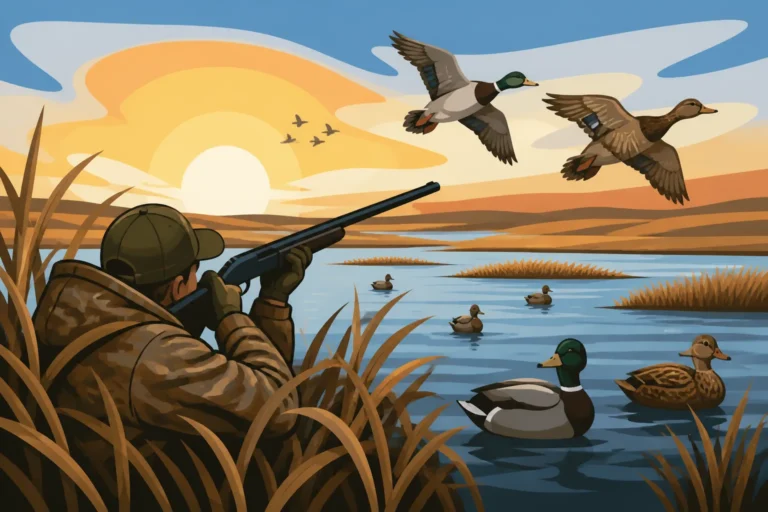
For deer, these edges are like highways and rest stops rolled into one. They’ll use them to travel from dense bedding cover in a distant woodlot or deep slough to a lush feeding field. Sometimes, the edge itself, especially if it’s thick with cattails or tall grass, becomes a bedding area, offering concealment while still allowing easy access to food. Pheasants often roost in heavy cover along these edges and then move into fields to feed, or vice-versa. Waterfowl, particularly ducks and geese, might loaf on a pothole and then fly directly over its edge to access a nearby stubble field for grain. It's not just a boundary; it's an active, dynamic ecosystem that game animals rely on daily.
Game Movement Patterns Along These Edges
Understanding why and how game moves along these edges is fundamental to setting up effectively. Deer, for example, are creatures of habit. They’ll often follow the path of least resistance or the most cover. A fenceline lined with scrub brush, a slight rise in elevation, or the fringe of a standing cornfield all offer just enough security for a mature buck to feel comfortable moving in daylight. During the rut, these edges can become prime cruising lanes, especially if they offer some visual break from the wide-open prairie. You might find a buck working a scrape line along a section line trail that follows a field edge, or rubbing saplings where the field meets a small shelterbelt.
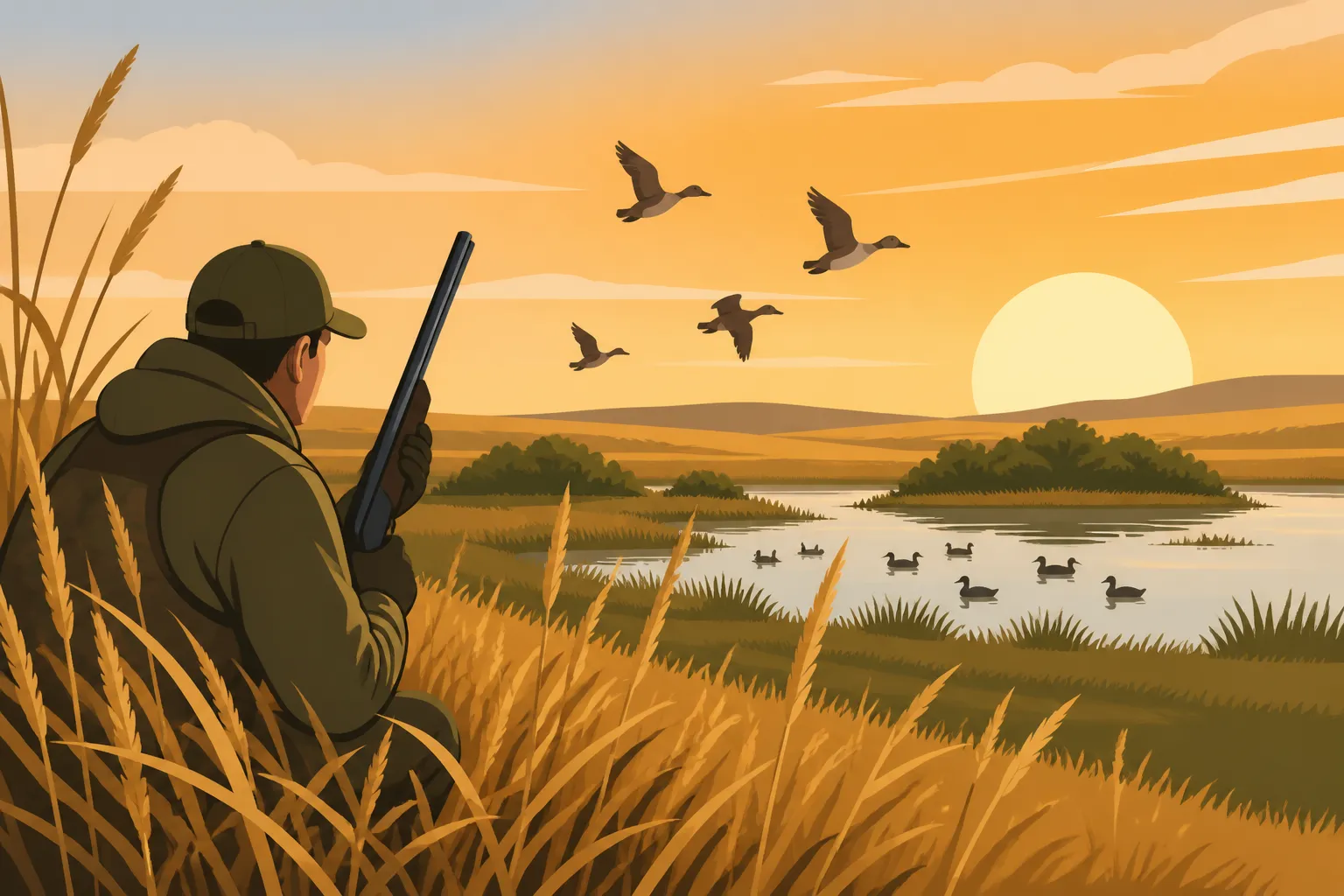
Pheasants and Hungarian partridge will burst from standing crops like sunflowers or corn and tuck into dense grass or a brushy draw along the edge to escape pressure or predators. During the midday lull, they might be found dusting in bare patches or loafing under a thick bush along these very same lines. Waterfowl, particularly late in the season, will key in on fields with waste grain. Their flight paths often take them directly over the edges of potholes and fields, creating predictable shooting lanes if you can conceal yourself properly. It's all about observing these patterns – the worn deer trails, the flushed birds, the low-flying geese – to pinpoint where your setup will be most effective.
Mastering the Art of Scouting for Field Edge Setups
You wouldn't build a house without a blueprint, and you shouldn't hunt a field edge without some serious scouting, both from your armchair and with boots on the ground. The prairie doesn't forgive guesswork.
Pre-Season Digital Reconnaissance
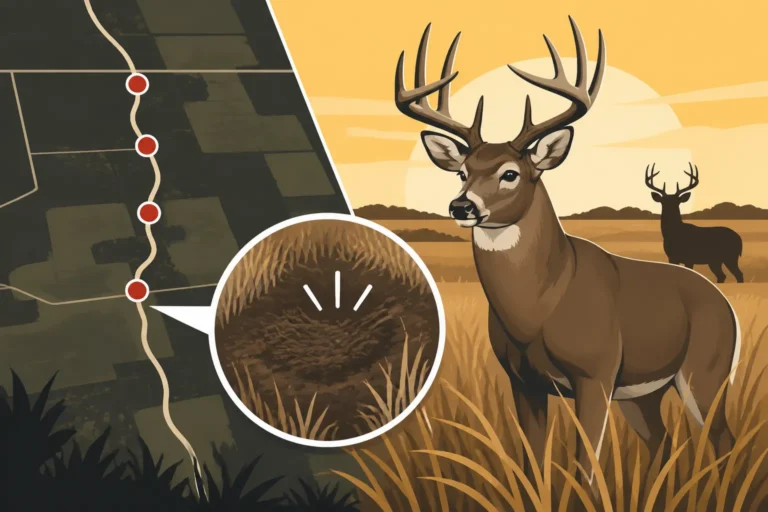
Before you even step foot in the field, a significant portion of your scouting can and should happen digitally. Tools like GoHunt's mapping software are absolute game-changers for identifying potential hotspots from afar. Spend time poring over satellite imagery, looking for the confluence of different cover types. Search for those obvious pinch points where a field narrows, or where a thicket of trees meets a large field. Identify shelterbelts, even small ones, that offer a visual barrier. Look for changes in elevation, even subtle ones, as these can provide critical cover for a low-profile approach or a blind.
Pay close attention to what crops are planted in different fields – deer love corn and soybeans, especially late in the season when waste grain is abundant. Waterfowl will often favor wheat or barley stubble. Cross-reference these observations with public land boundaries using layers provided by platforms like GoHunt, ensuring you're targeting accessible areas. For more details on this, check out our guide on Scouting PLOTS Land Before Season. Don't forget to look for water sources too, as animals will often move between feeding areas and water.
Boots-on-the-Ground Verification
Digital scouting gets you in the ballpark, but nothing beats actual, physical reconnaissance. Once you've identified promising field edges on your map, it's time to hit the dirt. Walk those edges, but do so strategically, trying to disturb the area as little as possible, especially if it's close to season. Look for fresh deer sign: tracks, rubs on small trees or brush, active scrapes, and most importantly, fresh droppings. Droppings are your best indicator of recent activity and preferred feeding areas.
For upland birds, look for dusting bowls, scattered feathers, and tracks in the dirt or mud along the edge. If you're targeting waterfowl, look for feathers, droppings, and worn paths where birds might have entered a field from a pothole. Note the dominant wind directions, as this will be critical for your actual hunting setup. Identify natural cover elements you can use for concealment, like a stand of cattails, a brush pile, or even a depression in the terrain. This ground-truthing allows you to confirm your digital hunches and discover the subtle nuances that a satellite image simply can't reveal. It helps you understand the immediate approach routes and escape paths animals might take, informing your eventual setup decision.
Concealment and Approach Strategies on the Open Prairie
On the wide-open canvas of the North Dakota prairie, concealment isn't just a suggestion; it's a non-negotiable requirement. Animals, especially deer, have incredibly keen senses and will spot anything out of place. Your approach and your final setup are equally crucial.
Utilizing Natural Cover for the Hunter
The prairie doesn't always offer towering timber, so you have to get creative with what's available. Standing crops are your best friend here. A field of mature corn or tall sunflowers can provide excellent cover for a ground blind or even for Hunting Standing Sunflowers for Deer and Geese. If you're hunting later in the season, Hunting a Standing Corn Field for Deer or for geese can be incredibly productive, as the stalks provide both visual and sound dampening. Look for fencelines that have grown up with brush, or the edges of drainage ditches that offer a natural depression. Sometimes, even a slight rise or dip in the terrain can be enough to break up your outline if you're able to keep a low profile.
The key is to blend in, not just hide. Think about how the local wildlife perceives their environment. If there's a small cluster of willows at the edge of a field, that's a natural piece of cover animals are used to seeing. Setting up a blind within that cover, or using it as a backdrop, makes your presence far less alarming. Always be mindful of the skyline; never position yourself where your silhouette is easily visible against the horizon.
Choosing and Brushing In the Right Blind
Given the lack of extensive natural cover, a good ground blind or layout blind is often essential for field edge hunting. For deer, a pop-up ground blind can be incredibly effective, but it must be brushed in properly. Simply setting it up in the open is an invitation for deer to walk around you at a distance. Gather local vegetation – corn stalks, sunflower heads, cattails, tumbleweeds, whatever matches the immediate environment – and incorporate it heavily into the blind's exterior. Our guide on Brushing In a Blind on a Field Edge offers some excellent tips for making your blind disappear. The goal is for the blind to look like it belongs there, not like an alien structure.
For waterfowl, a layout blind is usually the preferred choice. These blinds are designed to blend seamlessly with stubble fields, mimicking a natural clump of earth or debris. Again, brushing them with local crop residue is critical for effective concealment. Consider the time of year and the specific field type. A blind brushed for a wheat field won't work as well in a cornfield. Having a versatile blind that allows for easy brushing or one with multiple stubble straps can make a huge difference in your success.
Minimizing Your Footprint and Approach
This might be the most overlooked aspect of hunting open country. Your approach to your chosen setup location can make or break your hunt before it even begins. Always approach with the wind in your favor, especially when hunting deer. Scent control is paramount. Plan your route to avoid walking directly through areas where you expect game to be, or where they might be bedding. Use existing field roads, ditch bottoms, or the backside of shelterbelts to shield your movement.
Try to arrive well before first light for a morning hunt, or several hours before animals typically start moving in the evening. This gives the area time to settle down after your disturbance. Walk slowly and quietly, paying attention to every crunch of stubble underfoot. Think about the impact you're having; every dropped scent molecule, every loud step, every exposed silhouette pushes game further away. The more thought you put into your approach, the less you'll feel that nagging frustration of getting busted.
Optimizing Your Setup for Ultimate Success
Once you've done your scouting and you're ready to deploy your blind, there are still a few critical elements to consider that can turn a good setup into a great one. These involve leveraging the natural elements and employing smart tactics.
Wind Direction and Thermals: Your Best Friend or Worst Enemy
On the open North Dakota prairie, wind is king. It dictates everything, especially for deer. You absolutely must hunt with the wind in your favor. This means it needs to be blowing your scent away from where you expect animals to approach from and where they will be moving. If the wind isn't right for your chosen spot, it's often better to have a secondary location or simply wait for another day. This is one of the hardest lessons to learn in open country, but also the most important.
Thermals also play a role, particularly at dawn and dusk. As the sun rises, the ground heats up, and thermals often rise, carrying scent upward. In the evening, as the air cools, thermals tend to fall, carrying scent downward into low-lying areas. While the prairie is relatively flat, even subtle elevation changes around a pothole or field can create micro-thermals. Understanding these patterns, alongside the dominant wind, allows you to pick a blind location that keeps your scent out of the game's nose, a common source of frustration for many hunters. Always check reliable weather sources and use a wind checker frequently.
Strategic Decoy Spreads and Calling Techniques
For waterfowl hunting along a field edge, a well-executed decoy spread is non-negotiable. Ducks and geese are incredibly visual, and your decoys need to look realistic and inviting. Consider the species you're targeting and the time of year. For early-season mallards around a prairie pothole, a smaller, realistic spread of mostly full-body mallard decoys might suffice, perhaps mimicking a feeding flock right at the edge of the water and the field. For more advanced strategies, consider our deep dive into Decoy Spreads for Prairie Pothole Mallards. Later in the season, if you're targeting geese in a cut stubble field, you'll want a much larger spread of goose decoys, replicating the feeding patterns you observed during scouting.
Calling also plays a crucial role. For waterfowl, accurate and timely calling can draw birds closer, convincing them your spread is the real deal. For deer, subtle calls can sometimes work, but loud, aggressive rattling (as discussed in Rattling Volume on the Open Prairie) might not always be the best choice on the wide-open prairie where sound travels far. Soft grunts or doe bleats are often more effective if you're already in a prime ambush position. For fall turkeys found near field edges, mastering calls to break up a flock, as described in Calling a Fall Gobbler Flock, can draw birds right into your shooting lane.
The Power of Patience and Persistence
Hunting field edges on the prairie isn't always about fast action. Sometimes, it's a grind. Game animals will often move at dawn and dusk, but also during the midday in undisturbed areas or under specific weather conditions. Being patient and staying persistent, even when it feels like nothing is moving, is paramount. Deer might only trickle out into a field in the last minutes of daylight. Pheasants might hold tight until a hunter or predator pushes them out of a particular patch of cover.
Table: Field Edge Cover Types and Their Hunting Applications
| Cover Type | Primary Species Targeted | Pros | Cons | Best Setup Location |
|---|---|---|---|---|
| Standing Corn/Sunflowers | Deer, Geese, Pheasants | Excellent visual concealment, natural food source | Can be noisy to walk through, limited shooting lanes | Inside the crop, ~10-20 yards from the field edge |
| Grassy Ditch/Draw | Deer, Pheasants, Hungarian Partridge | Breaks up silhouette, offers travel corridor | Limited height for visibility, can be exposed from above | Low-profile ground blind or natural ambush spot |
| Shelterbelt/Tree Line | Deer, Turkeys, Pheasants | Dense visual cover, windbreak, natural travel route | May have too much internal cover, limited shooting visibility | Just inside the edge, looking into the field or along the edge |
| Pothole/Slough Edge | Waterfowl, Deer, Pheasants | Access to water, thick cattail/rush cover for blind | Can be muddy, exposed to wind, limited view of distant field | Brushed-in ground blind or layout blind near water's edge |
| Fenceline with Brush | Deer, Pheasants | Subtle travel corridor, some visual break | Often thin cover, easy to get busted | Concealed behind the brush, facing the field |
Remember, the animals live here. They know every clump of grass, every subtle dip in the terrain. You’re a visitor, and the less you act like one, the better your chances. Being prepared for long sits, especially during the cold snaps that are common when Hunting Into a December Cold Snap, and having the mental fortitude to stick with your plan will increase your odds immensely. Focus on the details, use your North Dakota Deer Herd Size and North Dakota Pheasant Population Estimate knowledge to inform your expectations, and trust your scouting.
Disclaimer
Please note: Hunting regulations, license requirements, and season dates in North Dakota can change. Always consult the most current North Dakota Game and Fish Department (NDGFD) regulations before planning any hunting trip. This guide is for informational purposes only and does not replace official state regulations or proper hunter education.