Posting a Drive Around a Shelterbelt
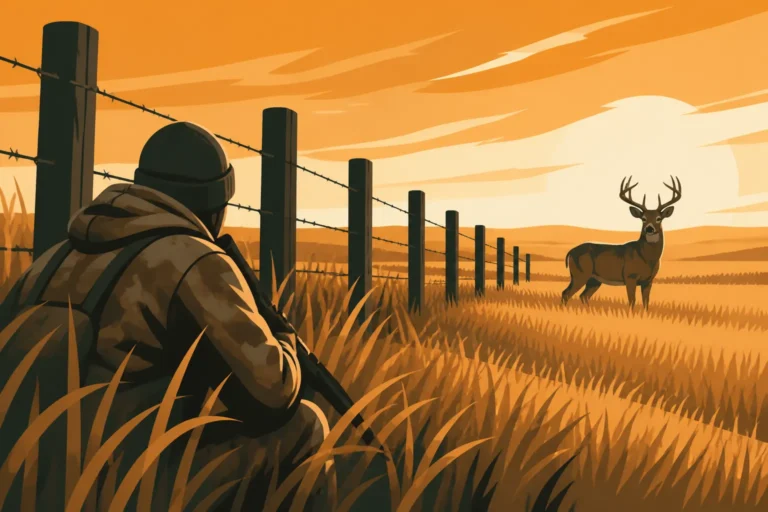
There’s nothing quite like the collective sigh of frustration when a perfectly planned deer drive through a North Dakota shelterbelt goes awry. You’ve got your buddies lined up, the wind seems right, but those wily whitetails simply blow out the end before anyone gets a clean shot, or worse, they sneak out the sides unseen. It's a common scenario that highlights the critical need for precision in posting hunters and executing a drive effectively. This guide will help you understand the nuances of orchestrating a successful deer drive around shelterbelts, turning those elusive escapes into rewarding opportunities.
Understanding Shelterbelt Dynamics for Deer Drives
Shelterbelts, those linear plantings of trees and shrubs crisscrossing the North Dakota prairie, are absolute magnets for deer, especially during the colder months or when hunting pressure is high. They offer critical thermal cover from brutal winds, visual seclusion, and often a travel corridor between bedding and feeding areas. However, their linear nature also means deer can often anticipate movement and slip out before hunters are ready. Mastering a drive starts with understanding why deer are there and how they typically use these unique habitats.
Why Shelterbelts Attract Deer
Imagine a vast, open prairie with biting winds and sparse cover. Then, picture a dense strip of trees and brush cutting across it—a haven. Deer are instinctively drawn to these shelterbelts because they provide immediate relief from the elements, especially during harsh North Dakota winters. These tree lines act as natural windbreaks, creating pockets of calmer, warmer air, and offering thick visual cover to bed down undetected. They are also often situated near agricultural fields, providing a convenient highway for deer traveling between the safety of the trees and a late-season food source. When you’re planning your drive, always consider what Late-Season Food Sources for North Dakota Whitetails are nearby, as this will heavily influence deer movement patterns into and out of the shelterbelt.
Beyond basic survival, shelterbelts serve as security blankets for deer. They feel safe in the dense vegetation, and the linear structure can make them feel somewhat corralled, especially if they're not heavily pressured. However, this sense of security can quickly turn to panic when a drive begins, leading to unpredictable break-outs. Understanding this duality—their comfort in the shelterbelt versus their instinct to flee—is key to setting up your drive. Often, if a shelterbelt hasn't been disturbed recently, deer might hold tight, giving posters a better chance.
Reading the Shelterbelt: Escape Routes and Cover
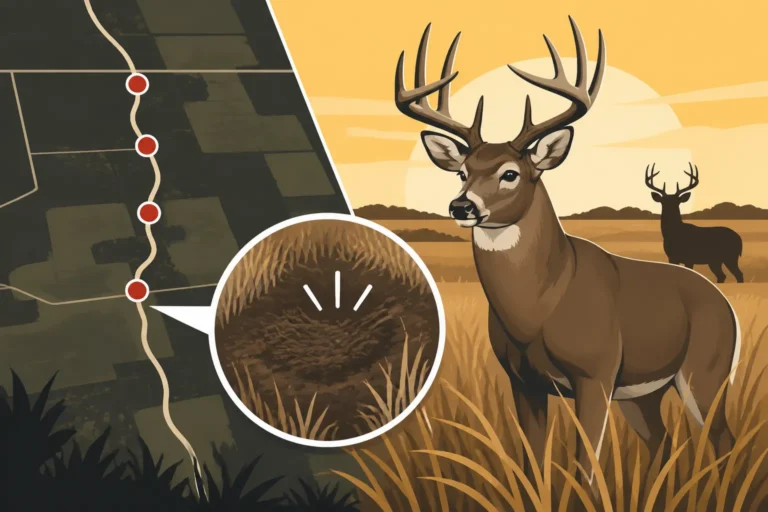
Just like Reading a Missouri River Bottom for Deer, deciphering a shelterbelt's layout is crucial for a successful drive. Not all shelterbelts are created equal; some are dense and impenetrable, while others have gaps, old farmsteads, or connecting ditches that create natural escape routes. Before you ever start a push, take the time to scout the specific shelterbelt you intend to drive. Look for well-worn deer trails leading in and out, especially at the ends or where the shelterbelt meets other cover. These are the highways deer will use to escape.
Pay close attention to the density of the trees and brush. Are there sections of cedars or dense evergreens that offer supreme cover, or is it mostly deciduous trees that lose their leaves in fall, offering less concealment? Deer will often bed in the thickest cover they can find within the shelterbelt, typically toward the downwind side or in areas that offer the best visual breaks. Use tools like GoHunt’s mapping features to identify these dense pockets and potential funnels. By understanding these nuances, you can better predict where deer might try to hold up or where they'll make their break, allowing your posted hunters to be in the absolute best positions. Identifying these natural escape funnels is where your posting strategy will make or break the hunt.
Strategic Positioning: The Art of Posting
The success of any shelterbelt drive hinges on the strategic placement of your posted hunters. This isn't just about sticking someone at the end of the trees and hoping for the best; it requires careful consideration of wind, topography, anticipated deer movement, and, most importantly, safety. With smaller groups, typically involved in Deer Drives With Three or Four Hunters, every single posted position becomes even more critical. Each person needs to understand their role and the likely scenarios.
Key Considerations for Post Placement
When deciding where to place your posters, start by analyzing the wind direction. Deer will almost always try to escape into the wind to use their superior sense of smell to detect danger ahead. Therefore, your primary posters should be positioned downwind of the shelterbelt's expected exit points. However, deer might also circle back or break out the sides if they feel too pressured. Consider placing secondary posters along the sides, slightly ahead of the pushers, particularly if the shelterbelt is wide or has dense internal cover. These side posters can catch deer attempting to flank the drive.
Topography also plays a significant role. Is the shelterbelt on a ridge, in a depression, or does it run parallel to a field edge? Deer often use subtle changes in elevation for cover, even within a shelterbelt. If the trees run along a rise, deer might top out and pause before committing to open ground, offering a brief shot opportunity. Conversely, if it drops into a low spot, they might utilize that depression for a quick escape. Furthermore, consider natural barriers like fences, roads, or ditches that could funnel deer. Use scouting apps like GoHunt to visualize these elevation changes and potential funnels beforehand, allowing you to fine-tune each poster's exact spot. Remember, the goal isn't just to block exits, but to place hunters where they can get a clean, ethical shot.
Communication and Safety Protocols for Posted Hunters
Safety is paramount in any deer drive, especially when multiple hunters are positioned around a confined area like a shelterbelt. Before anyone takes their position, a thorough safety briefing is non-negotiable. Clearly define shooting lanes, no-shoot zones, and the expected direction of deer travel. Remind everyone that they should only shoot when they have a safe backdrop and are absolutely certain of their target. Blaze orange requirements in North Dakota are there for a reason, and everyone involved, whether pushing or posting, should be wearing it visibly.
Communication is the second pillar of safe and effective posting. In today’s world, cell phones can be a great asset, but don't rely solely on them; establish pre-determined hand signals or distinct calls for when deer are spotted or when the drive is approaching. Each poster needs to know where their fellow hunters are positioned and what their responsibilities entail. For instance, a poster on the end needs to know if another poster is flanking a side or if the pushers are nearing the end of the belt. A lack of clear communication can lead to confusion, missed opportunities, or, worst of all, an unsafe situation. As a general rule, always assume there are other hunters in the area, even if you’re using Hunting Pressure on North Dakota Public Land to your advantage by finding less-traveled spots.
Executing a Successful Shelterbelt Drive
Once your posters are in place and everyone understands the plan, it's time for the pushers to take action. This phase requires patience, calculated movement, and the ability to anticipate how deer will react to pressure. It's a delicate balance of creating enough disturbance to move deer without sending them into a full-blown panic that compromises safe shooting opportunities.
The Role of the Pushers and Their Approach
The pushers are the engine of the deer drive, and their methodical approach is what makes or breaks the movement of deer. They should enter the shelterbelt from the upwind side, creating a natural funnel for deer to move downwind toward the waiting posters. The pace of the push is crucial: too fast, and deer will burst out haphazardly; too slow, and they might circle back or slip out undetected. A steady, deliberate walk, often with some noise (talking, stomping, or even rattling branches), is usually most effective. Think of it like a human dog, systematically working through the cover.
Pushers should maintain a relatively straight line, ensuring they cover the entire width of the shelterbelt. If there are multiple pushers, they need to communicate to stay abreast of each other. If one person surges ahead or lags behind, it creates gaps that deer can exploit. In dense sections, pushers might need to slow down further, thoroughly working the cover to ensure no deer are left behind. As they near the end of the shelterbelt, their communication with the posted hunters becomes even more important. Often, pushers will only carry a slug gun or a pistol, leaving the rifle to the posters for safety.
Anticipating Deer Movement and Shot Opportunities
For both pushers and posters, anticipating how deer will react is vital. Deer, when pressured, will usually try to find the path of least resistance. This means if your pushers are making steady noise in the middle, deer will often move along the quieter edges of the shelterbelt. Posters should be constantly scanning these edges and any known escape trails. It's rare for deer to bolt directly out of the thickest cover into the open; they usually pause at the edge of the shelterbelt, assessing the situation before committing. This brief pause is often the best opportunity for a shot.
Posters should be ready, with their firearm shouldered and safety off, as soon as they hear the drive approaching or glimpse movement. Every second counts. Remember, deer are incredibly fast and agile. A quick, decisive shot is often necessary. Hunters should be prepared for multiple deer to emerge, especially if it's a larger bedding area. Don't rush your shot; identify your target clearly and ensure a safe backdrop. This is where patience and practice pay off. It also helps if hunters understand Wind and Thermals in Badlands Terrain principles, as deer movement can be surprisingly influenced even in relatively flat shelterbelts. Sometimes, using A Ground Blind on PLOTS Land can offer additional concealment for posters, especially if the shelterbelt is sparse at the ends.
Table: Roles and Responsibilities in a Shelterbelt Deer Drive
| Role | Primary Objective | Key Actions | Important Considerations |
|---|---|---|---|
| Pushers | Move deer out of cover towards posted hunters. | Walk steadily, make consistent noise, maintain formation. | Do not rush; cover entire width; communicate with other pushers and posters. |
| Posters | Intercept deer exiting the shelterbelt; ensure safety. | Position quietly and still; scan escape routes; be ready for quick, ethical shots. | Know shooting lanes; maintain communication; prioritize safety; identify target clearly. |
| Spotters | Identify deer movement from a vantage point (optional). | Observe from elevated position; relay information to pushers and posters. | Crucial for larger shelterbelts; requires good optics and communication. |
| Communicator | Centralize communication and coordinate all roles. | Relays messages between pushers and posters; ensures timing is synchronized. | Often one of the pushers or a designated "command" hunter. |
Post-Drive Considerations and Safety
After the adrenaline of the drive subsides, the real work—and often the true measure of success—begins. What happens immediately after the shots are fired, or if no shots were taken, is just as important as the drive itself. Proper follow-up ensures ethical hunting and helps you learn for future endeavors.
Retrieval and Follow-Up After the Drive
If a shot was taken, the first step is always to verify if the deer was hit. Even if it ran off, mark the exact location where the deer was standing when shot and its last known direction of travel. This is where the real patience comes in. Unless you saw the deer drop, give it time—at least 30 minutes for a good hit, and often several hours for a questionable hit, especially if it's a gut shot. This allows the deer to bed down and expire, rather than being pushed further. Once enough time has passed, begin your blood trailing. Even if you think it was a clean miss, always walk the area to confirm.
For blood trailing in North Dakota, tools like a good flashlight or headlamp are indispensable, particularly if you're Blood Trailing After Dark in North Dakota. Look for blood, hair, bone fragments, and tracks. Work slowly and methodically. If the blood trail peters out, expand your search in circles around the last confirmed sign. If you still can't find it, consider enlisting the help of another hunter or even a tracking dog, if available and legal. Once the deer is recovered, immediate field dressing, especially when Field Dressing a Deer in Cold Weather, is crucial to preserve the meat quality. Remember to share the load when Dragging a Deer Out of a Coulee or through dense cover.
Reviewing and Adapting Your Strategy
Every drive, whether successful or not, offers valuable lessons. Once the excitement dies down, take the time to debrief with your hunting partners. What worked well? Where did the deer break out? Were the posters in the right spots? Was the push too fast or too slow? Perhaps you needed to Find Sign Along a Shelterbelt more thoroughly before the drive. Honest self-assessment is key to improving your future drives.
Consider recording your drives on a mapping app like GoHunt. You can mark where pushers started, where posters were positioned, and the deer's escape route. This visual data can be incredibly helpful for future planning. Maybe a particular shelterbelt consistently sees deer escape from a certain corner, indicating a need for an additional poster there or a different pushing angle. Perhaps the Entry Routes Through Standing Sunflowers or other adjacent cover need to be modified. By continually refining your strategy based on real-world outcomes, you'll become a much more effective and safer deer drive team. It’s all part of the continuous learning curve that makes hunting in North Dakota so engaging and rewarding.
Disclaimer
Hunting is an inherently dangerous activity. Always prioritize safety, follow all local and state hunting regulations, and ensure you have proper training and equipment. This guide provides general information and should not replace professional instruction or official hunting regulations.