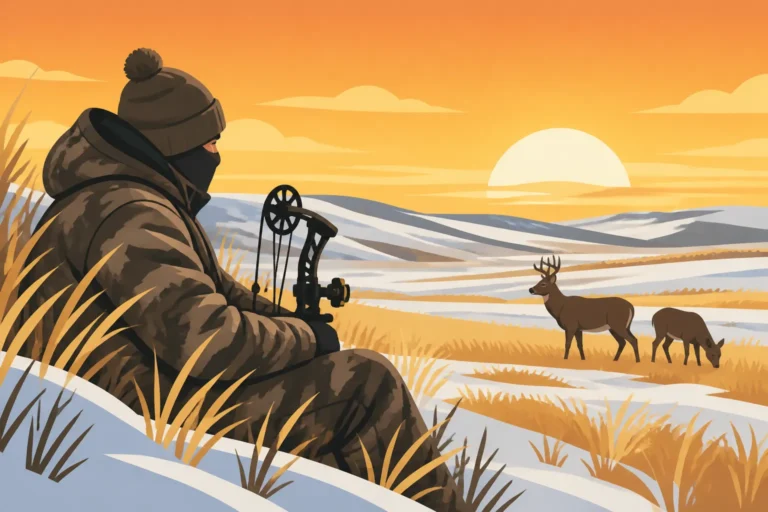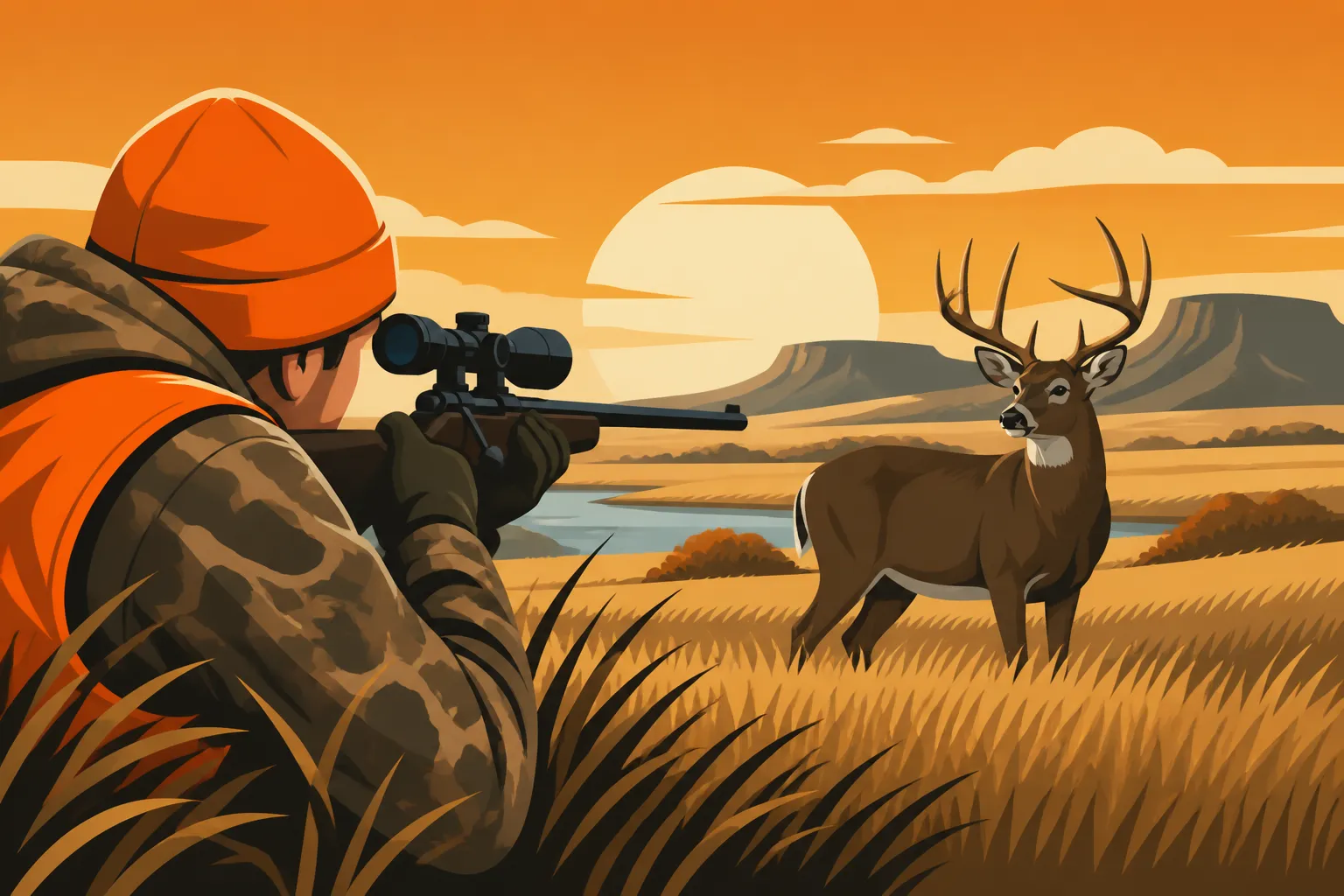
North Dakota’s November Gun Deer Season
The crisp, cold air of November descending upon North Dakota stirs a unique anticipation in the heart of any deer hunter. Yet, for many, the general gun deer season, while a cherished tradition, can also feel like a pressure cooker – a relatively short window of opportunity packed with intense competition, unpredictable weather, and the ever-present challenge of drawing that coveted tag. This guide aims to demystify North Dakota's November gun deer season, offering a comprehensive look at what it takes to navigate its challenges and maximize your chances of success on the prairie.
Understanding the November Gun Deer Season in North Dakota
North Dakota’s November gun deer season is an institution, a time when communities across the state buzz with hunters. But for those new to the scene, or even seasoned veterans facing a changing landscape, it can present a steep learning curve. We’re not talking about endless months of rifle hunting here; the season is notably shorter than in many other states, often sparking frustration among hunters who wish they had more time in the field.
The Short Window and Why It Matters
Typically, North Dakota's general gun deer season kicks off on a Friday in early to mid-November and runs for approximately sixteen and a half days, wrapping up on a Sunday. This concise timeframe means that every single day in the field, sometimes every hour, counts immensely. Unlike states with longer seasons where you might have the luxury of waiting for perfect conditions or observing deer patterns over weeks, North Dakota forces hunters to adapt quickly, make swift decisions, and often hunt in less-than-ideal weather.
This compressed schedule isn't arbitrary; it’s a management decision aimed at balancing hunter opportunity with deer herd health, minimizing harvest pressure on the breeding population, and often reducing potential conflicts with agricultural operations. However, for a hunter, it means planning meticulously, understanding deer behavior during this specific period, and being ready to execute your strategy the moment you step out of the truck. It emphasizes scouting, quick decision-making, and often, an aggressive approach to maximize your chances before the season closes.
Resident Versus Nonresident Opportunities and Challenges
North Dakota prioritizes its resident hunters, which is a common practice across many states, and rightly so. The vast majority of deer gun licenses are allocated to residents through a lottery system. This means that if you're a local, your odds of drawing a general gun tag are significantly higher, though still not guaranteed, especially for prime units or "any-deer" tags. Residents often have the advantage of familiarity with local terrain, land access, and established hunting networks, making their planning a bit smoother.
For nonresidents, the picture is considerably more challenging. While there are a limited number of nonresident licenses available, the competition is fierce, and the odds of drawing a gun tag are often extremely low. Nonresidents typically face stricter regulations, higher license costs, and the added hurdle of potentially needing to secure private land access as many prime public lands see heavy pressure. This disparity often leads to nonresidents focusing on archery seasons or small game, where access and licensing are more straightforward, or making significant efforts to secure private land hunting opportunities if they are determined to experience the gun season. It's a reality that can be disheartening, but understanding it upfront is key to planning a realistic hunting trip.
License and Tag Logistics
Navigating the license and tag system in North Dakota can feel like a labyrinth, especially with its lottery-based approach to deer gun season. It’s not as simple as walking into a store and buying a tag, and missing a deadline can mean missing out on the season entirely.
The Deer Gun Lottery Application Process
The bedrock of North Dakota’s gun deer season is its lottery system. To even have a chance at hunting, you must apply for a license through the North Dakota Game and Fish Department (NDGFD). This application period typically opens in May and closes in early June, usually around June 3rd. Missing this deadline is the single biggest mistake you can make, as there are no late applications for the general deer gun season. The anticipation during the waiting period for lottery results, which are usually announced in early July, can be palpable. Hunters often check their mailboxes and online accounts with bated breath, hoping for good news.
The lottery allocates tags based on a preference point system, designed to give hunters who have been unsuccessful in previous years a slightly better chance. While it doesn't guarantee a tag, accumulating preference points can eventually tip the odds in your favor for harder-to-draw units or "any-deer" tags. For those looking for a detailed breakdown, the NDGFD website provides extensive information on North Dakota's Lottery-Based Deer Gun Season. Understanding your unit choices and how they impact your odds is crucial. Many hunters pour over past lottery statistics, trying to find the sweet spot between a good hunting unit and decent drawing odds, a process that can feel like a tactical game in itself.
Understanding Tag Types and Unit Specifics
When you apply, you’re not just applying for "a deer tag." North Dakota offers different types of tags, and they are unit-specific, meaning they are valid only in the designated hunting unit. The most sought-after is often the "any-deer" tag, which allows you to harvest either an antlered or antlerless deer. These are typically the hardest to draw. More commonly available are "antlerless" tags, which restrict you to harvesting a doe or fawn. These are often used as a management tool to reduce deer populations in areas with high numbers or agricultural damage.
Choosing your unit is paramount. North Dakota is divided into numerous hunting units, each with its own specific tag quotas and drawing odds. Some units, particularly in the Badlands, are renowned for larger mule deer, making "any-deer" tags there highly desirable and incredibly difficult to draw. Other units, especially in the eastern prairie pothole region, might have higher numbers of whitetails, and thus, more antlerless tags are offered. Before you apply, it’s essential to research the units thoroughly. Resources like the NDGFD's annual hunting guide, past harvest statistics, and even digital mapping tools like GoHunt's map overlays can provide invaluable insight into deer densities, habitat types, and historical drawing success for each unit. This critical homework can save you immense frustration later and ensure you apply for a tag that aligns with your hunting goals and realistic drawing chances.
Costs and Other Licensing Requirements
Beyond drawing a tag, there are also general licensing requirements and associated costs. All hunters, whether resident or nonresident, need to purchase a general game and habitat license, which serves as a base license. On top of that, if you successfully draw a gun deer tag, there will be an additional fee for that specific tag. Nonresidents typically face significantly higher costs for all licenses compared to residents, reflecting the state's prioritization of its local hunting community. You can find detailed breakdowns of all fees on the NDGFD website, or refer to our guide on North Dakota Hunting Licenses and What They Cost.
It's also important to remember basic requirements like hunter education. Anyone born after December 31, 1961, needs to complete a hunter education course before purchasing a license. Even if you're an experienced hunter from another state, you'll need to demonstrate proof of a similar course completion. Furthermore, migratory bird hunters often need a federal duck stamp and HIP certification, though these aren't required for deer hunting. Always carry your physical license or digital proof on your phone when afield. Failure to do so can lead to citations, interrupting what should be an enjoyable time.
Legal Weapons and Equipment
Understanding what you can and cannot use during North Dakota's general gun deer season is more than just good practice—it's the law. Violating weapon regulations can lead to serious penalties, and nobody wants their hunting trip to end with a fine or confiscation. Beyond legality, having the right gear ensures safety and efficiency in the field.
Approved Rifle Calibers and Minimums
North Dakota has specific regulations regarding legal firearms for deer hunting. For rifles, there's a minimum bullet diameter requirement, generally stating that centerfire rifles must be at least .22 caliber and use expanding bullets. This means your trusty .22 LR squirrel rifle won't cut it for deer. Most hunters opt for popular deer calibers like the .243 Winchester, .270 Winchester, .30-06 Springfield, .308 Winchester, and 6.5 Creedmoor. These calibers offer a good balance of accuracy, effective range, and knockdown power for North Dakota's deer species, whether you're targeting a heavy-bodied whitetail or a more slender mule deer.
It’s crucial to understand that while many calibers are legal, ethical hunting also means using a cartridge and bullet combination appropriate for the game and the conditions. A smaller caliber might be legal but less forgiving of marginal shots, especially at longer ranges common on the open prairie. Always check the current year's proclamation for any updates or specific restrictions, as regulations can occasionally change. Investing in a quality rifle and practicing regularly at various ranges is far more important than debating the minutiae of one caliber over another; shot placement is king. For a complete list of what's allowed, refer to Legal Weapons During North Dakota Gun Season.
Shotguns, Muzzleloaders, and Archery Equipment
While "gun season" primarily implies rifles, shotguns are also legal for deer hunting in North Dakota. They must be 20-gauge or larger and use slugs – buckshot is prohibited for deer. Shotguns are often the preferred choice in more densely populated areas or units where firearms discharge setbacks near homes or roads are a concern, or where terrain limits long-range shots. They're also a great option for younger hunters or those who prefer the feel of a scattergun.
Muzzleloaders, while having their own dedicated season later in the year, are also generally allowed during the regular gun season if you hold a valid gun deer license. This offers a unique challenge and a traditional hunting experience for those who enjoy it. However, it's rare for hunters to opt for a muzzleloader during the general gun season when rifles offer greater range and quicker follow-up shots. Archery equipment, on the other hand, is specifically not allowed during the regular gun season unless you possess a valid archery tag and the appropriate season is open. Combining methods isn't permitted on a single gun license. Each weapon type has its advantages and limitations, and understanding these will help you choose the best tool for your chosen hunting unit and style.
Blaze Orange Requirements: Your Life Depends On It
North Dakota takes hunter safety seriously, and blaze orange is a non-negotiable requirement during the general gun deer season. All deer hunters, including those accompanying them, must wear fluorescent orange. This typically means a minimum of 400 square inches of solid blaze orange material visible from all directions. This includes a hat and outerwear above the waist, such as a vest or jacket. The bright color makes you highly visible to other hunters, dramatically reducing the risk of accidental shootings.
Failing to wear sufficient blaze orange is not just a legal infraction; it's a critical safety lapse. On the rolling hills of the prairie or in thick river bottom timber, visibility can be limited, and wearing blaze orange can be the difference between a successful, safe hunt and a tragic accident. Always err on the side of more blaze orange if you’re unsure. There are options for blaze pink as well under North Dakota law, offering a choice for hunters who prefer it. No matter your preference, ensure you are highly visible; your life, and the lives of those hunting around you, depend on it.
Prime Hunting Habitat and Strategies
North Dakota offers a diverse landscape, and understanding how deer utilize different habitats is fundamental to success during the gun season. From the rugged Badlands to the vast prairie potholes and timbered river bottoms, each area demands a tailored approach.
Whitetails in the Prairie Pothole Region
The eastern and central parts of North Dakota are dominated by the Prairie Pothole Region, an area characterized by countless small wetlands (potholes), rolling grasslands, and extensive agricultural fields. Here, white-tailed deer are the primary quarry. These deer thrive in the mixed habitat, utilizing shelterbelts, cattail sloughs, brushy draws, and standing crops like corn or sunflowers for cover and food. Hunting these areas often involves still-hunting along shelterbelts or creek bottoms, posting watchers on field edges during drives, or sitting blinds strategically placed near food sources.
The key to hunting whitetails here during November is understanding their reliance on cover and food. After harvest, deer will concentrate in remaining thermal cover. This often means thick cattail sloughs, unharvested standing crops, or dense shelterbelts. Hunting these areas can be physically demanding, pushing through thick brush or walking extensive field edges. Using tools like GoHunt's satellite imagery can help identify prime cover pockets and potential travel corridors. A common strategy involves carefully walking these cover areas, perhaps with a partner or two, to push deer out into more open terrain where they can be intercepted. However, ensure you’re not just aimlessly walking; be deliberate, watch wind direction, and anticipate escape routes.
Mule Deer in the Rugged Badlands
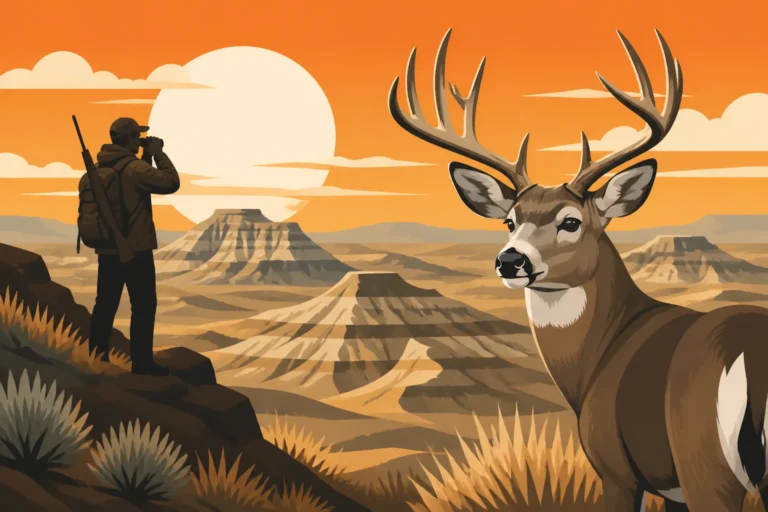
Western North Dakota is home to the stunning and rugged Badlands, a vastly different hunting environment primarily known for its mule deer. This landscape of deep coulees, buttes, and juniper breaks offers both immense challenge and incredible reward. Mule deer in the Badlands are constantly on the move, covering vast distances and utilizing the broken terrain for bedding and escape. Hunting here demands excellent glassing skills, physical stamina, and patience. Our guide on Mule Deer in North Dakota's Badlands delves deep into this unique hunting experience.
Strategies for mule deer in November often revolve around "glassing and stalking." Hunters spend hours patiently observing vast expanses from high vantage points using quality binoculars or spotting scopes. Once a buck is spotted, a challenging stalk through the unforgiving terrain begins, requiring careful attention to wind, topography, and cover. The post-rut period in November can see bucks resting and feeding heavily, making them slightly more predictable. However, they are still incredibly wary. Knowing Where Badlands Bucks Bed is crucial, as they often choose spots with maximum visibility and escape routes. The terrain itself is a challenge, so physical preparation is just as important as marksmanship.
Deer in the Missouri River Corridor
The Missouri River Corridor, a ribbon of timber, brush, and agricultural fields winding through the state, provides prime habitat for a mix of both white-tailed and some mule deer, particularly in the western stretches. This area offers excellent cover and abundant food, making it a hotspot for deer activity. The river bottoms are complex, with thick cottonwood forests, willow thickets, and deep draws leading down to the water.
Hunting here during November requires a blend of tactics. Still-Hunting North Dakota's Missouri River Bottomland is highly effective, moving slowly and deliberately through the timber, pausing often to scan ahead. Deer will often use the thick cover along the river for bedding during the day, moving to adjacent fields to feed in the evenings and mornings. Understanding deer movement along the river is key. Look for well-used trails leading from heavy cover to food sources, rub lines, and scrapes. Setting up stands or ground blinds overlooking these travel corridors can be productive. The river itself acts as a natural funnel, concentrating deer movement, but also providing escape routes through its dense vegetation.
Tactics for Success During the Gun Season
The North Dakota gun deer season is short, intense, and often cold. Maximizing your chances means employing smart tactics, understanding deer behavior, and being adaptable.
Still-Hunting and Stand Hunting
Still-hunting is a highly effective tactic, especially in timbered areas like river bottoms or dense shelterbelts. It involves moving incredibly slowly and deliberately through the habitat, pausing frequently to observe your surroundings. Think of it less as "walking" and more as "stalking." You're not just looking for a deer, but for parts of a deer – a flicker of an ear, a horizontal line in a vertical forest, a patch of white rump. This method allows you to cover ground while remaining stealthy, increasing your chances of surprising a deer in its bedding area or along a travel route. Pay close attention to wind direction, always moving into the wind or with a crosswind to keep your scent from spooking deer.
Stand hunting, whether from a treestand or a ground blind, is another popular and often productive method. This involves selecting a strategic location overlooking a known travel corridor, food source, or bedding area, and waiting patiently. In North Dakota, especially on private land or specific public parcels, stands are often placed near agricultural fields, pinch points between cover, or along creek bottoms. For example, a stand positioned on a shelterbelt edge can be incredibly effective, intercepting deer moving from dense cover to feeding areas. The key to successful stand hunting is proper placement (considering wind and approach), scent control, and extreme patience. Early morning and late afternoon are typically the most productive times, but during the rut or in severe cold, deer may move throughout the day.
Deer Drives: Group Tactics and Considerations
Deer drives are a classic hunting tactic, particularly effective in the more open prairie pothole country or areas with defined blocks of cover like shelterbelts or standing corn. This method involves a group of hunters, where some act as "pushers" to move deer out of cover, and others are "posters" positioned to intercept the deer as they try to escape. Drives can be incredibly effective at flushing deer out of areas they might otherwise be difficult to find. For example, Deer Drives With Three or Four Hunters can effectively clear a shelterbelt or a small patch of CRP.
However, drives require careful planning, clear communication, and a strong emphasis on safety. Everyone involved needs to know their role, understand shooting lanes, and, most importantly, identify safe directions of fire. Communication via two-way radios is essential to coordinate movements and ensure everyone knows where other hunters are. Drive sizes can vary, but even a small group can be highly effective. The challenge is often finding enough suitable habitat and willing participants to execute a safe and successful drive. It's not a tactic for every situation or every group, but when done right, it can fill tags and create lasting memories.
Reading Sign and Post-Rut Behavior
November in North Dakota means hunting either during the tail end of the whitetail rut or just after it peaks, depending on the specific timing of the season. During the rut, bucks are often less cautious, actively seeking does, which can make them more vulnerable. Look for fresh rub lines on trees (where bucks rub their antlers) and scrape lines (where bucks paw the ground and deposit scent). These are indicators of active buck travel and presence.
As the season progresses into late November, deer, especially bucks, begin to shift towards recovery mode after the intense energy expenditure of the rut. They will be focused on replenishing fat reserves, making food sources incredibly attractive. This is when Late-Season Food Sources for North Dakota Whitetails become critical. Agricultural fields, especially standing corn or beans, become magnets. Thick thermal cover becomes even more important as temperatures drop. Understanding this shift from rutting behavior to post-rut recovery is vital. Your scouting should evolve to locate these food sources and the dense cover deer use for bedding and shelter. Digital scouting tools can help identify remaining standing crops or unharvested fields that will draw deer.
Navigating Public and Private Land Access
Access to good hunting ground is often the biggest hurdle for North Dakota deer hunters, especially during the general gun season when pressure is high. Both public and private land offer opportunities, but each comes with its own set of rules and challenges.
The PLOTS Program and Public Lands
North Dakota boasts a robust Public Land Open To Sportsmen (PLOTS) program, where private landowners open their land for public hunting in exchange for payments from the NDGFD. These areas are marked with distinct yellow triangular signs and are invaluable resources for hunters. Finding these parcels is made easy through the annual PLOTS guide booklet and the ND Hunt App, which utilizes GPS to show you exactly where the public access land is. You can also explore Scouting PLOTS Land With the ND Hunt App for more detailed information.
However, PLOTS land can also experience significant hunting pressure, especially on opening weekend. To find success on PLOTS, you often need to be willing to walk further than most or seek out less-obvious parcels. Some hunters use GoHunt's mapping features to overlay PLOTS data with terrain features, looking for areas that might funnel deer or offer thicker cover away from easy road access. Additionally, federal lands like the Little Missouri National Grassland in western North Dakota and numerous Waterfowl Production Areas (WPAs) offer extensive public access. While WPAs are primarily for waterfowl, many also hold deer, especially in the larger parcels with significant upland cover. Understanding the specific rules for each type of public land (e.g., vehicle restrictions, camping rules) is crucial.
Securing Private Land Permission
Given the high percentage of private land in North Dakota, securing permission from landowners is often the golden ticket to a successful deer season, especially for residents. This can be challenging, as many landowners are inundated with requests, and some have already leased their hunting rights. However, a polite, respectful approach can go a long way. Start well before the season, perhaps in late summer or early fall. Knocking on doors and introducing yourself in person is almost always more effective than a phone call or letter.
When approaching a landowner, be prepared to explain how you plan to hunt (e.g., "I'm a still-hunter, I plan to walk slowly and safely," or "My son and I would like to sit a blind on the field edge, away from any livestock"). Offer to help with chores, pick up trash, or even share your harvest. Emphasize safety and respect for their property, livestock, and crops. Landowners appreciate honesty and a genuine desire to build a relationship, not just grab a tag. It's a long game, and persistence, coupled with courtesy, is often rewarded. For more guidance, check out our piece on Getting Private Land Permission in North Dakota. Remember, even with permission, always reconfirm access each year and respect any specific requests the landowner might have.
Post-Harvest Considerations and CWD
Harvesting a deer is only part of the journey. Proper handling, reporting, and understanding disease protocols are essential responsibilities for every hunter in North Dakota.
Field Dressing, Transport, and Reporting
Once your deer is down, prompt field dressing is crucial, especially in North Dakota's cold November temperatures. Removing the entrails quickly helps the carcass cool down, preserving the meat. Be prepared with sharp knives, game bags, and gloves. Transporting your deer correctly is also important; ensure it’s properly tagged and secured. The tag must be attached to the carcass immediately after harvest and remain with it until the deer reaches its final destination or is processed.
North Dakota requires all deer harvests to be reported. This can often be done online through the NDGFD website or via their mobile app within 24-48 hours of harvest. This data is vital for wildlife managers to track harvest numbers, assess population health, and make informed decisions for future seasons. Failing to report your harvest is a violation and deprives the state of critical management information. Make it a habit to report your deer as soon as you get back to camp or home. Our guide on North Dakota Deer Reporting Requirements can provide specific details.
CWD Zones and Mandatory Testing
Chronic Wasting Disease (CWD) is a serious concern for deer herds across North America, and North Dakota is actively monitoring and managing its spread. The state has identified several CWD hunting units, particularly in the western and central parts of the state, where the disease has been detected. For detailed information on these zones, refer to North Dakota's Expanding CWD Hunting Units. In these designated units, hunters may be required to submit deer heads for CWD testing. This is typically mandatory for specific species or during certain periods, and drop-off points are established throughout these zones.
Even if not mandatory in your unit, voluntary testing is often encouraged. It’s an important way for the NDGFD to track the disease. If you harvest a deer in a CWD zone, or anywhere else for that matter, and notice any signs of sickness or emaciation, it's prudent to get it tested. Guidelines exist for Handling Venison From a CWD Hunting Unit, emphasizing precautions like not consuming meat from a CWD-positive animal and taking care when butchering. Awareness and compliance with CWD protocols are vital for the health of North Dakota’s deer populations and for ensuring safe venison for consumption.
Butchering and Meat Care
After reporting and CWD considerations, the next step is processing your deer. You can either take it to a professional meat processor or butcher it yourself. If you plan to do it yourself, ensure you have a clean workspace, sharp tools, and a good understanding of how to break down the carcass. Cooling the meat quickly and keeping it clean are paramount for quality. Many hunters in North Dakota take advantage of the cold November weather to age their venison, which can significantly improve tenderness and flavor.
Aging typically involves hanging the carcass or large cuts in a cool, well-ventilated space (around 34-40°F) for several days to a week. This allows natural enzymes to break down muscle fibers. Once processed, package the meat properly for freezing, removing as much air as possible to prevent freezer burn. Vacuum sealers are excellent for this. Proper care from field to freezer ensures that your hard-earned venison will be delicious and provide meals for months to come.
Weather and Preparing for the North Dakota November Elements
North Dakota in November can be beautiful, but it can also be brutally unforgiving. The weather is perhaps the most significant wild card, impacting deer behavior, hunter comfort, and overall success. Ignoring it is not an option.
Dealing With Cold, Snow, and Wind
November in North Dakota means the strong possibility of encountering bone-chilling cold, significant snowfall, and relentless prairie winds. Temperatures can easily drop well below freezing, and wind chills can make it feel much colder. This demands serious attention to your clothing system. Layering is key: start with a moisture-wicking base layer, add insulating mid-layers (fleece or down), and top it with a windproof and waterproof outer shell. Avoid cotton, as it loses its insulating properties when wet.
Footwear is another critical component. Insulated, waterproof boots are a must. Carry hand warmers and foot warmers, and have extra layers in your pack. A good pair of warm, waterproof gloves or mittens is also essential. When the snow flies, tracking deer can become easier, but movement can be tougher, and visibility might be reduced. Blizzards can even close roads and make travel dangerous, so always check the forecast. Our article on Cold-Weather Sitting Strategy on the Prairie offers more advice on staying warm and effective when temperatures plummet. Preparing for these conditions isn't just about comfort; it's about safety and your ability to stay in the field long enough to be successful.
Impact of Weather on Deer Movement
North Dakota's weather doesn't just affect hunters; it profoundly impacts deer behavior and movement patterns. During periods of mild weather, deer might be more spread out and less predictable. However, as cold fronts move in, especially with heavy snow or strong winds, deer will alter their routines significantly. They will seek out thermal cover – dense shelterbelts, cattail sloughs, thick draws, or unharvested standing crops – to escape the elements. Their feeding patterns may also shift, as they try to consume more calories to stay warm, often leading to more consistent movement to and from food sources.
A sudden drop in temperature or a fresh snowfall can trigger increased deer activity as they adapt to the change. Hunting right after a snowstorm, for instance, can be excellent, as deer tracks are fresh and easy to follow. However, in extreme cold, deer may become entirely nocturnal or bed down for extended periods to conserve energy. Understanding these weather-driven shifts in behavior is critical for adapting your tactics. Watching the forecast isn't just about packing the right clothes; it's about predicting where the deer will be and how they will react. A hunter who can read the weather and its effects on deer will consistently have better odds.
Disclaimer
Hunting is an inherently dangerous activity that carries risks including, but not limited to, serious injury or death. This guide provides general information for educational purposes only and is not a substitute for professional instruction, adherence to all applicable laws and regulations, or sound judgment in the field. Always prioritize safety, understand and follow all North Dakota Game and Fish Department regulations, and respect private property. The information provided herein is subject to change. Consult the most current official hunting proclamations from the North Dakota Game and Fish Department before engaging in any hunting activity.