Late-Season Food Sources for North Dakota Whitetails
Hunting North Dakota whitetails in the late season can feel like a game of hide-and-seek, where the deer are experts and you're often left scratching your head. As temperatures plummet and snow blankets the prairie, their priorities shift dramatically to survival, making reliable food sources the absolute key to finding them. This guide will walk you through identifying and locating the critical late-season buffet that draws whitetails in North Dakota, helping you unlock their patterns when conditions get tough.
The Late-Season Whitetail Challenge in North Dakota
When December rolls around and the North Dakota landscape transforms into a frozen expanse, deer face an uphill battle. It’s not just about enduring the cold; it’s about finding enough fuel to keep their internal furnaces burning. This period tests their resilience, and understanding their physiological needs and how the environment impacts them is crucial for any late-season hunter.
Understanding Deer Metabolism and Needs
As the mercury drops, a whitetail’s metabolic rate ramps up significantly to maintain core body temperature. This means they require a massive increase in caloric intake just to survive, let alone thrive. Their bodies are constantly working to generate heat, and without a steady supply of energy-rich foods, they quickly begin to lose condition. A deer that might have been content nibbling on diverse browse in October now needs concentrated calories, like those found in agricultural fields, to make it through the bitter North Dakota winter.
This isn't just a slight preference; it's a matter of life and death. The energy drain from severe cold and deep snow can deplete fat reserves rapidly. If a deer can’t replenish those stores, it risks succumbing to the elements or becoming vulnerable to predators. That's why food becomes the undeniable magnet. You'll often find deer sacrificing some sense of security to remain close to the most palatable and accessible food sources, especially if they are trying to conserve energy by minimizing travel distances.
The Impact of Snow and Extreme Cold
Deep snow is a double-edged sword for North Dakota whitetails. While it can offer some insulation and make tracks easier to read, it also covers up many natural food sources that were available earlier in the season. Even shallow snow can make it difficult for deer to access waste grain or acorns, forcing them to expend more energy pawing through drifts. This additional effort further intensifies their need for readily available, high-calorie meals.
Extreme cold, often exacerbated by brutal prairie winds, compounds the problem. Deer will seek out thermal cover – dense stands of conifers, deep draws, or heavy river bottom timber – to escape the windchill. However, these bedding areas must be relatively close to food. A deer isn't going to trek miles across an open, windswept field just for a bite to eat if it can find something closer to its thermal sanctuary. This proximity creates predictable travel corridors between bedding and feeding, which is precisely what late-season hunters are trying to identify. It's a critical factor when considering Hunting Into a December Cold Snap and how deer react to the weather.
Key Agricultural Food Sources in North Dakota
North Dakota's vast agricultural landscape isn't just for farmers; it's a lifeline for late-season whitetails. These cultivated fields often represent the richest and most accessible calorie bombs available when natural browse is limited or buried under snow. Ignoring them means missing out on the primary draw for deer in many parts of the state.
Standing Corn and Soybean Fields
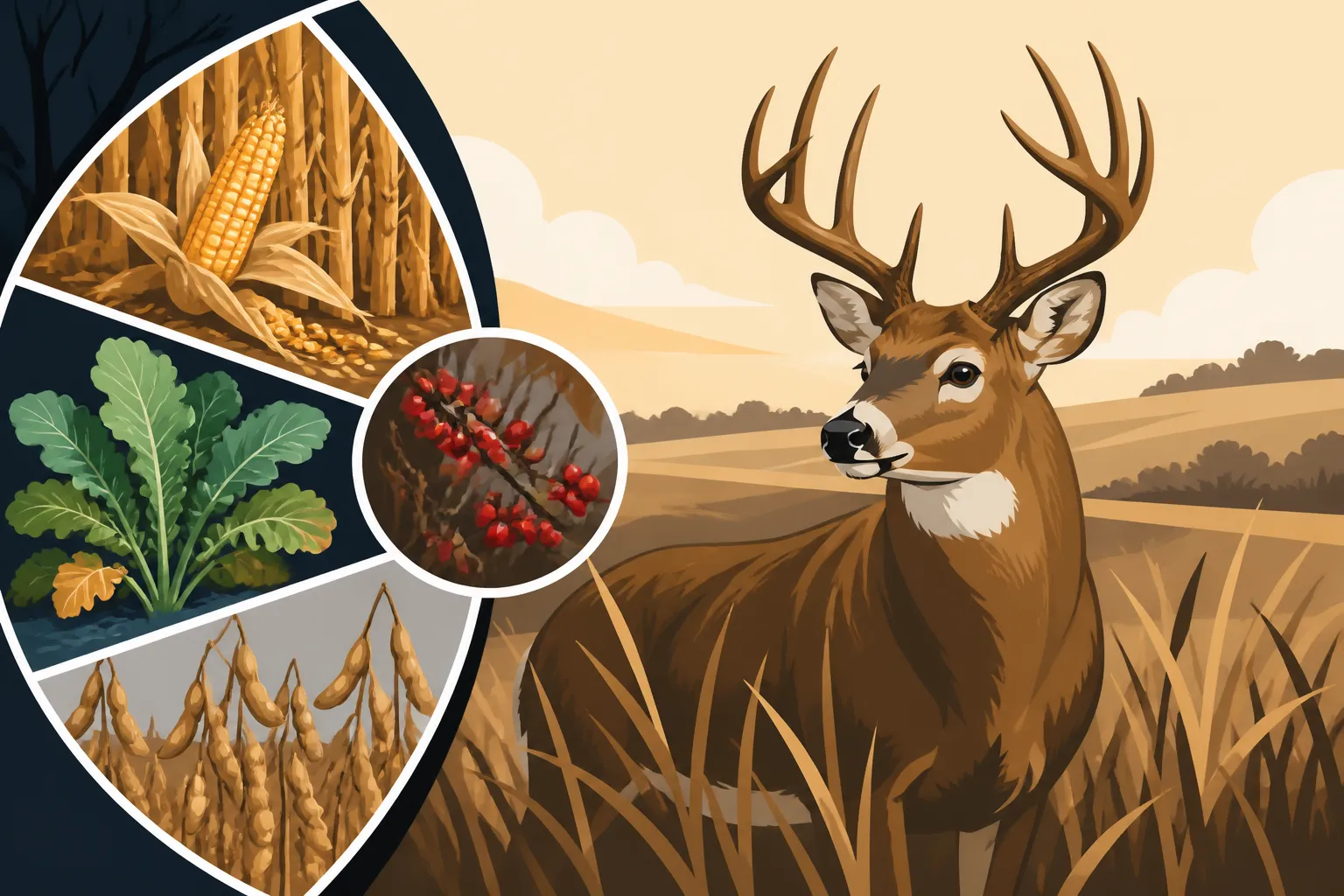
There's simply no substitute for a standing corn or soybean field in late-season North Dakota. Corn, especially, offers a triple threat: high-calorie food, dense thermal cover, and a visual barrier that makes deer feel secure. Whitetails will often bed right within these fields, emerging only to feed on the stalks and dropped kernels. These fields are literal magnets, pulling deer from miles around, especially after a hard frost has dried the stalks and made the kernels easily digestible.
Soybean fields, even after harvest, remain a potent draw. While the beans themselves are rich in protein and fat, it's the waste grain left on the ground that becomes crucial. Deer will methodically work through these fields, picking up every last bean they can find. The trick is identifying which fields have enough waste grain to be worth the deer's effort, which often comes down to the efficiency of the harvest or weather events that cause more drop. When Hunting a Standing Corn Field for Deer, you'll see firsthand how deer melt into that cover.
Harvested Fields and Waste Grain
Even fields that have been thoroughly harvested can be goldmines. Combines, despite their efficiency, always leave behind a certain amount of waste grain. Wheat, barley, sunflower, and even canola fields can offer a persistent food source, especially in the early parts of the late season before heavy snows accumulate. Deer will often visit these fields at night, venturing out from secure cover to glean what they can.
The key to finding productive harvested fields is scouting. Look for fields that had a particularly heavy crop, or those that might have seen some lodging (where stalks fall over) during a storm, making them harder for the combine to clean up. Furthermore, fields that receive consistent deer pressure often have visible trails leading into them, and you can confirm activity by finding droppings and tracks along these routes. Don't underestimate the drawing power of these seemingly empty fields, especially if you're able to observe deer movement in the evenings.
Winter Wheat and Alfalfa Fields
While not as abundant as corn or soybeans, winter wheat and alfalfa fields offer vital green browse that becomes incredibly attractive to deer when most other vegetation is dormant. Winter wheat, planted in the fall, will often sprout and provide a lush, green carpet that remains accessible even under light snow cover. This green forage is packed with nutrients that deer crave, especially after weeks of dry, woody browse.
Alfalfa fields, particularly those with a strong, healthy stand, can also provide a late-season boost. While much of the plant dies back, the root systems hold nutrients, and often some green shoots will persist at the base of the plant, or even sprout up if there's a milder stretch. These fields, often found near river bottoms or other areas with good soil, can be primary feeding areas, especially if the deer population is high and competition for other food sources is intense. Observing deer feeding in these green oases can offer valuable insights into their late-season diet preferences.
Natural Food Sources When Agriculture is Scarce
Sometimes, agricultural fields aren't an option, or perhaps heavy snow has rendered them inaccessible. This is where understanding North Dakota's natural forage becomes critical. While not always as calorically dense, these natural options provide sustenance and can be reliable draws in certain landscapes, especially in units with less farming activity.
Browse and Woody Stem Forage
When crops are gone or buried, deer turn to browse – the twigs, shoots, and leaves of woody plants. In North Dakota, species like dogwood, sumac, wild rose, aspen, willow, and even young oak and ash provide essential sustenance. These plants offer fiber and some nutrients, helping deer digest their existing fat reserves and maintain gut health. River bottoms and shelterbelts are prime locations to find this type of browse.
Look for areas with dense thickets and young, regenerating growth, as these are the most palatable. Deer will create noticeable browse lines in heavily utilized areas, where the vegetation is clipped at their reach height. These areas also offer critical thermal cover. You might find deer not just feeding in these spots, but also bedding down to escape the elements. This dual purpose makes areas like these incredibly valuable for Reading a Missouri River Bottom for Deer or finding deer along Hunting a Shelterbelt Edge for Deer.
Bur Oak Acorns and Other Mast
While North Dakota isn't known for its extensive oak forests like some Midwestern states, pockets of bur oak can be found, particularly in river drainages and sheltered coulees. Where they exist, bur oak acorns are a highly prized, high-calorie natural food source. If the fall acorn crop was good and snow cover isn't too deep to bury them entirely, deer will seek them out relentlessly.
Other mast, like chokecherries or buffalo berries, might also be browsed, though their caloric value is generally lower than acorns. The trick with mast crops is finding areas where they are abundant and accessible. A south-facing slope with a stand of bur oaks might be cleared of snow by the sun, making those precious acorns available when they're otherwise buried on a north slope. While often localized, these mast pockets can be worth investigating, especially if other food sources are scarce.
North Dakota's Hidden Green Patches
Even in the dead of winter, small patches of green can sometimes persist, offering a vital nutrient boost. These "hidden" spots often occur on south-facing slopes that receive maximum sun exposure, melting snow and allowing hardy plants to emerge. Spring seeps, where groundwater flows to the surface, can also create small, unfrozen areas where green vegetation remains available.
Look for sheltered coulees, dense tree rows, or even the edges of old homesteads where native grasses might get just enough protection to stay palatable. These areas may not hold a large population of deer, but they can be critical for individuals or small groups. Keep an eye out for these micro-climates, especially during milder late-season periods or after a brief thaw. It often pays to use mapping tools like GoHunt to identify these sheltered aspects and then scout them on the ground.
Scouting Strategies for Late-Season Food
Finding late-season food sources isn't always easy, but with a systematic approach to scouting, you can dramatically increase your odds. It requires a combination of technology, on-the-ground investigation, and a keen eye for deer sign.
Aerial Photos and On-the-Ground Reconnaissance
Start your scouting from the comfort of your home using aerial photography. Services like GoHunt are invaluable for identifying potential food sources. Look for large agricultural fields, particularly standing corn or soybeans, and pay attention to their proximity to known bedding cover like dense timber blocks, shelterbelts, or deep coulees. Identify travel corridors that connect these areas – pinch points, draws, and fencelines are all good starting points. You can also use the ND Hunt App for Scouting PLOTS Land With the ND Hunt App, looking for fields bordering publicly accessible ground.
Once you have identified promising areas on the map, it's time for on-the-ground reconnaissance. This is where you verify what you saw from the air. Walk the edges of fields, looking for tracks leading in and out, fresh droppings, and signs of recent feeding. Pay close attention to corners and sheltered areas within fields, as deer often enter and exit these spots. This hands-on approach confirms that deer are actually using the food sources you've identified and helps you fine-tune your approach for Cold-Weather Sitting Strategy on the Prairie.
Interpreting Tracks and Droppings in Snow
Snow is a hunter's best friend in the late season, transforming the landscape into a giant tracking board. Fresh tracks leading into a field or along a treeline are undeniable evidence of recent deer activity. Pay attention to the size and depth of the tracks – larger, deeper tracks often indicate a heavier-bodied deer, potentially a mature buck. Follow these tracks, being careful not to spook the deer, to learn their entry and exit points and preferred travel routes. You can learn a lot by Reading North Dakota Mud for Fresh Deer Movement, and snow offers an even clearer picture.
Droppings can also tell a story. Fresh, soft, dark droppings indicate recent feeding. Pay attention to their composition; a diet heavy in corn will often result in larger, more uniform droppings, while browse-heavy diets might produce smaller, more segmented pellets. Finding a concentration of fresh droppings within a field or along an access trail confirms that deer are spending significant time there, making it an ideal ambush location.
Using Trail Cameras on Food Plots and Field Edges
Trail cameras are powerful tools for late-season scouting, offering insights into deer behavior without disturbing the area. Position cameras on the edges of promising food sources, particularly where trails enter standing corn or soybean fields, or along the edges of winter wheat. Focus on pinch points, funnels, or natural travel corridors that lead to the food.
Check your cameras regularly, but sparingly, to avoid putting too much pressure on the deer. The goal is to identify peak feeding times, the direction from which deer are approaching, and the specific individuals that are using the area. This information allows you to fine-tune your setup, whether you're using a treestand or employing a strategy like Using a Ground Blind on PLOTS Land, increasing your chances of success during the brief late-season feeding windows. This is especially useful when Hunting Deer After a Cold Front, as deer may shift feeding patterns dramatically.
Summary of Late-Season Whitetail Food Sources
To help you quickly reference the most important food sources for North Dakota whitetails in the late season, here's a quick overview:
| Food Source Type | Specific Examples | Season Availability | Key Benefits | Scouting Tip |
|---|---|---|---|---|
| Agricultural | Standing Corn, Soybeans | Late Fall – Mid-Winter (until buried by deep snow) | High calories, protein, fat; excellent thermal cover; magnet for deer. | Use aerial maps (like GoHunt) to identify fields near dense cover; look for heavy entry/exit trails and embedded deer. |
| Waste Grain (Wheat, Sunflower) | Late Fall – Early Winter (becomes inaccessible with deep snow) | Readily available carbohydrates from dropped kernels after harvest. | Identify recently harvested fields; check for areas with lodging or less efficient combine passes; look for concentrated tracks. | |
| Winter Wheat, Alfalfa | Late Fall – Mid-Winter (accessible with light snow) | Green browse, essential nutrients; provides a fresh dietary component. | Focus on well-established plots in sheltered areas; observe if snow is melting off south-facing slopes where these might persist. | |
| Natural Browse | Dogwood, Sumac, Aspen, Willow, Rose | All Winter (always available, but less palatable if dry) | Fiber, maintenance nutrients; found in conjunction with thermal cover. | Scout river bottoms, shelterbelts, and dense thickets for heavy browse lines and fresh deer droppings. |
| Mast (Limited) | Bur Oak Acorns | Late Fall – Early Winter (if not buried) | High-calorie, concentrated energy source. | Locate bur oak stands in sheltered coulees or river drainages; check south-facing slopes for snow melt, revealing acorns. |
| Hidden Green | Spring Seeps, South-Facing Slopes | All Winter (highly localized) | Provides critical green forage when other options are completely buried. | Use topographical maps to find potential seeps or sun-exposed slopes; verify on foot for persistent green vegetation and deer sign. |
Hunting North Dakota in the late season offers incredible opportunities, but it demands a focused strategy centered around food. By diligently scouting these critical food sources – both agricultural and natural – you'll be well on your way to intercepting those whitetails when they are most predictable. Remember, in the harsh North Dakota winter, food isn't just a preference; it's survival.
Disclaimer
Hunting is an inherently dangerous activity. Always prioritize safety, follow all local and state regulations, and obtain proper licenses and permits. The information provided in this guide is for informational purposes only and should not be considered a substitute for professional advice or hands-on experience. Conditions and regulations can change, so always consult the North Dakota Game and Fish Department for the most current and accurate information.