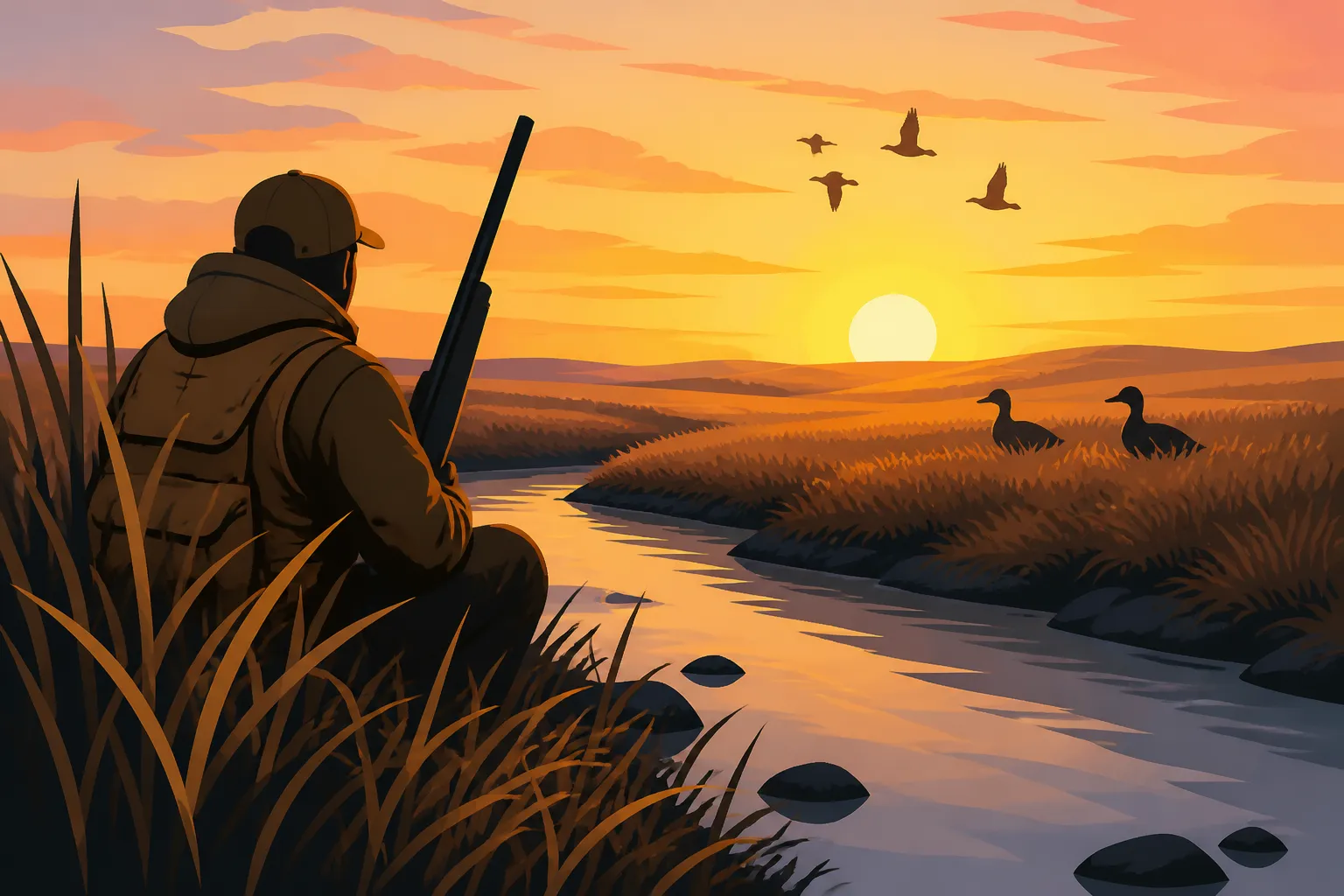
Sitting a Creek Crossing at First Light
The chill before dawn, the crunch of frosted grass underfoot, the anxiety of getting to your stand silently before the world wakes up – if you've ever hunted North Dakota deer, you know these feelings well. One of the most consistently rewarding strategies, especially during the colder months when deer are really on the move, is to intercept them at a creek crossing, particularly at first light. This guide will help you understand why these spots are so vital, how to find the best ones, and how to set up for success when the woods are just starting to brighten.
Why Creek Crossings Are Deer Magnets in North Dakota
North Dakota might be known for its vast prairies, but it's also crisscrossed by countless creeks, streams, and river bottoms that act as critical travel corridors and havens for deer. These waterways, even the smaller ones, provide essential elements that deer seek: water, thick cover, and natural funnels for movement. Deer, being creatures of habit and efficiency, will almost always choose the path of least resistance, and that often means using established crossings.
The Appeal of Water and Cover
First and foremost, water is life, and deer need it daily. Even in winter, when snow might provide some moisture, open water sources remain highly attractive. A meandering creek provides a continuous water supply, but more than that, the vegetation along its banks offers dense thermal cover and security. Think about the thick willows, cottonwoods, and brush that often line these waterways. This riparian habitat creates a natural sanctuary, shielding deer from the biting prairie winds and providing concealment from predators, including hunters. Deer will often bed down in these areas, emerging to feed at dawn and dusk. Understanding their need for both water and secure bedding helps us anticipate their movements through these crucial zones. It's not just a place to cross; it's a place to live.
Natural Travel Corridors and Funnels
Beyond water and cover, creek bottoms naturally act as superhighways for deer. Instead of traversing open fields or climbing steep coulees, deer will often follow the contours of a creek. When that creek needs to be crossed to get from one bedding area to a feeding location, or vice versa, specific crossing points emerge. These crossings become natural funnels, concentrating deer movement into predictable areas. Imagine a wide, brushy creek bottom that narrows down to a firm, shallow crossing point between two stretches of denser timber. Every deer in that general vicinity moving from one side to the other will likely use that exact spot. These are the golden tickets for hunters. Learning to identify these natural choke points is key to successful ambush hunting.
Scouting the Best North Dakota Creek Crossings
You can't just pick any creek and expect a deer to walk by. Successful creek crossing hunts demand meticulous scouting, both physically on the ground and digitally from above. North Dakota's diverse terrain, from the rugged Badlands to the gentler eastern prairie, presents different challenges and opportunities when it comes to identifying these hotspots.
Identifying High-Traffic Crossings
The absolute best way to find a high-traffic creek crossing is to walk the creek itself. Look for definitive signs of deer activity directly at the water's edge and on both banks.
- Tracks: Fresh tracks in the mud or soft soil leading into and out of the water are your most obvious clue. Pay attention to the volume and freshness of the tracks. Are there multiple sets? Are they overlapping? This indicates heavy use. Don't just look for singular tracks; look for worn paths or trails that bottleneck at the water. You'll want to be keenly aware of Reading North Dakota Mud for Fresh Deer Movement.
- Scrapes and Rubs: While not always directly at the crossing, mature bucks will often leave scrapes and rubs along the trails leading to and from these popular crossing points. A freshly pawed scrape with an overhanging branch worked with saliva is a strong indicator of a buck actively patrolling the area. These are often indicators that a buck is scent-checking the area for does, especially during the rut.
- Droppings: Piles of deer droppings, especially fresh ones, confirm consistent use of the trail and the crossing. The size and consistency can even give you a clue about the size of the deer and their diet.
- Worn Paths: Over time, consistent deer use will create distinct, worn paths through the vegetation. These paths, leading right to the water and picking up on the other side, are undeniable evidence of a preferred crossing.
Using tools like the GoHunt app or other satellite imagery can greatly aid your scouting. Before you ever step foot in the field, you can identify potential crossing points where dense cover meets water, or where a creek bottlenecks. Overlaying public land maps from the PLOTS program can also help you find accessible areas. This digital reconnaissance allows you to narrow down your physical scouting efforts to the most promising locations, saving you valuable time and boot leather.
Considering Wind and Thermals
North Dakota's weather can be unpredictable, and understanding wind patterns and thermals is paramount, especially at first light. Creeks, being low-lying areas, can create their own microclimates and thermal drafts that will carry your scent.
- Thermals at Dawn: As the sun begins to warm the earth, thermals will typically start to rise. However, in the deepest parts of a creek bottom, cold air can linger and even "drain" downhill or along the creek bed before rising. This means your scent might be carried down the creek line or along it in unpredictable ways during the first hour of daylight.
- Prevailing Winds: Know the prevailing wind direction for your area and the day of your hunt. You always want the wind in your face or quartering. But remember, in creek bottoms, the wind can swirl and eddy more than in open country. It's not uncommon to feel the wind shift several times in a short period. Always err on the side of caution.
- Stand Placement Implications: This knowledge directly impacts where you place your stand. You want to be downwind of where you expect the deer to approach or cross. If the wind is consistently unpredictable, a ground blind might offer more flexibility in scent management than a tree stand, as you can often set it up to better block or filter your scent profile.
| Factor | Ideal Conditions for First Light | Impact on Hunt Success |
|---|---|---|
| Wind Direction | Consistent, blowing from target area towards you | Crucial for scent control, prevents deer from winding you |
| Air Temperature | Cool or cold, especially after a clear night | Enhances thermal movement predictability, deer more active |
| Cloud Cover | Clear skies, allowing sun to warm ground slowly | Can create gentle, predictable rising thermals |
| Deer Activity | Recent tracks, rubs, scrapes (within 24-48 hrs) | High likelihood of deer using crossing during prime time |
| Visibility | Adequate ambient light, no dense fog | Allows for ethical shot opportunities at first shooting light |
Setting Up for Success at First Light
Once you've scouted a promising creek crossing, the real work begins: setting up your ambush. This involves careful consideration of your stand location, how you approach it, and minimizing your impact on the deer's natural patterns.
Optimal Stand or Blind Placement
Your goal is to be hidden, quiet, and have a clear shot at the crossing, all while managing your scent.
- Elevated Advantage (Tree Stand): If the creek bottom offers suitable trees, a tree stand gives you an excellent vantage point for spotting deer approaching the crossing and keeps your scent elevated, hopefully above the deer's nose. Aim for placement 15-25 feet high, depending on the canopy and background cover. Look for a tree that provides broken cover, such as a gnarly cottonwood or a cluster of smaller trees, to break up your outline. Ideally, position your stand 20-30 yards from the crossing point, slightly off to the side, allowing for shots both at the crossing and along the approach trails. Remember, you want to be able to see the trails leading to the creek crossing, as often deer will pause before committing to the water.
- Ground Blind Advantages: In areas with less mature timber, or where the wind is particularly swirly, a well-brushed-in ground blind can be incredibly effective. Position it to use existing cover – a thick tangle of hawthorn, a brush pile, or even a deep cut in the bank – to conceal its outline. Make sure your shooting lanes are clear but your silhouette is broken up. The beauty of a ground blind is that it allows for more movement without being detected and can offer better protection from the elements during a cold North Dakota morning. Just ensure you set it up well in advance, ideally weeks before the season, to allow deer to grow accustomed to its presence.
- Backdrop and Angles: Always consider your backdrop. Avoid silhouetting yourself against the open sky. Try to have a dense patch of trees, a dark hill, or even a thick shelterbelt behind you to help you blend in. Pay attention to shot angles – you want to be able to comfortably draw your bow or shoulder your rifle without having to make excessive movements that could alert an approaching deer. Using a mapping tool like GoHunt can help you visualize these angles and backdrops from an aerial perspective.
Stealthy Entry and Exit Routes
The best stand placement in the world is useless if you spook deer getting to and from it. Deer, especially mature bucks, are incredibly sensitive to intrusion, particularly in high-traffic areas like creek crossings.
- Pre-dawn Approach: Plan your entry route to use existing terrain features for concealment. This might mean following a fenceline, a ditch, or the back side of a ridge. Avoid walking through bedding areas or known feeding sites. If possible, choose a route that keeps you out of the main deer travel corridors until you're very close to your stand. The goal is to be completely scent-free and silent. Wear clothes that won't make noise against brush.
- Timing is Everything: Aim to be in your stand at least an hour before first light. This gives the woods time to settle down after your presence, and allows you to calmly get comfortable, hang your pack, and make any final adjustments. Remember, deer are often already moving well before the sun crests the horizon.
- Strategic Exits: Your exit strategy is just as important as your entry. If you blow deer out of the area on your way out, you've compromised that spot for future hunts. If deer are still moving, consider waiting until mid-morning or even noon before climbing down, especially if you know they're bedding nearby. If you must exit while deer are still active, use a different route than your entry, if possible, or wait for a strong, favorable wind to carry your scent away from critical areas. For instance, if you're hunting a creek crossing in a river bottom, you might have to consider Reading a Missouri River Bottom for Deer to find less intrusive exit paths.
Tactics for Creek Crossing Hunts
Once you're settled in your stand or blind at first light, it's not just about waiting. Employing smart tactics can significantly increase your chances of success.
Mastering Scent Control
Scent control is non-negotiable when hunting deer, especially in funnel areas like creek crossings where deer are often alert and traveling with purpose.
- Personal Hygiene: Shower with scent-free soap, use scent-free deodorant, and wash your hunting clothes in scent-free detergent. Store your hunting clothes in airtight containers or bags, separate from everyday items, to prevent contamination.
- In-Field Application: Use scent-eliminating sprays on your clothes, boots, and gear before heading out. Pay extra attention to your boots, as ground scent is a major concern on your approach. Consider using rubber boots to minimize scent transfer as you walk.
- Cover Scents and Attractants: While primary scent control is key, cover scents (like pine or earth) or attractant scents (like doe estrus or buck urine) can sometimes provide an added layer of deception. Use them judiciously and understand their purpose. A well-placed doe estrus bomb might draw a curious buck to investigate, but if your human odor is blowing directly at him, it won't matter. Some hunters even use commercial products from companies like Ozonics to try and neutralize scent, especially for stationary hunts.
- Wind Checkers: Always carry a small bottle of scent-free powder or a milkweed pod to check the wind direction and thermals constantly throughout your sit. The wind can change subtly, and being aware of these shifts allows you to adjust your body position or prepare for deer coming from an unexpected direction.
Calling and Decoying Strategies
Creek crossings are excellent places to incorporate calling and decoying, especially during the rut when bucks are actively seeking does and challenging other bucks.
- Grunt Calls: A well-timed grunt call can be incredibly effective. Deer passing through a creek bottom, perhaps looking for a receptive doe or just traveling, might respond to a subtle grunt. Start with soft, inquisitive grunts and gauge the deer's reaction. If a buck stops and looks, a more aggressive grunt might draw him in. If you're hunting in thick timber along a creek, knowing how to use Grunt Calls in River Bottom Timber effectively can be a game-changer.
- Doe Bleats: Doe bleats, particularly during the early and late parts of the rut, can appeal to both bucks looking for mates and does looking for companionship. A fawn bleat can sometimes even draw in a curious doe with yearlings.
- Rattling: If you're in an area with a good buck-to-doe ratio and you've seen sign of mature bucks, rattling can be potent. Bucks are often traversing creek bottoms to find does, and the sound of a sparring match can pique their interest. Consider short, sharp rattling sequences followed by silence and attentive listening.
- Decoys: While less common for creek crossings due to space constraints, a single doe or buck decoy placed strategically can work wonders, especially during the rut. If you have a wide, open approach to your crossing and the wind is right, a buck decoy can challenge a dominant buck, while a doe decoy might draw in a cruising male. Ensure the decoy is highly visible from a distance and appears natural. However, remember that decoying requires careful setup and consideration of wind and potential safety concerns with other hunters.
Patience and Persistence
Hunting a creek crossing at first light often means a cold, quiet wait. It's easy to get antsy, check your phone, or fidget, but these movements can easily spook a wary deer.
- Embrace the Quiet: The stillness of dawn is part of the magic of hunting. Focus your senses. Listen for the crunch of leaves, the splash of water, the rustle of brush. Scan constantly, not just directly at the crossing, but along the trails leading to it and even behind you. Deer have a knack for appearing silently.
- Long-Term Strategy: If a particular creek crossing shows consistent sign, but you don't connect on your first few hunts, don't abandon it. Deer patterns can shift slightly due to weather, hunting pressure, or food source changes. Your persistence will often pay off. Keep an eye on the weather; a sudden cold snap might push deer to move more to reach Late-Season Food Sources for North Dakota Whitetails. The more time you spend observing, the better you'll understand the local deer population and their movements. Consistent hunting pressure can affect deer movement, so consider varying your approach times or even taking a day off from a spot to let it "rest." A good tool like GoHunt can help you track your hunting days and avoid over-pressuring specific areas.
Creek crossings are timeless deer hunting locations, and with proper scouting, setup, and execution, sitting one at first light can be one of the most exciting and rewarding experiences in the North Dakota deer woods.
Disclaimer
Hunting carries inherent risks and requires adherence to all local, state, and federal laws and regulations. The information provided in this guide is for informational purposes only and does not constitute professional advice. Always prioritize safety, respect wildlife and private property, and ensure you have the necessary licenses and permits before engaging in any hunting activities. Always refer to the most current North Dakota Game and Fish Department regulations.