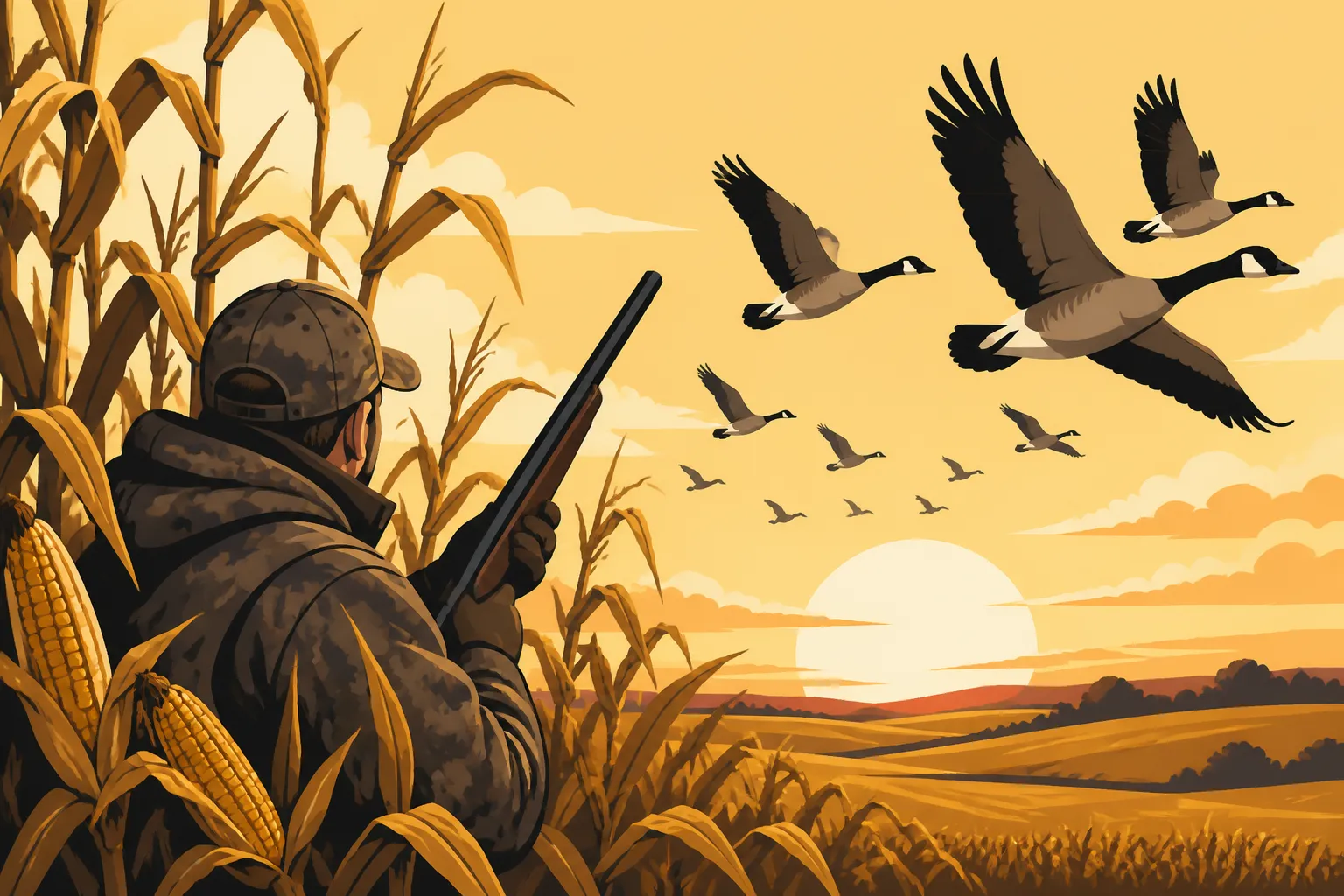
Hunting Standing Corn for Late-Season Geese
The late season for goose hunting in North Dakota can be incredibly challenging. The birds have seen it all, they're wary, and the weather can be downright brutal. But when you find those massive flocks of Canada geese piling into a standing cornfield, it’s a golden opportunity if you know how to approach it. This comprehensive guide will walk you through everything you need to know to successfully hunt late-season geese tucked away in North Dakota’s standing corn.
The Allure of Standing Corn for Late-Season Geese
When the temperatures drop and snow begins to blanket the North Dakota landscape, most of the easy pickings for geese vanish. Fields are cut, stubble is thin, and open water can freeze solid. But standing corn, that golden fortress of energy, becomes an irresistible magnet. Understanding why these intelligent birds choose standing corn is the first step to intercepting them.
Why Geese Flock to Standing Cornfields
Standing corn offers a unique combination of sustenance and sanctuary that becomes critical for geese as winter approaches. It’s not just about food; it’s a complete package deal.
Firstly, the nutritional value is off the charts. Corn kernels are packed with carbohydrates, providing the high-octane fuel geese desperately need to maintain their body temperature in freezing conditions and to power long migratory flights. After weeks of feeding on lighter stubble and greens, a full belly of corn is a game-changer. Imagine a bitter December morning after a fresh snowfall: every other food source might be buried or picked clean. But those sturdy cornstalks often hold their golden bounty above the snow, making it an accessible buffet. This is why you'll often see them commit to a standing cornfield when they might fly high over a cut bean field.
Secondly, standing corn provides exceptional shelter. The dense stands of stalks create a microclimate that offers protection from biting winds and driving snow, conserving precious energy. It also offers a degree of concealment from aerial predators like eagles and ground predators like coyotes. While geese are naturally vigilant, hunkering down in a sea of cornstalks provides a sense of security they just don’t get in an open stubble field. They can tuck themselves deep into the rows, out of sight and out of the wind, digesting their meal.
Late-Season Goose Feeding Behavior
As the season progresses and conditions worsen, the feeding patterns of geese become more pronounced and predictable, yet also more sensitive to pressure. Their primary goal is caloric intake.
You’ll typically find them feeding most actively from mid-morning through mid-afternoon, especially after a frosty night. They might wait for the sun to warm the field a bit, melting any ice or frost on the kernels, before dropping in. Their feeding is often methodical; a large flock might start at one end of a massive field and work its way across over several days, or they might hit different sections of the same field based on where they found the best kernels the day before. Observing these subtle rotations is key to successful scouting. For example, if you see them feeding consistently in the southwest corner of a field for two days, there's a good chance they'll return to that general area unless disturbed. Their desire for high-energy food is so strong that they will often push through some pretty tough weather to get to it.
The Impact of Hunting Pressure on Standing Corn Geese
The term "late-season" isn't just about the calendar; it's about the accumulated wisdom of the geese. By now, they've encountered countless decoy spreads, heard every call, and been shot at more times than we can count. This makes them incredibly wary.
A field that might have been relatively easy to hunt in early November, with birds confidently committing to a basic spread, will be a completely different ballgame by December. Geese will fly higher, circle wider, and meticulously scrutinize every detail of your setup. They're looking for anything out of place – a shiny blind, a decoy that's too uniform, or a hunter’s head poking up. Their flight patterns can become incredibly cautious, making multiple passes over a field, seemingly just to check for danger. They might even land a half-mile away and walk into the corn, or skirt the edges if they sense something is amiss. This heightened awareness means your concealment, decoy setup, and calling must be absolutely flawless.
Effective Scouting for Standing Corn Geese
You simply cannot afford to show up blind when hunting late-season geese in standing corn. Successful hunting starts long before you even set a single decoy. Scouting is paramount, and it requires a combination of traditional observation and modern technology.
Identifying Active Fields and Entry Points
The goal of scouting is to find where the geese are actually feeding within a standing cornfield and how they are getting there. Start by driving the backroads at dawn and dusk, especially in areas known for high goose concentrations. Look for large flocks lifting out of or settling into particular fields.
Once you spot activity, focus on specific signs:
- Droppings: Fresh droppings on the ground, especially concentrated in specific areas, are a sure indicator. Look for large piles of green and white droppings; the greener they are, the fresher the sign.
- Tracks: If there's snow, tracks are your best friend. Look for patterns of goose tracks leading into and out of the corn, showing specific paths they use.
- Broken Stalks and Kernels: Geese are not delicate eaters. They’ll often break stalks and leave scattered kernels on the ground where they've been feeding. Freshly broken stalks are a clear sign of recent activity.
- Staging Areas: Geese often congregate on a nearby pond, slough, or open field before flying into the corn. Identifying these staging areas can give you clues about their flight paths.
- Flight Lines: Pay attention to the exact angles and heights at which birds approach and depart the field. This will dictate your blind placement and decoy spread.
For example, if you observe a massive flock of Canada geese consistently lifting out of a specific 80-acre standing cornfield near Bismarck every morning, that's your starting point. Then, watch to see if they consistently enter from the north, landing along a specific fencerow.
Utilizing Technology for Advanced Scouting
Modern technology has revolutionized scouting, allowing you to get a bird's-eye view and detailed information without disturbing the birds.
- Aerial Imagery: Tools like Google Earth, onX Hunt, and GoHunt are indispensable. They allow you to look at fields from above, identifying potential entry routes, ditches for concealment, and even patterns of standing water within the corn. You can pinpoint specific corners or low spots that might offer better cover or easier access for the birds. A detailed map on GoHunt can show land ownership, helping you identify public access or target private landowners for permission. You might use the app to identify a small finger of standing corn that juts out into a cut field, creating an obvious funnel for birds.
- Weather Apps: Late-season hunting is heavily influenced by weather. Use detailed weather apps to predict wind direction and speed, temperature, and precipitation. Wind direction is critical for setting up your decoys and blinds, as geese almost always land into the wind. Snowfall can either bury other food sources, pushing birds into corn, or make visibility difficult for hunters.
- ND Hunt App: While not specifically for geese, the Scouting PLOTS Land With the ND Hunt App can give you insight into public land access for potential scouting vantage points or adjacent areas where geese might stage.
Ground Scouting with Caution
Once you've narrowed down potential fields with technology, a discreet ground scout is necessary. However, remember the golden rule: do not spook the birds. Flaring a feeding flock can ruin that field for days, if not weeks.
- Stealth Approach: Use existing cover like ditches, tree lines, or rolling terrain to approach the field. Never walk directly into a field where birds are actively feeding.
- Binoculars and Spotting Scopes: Observe from a distance. A good pair of binoculars (10×42 or 12×50) or a spotting scope will allow you to see where birds are landing, walking, and concentrating their feeding activity within the corn. Look for subtle shifts in their behavior or concentration.
- Evidence on the Ground: If the field is empty, carefully walk the edges or use existing paths (like combine tracks) to look for physical evidence. Fresh goose tracks in the mud or snow, scattered corn kernels, and disturbed stalks are crucial clues. Pay attention to the edges – geese often work the first few rows before moving deeper.
- Mapping Key Spots: Use your GPS or mapping app to mark exact spots where you find heavy sign, where birds prefer to land, and potential blind locations. This precision will save you valuable time on hunt day.
Remember, the more information you gather during scouting, the higher your chances of success. It's the ultimate homework assignment for a late-season goose hunter.
Essential Gear for Late-Season Standing Corn Hunts
Hunting late-season geese in standing corn demands specific gear to overcome the challenges of camouflage, cold, and wary birds. Don't skimp on quality here; your comfort and success depend on it.
Decoys for Maximum Attraction
Your decoy spread is your main attraction, and for late-season geese, realism and quantity often go hand-in-hand.
- Full-Body Decoys: These are the gold standard for late-season hunting. Their three-dimensional realism, especially when wind socks or flags are integrated, is hard for wary birds to ignore. They provide depth and realism that silhouettes can't match, particularly in the flat light of winter. While heavier and bulkier to transport, the visual impact is worth the effort. Aim for a good mix of feeding and sentry poses to mimic a relaxed flock.
- Shell Decoys: Lighter and easier to transport, shells can augment a full-body spread, adding to the perceived flock size. However, they lack the realism of full-bodies from certain angles and can appear flat in bright light.
- Silhouettes: While generally not recommended as a primary decoy for late-season, a handful of high-quality silhouettes can be used to extend the edges of a large spread, giving the illusion of an even bigger flock from a distance.
- Motion Decoys: Flags, flyers, and even motorized wing-spinners can add crucial realism, especially on calm days. A well-timed flag can draw the attention of distant birds. However, use them judiciously. Too much erratic motion can make wary birds suspicious. A subtle "waving flag" that mimics a goose stretching its wings is often more effective than an aggressive "flapper." When setting up, think about mimicking the natural movement described in tips for Decoy Spreads for Prairie Pothole Mallards to draw birds in.
For a serious late-season hunt, a spread of 3 to 6 dozen full-body Canada goose decoys is a good starting point. If you can manage more, often more is better. Focus on realism and movement.
Effective Blinds and Superior Concealment
Your blind must become an invisible part of the cornfield. Anything less will flare late-season birds.
- Layout Blinds: These are often the best choice for standing corn. Their low profile makes them incredibly easy to conceal, especially when brushed in properly. Brands like Avery, Final Approach, and Rogers offer excellent models designed for field hunting. You can tuck them right into the rows, allowing you to pop up for a shot without exposing your entire body. The key is meticulous brushing; you want to look like another clump of cornstalks.
- A-Frame Blinds: If you're hunting with a larger group or prefer more space, an A-frame blind can work, but it requires significantly more brushing and careful placement. They provide excellent room for gear and multiple hunters, but their larger footprint can make them harder to hide perfectly. These are often better suited for the edges of standing corn, where they can blend with a fencerow or tree line.
- Natural Cover: Don't underestimate natural cover. A deep ditch running through or along the edge of a cornfield, a natural low spot, or a dense cluster of thicker cornstalks can provide excellent inherent concealment. Use these natural features to your advantage, minimizing the visual impact of your blind. A well-brushed layout blind tucked into a deep combine rut can be almost invisible. The principles of effective concealment, similar to those used in Layout Blind Hunting a Cut Wheat Field, apply here, but with cornstalks as your primary brushing material.
Crucial Cold-Weather Clothing and Essentials
North Dakota winters are no joke. You will get cold if you're not prepared, and being cold dramatically reduces your focus and enjoyment.
- Layering System: This is non-negotiable. Start with a moisture-wicking base layer (merino wool or synthetic, never cotton). Add a warm mid-layer (fleece or down), and finish with a waterproof, windproof outer layer. Your outer layer should be in camouflage patterns that match late-season fields, like Realtree Max-5 or a similar pattern with browns, grays, and whites.
- Head and Hand Protection: A warm beanie or facemask that covers your ears is critical. Good insulated gloves or mittens are also a must. Consider fingerless gloves for calling and shooting, with a mitten flap you can pull over when not actively engaged. Hand warmers tucked into your gloves or pockets are game-changers on bitter days.
- Footwear: Insulated, waterproof boots are essential. Many hunters opt for felt-lined pack boots or heavy-duty rubber boots rated for extreme cold. Always wear good wool socks and bring an extra pair.
- Other Essentials: A thermos of hot coffee or soup, chemical hand and foot warmers, plenty of water, high-energy snacks, a reliable headlamp (for early mornings and late evenings), and a small shovel (for digging out blind edges or creating a natural depression) are all vital. Don't forget an extra battery pack for your phone or GPS. When you're out there Hunting Into a December Cold Snap you'll be glad for every extra layer and piece of warmth you brought.
Strategic Setup and Concealment in Standing Corn
Once you've scouted your field and gathered your gear, the success of your hunt hinges on your setup. This is where attention to detail pays off big, especially with the educated birds of late season.
Optimizing Blind Placement
Where you put your blind is just as important as how you hide it. Think like a goose: what would make you feel safe to land?
- Wind Direction is King: Geese always land into the wind. This is a non-negotiable rule. Your blinds must be placed downwind of where you want the birds to land, with the landing zone directly in front of you. If the wind shifts, be prepared to move your setup or adjust your strategy. Check the forecast closely, but also be ready to read the actual wind in the field.
- Sun Position: Try to keep the sun at your back. This not only makes it easier for you to see incoming birds without squinting, but it also helps conceal you by silhouetting the geese against the bright sky as they approach. If the sun is in front of you, it can glare off your face or blind material, flaring birds.
- Entry and Exit Routes: Plan your approach and departure carefully. You want to be able to get to your blinds and leave without spooking any birds that might be loafing nearby or flying over. Use ditches, fencerows, or dense cover. Consider where you'll park your vehicle – far enough away that it's out of sight and won't be seen by incoming birds.
- "The Hole": Place your blinds at the downwind edge of your intended landing zone, creating a clear "hole" or open space where the geese can set their wings and drop in without feeling cramped. A common setup is a U-shape or J-hook with the open end facing into the wind, about 20-30 yards from your blinds.
Decoy Spreads for Wary Birds
Your decoy spread needs to be convincing and natural, reflecting the behavior of a contented flock.
- Create a Landing Zone: As mentioned, leave a clear, inviting landing strip or "pocket" directly in front of your blinds. Geese want to see an easy place to land.
- Mimic Family Groups: Instead of scattering decoys uniformly, arrange them in clusters of 3-5 birds, mimicking natural family units feeding together. This looks much more realistic. Place some actively feeding (heads down) and some loafing (heads up, sleeping) to add variety.
- Sentries on the Edge: Place a few upright, "sentry" decoys on the upwind and outer edges of your spread. These birds look like they're watching for danger, which can make the rest of the flock feel safer.
- Confidence Decoys: Don't be afraid to add a few duck decoys (mallards or pintails) to your spread, especially if you're hunting near water. Geese often tolerate ducks, and their presence can add to the illusion of a safe, active feeding area. A good strategy for Decoy Spreads for Prairie Pothole Mallards often includes a few goose decoys for confidence, and the reverse can also be true.
- GoHunt Mapping: Use your GoHunt app or other mapping tools to draw out your planned decoy spread on the aerial image of the field. This helps visualize the setup and ensure you’re utilizing the terrain and wind correctly.
Blending Into the Cornfield Environment
This is arguably the most crucial aspect of late-season goose hunting in standing corn. Your blind must disappear.
- Natural Brushing: Use the actual materials from the field around you. Break off cornstalks and weave them meticulously into the stubble straps or pockets of your layout blind. Don't just lay them on top; make them part of the blind.
- Break Up Outlines: Eliminate any hard lines or unnatural shapes. If your blind creates a perfect rectangle, it will stick out. Scatter loose corn leaves, husks, and even some soil or stubble over the blind to further break up its outline.
- Shadow Management: Pay attention to shadows. If the sun is low, a stark shadow from your blind can be a dead giveaway. Position your blind so its shadow blends with existing shadows or is minimized.
- Minimize Movement: This cannot be stressed enough. Late-season geese have incredible eyesight. Even a small movement – a shifting foot, a turning head, or a hand adjusting gear – can flare an entire flock. Stay still. Stay low. Only move when the birds are fully committed and it's time to shoot. Ensure all your gear is within easy reach inside the blind so you don't have to rustle around.
By executing a strategic setup and becoming an invisible part of the cornfield, you dramatically increase your chances of fooling these highly intelligent and cautious late-season geese.
Calling and Shooting Tactics for Wary Geese
So, you’ve scouted, set up, and are perfectly concealed. Now the birds are coming. This is where your calling prowess and shooting discipline come into play. Late-season geese are experts at detecting fakes, so your execution needs to be spot-on.
Mastering the Art of Goose Calling
Calling is an art, not just noise. It’s about creating a conversation and reassuring wary birds that your spread is a safe place to land.
- Variety is Key: Don't just honk. Learn to make a range of calls: the resonant "honk" of a distant bird, the excited "clucks" and "murmurs" of a feeding flock, and the urgent "comeback call" for birds that are swinging wide. Watch videos, listen to real geese, and practice, practice, practice.
- Reading the Birds: The most important aspect of calling is knowing when and how to call. Start with softer, distant greeting calls when birds are far off. As they get closer, adjust your calling based on their response. Are they looking? Are they working? If they're coming straight, softer contented clucks might be all you need. If they're swinging wide, a slightly more urgent comeback call can sometimes pull them back, but don't overdo it. The key is to sound natural, like a flock that's happy and feeding.
- Realistic Cadences: Mimic the natural rhythm of a goose flock. Sometimes it's a cacophony of excited chatter, other times it's soft, contented murmurs. Avoid sounding like a lone, aggressive caller. If you're hunting with partners, coordinate your calling so you sound like a cohesive group. Remember, you're trying to sound like a flock that is enjoying their meal and not worried about a thing. For birds that have been pressured all season, subtlety often wins over aggression. These skills are often honed over many seasons, learning from situations like those described in Pass-Shooting Geese on the James River, where calling can make or break the hunt.
Optimal Shot Placement and Ammunition Selection
When the moment of truth arrives, proper shooting technique and ammunition selection are critical for clean kills and quick retrieves.
- Choke Selection: For geese, a modified or full choke is generally recommended. This provides a tighter pattern for the tough, often long-range shots presented by wary birds. Experiment with your shotgun and different chokes on paper to see which combination patterns best for you.
- Ammunition: Steel shot is mandatory for waterfowl. For Canada geese, especially late-season giants, you'll want heavy loads in BB or BBB shot sizes. Many hunters opt for 3-inch or even 3.5-inch shells for the added payload and velocity. The knockdown power is crucial to prevent wounded birds from flying off and being lost. Consider brands like Federal Black Cloud or Winchester Blind Side for their proven performance on waterfowl.
- Lead and Follow-Through: Geese are large, but they are fast. You need to lead them adequately, especially on crossing shots. Practice swinging through the bird and continuing your swing after the shot. Aim for the head and neck for a quick, humane kill. On overhead shots, aim for the front of the bird. Practice at the trap or skeet range, or on a patterning board, to get a feel for your lead and pattern density.
Dealing with Wary Late-Season Birds
This is where patience and discipline become your greatest assets. These birds have seen it all.
- Patience is a Virtue: Late-season geese will often make multiple wide circles, inspecting your spread from every angle. Resist the urge to call too aggressively or to move prematurely. Let them work. They might take 5-10 minutes, making three or four passes, before they decide to commit.
- Hold Fire: The biggest mistake hunters make is shooting too soon. Wait for the birds to be fully committed, with their feet down, and within optimal killing range (typically 25-40 yards). Shooting at birds that are flaring or too far out just educates them further and often results in missed shots or wounded birds. Communicate with your hunting partners: "Wait, wait, now!"
- Avoid Flaring: Any sudden movement, a glint of light off a phone, or a call that sounds fake can cause an entire flock to flare. Stay absolutely still until the moment you sit up to shoot. Your concealment and lack of movement are often more important than your calling at this stage. Sometimes, less is more with calling – let your realistic spread do the talking. The discipline needed here is similar to that required when Hunting a Muzzleloader Unit After Gun Season Closes, where game is scarce and educated.
By mastering these calling and shooting tactics, you’ll be much better equipped to turn those wary late-season geese into successful retrieves.
Safety and Ethical Considerations in the Cornfield
Hunting is a privilege, and with that comes a significant responsibility to uphold safety, respect, and ethical practices. When hunting late-season geese in North Dakota's cornfields, these considerations are paramount.
Hunter Safety is Non-Negotiable
No bird is worth an accident. Always prioritize safety for yourself, your hunting partners, and anyone else in the vicinity.
- Firearms Handling: Treat every gun as if it's loaded. Keep the muzzle pointed in a safe direction at all times, especially when getting in and out of blinds or moving around the field. Keep your finger off the trigger until you're ready to shoot. Always know what's beyond your target.
- Communication: Clearly communicate with your hunting partners about incoming birds, who is shooting, and when to get up. Establish safe zones of fire to prevent accidental injury.
- Blaze Orange: While not strictly mandatory for waterfowl hunting from a blind, wearing blaze orange when walking to and from your setup is a smart practice, especially during overlapping seasons or in areas with other hunters. For general guidelines, refer to North Dakota Blaze Orange Requirements. This simply makes you more visible to other hunters who might be in the area, whether they're also hunting geese or perhaps deer.
- Awareness of Surroundings: Be aware of other hunters, farm equipment, livestock, or nearby residences. Your shot should always be directed away from any potential hazards.
Respecting Landowners and Property
Access to private land is a cornerstone of North Dakota hunting. Maintaining good relationships with landowners is crucial for continued hunting opportunities.
- Always Ask Permission: This is the golden rule. Never assume you have permission to hunt private land, even if it looks unposted. A polite knock on the door, a brief conversation, and a sincere thank you can open doors for years to come.
- Leave No Trace: Pack out everything you pack in. This means all spent shotgun shells, food wrappers, plastic water bottles, and any blind materials you brought. Leave the field cleaner than you found it.
- Minimize Crop Damage: Be mindful of the standing corn. Avoid breaking excessive stalks when setting up your blinds or retrieving birds. Drive only on designated paths or field roads, never across crops unless explicitly given permission.
- Show Gratitude: A follow-up thank you note, a small gift (like a game processing gift certificate, or some processed meat from your hunt), or simply checking in after the season can go a long way in building goodwill.
Upholding Ethical Hunting Practices
Ethical hunting ensures the future of our sport and respects the game we pursue.
- Fair Chase: Hunt within the spirit of fair chase. Do not shoot birds on the ground or in the water. Wait for them to be flying and in a position for a clean shot.
- Swift and Humane Kills: Strive for clean, one-shot kills. Practice your shooting and know your effective range. If a bird is wounded, make every effort to quickly dispatch it.
- Retrieve All Downed Birds: This is your responsibility. Use a good retriever dog if possible, or mark where birds fall and meticulously search until every downed bird is recovered. Losing a bird is a waste of a valuable resource.
- Know and Respect Bag Limits: Be aware of the daily bag limits and possession limits for ducks and geese. These limits are set to ensure sustainable populations. For up-to-date information, consult North Dakota Duck and Goose Bag Limits and always check the current year's regulations.
- Federal Duck Stamp: Remember that you need a federal duck stamp, in addition to your state hunting license and Harvest Information Program (HIP) certification, to hunt waterfowl in North Dakota. This stamp contributes directly to wetland conservation. You can find more details on the North Dakota Federal Duck Stamp Requirement.
By adhering to these safety and ethical guidelines, you contribute to a positive public image of hunting and help preserve our hunting heritage for future generations.
Decoy Considerations for Wary Geese in Standing Corn
Choosing the right decoys and employing them effectively is a nuanced art, especially when you're dealing with late-season geese that have seen it all. Your spread needs to be convincing, subtle, and natural. Here's a comparative look at common decoy types and how they stack up for standing corn.
| Decoy Type | Pros | Cons | Best Use Case |
|---|---|---|---|
| Full-Body | Most realistic, 3D appearance, good motion | Bulky, heavy, more expensive | Primary decoy for critical realism in late season |
| Shells | Lighter, stackable, less expensive | Less realistic (flat profile from side) | Supplement full-bodies, increase perceived size |
| Silhouettes | Very lightweight, compact, inexpensive | Least realistic, very flat | Extend edges of large spreads, emergency filler |
| Motion/Flag | Adds lifelike movement, attracts attention | Can flare wary birds if overused, battery reliance | Subtle movement when birds are distant or calm |
Enhancing Realism with Movement
Beyond static decoys, carefully integrated movement can be the key to pulling in those last few wary birds.
- Goose Flags: These are simple hand-operated flags designed to mimic the flash of a goose's wings or the stretch of its neck. Used subtly, they can draw attention from distant birds without alarming them. The trick is to use them sparingly, making short, natural movements, rather than frantic waving. A quick flash when birds are turning or far off can make them take a second look.
- Swaying Decoys: Some full-body decoys come with stakes that allow them to sway slightly in the wind, mimicking natural movement. This subtle motion can be highly effective, especially on breezy days.
- Motorized Flyers: While effective in early season, be cautious with motorized wing-spinners for late-season geese. Their repetitive, unnatural motion can often flare wary birds who associate them with danger. If you use them, place them far from your main spread and use them minimally. Sometimes less is more when it comes to technology and highly pressured birds.
Remember, the goal is to create an illusion of a safe, content, and active feeding flock. Every decoy, every piece of brushing, and every call should contribute to that single, convincing picture.
Disclaimer
The information provided in this guide is for informational purposes only and is not a substitute for official hunting regulations. Always consult the current North Dakota Game and Fish Department regulations and federal waterfowl regulations before hunting. Hunting laws and seasons can change annually, and it is the hunter's responsibility to be aware of and comply with all applicable rules. Stay safe and hunt ethically.