Hunting a Standing Milo Field for Deer
You’ve been there, right? You pull up to a promising-looking field, maybe it’s a late-season afternoon, and you see tracks everywhere along the edge. But the moment you step foot near it, the field swallows up every deer within eyesight. Hunting a standing milo field for deer in North Dakota can be incredibly frustrating precisely because these fields are such perfect deer hideouts. This guide will help you understand why milo fields are so attractive to whitetails and, more importantly, how to effectively hunt them without spooking every deer into the next county.
Why Standing Milo Fields are Deer Magnets and Hunter Headaches
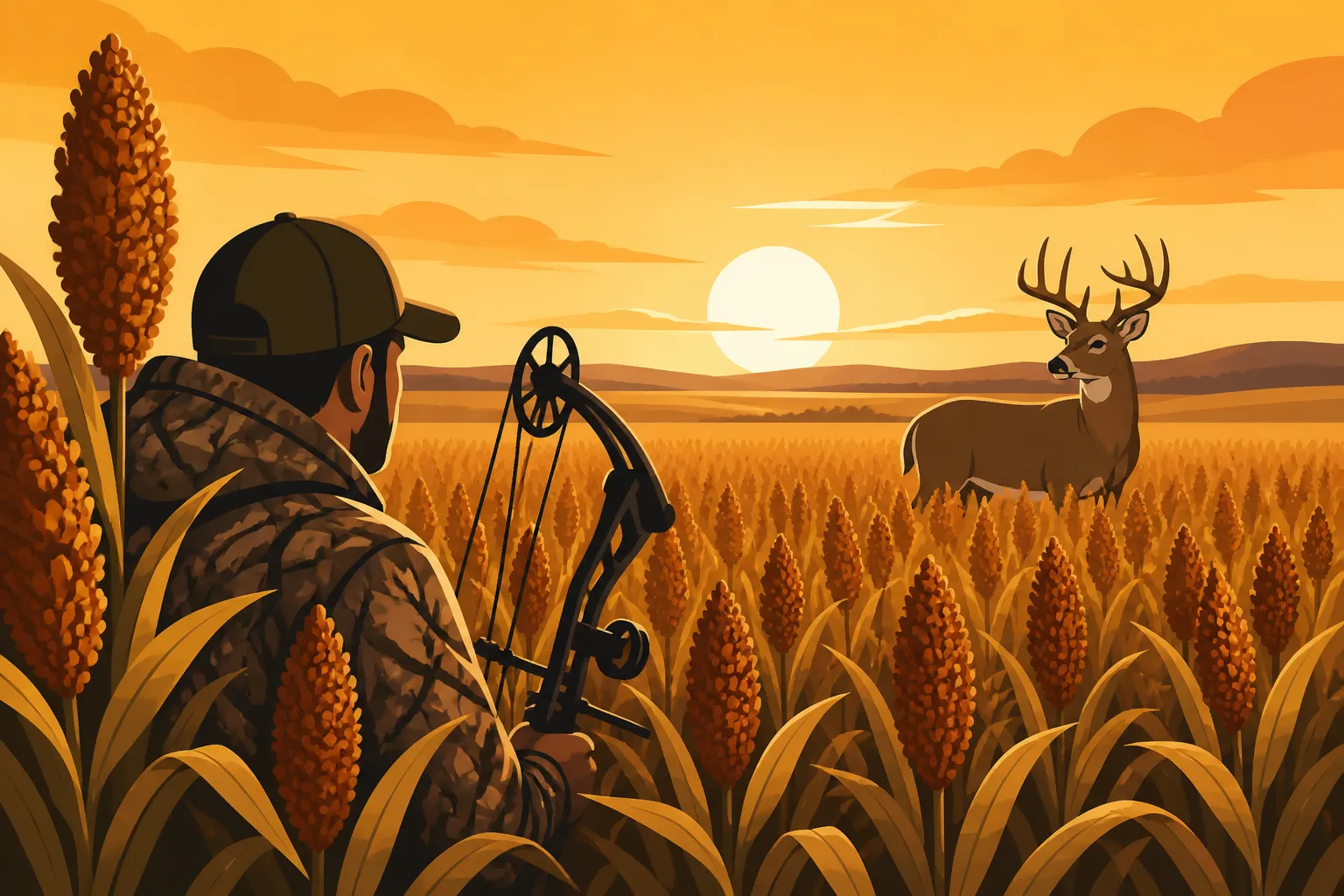
Standing milo fields, sometimes called grain sorghum, are an absolute paradox for deer hunters. They're like a five-star resort for deer: all-you-can-eat buffet combined with a luxury spa and impenetrable security. This makes them incredibly appealing to deer, but a real puzzle for us hunters trying to get an ethical shot.
Understanding Milo as a Food Source and Cover
First off, let's talk about the draw. Milo is a fantastic food source for deer, especially as the season progresses and other crops are harvested or blanketed in snow. The small, protein-rich grains provide vital energy, and deer will often spend entire days (and nights!) in these fields, browsing casually. It's not just the food, though. The dense, upright stalks of milo provide incredible thermal cover, shielding deer from bitter North Dakota winds and snow. This cover also offers an unparalleled sense of security. A deer can disappear into a standing milo field and feel virtually invisible, even when you're just yards away on the perimeter. They can bed down, move, and feed with a level of comfort that's hard to find anywhere else on the prairie. This combination of abundant food and secure cover means deer aren't just visiting milo fields; they’re often living in them for extended periods, making them incredibly difficult to predict and pattern from the outside.
Seasonal Appeal: From Early Archery to Late Gun
The appeal of milo fields changes subtly throughout the hunting seasons, but their fundamental draw remains strong. In the early archery season, before many other crops have been cut, milo provides fantastic concealment and a nascent food source. Deer will use it as a safe travel corridor between bedding areas and other feeding grounds, and they'll nip at the developing heads. As the season progresses into the general gun season and then the late muzzleloader or archery periods, milo becomes an even more critical resource. After the corn is chopped and soybeans are harvested, standing milo often stands alone as one of the last remaining secure food and cover sources. This means that deer, especially mature bucks, will gravitate heavily towards these fields. During a hard prairie winter, Late-Season Food Sources for North Dakota Whitetails like milo can be the difference between survival and starvation, concentrating deer in predictable, yet hard-to-hunt, pockets. Understanding this seasonal shift helps you prioritize which milo fields to focus on at different times of the year.
Scouting and Planning Your Milo Field Hunt
You can’t just walk up to a milo field and expect to luck into a deer. These places demand careful scouting and a well-thought-out plan. It's all about understanding how deer are using the field and figuring out the least intrusive way to intercept them.
Reading the Edges and Entry Points
Before you even think about setting up a stand, you need to become an expert at reading the edges of the milo field. Deer are creatures of habit, and even within the dense cover, they'll often use consistent entry and exit points. Look for well-worn trails leading into the field from adjacent timber, shelterbelts, or fencerows. Pay close attention to tracks—size, freshness, and direction of travel. You might find rub lines or scrape lines along these perimeters, especially during the rut, indicating where bucks are marking their territory before diving into the safety of the milo. Identifying natural funnels or pinch points, like a narrow strip of milo between two open fields or where it meets a wooded creek bottom, is crucial. These are high-traffic areas where deer movement is concentrated. Tools like the GoHunt app or other digital mapping platforms are invaluable here, allowing you to study aerial imagery for potential travel corridors and identify subtle topographical features that might influence deer movement. Knowing Reading North Dakota Mud for Fresh Deer Movement can give you real-time intelligence on exactly which spots are hot.
Wind, Thermals, and Deer Movement Within Milo
The wind is your most important ally and biggest enemy when hunting milo. Because the cover is so thick, deer rely heavily on their sense of smell to detect danger. Approaching a milo field from the wrong wind direction guarantees you’ll blow out every deer. Even when setting up a stand or blind, the wind must be perfect. Consider the prevailing wind, but also be aware of micro-thermals, especially around draws, ditches, or varied terrain adjacent to the field. For instance, in the mornings, cooler air might drain into lower areas, influencing how deer approach or exit the field. As the day warms, thermals can lift. Understanding Wind and Thermals in Badlands Terrain (and applying those principles to any terrain, even subtle ones) is key. Deer inside the milo might also move with the wind to catch scent of anything approaching. Your approach, stand placement, and even your exit strategy all need to be meticulously planned around the wind direction for the specific time of day you intend to hunt. Always err on the side of caution; a slight shift in wind can ruin your hunt in an instant.
Effective Hunting Strategies for Standing Milo
Once you’ve scouted and understood the nuances of the milo field, it's time to choose your strategy. There isn't one perfect way to hunt these fields; often, it's a combination of tactics, adapted to the conditions and the number of hunters you have.
Stand and Blind Placement for Ambush
Setting up an elevated stand or a well-concealed ground blind is often the most effective solo hunting strategy for milo. The key is to place your stand on the very edge of the field, overlooking the most active entry/exit points you identified during scouting. Look for trails that cut through thinner parts of the milo, or where deer might step out into an adjacent open area for a quick look or a bite of another food source. You'll want to be high enough in a treestand to see over the milo if possible, but that's often difficult if the milo is head-high or taller. In such cases, focus on narrow lanes or openings. Ground blinds, Using a Ground Blind on PLOTS Land can be incredibly effective when brushed into the milo edge, offering excellent concealment for close-quarters shots. However, visibility is your biggest challenge. You might only have a small shooting window, so practice estimating distances and being ready for a quick shot. Scent control is paramount here; any whiff of human odor will send deer deep into the milo or out the back side.
Small Drives and Pushing Tactics
When deer are absolutely living in a milo field and you can't get them to step out, organizing a small drive can be a highly productive tactic, especially in the late season or after a fresh snow. This usually works best with three or four hunters. The idea is to have one or two hunters, known as "blockers" or "posters," position themselves silently on the downwind side of the field, at anticipated exit points. The remaining hunters, the "drivers" or "pushers," will then slowly and methodically walk through the field, pushing deer towards the blockers. Communication is vital here for safety. Using radios can help maintain spacing and alert blockers to deer movement. The drivers should move slowly, pausing frequently, as deer will often try to sneak back behind them or hold tight until the last moment. Deer Drives With Three or Four Hunters can be incredibly effective, but they require coordination, patience, and strict adherence to safety protocols. This isn't a chaotic rush; it's a deliberate, slow push designed to gently encourage deer to move predictably.
Still-Hunting the Perimeter and Interior
Still-hunting is perhaps the most challenging, but potentially most rewarding, method for milo fields. It involves moving incredibly slowly along the perimeter or even carefully through the interior of the field, focusing intently on looking for subtle movements, flicking ears, or patches of deer hide. This strategy requires immense patience, quiet footwear, and exceptional scent control. You'll want to move into the wind, taking only a few steps at a time, then pausing for several minutes to scan for deer. This is particularly effective if the milo has some internal lanes or thinner patches. Consider Hunting a Standing Corn Field for Deer for similar still-hunting insights, as corn offers similar challenges. You'll need to be hyper-aware of your surroundings, using every stalk and shadow for concealment. This method is not for the faint of heart and often results in busting deer, but on occasion, you might catch a buck off guard, especially one that thinks it's completely safe within the milo jungle.
Post-Shot Considerations and Recovery
You've made a good shot, but the deer disappeared back into the milo. Now what? Recovering a deer from a dense milo field presents its own set of unique challenges that demand careful planning and execution.
Blood Trailing Challenges in Dense Milo
One of the biggest frustrations of hunting standing milo is the difficulty of blood trailing. The stalks can absorb blood, and the dense ground cover makes it incredibly hard to spot small drops. If you shoot a deer that runs into a milo field, your first step is crucial: mark the exact spot where the deer was standing when you shot it, and where you last saw it enter the cover. This initial marking is absolutely vital. Then, give the deer time. If you suspect a good hit, especially a lung shot, wait at least 30-60 minutes, or even longer for a gut shot (4-6 hours). Rushing in can push a marginally hit deer further, making recovery nearly impossible.
When you do begin trailing, move slowly and methodically. Look for bent stalks, disturbed soil, or hair at the point of impact. If blood is scarce, move on hands and knees, covering every square foot. Bright flashlights are indispensable, especially as dusk approaches. For guidance on Blood Trailing After Dark in North Dakota, remember to take your time, mark your last blood, and use multiple light sources. A GoHunt GPS on your phone can help you mark your last blood trail spots and create a grid search pattern. Don't be afraid to call in a friend or two to help, spreading out just enough to cover ground but staying close enough to communicate any finds.
Essential Gear for Milo Hunting
Having the right gear can make or break your milo field hunt and recovery. Here’s a quick rundown:
| Item | Importance |
|---|---|
| GPS/Mapping App | Invaluable for marking stand locations, deer sign, and especially blood trail spots within the dense, disorienting field. GoHunt is a top choice for land ownership and aerials. |
| Good Optics | Binoculars (10×42) or a spotting scope are critical for glassing field edges and spotting subtle deer movement from a distance, or picking out a deer holding tight within the stalks. |
| Powerful Flashlight | Essential for blood trailing after dark. Consider a headlamp and a handheld, high-lumen light. |
| Quiet Clothing | Soft, quiet fabrics that won't snag on milo stalks. Layer for North Dakota's variable weather, keeping in mind Cold-Weather Sitting Strategy on the Prairie if you're hunting late season. |
| Scent Control | Sprays, carbon clothing, and scent-free detergents are crucial. Deer will bust you by smell long before they see you in milo. |
| Game Cart/Sled | Milo fields can be long walks, and dragging a deer out of dense cover is exhausting. A cart or sled will save your back. |
| Marking Tape/Flags | Indispensable for marking your initial shot location and every blood drop or sign while trailing. |
| Robust Knife/Saw | For field dressing. If you're successful, you'll want to be able to Field Dressing a Deer in Cold Weather efficiently before transporting. |
Hunting standing milo fields isn't easy, but with patience, careful scouting, and the right strategies, you can turn these deer havens into successful hunting grounds. Good luck out there!
Disclaimer
Hunting is an inherently dangerous activity. Always prioritize safety, adhere to all North Dakota Game and Fish Department regulations, and obtain appropriate licenses and permissions before entering any hunting area. This guide is for informational purposes only and does not substitute for professional instruction or official hunting regulations.