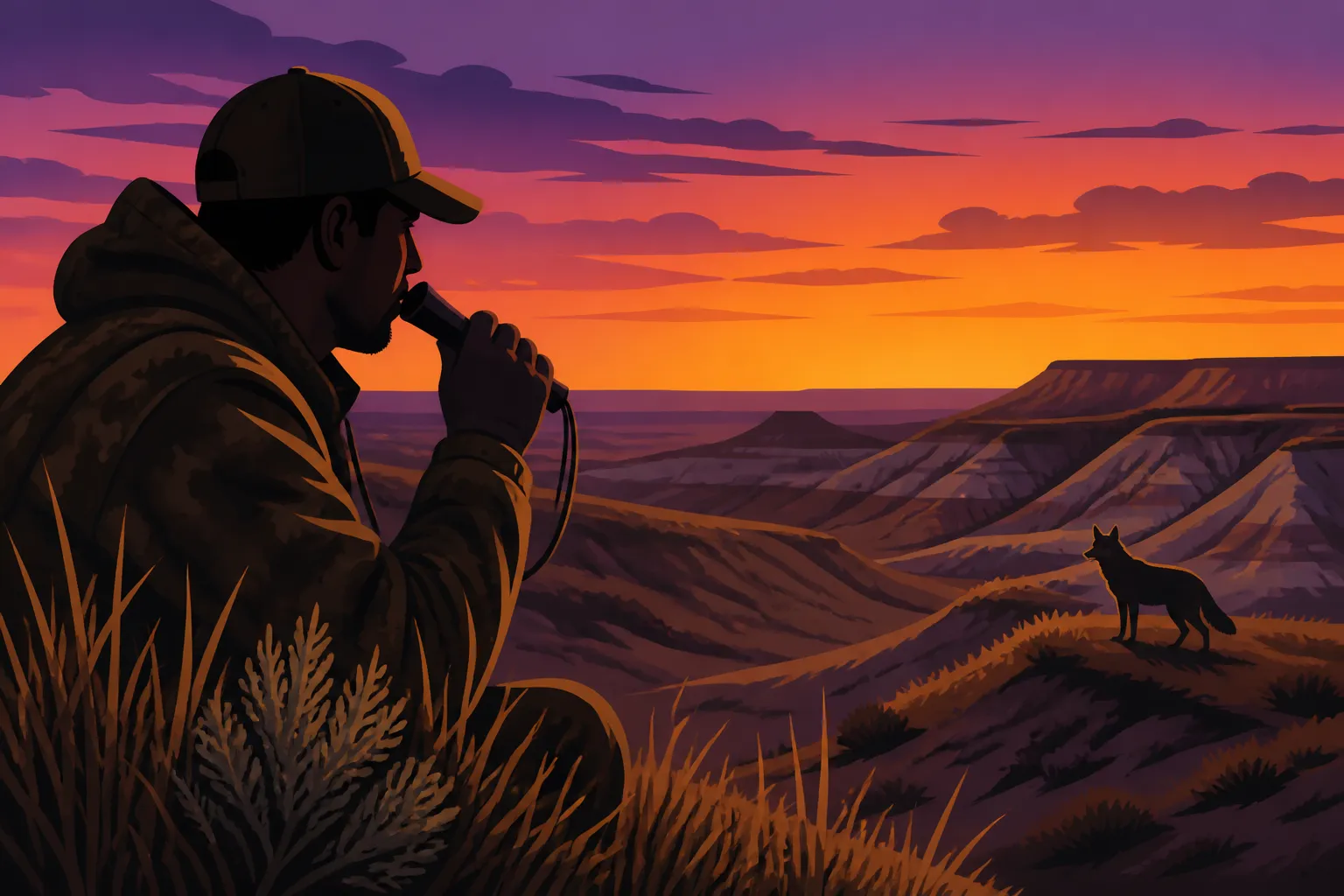
Predator Calling a Badlands Draw at Dusk
The quiet solitude of the North Dakota Badlands at dusk can be incredibly peaceful, but for predator hunters, it's a prime window of opportunity that often feels elusive. The fading light brings a unique set of challenges and advantages, making successful calling sessions feel like threading a needle in the dark. This guide will walk you through the specifics of effectively calling predators into a Badlands draw as the sun dips below the horizon, helping you understand the terrain, master your setup, and hone your calling sequences for twilight success.
Understanding the Badlands at Dusk for Predator Calling
Hunting predators in the Badlands as daylight wanes isn't just about timing; it's about understanding a complete shift in the landscape and the behavior of the animals that inhabit it. The unique topography and the transition from day to night create a dynamic environment that, when understood, can be leveraged for incredible success.
Why Dusk is Prime Time in the Badlands
As the vibrant colors of a Badlands sunset paint the sky, a tangible shift occurs. The relentless sun, which often drives coyotes, foxes, and bobcats into the shade of deep coulees and brushy pockets during the day, begins to lose its grip. This is when predators, especially coyotes, become more confident and active. They’re moving from their daytime bedding areas to their nocturnal hunting grounds, and a well-placed call can intercept them during this vulnerable transition. The cooler air means scent travels better, and the fading light offers a natural camouflage that works both ways – it hides you, but it also makes it harder to spot an approaching animal. It’s a magical window where their guard is slightly down, and their drive to hunt kicks in. You're not just calling an animal; you're tapping into their instinctual shift. For hunters looking to capitalize on this natural change, understanding Coyote Calling at First Light can offer a valuable contrast to adapt to evening conditions.
Navigating the Unique Badlands Terrain
The Badlands are a maze of sharp ridges, steep coulees, and winding draws. This broken country is a double-edged sword for predator callers. On one hand, it funnels animals, creating natural travel corridors that predators frequently use. On the other hand, it can make sound travel unpredictably and limit visibility, especially as shadows lengthen and eventually consume the landscape. A "draw" isn't just a dip in the ground; it's a miniature ecosystem, often thicker with cover, holding pockets of cooler air, and providing sheltered avenues for movement. When you're considering a stand, you need to think about how far sound will carry, where an animal might come from, and where it will likely try to circle downwind of you. Wind and thermals, even light breezes, can be amplified or completely redirected by the steep cuts and buttes, making proper positioning even more critical. Knowing the nuances of Wind and Thermals in Badlands Terrain is absolutely essential for a successful setup.
Setting Up for Success in a Badlands Draw
The Badlands are unforgiving, and a successful predator hunt at dusk hinges on a meticulously planned setup. You can't just walk into a draw, sit down, and expect results. Every element, from your entry to your exit, needs to be considered.
Choosing Your Stand Location
Selecting the perfect spot in a Badlands draw is paramount. First, consider your approach. You want an entry that's quiet and keeps you out of sight, ideally using topography to mask your silhouette as you move in. Once you're in the draw, look for an elevated position that offers a good vantage point downwind, but also provides ample back cover to break up your outline. A small rise, a clump of cedars, or even a deep erosion cut can work wonders. The goal is to see the predator before it sees, or smells, you. Coyotes, especially, are notorious for circling downwind to get a whiff of the source of the distress call. You need to position yourself to intercept them before they complete that circle. This often means facing into the prevailing wind as much as possible, or using a crosswind to your advantage, giving you time to react. When trying to pinpoint the perfect draw, especially one that hasn't seen too much pressure, digital scouting tools like those offered by GoHunt can be incredibly helpful for visualizing topography and access points, showing you elevation changes and cover without having to physically walk every inch.
Decoy Placement and Scent Control
Decoys add a visual element that can be incredibly effective, particularly in the fading light when a predator might be hesitant to fully commit to a sound. A simple motion decoy, like a Furtaker or Lucky Duck, mimicking a wounded rabbit or bird, can draw a predator's attention away from your concealed position. Place your decoy 20-50 yards out, preferably in an open area within your shooting lane, so that any approaching animal focuses on it rather than scanning for you.
Scent control, however, is your absolute biggest asset and potential downfall. Predators, especially coyotes, have an incredible sense of smell. Even with a perfect calling sequence, if they catch your scent, the game is over. Shower with scent-free soap, wash your hunting clothes in scent-free detergent, and use scent-eliminating sprays on your boots and gear. Even something as simple as a strong coffee smell on your breath can give you away. In the tight confines of a Badlands draw, where thermals might swirl and eddy, being as scent-neutral as possible is non-negotiable. Don't forget, understanding the larger landscape can give you an edge, and resources like Reading Aerial Photos for Badlands Deer can also help you identify prime ambush points and travel corridors for predators.
Mastering the Calls for Badlands Predators
Predator calling is as much an art as it is a science, especially when dealing with the varied and often cautious animals of the North Dakota Badlands. Adapting your calling strategy to the specific species and the unique acoustical properties of the draws is crucial.
Effective Sound Sequences for Coyotes
Coyotes are often the primary target for predator callers, and in the Badlands, they respond well to a mix of distress calls and vocalizations. A typical sequence might start with a soft, pleading rabbit distress call, played for about 30-45 seconds. Then, pause for a minute or two, scanning intently. If nothing appears, increase the intensity to a more frantic distress call for another 30 seconds. After another pause, you might introduce some coyote vocalizations – a few lone howls, or a pair of yips, to mimic other coyotes in the area. This can either draw in territorial coyotes or make them feel safe to approach.
The key in the Badlands is managing your volume. In open prairie, you might scream calls across miles, but in a draw, the sound can bounce off canyon walls and become distorted. Start softer, especially at dusk when animals are already moving and potentially closer. Let the terrain carry the sound. If you don't get a response after 10-15 minutes, consider a short, sharp series of pup distress calls, which can trigger a maternal or territorial response. Don't be afraid to experiment, but always listen more than you call. The best callers know when to be quiet and let the natural curiosity, or aggression, of the coyote take over. This type of nuanced calling differs from what you might do in more open country; consider comparing notes with Coyote Calling North Dakota Farm Country to see how tactics vary.
Calling in the Elusive Fox
While coyotes are dominant, red foxes and even swift foxes inhabit parts of the Badlands, offering another exciting challenge. Foxes are generally smaller, more cautious, and have a more acute sense of hearing than coyotes. They also tend to respond to higher-pitched, less aggressive distress calls. Think small rodents or bird distress. A mouse squeak, voles, or even a songbird in distress are excellent choices.
Unlike coyotes, foxes often approach much more stealthily and quickly. Your calling sequence for a fox should be shorter and often softer. A 15-20 second burst of a high-pitched distress call, followed by a longer pause (2-3 minutes), works well. Repeat this a few times. Foxes can materialize out of nowhere, so constant scanning is vital. Because they are smaller, spotting them in the deepening shadows can be incredibly difficult. They’ll often slink along the edges of the draw, using every bit of cover available. Sometimes, a subtle, almost whimpering call is all it takes to pique their curiosity. Remember, North Dakota has a healthy population, and learning about North Dakota Fox and Bobcat Populations can help you understand their habits and distribution.
Comparative Calling Techniques: Coyotes vs. Foxes
Understanding the subtle differences in how to approach calling these two primary Badlands predators can dramatically increase your success rate. Here's a quick breakdown:
| Feature | Coyote Calling Technique | Fox Calling Technique |
|---|---|---|
| Primary Sounds | Rabbit distress (medium to loud), howls, pup distress | Mouse squeaks, bird distress (high pitch, soft) |
| Volume | Moderate to loud initially, can vary, project further | Softer, subtle, doesn't need to carry as far |
| Sequence Length | Longer, more varied bursts (30-45 sec), includes vocalizations | Shorter, consistent bursts (15-20 sec), less vocalization |
| Pause Duration | 1-3 minutes, scanning for approach | 2-4 minutes, intense scanning for stealthy approach |
| Approach Style | Often circle downwind, may appear hesitant initially | Stealthy, quick, can appear from unexpected angles |
| Reaction to Call | Territorial, curious, aggressive | Highly curious, often cautious |
| Decoy Preference | Motion decoys (rabbit, bird) for visual distraction | Smaller motion decoys, subtle movement |
Gear Essentials and Safety for Dusk Calling
Hunting in the Badlands at dusk introduces specific gear and safety considerations. The transition from light to dark is swift and unforgiving, and being unprepared can turn an exciting hunt into a dangerous situation.
Critical Equipment for Low-Light Situations
When the sun starts to drop in the Badlands, visibility can go from perfect to practically zero in what feels like minutes. A reliable, powerful headlamp with a red light option (to preserve night vision) is absolutely non-negotiable. You'll need it for navigating to and from your stand, and for any tracking you might need to do. Beyond that, good quality optics – binoculars and a scope with excellent low-light gathering capabilities – are vital for spotting subtle movements in the dim light. Consider scopes with illuminated reticles for precise shot placement when an animal finally commits.
For weapons, a flat-shooting rifle in a caliber like .223, .22-250, or .204 Ruger is popular for coyotes, offering precision at varying ranges. A shotgun loaded with buckshot can also be incredibly effective for close-range encounters in thick draws. Always check local regulations regarding the use of thermal or night vision optics for hunting, as rules can vary. Having a solid mapping app, perhaps with offline capabilities, is crucial, and platforms like GoHunt often provide detailed topographic maps that are invaluable for pinpointing your location and navigating the intricate Badlands terrain in low light. These tools help prevent you from getting disoriented, which is a real danger when you're focusing on calling.
Badlands Specific Safety Considerations
Safety in the Badlands at dusk is paramount. The broken terrain, deep coulees, and sudden drops can be disorienting even in daylight, let alone when shadows deepen. Always let someone know where you are going and when you expect to return. Carry a fully charged cell phone, but don't rely solely on it for navigation, as service can be spotty.
Beyond navigation, be aware of other potential hazards. Rattlesnakes are common in the Badlands, and while they're typically less active in cooler evening temperatures, they can still be present. Watch your step, especially around rocks and brush. Bison and elk also inhabit certain areas of the Badlands, and encountering them unexpectedly in low light can be dangerous. Give them wide berth. Dress in layers, as Badlands evenings can get surprisingly cold, even after a hot day. Carry enough water, a small first-aid kit, and basic survival items. Finally, if you're hunting public land, remember that other hunters might be out there. Always identify your target positively before shooting, and if you plan to be out late, consider wearing blaze orange while moving, even if not strictly required for predator hunting, to enhance your visibility to others. For detailed information on specific hunting areas, consulting resources like Hunting the North Dakota Badlands can provide invaluable insights into local conditions and rules.
Predator calling in a Badlands draw at dusk is an experience unlike any other, demanding respect for the land and the animals within it. By understanding the environment, perfecting your setup, and mastering your calls, you stand a much better chance of success. This skill is a testament to the hunter's ability to adapt, to become part of the landscape as it transitions from the light of day to the mysteries of night. Learning more about North Dakota Coyote Range and Density can further inform your strategy and increase your chances of finding prime hunting grounds. The quiet satisfaction of calling in a predator against the backdrop of a fading Badlands sunset is a memory that truly lasts a lifetime. Whether you're targeting coyotes or trying to call in the more elusive fox, a good understanding of Hunting Little Missouri's Backcountry Draws is key to finding the right terrain. For those interested in the broader ecological impact, understanding Predator Impact on Fawn Recruitment highlights the role these animals play in the ecosystem.
Disclaimer
Hunting is an inherently dangerous activity. Always prioritize safety, adhere to all North Dakota Game and Fish Department regulations, and respect private property. Information provided in this guide is for informational purposes only and does not constitute professional advice. Ensure you are familiar with all current hunting laws and obtain all necessary licenses and permits before engaging in any hunting activity.