North Dakota’s Once-in-a-Lifetime Moose Herd
Drawing a North Dakota moose tag feels like winning the lottery, and for good reason—it's a once-in-a-lifetime opportunity that many hunters dream of but few ever experience. This guide will walk you through everything you need to know about pursuing these magnificent animals in the Peace Garden State, from understanding their unique habitats to navigating the elusive draw process and planning a successful hunt should you be lucky enough to punch that coveted tag.
The Mystique of North Dakota Moose
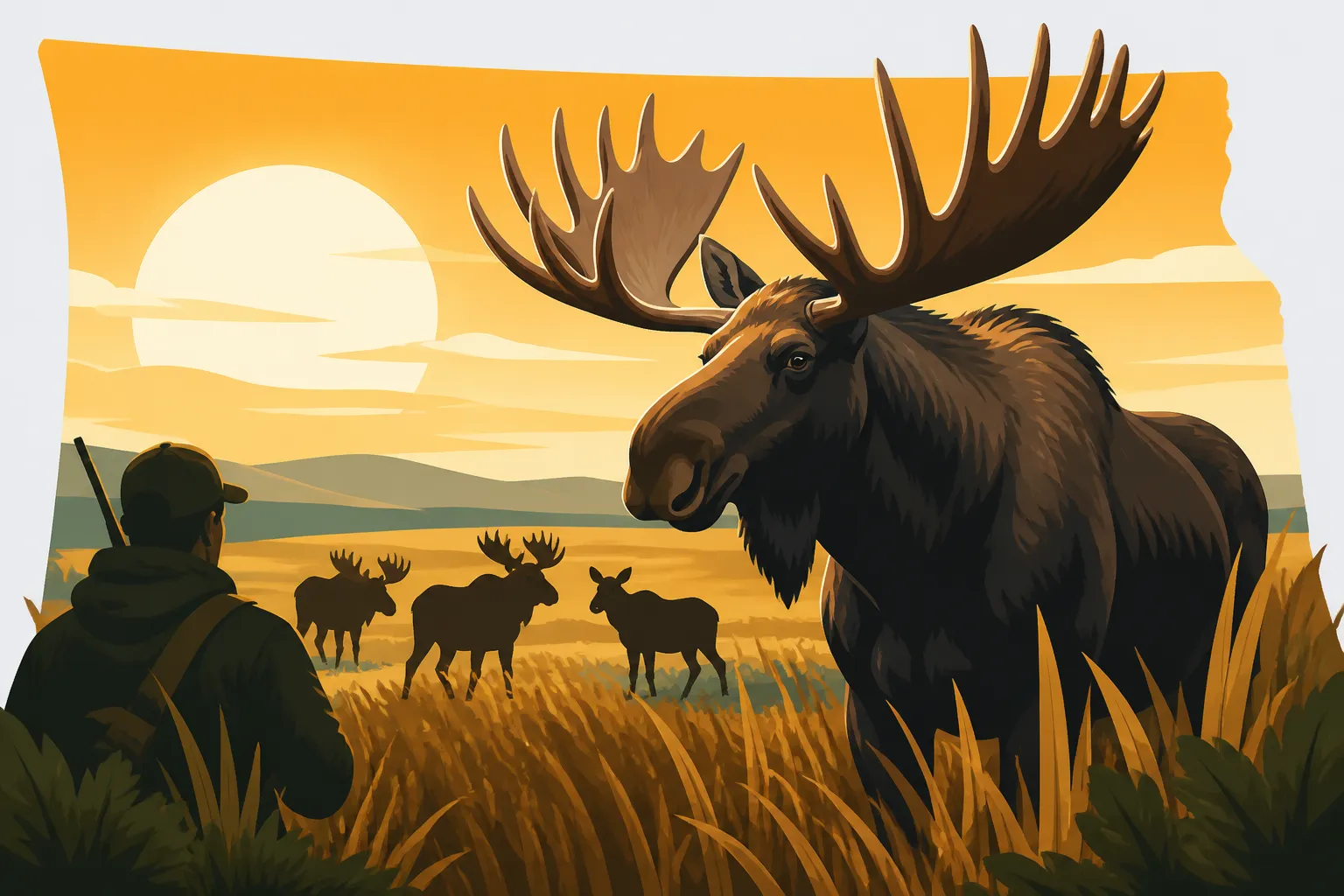
Moose in North Dakota? For many, the idea conjures images of vast wilderness in Canada or Alaska, not the rolling prairies and badlands of North Dakota. Yet, for those in the know, the Peace Garden State holds a small but thriving moose population, offering one of the most exclusive and challenging big game hunts in the Lower 48. These animals represent a remarkable conservation success story and a truly unique hunting experience.
A Truly Special Opportunity
Imagine standing in a dense willow bottom, the air crisp with the scent of damp earth and decaying leaves, and hearing the deep, guttural grunt of a bull moose nearby. It's a sound that stirs something primal, especially when you know you're one of only a handful of hunters in the entire state with a legal opportunity to pursue such an animal. This isn't just another deer hunt; it's an immersive experience in some of North Dakota's most rugged and often overlooked landscapes. The "once-in-a-lifetime" designation for North Dakota moose tags underscores just how special this opportunity is. It means that if you are fortunate enough to draw and harvest a moose, you won't be able to apply for another moose tag in North Dakota again, elevating the stakes and the reverence for each hunt. Hunters often spend years, even decades, building preference points and dreaming of this single chance.
The sheer size and power of a North Dakota moose are also part of their mystique. These are immense creatures, capable of navigating dense cover with surprising stealth, yet when they emerge into an opening, their scale is breathtaking. From their broad, palmate antlers to their towering stature, they are iconic symbols of wildness. For the hunter, it's not just about the harvest; it's about the challenge of finding such a wary giant in its natural element, often requiring intense scouting, physical endurance, and a deep understanding of their behavior.
Historical Presence and Recovery
While not as historically abundant as bison or deer, moose have always had a presence in North Dakota, particularly in the northern and eastern reaches where suitable habitat exists. However, their numbers dwindled significantly during the settlement era due to habitat loss and unregulated hunting. For decades, sightings were rare, and hunting opportunities non-existent. The story of their recovery is a testament to dedicated wildlife management and the resilience of nature.
Beginning in the late 20th century, as habitat conditions improved and conservation efforts gained traction, moose populations slowly began to rebound. They expanded their range from neighboring Minnesota and Canada, finding ideal conditions in the dense river bottoms, vast wetlands, and aspen parklands that remained untouched by agriculture. The North Dakota Game and Fish Department (NDGFD) carefully monitored these growing herds, eventually initiating a highly controlled lottery system to allow limited hunting opportunities. This cautious approach has allowed the population to stabilize and even grow in certain areas, ensuring the long-term health of the herd while offering a sustainable hunting season for a select few. Understanding this history adds another layer of appreciation to every drawn tag, knowing that you are participating in a carefully managed success story.
Understanding North Dakota's Moose Habitat and Range
North Dakota moose aren't spread uniformly across the state. They tend to concentrate in specific regions that provide the dense cover, abundant water, and preferred forage they need to thrive. Knowing these areas is crucial for any hunter hoping to draw a tag or, once successful, to focus their scouting efforts.
Key Moose Hunting Zones
The primary moose hunting zones in North Dakota are found in the northeastern and north-central parts of the state. These regions, particularly the Pembina Hills, Turtle Mountains, and the aspen parkland areas along major river systems like the Red and Souris, offer the ideal blend of forested cover, marshlands, and dense willow thickets that moose prefer. Unlike the vast, open prairies, these areas feature significant timber, riparian zones, and wetlands, providing both shelter and food.
Let's break down some of these key areas:
- Pembina Hills: This region in northeastern North Dakota is characterized by a mix of deciduous forests, rolling hills, and deep ravines. It’s a classic moose habitat, offering abundant woody browse and protection. Hunters often focus on the larger tracts of public land, including state forests and wildlife management areas, but gaining access to private land can also be incredibly productive.
- Turtle Mountains: Straddling the Canadian border in north-central North Dakota, the Turtle Mountains are an isolated forested plateau. This area is a mosaic of lakes, wetlands, and dense aspen and oak forests. The terrain can be challenging, but it provides excellent cover for moose.
- Souris River Valley: The river bottomlands and associated wetlands of the Souris River, especially near the Upper Souris National Wildlife Refuge, offer critical habitat. While the refuge itself has restrictions, the surrounding public and private lands can hold significant moose numbers.
- Red River Valley Tributaries: While the Red River Valley itself is largely agricultural, the tributaries and associated wooded corridors provide important linear habitats that moose utilize, especially for travel and dispersal.
For hunters who draw a tag, intensely studying unit maps and understanding the specific features of their assigned zone is paramount. Resources like the GoHunt Insider platform often provide detailed unit analyses and historical draw data that can inform where moose tend to be found and what kind of terrain to expect. You'll want to be prepared for everything from dense brush to marshy ground.
Preferred Habitat and Food Sources
Moose are creatures of browse, and their diet consists primarily of woody vegetation. They thrive in areas with abundant young aspen, willow, dogwood, and various aquatic plants. This means they are often found near water – whether it's a prairie pothole, a sluggish river, or a marshy lake edge. These wet environments provide not only critical hydration but also essential nutrients from aquatic vegetation and dense cover from willows and alders.
During the colder months, moose will often seek out mature forests for thermal cover, but even then, they'll forage on the young shoots and branches available. The edges of clearings, recent timber cuts, and areas where flooding has created new growth are all prime locations for finding moose. They are less dependent on agricultural fields than deer, though they may occasionally browse on crops, especially in areas where traditional forage is limited.
When scouting for moose, look for classic signs: heavily browsed saplings, distinct tracks in soft ground (much larger than a deer's), and rubs on small trees. Their sheer size means they leave a noticeable impact on the landscape. Identifying "Picking Out a Bedded Moose in Willow Cover" requires a keen eye and often a slow, deliberate approach, as these animals can disappear into seemingly impenetrable thickets. Understanding their preferred food sources and how they change with the seasons will guide your scouting efforts and ultimately improve your chances of locating a trophy bull or a healthy cow.
The Lottery System: Drawing that Once-in-a-Lifetime Tag
The dream of hunting a North Dakota moose hinges entirely on navigating the lottery system. This isn't a guaranteed tag; it's a game of patience, strategy, and a little bit of luck. The "once-in-a-lifetime" aspect makes it even more poignant, as for most, this will be their only chance.
Navigating the Application Process
Applying for a North Dakota moose tag is a straightforward process, but it requires attention to detail. The application period typically opens in May and closes in early June, so you need to be aware of these critical dates. All applications are submitted through the North Dakota Game and Fish Department's online portal. You'll need a valid North Dakota hunting license (or a general game and habitat license for residents) to apply. For non-residents, the chances are even slimmer, as the vast majority of tags are allocated to residents.
When you apply, you'll select your preferred hunting unit. The NDGFD manages moose populations across various units, each with different tag allocations based on localized population surveys and management goals. Some units might offer more "any moose" tags, while others might be limited to "antlerless" tags, or even specific antler-point restrictions depending on the year's harvest objectives. It's crucial to research these units before applying, considering factors like public land access, historical success rates, and the type of tag you're hoping for. While it's tempting to apply for any unit, focusing your efforts on units that align with your hunting goals can be beneficial. Many applicants consult resources like the GoHunt system, which provides detailed unit breakdowns and draw statistics, helping hunters make informed decisions about where to apply.
It's important to remember that this process is distinct from the general "North Dakota's Lottery-Based Deer Gun Season," though both operate on a preference point system. For moose, these points are incredibly valuable because of the limited number of tags. Each year you apply and are unsuccessful, you accrue a preference point, increasing your odds in subsequent draws. However, once you draw a moose tag, all your preference points are reset to zero, and you cannot apply for another North Dakota moose tag ever again. This makes the decision of when and where to apply a significant one, sometimes involving decades of waiting.
Understanding Your Odds
Let's be blunt: the odds of drawing a North Dakota moose tag are slim. This is truly a once-in-a-lifetime draw for most successful applicants, meaning many individuals will spend years, if not their entire hunting careers, applying without success. The number of moose licenses issued each year is very low, typically ranging from a few dozen to just over a hundred statewide, depending on population dynamics and management goals. When you consider the thousands of applicants, the math quickly highlights the challenge.
For example, in a recent year, the NDGFD might issue around 150 moose tags across all units. With several thousand applicants, the draw odds often fall into the single digits, sometimes less than 1% for certain coveted units. This is why accumulating preference points is so critical. While a preference point doesn't guarantee a tag, it significantly improves your chances over time by moving you up in the drawing pool. A hunter with 10 or 15 preference points has a much better shot than someone with zero, but even then, it's not a sure thing.
Here's a simplified look at how draw odds might compare across different units (actual numbers vary yearly):
| Moose Hunting Unit | Tags Issued (Example Year) | Applicants (Example Year) | Approximate Draw Odds | Preference Points Needed (Estimated) |
|---|---|---|---|---|
| Unit M1 (Pembina Hills) | 20 Any Moose | 2000 | 1.00% | 15-20+ |
| Unit M2 (Turtle Mtns) | 15 Any Moose | 1500 | 1.00% | 12-18+ |
| Unit M3 (Souris River) | 10 Any Moose | 1200 | 0.83% | 10-15+ |
| Unit M4 (Antlerless) | 5 Antlerless | 800 | 0.63% | 8-12+ |
Note: These numbers are illustrative and vary widely each season. Check the current North Dakota Game and Fish Department annual proclamation for exact figures.
These odds highlight why patience is not just a virtue, but a necessity. Many hunters meticulously track their "North Dakota Moose Hunt Success Rates" and draw statistics, often using online tools and forums, to strategize their application units. The dedication to this long-term pursuit is a testament to the allure of a North Dakota moose tag.
What a Once-in-a-Lifetime Tag Means
The "once-in-a-lifetime" designation for North Dakota moose, elk, and bighorn sheep tags is a fundamental aspect of their management and rarity. It explicitly means that if you are successful in drawing a license and harvesting one of these species, you cannot apply for or receive another license for that specific species in North Dakota again, ever. This is a critical point that distinguishes these hunts from general deer or turkey tags, which can be drawn annually. To learn more about this unique aspect of North Dakota hunting, you can explore "What a Once-in-a-Lifetime Moose Tag Means" in detail.
This rule has several significant implications. Firstly, it ensures that over a lifetime, as many different individuals as possible get a chance to experience these unique hunts, distributing the limited opportunity widely among the hunting population. It's a deeply equitable approach to managing extremely limited resources. Secondly, it elevates the significance of each hunt. There's no "next year" if you pass on a less-than-ideal animal or make a mistake. Every moment of the hunt, every decision, carries immense weight, knowing it's your single shot at this particular species in North Dakota.
For the hunter, this designation fosters an incredible sense of responsibility and appreciation. It encourages thorough preparation, careful shot placement, and a commitment to making the most of the unique privilege. It also drives the long-term strategy of accumulating preference points, as hunters often consider carefully when they want to cash in those points for their one big chance. This system contributes to the mystique and value of these big game tags, making them among the most coveted in the nation. This approach is also applied to "North Dakota's Once-in-a-Lifetime Big Game Licenses" for elk and bighorn sheep, reflecting the similar scarcity and management philosophy for these species.
Preparing for Your North Dakota Moose Hunt
Once you've beaten the odds and drawn that coveted North Dakota moose tag, the real work begins. Preparation is key to a successful hunt, encompassing everything from your gear choices to your physical condition. Don't underestimate the demands of hunting these magnificent animals in challenging terrain.
Essential Gear and Equipment
Moose hunting in North Dakota typically means traversing dense cover, often wet and marshy, and potentially facing inclement fall weather. Your gear needs to be robust and reliable.
Here’s a breakdown of essential equipment:
- Footwear: Waterproof, sturdy boots are non-negotiable. Think hip waders or knee-high rubber boots for navigating sloughs and wet bottomlands. You'll be crossing muddy trails, wet grass, and potentially shallow water. Muck Boot or Lacrosse are popular choices for their durability and comfort in such conditions.
- Clothing: Layers are your best friend. Start with moisture-wicking base layers, add insulating mid-layers (fleece or down), and top it with a waterproof and windproof outer shell. Blaze orange is required during the gun season, and even during archery, it's wise to wear it for safety when hiking to and from your stand, especially on public land.
- Optics: Good binoculars (10×42 or 10×50) are crucial for spotting moose in dense cover or across clearings. A spotting scope can also be useful for long-range glassing, particularly if you're in slightly more open areas adjacent to their core habitat. A rangefinder is essential for accurate shot placement.
- Weapon: For rifle hunters, a powerful caliber capable of taking down a large animal like a moose is necessary. Popular choices include .30-06, .300 Win Mag, .338 Win Mag, or 7mm Rem Mag. Ensure your rifle is sighted in and you are proficient with it. Archery hunters will need a powerful bow and heavy arrows with sharp broadheads designed for deep penetration. Check "North Dakota Legal Firearms for Deer Hunting" for general regulations, which often apply to moose, but always consult the moose specific proclamation.
- Navigation: A reliable GPS unit or a smartphone with a robust hunting app like GoHunt's mapping system is critical. Moose habitat can be disorienting with dense woods and unmarked trails. Download offline maps beforehand, as cell service can be spotty. Carry a compass and paper map as a backup.
- Game Processing: A sharp knife, game bags, and a substantial way to haul out meat are paramount. A moose is a massive animal, and you'll likely need to quarter it in the field. A heavy-duty game cart or pack frame, or even a small sled if snow is present, will be invaluable. Don't forget paracord or rope to help with field dressing and dragging.
- Safety and Communication: A first-aid kit, signaling device (whistle, satellite messenger like Garmin InReach), and sufficient water and high-energy snacks are must-haves. Hunting alone in remote, dense moose habitat can be dangerous, so let someone know your plans.
Remember, the goal is to be self-sufficient and prepared for anything North Dakota's wilderness can throw at you.
Physical Conditioning for Moose Terrain
Moose hunting is physically demanding. These animals live in tough country – often thick, marshy, and far from easy access points. Don't show up for your once-in-a-lifetime hunt without putting in the effort beforehand. Even if you draw a tag in a relatively flat river bottom, the dense brush, downed timber, and muddy conditions will challenge your stamina.
Start your physical preparation well in advance. Focus on building endurance and strength. Long walks with a weighted pack are excellent training, mimicking the experience of carrying gear in and meat out. Incorporate exercises that strengthen your legs, core, and shoulders. Hiking uneven terrain, particularly through dense vegetation or up and down small hills (if your unit has them), will prepare you for the real thing.
Imagine you've harvested a large bull in a dense willow thicket a mile from the nearest road. You'll need the strength and stamina to quarter the animal, pack out heavy loads of meat, and potentially navigate challenging terrain in low light. This isn't just about walking; it's about pushing through dense brush, stepping over logs, and pulling yourself through sticky mud, all while carrying heavy equipment. Don't underestimate the sheer weight of a moose, even when quartered. A bull moose can weigh over a thousand pounds, meaning each quarter can be hundreds of pounds.
If you plan to utilize outfitters or guides, they often provide transportation or assistance with game retrieval, which can ease the physical burden, but even then, you'll be doing a fair amount of walking and navigating on your own. For those doing a self-guided hunt, especially on public lands or areas like "North Dakota Wildlife Management Areas," physical fitness is arguably the single most important factor after drawing the tag. A well-conditioned hunter is safer, more effective, and will ultimately enjoy the experience more, making their once-in-a-lifetime opportunity truly memorable.
Hunting Strategies for North Dakota Moose
Drawing a North Dakota moose tag is just the first step; effectively hunting these elusive giants requires specific strategies tailored to their behavior and the unique North Dakota landscape. Moose are not deer, and applying deer hunting tactics directly might leave you frustrated.
Spot-and-Stalk and Calling Tactics
The primary strategies for North Dakota moose typically involve a combination of spot-and-stalk and calling, often adapted to the dense cover they prefer.
- Spot-and-Stalk: While "Spotting Pronghorn on North Dakota's Open Prairie" might be a classic tactic for speed goats, moose country is usually much thicker. However, spotting can still be incredibly effective in certain scenarios. Early mornings and late evenings are prime times when moose might be moving between bedding and feeding areas, or when they might be found grazing in more open marshy areas or along forest edges. Hunters will often find high vantage points overlooking river bottoms, large sloughs, or sections of aspens to glass patiently. Look for any movement, a dark silhouette, or the tell-tale gleam of antlers. Once spotted, a slow, deliberate stalk through the dense cover, paying close attention to wind direction and noise, is essential. This is where a good mapping system and knowing property lines come into play, helping you plan your approach without busting the animal or trespassing.
- Calling: Moose calling can be highly effective, especially during the rut (late September through October). Both bull and cow calls can be used. A bull grunt or a challenging roar can draw in an aggressive bull looking for a fight, while a cow call can lure in a bull searching for a mate. It's an exciting and often heart-pounding experience to have a bull respond and start moving towards your position. Learning to mimic their sounds effectively takes practice. Moose calls are deep, guttural, and resonating. Often, hunters will combine calling with antler rattling or rubbing a small tree with an antler to simulate a bull thrashing brush, adding a visual and auditory element to their setup. Patience is key; a moose might take a while to respond and approach, so be prepared to wait and listen intently.
Success often comes from combining these two strategies. You might spot a bull from afar, but then need to close the distance and use calling to draw it into range in the dense cover. Or you might cold-call an area, waiting for a response, and then use your optics to pinpoint the responding animal for a stalk.
The Role of Weather and Timing
Weather and timing play significant roles in a successful North Dakota moose hunt. The fall hunting season, which typically runs from early October through late November/early December, presents a wide range of weather conditions.
- Rut Timing: The breeding season, or rut, for moose generally peaks in late September and early October. This is often when bulls are most active, vocal, and susceptible to calling. While the hunting season might extend beyond the peak of the rut, capitalizing on this period can greatly increase your chances of encountering a receptive bull. Knowing the "North Dakota Deer Antler Growth Timeline" can give a sense of cervid physiological cycles, but moose have their own specific rut.
- Cooler Temperatures: Moose are large animals and are prone to overheating. Cooler temperatures, especially after a cold front or during early morning and late evening, mean moose are more active. Warm, sunny days will often see moose bedded down in the thickest, shadiest cover, making them incredibly difficult to locate. A light snow cover can be a hunter's best friend, as it can reveal fresh tracks and make silent movement through crunchy leaves easier.
- Rain and Wind: Moderate rain can sometimes be beneficial, as it dampens the forest floor, making for quieter stalking. However, heavy rain can make visibility difficult and can wash away scent, making calling less effective. Strong winds can also be challenging, as they make it harder for both hunter and moose to hear, and they can make tracking scent difficult. Understanding how "Wind and Thermals in Badlands Terrain" affect animal movement can offer insights applicable to hilly moose country as well.
Being adaptable to weather conditions is vital. If it's warm, focus on dense, wet areas where moose will seek refuge. If it's cool and crisp, expand your search to more open edges. Planning your hunt around the peak of the rut and favorable weather forecasts can significantly increase your odds of success on this rare North Dakota tag.
Dealing with Heavy Cover
One of the biggest challenges in North Dakota moose hunting is dealing with the extremely heavy cover these animals inhabit. Unlike deer, which might use cover to hide, moose often live within it, making them incredibly difficult to see until you're right on top of them. This is especially true when attempting "Picking Out a Bedded Moose in Willow Cover" in a dense bottomland.
- Slow and Deliberate Movement: Speed is your enemy. Move slowly, taking one or two steps, then stopping to scan and listen. Use your binoculars to pick apart every patch of brush. Look for horizontal lines (a moose's back), the paddle of an antler, or the dark patch of a body amidst the vertical lines of trees and brush. Moose are masters of camouflage, and their dark coats blend surprisingly well into shadows and thickets.
- Sound and Scent: Pay close attention to subtle sounds. A twig snap, a rustle in the leaves, or the sloshing of water could indicate a moose. Wind direction is paramount; moose have an incredible sense of smell, and if they catch your scent, your hunt in that area is likely over. Always try to approach from downwind.
- Strategic Lanes: Look for natural openings or "lanes" in the cover – old logging trails, game trails, dried creek beds, or the edges of dense patches. These can be prime areas for moose movement and offer limited shooting opportunities. Sometimes, it might mean finding a slight rise in elevation to gain even a few feet of visibility over the dense canopy.
- Using a Partner: If hunting with a partner (which is often advisable for safety and logistics), consider slow, methodical still-hunting with one person slightly ahead, or even carefully coordinated "soft drives" through particularly dense pockets of cover, always maintaining communication and safety protocols.
Hunting moose in North Dakota's heavy cover requires extreme patience, stealth, and a willingness to push through difficult terrain. It's often an intimate hunt where you are truly immersed in the animal's world, and the reward of locating one in such conditions is immeasurable. Consider using satellite imagery and aerial photos, perhaps from a platform like GoHunt, to identify those crucial dense cover areas and potential travel corridors before you even step foot in the woods. This can save you countless hours of wandering aimlessly.
Post-Harvest Considerations and Conservation
Congratulations, you've successfully harvested a North Dakota moose! This incredible feat marks the culmination of years of dreaming and dedicated hunting. However, the work isn't over. Proper post-harvest care, reporting, and a deep appreciation for the conservation efforts behind this opportunity are crucial.
Field Dressing and Meat Care
A North Dakota moose is a large animal, typically weighing between 600 and 1200 pounds, and sometimes even more. This means field dressing and meat care are substantial undertakings that require careful planning and execution. Prompt and thorough field dressing is paramount, especially if temperatures are mild, to ensure the quality of the meat.
- Quartering in the Field: Due to their immense size, it's often impractical, if not impossible, to drag a whole moose out of dense cover. Be prepared to quarter the animal in the field. This means separating the four quarters, removing the backstraps, tenderloins, neck meat, and any other desirable cuts. A strong, sharp knife, a bone saw, and game bags are indispensable. Having a partner is incredibly helpful for this arduous task.
- Cooling the Meat: Moose meat needs to be cooled quickly to prevent spoilage. If you're hunting in warm weather, consider packing ice around the meat, or at the very least, getting it to a cool, shaded area as fast as possible. Prop open the body cavity for air circulation. If hunting in colder late-season weather, natural cooling is often sufficient, but protecting the meat from freezing solid before it can be processed is also a concern.
- Transportation: Once quartered, you'll need a robust plan for transportation. Heavy-duty game bags (often made of breathable cloth) will protect the meat from dirt and insects. A pack frame designed for heavy loads, a strong game cart, or even a vehicle capable of off-road access (if allowed and feasible) will be necessary. For truly remote harvests, a pack animal might be considered, though this is less common in North Dakota than in mountainous regions.
- Processing: Once out of the field, the meat should be taken to a reputable butcher or processed by the hunter promptly. Properly aged, cut, and packaged moose meat is a true delicacy, providing hundreds of pounds of organic, lean protein for your family.
Reporting and Taxidermy
After the physical demands of meat care, there are important administrative steps to complete, as well as decisions to make regarding preserving your trophy.
- Reporting Your Harvest: North Dakota requires all successful moose hunters to report their harvest to the NDGFD within a specified timeframe, usually within 24-48 hours. This can typically be done online through the NDGFD website or their mobile app. This reporting is crucial for wildlife management, as it provides valuable data on harvest success rates, animal health, and population estimates, informing future tag allocations and management decisions. It’s part of your responsibility as a participant in wildlife conservation.
- Taxidermy and Trophy Care: If you've harvested a bull, you might choose to have the antlers or a full shoulder mount preserved. The sheer size of a moose mount makes it a magnificent centerpiece. Immediately after harvest, take care to properly cape the animal if you plan on a shoulder mount, and protect the antlers from damage. If you're not caping it yourself, coordinate with your taxidermist beforehand for specific instructions. Freezing the cape and skull cap (if not immediately delivered to the taxidermist) will prevent spoilage. Ensure your taxidermist is experienced with large game like moose, as their size and hide thickness require specialized handling.
- Conservation Reflection: Beyond the tangible meat and trophy, take a moment to reflect on the privilege of your hunt. This "once-in-a-lifetime" experience is a direct result of sound conservation practices and careful management by the North Dakota Game and Fish Department. Your participation, from applying for the tag to ethically harvesting the animal and reporting your success, contributes to the ongoing health and sustainability of North Dakota's unique moose herd. Every hunter who pursues this special opportunity becomes a part of its legacy.
Disclaimer
Please note that hunting regulations, season dates, and license requirements can change. Always consult the most current North Dakota Game and Fish Department regulations and proclamations before planning any hunting trip. This guide is for informational purposes only and should not be considered legal advice.