North Dakota’s Small Bighorn Sheep Herd
For many hunters, the majestic bighorn sheep is a creature of legend, an animal that embodies the wild, rugged spirit of the western landscape. But in North Dakota, the dream of pursuing one of these incredible animals feels almost impossibly distant, a lottery ticket that rarely pays out. This guide aims to pull back the curtain on North Dakota's small, elusive bighorn sheep herd, shedding light on their history, the challenging Badlands terrain they call home, and the truly once-in-a-lifetime opportunity of pursuing a tag, helping you understand what makes this hunt so profoundly special.
The Unique Appeal of North Dakota Bighorn Sheep
There's something inherently mystical about bighorn sheep. They aren't just another game animal; they represent the pinnacle of mountain hunting, a challenge against unforgiving terrain and keen eyesight. For hunters across North America, drawing a bighorn tag is the ultimate achievement, a hunt that can define a lifetime.
Why Bighorns Capture a Hunter's Imagination
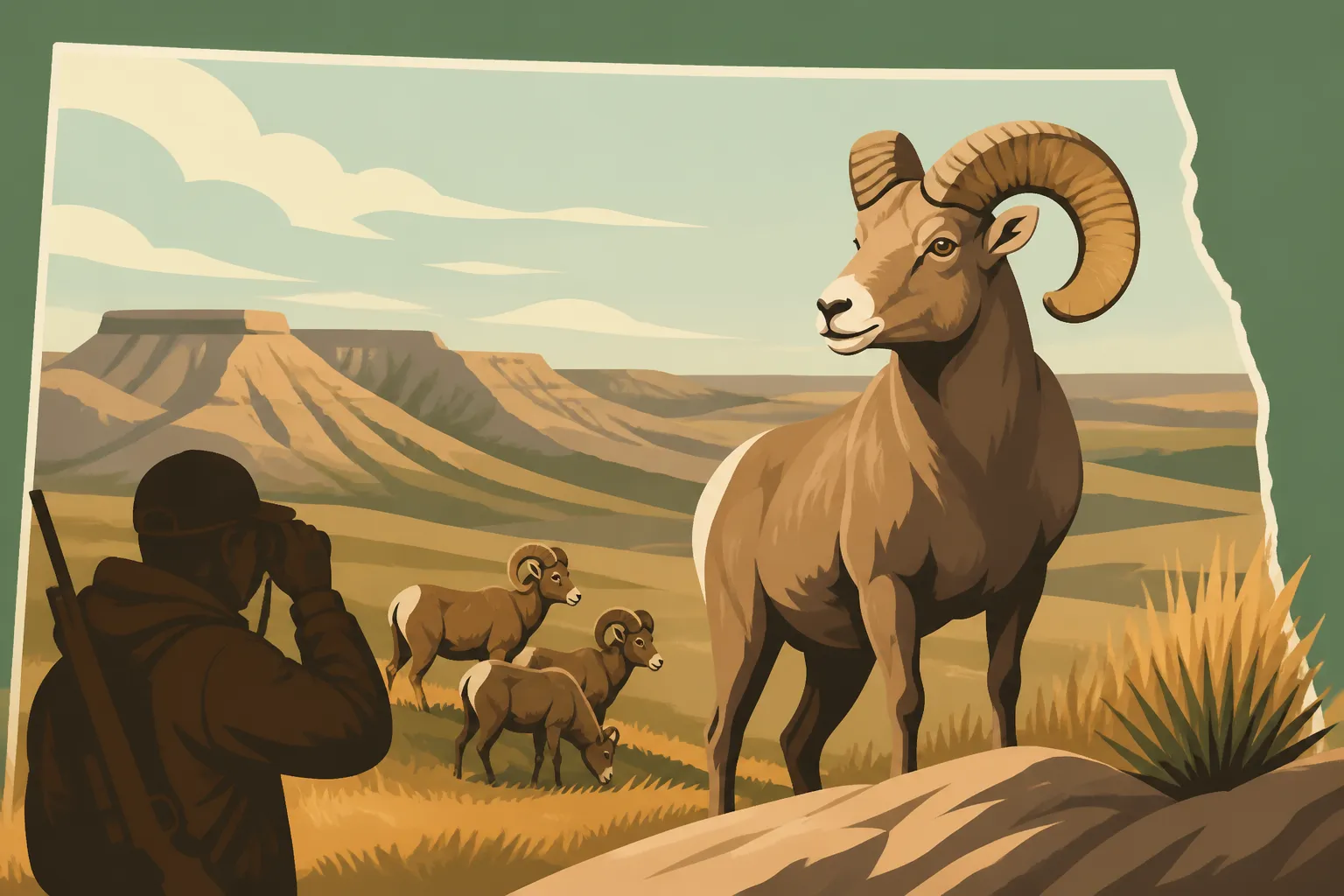
Imagine standing on a windswept rimrock, glassing across an expanse of deeply eroded badlands, knowing that somewhere in that stark, beautiful wilderness, a massive ram might be watching you from a seemingly impossible perch. That's the allure of the bighorn. These animals thrive in the steepest, most broken country, effortlessly navigating cliffs and coulees that would challenge even the most experienced human climber. The sheer physical demand of the hunt, combined with the bighorn's incredible adaptability and elusive nature, elevates it beyond a simple harvest; it becomes an immersive wilderness experience. Unlike hunting deer in a shelterbelt or pheasants in a field, a bighorn hunt is an odyssey into a primal landscape, testing every fiber of a hunter's being. It truly is a pursuit that becomes a story, a memory etched deeply into one's soul.
The North Dakota Badlands, with their dramatic buttes, deep canyons, and sparse vegetation, provide a breathtaking backdrop for these iconic creatures. Hunting here means embracing the wild, understanding the wind, and reading the subtle signs of a landscape that demands respect. It's not just about the animal, but about the place itself, and the feeling of being completely immersed in one of the state's most unique and challenging environments. For those who yearn for a hunt where the journey is as significant as the destination, the bighorn hunt offers an unparalleled opportunity to connect with the raw beauty of North Dakota's wild places.
The Rarity of a North Dakota Bighorn Tag
Let's be real: actually drawing a North Dakota bighorn tag is like winning the super lottery. It's incredibly, almost impossibly, rare. The North Dakota Game and Fish Department (NDGFD) issues only a handful of tags each year, often just a single digit, and sometimes none at all, making it one of the most difficult big game tags to acquire anywhere in the country. This extreme scarcity contributes massively to the animal's mystique and the profound respect held for those fortunate enough to draw.
This rarity, while frustrating for eager hunters, is a crucial part of the herd's careful management. The NDGFD meticulously monitors the population of How Many Bighorn Sheep Live in North Dakota and allocates tags based on strict quotas to ensure the long-term health and growth of this fragile herd. Every tag is a testament to years of conservation effort, making each successful hunt a small victory for wildlife management. The sheer improbability of drawing means that simply applying, year after year, becomes a ritual for many, a hopeful gesture toward an almost mythical pursuit.
Given the almost infinitesimal odds, the few hunters who do draw a tag are faced with the hunt of a lifetime. The pressure is immense, but so is the dedication. These are not easy hunts; they require extensive physical preparation and often weeks of scouting to locate a mature ram in the vast, unforgiving Badlands. This isn't a hunt you just "go on" – it's an expedition, a deep dive into the most demanding aspects of hunting, all for an animal that represents a true North Dakota hunting pinnacle. For more details on the application process, you might find some interesting information in our guide on North Dakota's Once-in-a-Lifetime Big Game Licenses.
A Glimpse into the Bighorn's History in North Dakota
The presence of bighorn sheep in North Dakota is a story of loss and painstaking recovery, a testament to conservation efforts that brought these majestic animals back from the brink of extirpation. Understanding their history helps appreciate just how precious the current herd truly is.
From Extirpation to Reintroduction Efforts
Historically, bighorn sheep roamed the rugged Badlands of western North Dakota. However, by the early 1900s, habitat destruction, unregulated hunting, and perhaps most devastatingly, diseases introduced by domestic sheep led to their complete disappearance from the state. For decades, the North Dakota Badlands, while seemingly perfect bighorn country, lay empty of these magnificent animals. It was a stark reminder of humanity's impact on wild populations.
Thankfully, the dream of seeing bighorns return to North Dakota never died. In the late 1950s, the NDGFD embarked on ambitious reintroduction efforts. The first attempts involved translocating California bighorn sheep from British Columbia, Canada, to the Badlands. Later, additional animals, including Rocky Mountain bighorns, were brought in from states like Montana and Alberta. These reintroductions were not without their challenges. The sheep faced harsh North Dakota winters, new predators, and, crucially, continued vulnerability to pneumonia from domestic livestock, which can decimate a herd. Each successful transplant was a small victory, a flicker of hope for the species' future in the state. You can find more information about these specific animals and their population in our article North Dakota's Once-in-a-Lifetime Moose Herd.
The Current Status of the Herd and Management
Today, North Dakota's bighorn sheep herd is small but stable, primarily concentrated in the highly rugged and remote areas of the Badlands west of the Little Missouri River. The herd fluctuates, of course, but it's a testament to decades of careful management that they persist at all. The NDGFD conducts regular surveys, often using aerial counts, to monitor population numbers, lamb recruitment, and overall herd health. This data is critical in making informed decisions about hunting quotas and conservation strategies.
Disease remains a significant threat, particularly pneumonia, which can spread rapidly through a herd and cause substantial die-offs. The NDGFD works closely with private landowners to manage potential contact between wild bighorns and domestic sheep, mitigating the risk of disease transmission. Predator control, while not a primary management tool, is also a consideration in certain areas where coyote or mountain lion predation might impact lamb survival. Overall, the management strategy is one of cautious growth and protection, recognizing the inherent fragility of a small, isolated population. This careful stewardship is why we have the privilege of discussing Where North Dakota's Bighorn Herd Ranges today.
Where North Dakota's Bighorn Sheep Roam
The Badlands of North Dakota aren't just a pretty place; they're an ecological masterpiece, a geological marvel sculpted by wind and water over millennia. For bighorn sheep, this rugged landscape is more than home—it's their fortress, providing the essential elements for survival in a challenging world.
The Rugged Badlands as Prime Bighorn Habitat
When you picture bighorn country, you often think of towering Rocky Mountains. But North Dakota's Badlands, while smaller in scale, offer an equally challenging and critical habitat. The bighorns here prefer the incredibly steep, broken topography characterized by deep, narrow coulees, towering buttes, and dramatic rimrock ledges. This isn't flat prairie land; it's a labyrinth of exposed rock, shale, and sparse vegetation, where every step can be a test of balance and nerve. These vertical elements provide critical escape terrain, allowing them to quickly evade predators like coyotes and even mountain lions, scrambling to heights where their pursuers simply cannot follow.
These areas are typically found along the Little Missouri River Breaks and its numerous tributaries. The constant erosion carves out these dramatic features, exposing minerals and creating a diverse mosaic of short grasses, forbs, and scattered junipers that provide both forage and limited cover. While the vegetation might seem sparse to the untrained eye, bighorns are expert foragers, making the most of every available plant. This unique blend of escape cover and food resources makes the North Dakota Badlands an ideal, albeit demanding, home for these specialized mountain dwellers. Exploring these areas requires an understanding of the terrain, much like what is needed when Hunting the North Dakota Badlands for other species.
Key Factors Influencing Bighorn Distribution
Beyond the obvious need for rugged terrain, several other factors heavily influence where bighorn sheep will establish themselves and move within the Badlands. Forage availability is paramount; while tough, these sheep need a consistent supply of grasses and forbs to sustain themselves, particularly during gestation and lambing. Areas that offer a variety of nutritious plants throughout the seasons are highly prized. Water sources, especially in the often-arid Badlands, are equally crucial. Natural springs, seepages, and occasional stock ponds provide the hydration necessary for survival, particularly for ewes and lambs during the hot summer months.
Winter severity plays a huge role too. Deep snow can cover critical forage, making it difficult for sheep to feed, leading to stress and higher mortality rates. Conversely, a mild winter can mean better survival and stronger lamb crops, contributing to herd growth. The NDGFD monitors these conditions closely, understanding their direct impact on the population. While human disturbance in these remote areas is minimal, the sheep are still sensitive to persistent intrusion. Their keen eyesight and instinct for self-preservation mean they'll quickly move away from areas with frequent human presence, choosing the most secluded and inaccessible parts of their range. This innate wariness is part of what makes spotting Pronghorn Hunting Western North Dakota or even a big mule deer buck in the Badlands so challenging.
The Highly Coveted North Dakota Bighorn Tag Lottery
The journey to hunt a North Dakota bighorn sheep invariably begins with the application process, a hopeful ritual for many, yet a successful outcome for very, very few. It’s a lottery in the truest sense of the word, embodying the phrase “once-in-a-lifetime” with extreme prejudice.
Understanding the "Once-in-a-Lifetime" Rule
North Dakota's bighorn sheep tags fall under a strict "once-in-a-lifetime" rule. This means that if you are lucky enough to draw a tag and harvest a bighorn ram in North Dakota, you can never apply for or receive another bighorn tag in the state again. This rule is in place to give every eligible hunter a theoretical chance at this incredibly rare opportunity, ensuring that the few available tags are distributed as broadly as possible over time. It underlines the sheer scarcity of the resource and the immense value placed on each animal and each hunting opportunity.
The application period for these tags typically runs alongside other big game applications, usually in the spring. Hunters must submit their applications by the specified deadline, often in early June, to be included in the drawing. There are strict eligibility requirements, and only residents are typically allowed to apply for these tags, reflecting the state's prioritization of its own citizens for such limited and valuable opportunities. This is similar to the restrictions you'll encounter for species like elk and moose, as detailed in our guide Why Elk, Moose and Pronghorn Stay Resident-Only. For this reason, non-residents often find themselves admiring these animals from afar, or waiting for a chance at a different, less restricted species.
Navigating the Application Process and Odds
Applying for a North Dakota bighorn sheep tag, while simple in its mechanics, is a lesson in patience and managing expectations. You fill out the application, pay the non-refundable application fee, and then you wait. The draw results are usually announced in the summer, and for the vast majority of applicants, the news is a polite refusal. To give you an idea of just how stacked the odds are, let’s consider a comparison with other "once-in-a-lifetime" species in North Dakota:
| Species | Typical Tags Issued Annually | Resident Application Odds (Approximate) | Nonresident Eligibility |
|---|---|---|---|
| Bighorn Sheep | 5-7 | Extremely low (e.g., 1 in 10,000+) | No |
| Moose | 100-200 | Very low (e.g., 1 in 200-500) | No |
| Elk | 500-1000 | Low (e.g., 1 in 50-100) | No |
| Pronghorn | Varies, often 1000-2000 | Moderate (e.g., 1 in 10-20) | No |
(Note: These figures are illustrative and vary significantly year to year based on population surveys and management goals. Always check the current North Dakota Game and Fish Department regulations for exact numbers and specific North Dakota Bighorn Sheep Lottery Application Process details.)
As you can see, bighorn sheep stand out as having the lowest odds by a significant margin. Tools like GoHunt can be invaluable for hunters interested in these low-odds draws, providing detailed historical data on drawing odds, unit breakdowns, and application strategies that, while not guaranteeing success, can help inform your approach. For the bighorn, however, it's mostly about consistently putting in for the draw and hoping for that one miracle year. Don't be discouraged; just understand that it's a marathon, not a sprint, and every year you apply builds towards that almost mythical possibility of being one of the chosen few.
Strategies for a Potential Bighorn Hunt
If the unimaginable happens, and you're holding a North Dakota bighorn sheep tag in your hand, congratulations! Now the real work begins. This isn't a walk in the park; it's a physically demanding, mentally taxing hunt in some of the state's most challenging terrain. Preparation and strategy are everything.
Scouting and Preparation for Badlands Terrain
The North Dakota Badlands are beautiful, but they are unforgiving. A bighorn hunt requires peak physical condition. You'll be traversing steep, broken country, climbing rocky slopes, and descending into deep coulees, often carrying heavy gear. Before you even think about the hunt, start a rigorous physical training regimen. Focus on cardiovascular endurance, leg strength, and balance. Many hunters underestimate the physical toll of Elk Hunting North Dakota's Badlands, and bighorn country is often even steeper.
Pre-season scouting is paramount for success, possibly even more so than the hunt itself. Bighorn sheep typically occupy specific areas within the Badlands, often tied to certain escape terrain or water sources. Use aerial maps and satellite imagery (GoHunt is excellent for this) to identify potential sheep habitat, glassing points, and access routes. Spend as much time as possible in the field before the season opens, glassing from vantage points for hours, days, even weeks. Locate areas with sheep, identify potential rams, and observe their movement patterns. Understanding the wind and thermals in Badlands terrain is also crucial; early morning thermals often rise, while evening thermals fall, which can impact your approach. This dedication to preparation and familiarity with the landscape will be your greatest asset.
Spot-and-Stalk Tactics in Steep Country
Once you're in the field with your tag, the primary hunting method for North Dakota bighorns will be spot-and-stalk. This involves patiently glassing vast expanses of terrain from a high vantage point, spotting sheep, evaluating rams for size and legality, and then planning an intricate stalk to get within shooting range. Good optics – powerful binoculars, a high-quality spotting scope, and a sturdy tripod – are non-negotiable. Spend more time glassing than walking; let your optics do the work of finding the sheep.
When you've spotted a ram and decided to make a move, the stalk itself will be a grueling chess match against the sheep's incredible eyesight and the challenging terrain. Use every fold in the land, every juniper bush, and every shadow to your advantage. Move slowly, deliberately, and always be aware of the wind direction. Getting into position often means navigating steep, loose shale slopes or scrambling across narrow ledges. Remember that these sheep are masters of their environment, and they know every escape route. A successful stalk might take hours, cover miles, and involve multiple re-evaluations of your approach. Patience, stealth, and a deep respect for the animal and its incredible home are the hallmarks of a successful bighorn hunter. It's a true test of a hunter's skill and resolve, echoing the challenges faced when Spotting Pronghorn on North Dakota's Open Prairie, but with significantly more verticality.
Conservation and the Future of North Dakota Bighorns
The continued existence of North Dakota's bighorn sheep herd is a delicate balance of careful management, habitat protection, and the dedicated efforts of conservationists and hunters alike. Their future is not guaranteed, but there is hope for these iconic animals.
The Role of Hunter Dollars in Conservation
It's a fact often overlooked by those outside the hunting community: hunters are among the most significant contributors to wildlife conservation. The non-refundable application fees and, for the lucky few, the cost of a bighorn sheep tag directly fund the very programs that support this herd. These dollars go towards aerial surveys, disease monitoring, habitat improvement projects, research into bighorn genetics, and efforts to mitigate threats. It's a cyclical relationship: hunters provide the financial backbone, and in return, well-managed wildlife populations thrive, providing opportunities for future generations.
Beyond license fees, many conservation organizations, often supported by hunters, actively contribute to bighorn conservation. These groups partner with state agencies on habitat restoration, land acquisition, and crucial research initiatives. For instance, understanding the specific North Dakota bighorn reintroduction history of this herd is a direct result of ongoing research fueled by these funds. Every applicant, successful or not, plays a part in this vital conservation work, demonstrating a commitment to preserving these magnificent animals for the benefit of all.
Challenges and Hope for Herd Expansion
Despite the successes, North Dakota's bighorn herd faces ongoing challenges. Disease, particularly pneumonia, remains the most significant threat. A single outbreak can wipe out a substantial portion of the herd, setting back years of conservation effort. Habitat fragmentation, though less severe in the Badlands, is also a concern, as is maintaining genetic diversity within such a small population. Harsh winters can also take a toll, especially on younger animals and older rams. These factors mean that the herd's growth is often slow and precarious.
However, there is always hope. The NDGFD, with its dedicated biologists, continues to explore strategies for herd expansion, including potential future reintroduction sites in suitable, disease-free habitats. Advances in veterinary science and habitat management techniques offer new tools to protect and grow the herd. As long as there are passionate individuals willing to invest their time, effort, and resources, the future of North Dakota's bighorn sheep, while always a challenge, holds the promise of continued presence in the state's wild western landscapes. The dream of a Moose and Bighorn Sheep Hunting in North Dakota experience continues to inspire this vital work.
Disclaimer
This article is for general informational purposes only and does not constitute professional advice. Laws, prices and regulations vary by location and change over time. Consult a qualified professional for guidance on your specific situation.