Finding PLOTS Ground Others Walk Past
It's incredibly frustrating, isn't it? You spend hours poring over maps, driving out to a promising PLOTS tract, only to arrive and see a string of trucks already parked along the road. It feels like every good spot is instantly overrun. But the truth is, many hunters stick to the most obvious access points, leaving fantastic, less-pressured ground just a little further off the beaten path. This guide is all about equipping you with the strategies and mindset to find those hidden gems and truly unlock the potential of North Dakota's vast public hunting opportunities.
Understanding the "Walk Past" Mentality of Hunters
Before we can find the ground others miss, we need to understand why they miss it. It’s not always about laziness; sometimes it’s a simple lack of awareness or a reliance on familiar patterns. Unpacking this mindset will give you a significant advantage in discovering less-pressured areas.
The Allure of Easy Access
Let’s be honest, hunting can be hard work. After a long drive, the temptation to park, grab your gear, and head into the first patch of cover you see is incredibly strong. Many hunters prioritize convenience, especially for a quick morning or evening sit. This often means they'll focus on areas easily visible from the road, spots with designated parking areas, or the first prominent shelterbelt or slough edge encountered right after crossing the fence.
This "easy access" mentality creates predictable patterns. If you pull up to a PLOTS sign and there's a well-worn path leading straight into a stand of trees fifty yards from your truck, you can bet that path sees a lot of traffic. Deer, pheasants, and other game animals are intelligent creatures. They quickly learn to avoid these high-traffic corridors and retreat into less disturbed areas. This behavior is key to understanding where to look for those overlooked spots. They aren't necessarily "bad" spots, but they are often "over-hunted" spots, especially during peak times like opening weekend or during the rut.
How Hunter Pressure Changes PLOTS
Hunter pressure isn't static; it ebbs and flows throughout the season, on different days of the week, and even at different times of the day. Early in the season, particularly for species like deer, birds often aren't as wary. As soon as the season opens, however, and especially after the initial weekend rush, game animals quickly become educated. They learn to associate human presence with danger.
This means that a PLOTS tract that might have held a good number of deer in September could be practically empty during the November gun season if hunters are constantly pushing through the easily accessible areas. The game doesn't disappear entirely, though. Instead, it gets pushed into the thickest, nastiest, or most remote cover available on that tract, or it simply moves off the PLOTS entirely to nearby private ground that sees less pressure. Understanding this dynamic is crucial. If you’re willing to put in the effort to get past the initial wave of hunters, you’ll often find the game waiting for you. This adaptation is why knowing Hunting Pressure on North Dakota Public Land is so vital for planning your strategy.
Leveraging Technology and Topographic Nuances
In today's hunting world, technology isn't just a convenience; it's an indispensable scouting tool. Modern mapping applications, paired with a keen eye for terrain, can reveal incredible opportunities that are completely invisible from the road.
Using Mapping Apps to Uncover Hidden Gems
Gone are the days of relying solely on paper maps, though they still have their place. Today, apps like onX Hunt or GoHunt are absolute game-changers for identifying overlooked PLOTS ground. These tools offer a treasure trove of information at your fingertips. Start by layering public land boundaries over detailed satellite imagery. Look for those blue and yellow PLOTS signs on the map, but then zoom in, way past where most people stop looking.
What are you looking for? Small pockets of cover, fingers of timber, or isolated sloughs that are a significant distance from any road or obvious access point. Pay close attention to contour lines; subtle changes in elevation, even just a few feet, can create natural funnels or hidden bedding areas. For example, a small rise might offer a deer a vantage point, while a depression could shield them from the wind and other hunters. The ability to switch between satellite views (which show vegetation) and topographic maps (which show elevation) in apps like GoHunt allows you to synthesize this information and identify potential travel routes and bedding cover that a quick drive-by wouldn't reveal. Remember to download your maps for offline use, especially since Using the PLOTS App Without Cell Service can be a reality in many rural North Dakota areas.
The Power of Aerial Reconnaissance
Think of yourself as a drone pilot, soaring high above the landscape. Aerial photos, readily available through your mapping apps, are your secret weapon. Most hunters drive by and only see what's immediately visible. You, on the other hand, can see the entire puzzle.
Look for areas that appear thicker or more isolated. Are there unharvested corners of fields that might offer late-season cover? Are there small, often overlooked shelterbelts that don’t extend all the way to a road? Sometimes, a PLOTS tract might have a small, dense woodlot tucked away behind a larger, more open field. From the road, this woodlot might appear insignificant or even nonexistent, but from above, its value as a secluded bedding or staging area becomes clear. Pay attention to how different types of cover connect – a thin line of brush linking two larger blocks of timber could be a natural travel corridor that sees little human disturbance. This aerial view helps you identify these subtle connections, guiding you to potential entry routes through standing sunflowers or other crops where game might feel safe.
Reading Terrain for Overlooked Holding Spots
North Dakota's landscape, while often appearing flat, is full of subtle terrain features that game animals exploit for cover and safety. Knowing how to read these features on a map and in person is paramount. Coulees and draws, even small ones, offer excellent protection from wind and can serve as natural travel routes. Look for points where these draws intersect or where they open into larger fields; these can be prime ambush locations or staging areas.
Prairie potholes, those iconic wetlands, often have thick, un-mowed edges of cattails and reeds that provide incredible thermal and visual cover, especially for pheasants and deer. While many hunters might focus on the main body of a large slough, often the smaller, brushier satellite potholes or even just a thick edge along a ditch can hold game. Think about the path of least resistance for game movement. A slight bend in a river bottom, a clump of mature trees surrounded by open prairie, or even an abandoned farmstead on a PLOTS tract can provide the perfect amount of seclusion. This is particularly relevant when you're Hunting a North Dakota Prairie Pothole Slough Edge, where the real action might be just out of sight from the commonly accessed areas.
Boots-on-the-Ground Scouting Strategies
Technology gets you close, but nothing replaces putting boots on the ground. This is where you confirm your hypotheses from the maps and discover the nuanced details that only direct observation can provide.
Pre-Season Scouting Beyond the Obvious
The best time to find overlooked PLOTS ground is before the season even opens. While most hunters are working their regular honey holes, you should be exploring those spots you identified on your mapping app. Walk the extra distance, even if it feels tedious. You'll often find that 200 yards from the road, the deer sign suddenly becomes fresher, the pheasant tracks more abundant, and the overall feel of the woods or prairie is less disturbed.
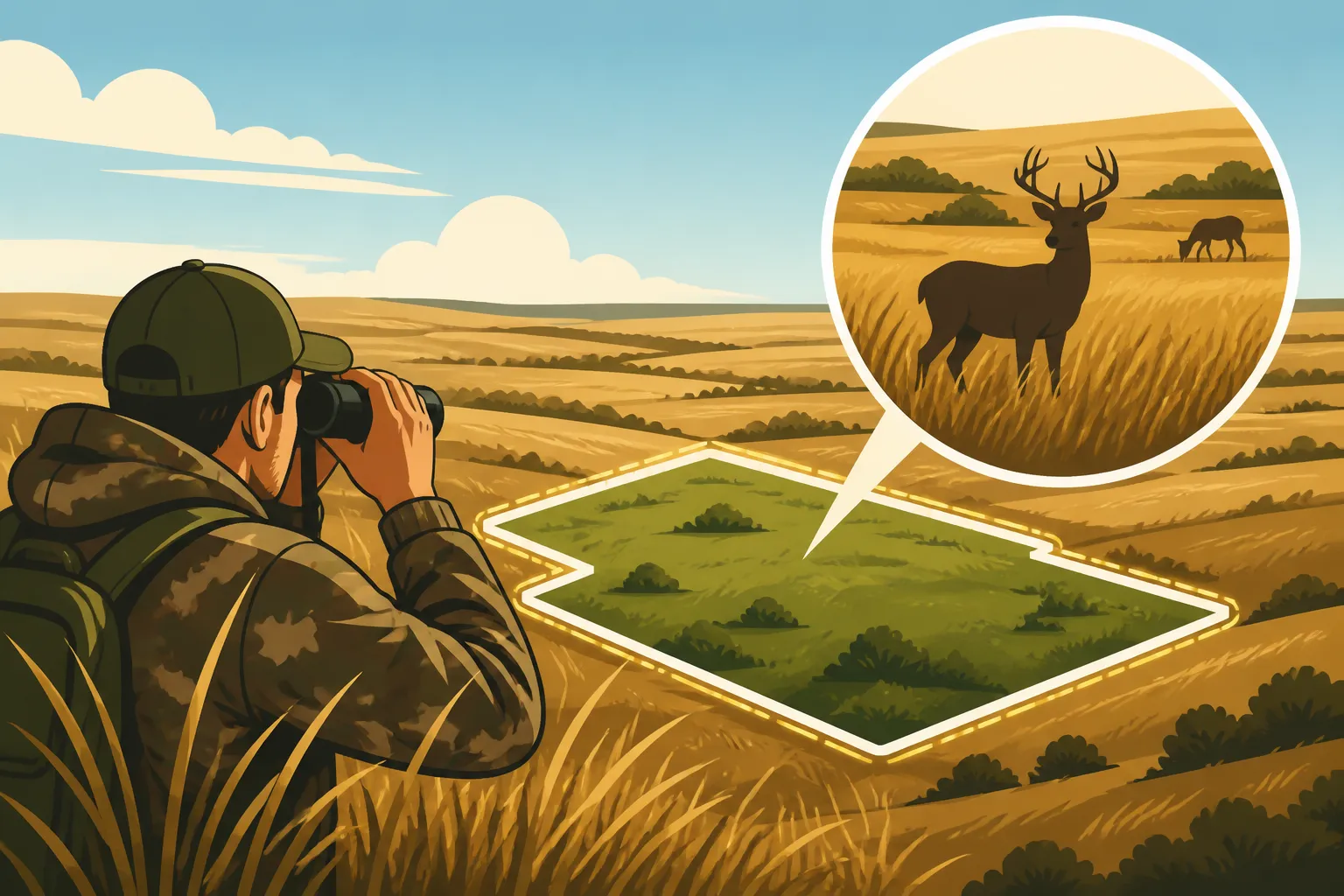
Look for old rubs, established scrape lines along a section line trail, and well-used trails that seem to vanish into thick cover. These are indicators that game is regularly using these areas when undisturbed. Pay attention to natural pinch points formed by terrain or changes in vegetation. Glass from elevated positions (if available) to observe the full expanse of the PLOTS tract and surrounding areas. This pre-season work allows you to pinpoint those secure zones where game will retreat once hunting pressure increases. Don't be afraid to truly explore; Scouting PLOTS Land Before Season is an investment that pays dividends.
In-Season Adaptations and Patience
Once the season is underway, your scouting shifts from finding where the game might be to where it is right now, given current pressure and conditions. If you show up to a PLOTS tract and see other vehicles, don't automatically assume the whole area is "burned out." Instead, use that pressure to your advantage. If hunters are pushing through the easily accessible areas, the game is likely moving deeper into the cover you scouted. This is where your willingness to walk How Far to Walk From a Section Road really comes into play.
Consider hunting during the middle of the day, especially for deer. Many hunters head out at first light and are back by mid-morning. The midday hours, particularly on cold, windy, or snowy days, can be incredibly productive as deer are often up and moving between bedding and feeding areas, or simply repositioning themselves in response to earlier pressure. For pheasants, if the easily accessible strips of cover are being walked hard, focus on the densest, nastiest patches – cattails, multiflora rose thickets, or deep sloughs – especially later in the day when birds are looking for secure roosting cover. Reading North Dakota mud for fresh deer movement after a rainfall can also give you current intelligence on where animals are traveling.
Practical Tips for Deeper PLOTS Penetration
It's one thing to identify overlooked areas; it's another to effectively hunt them. Deeper penetration into PLOTS ground requires the right gear, the right mindset, and a commitment to stealth.
Gear Up for the Long Haul
Venturing beyond the easily accessible spots means you need to be prepared. Your pack should include essentials for an extended stay away from your vehicle. Hydration is key, so carry enough water, even in cold weather. Snacks like energy bars or trail mix will keep your stamina up. A good GPS unit or a fully charged smartphone with your mapping app (like GoHunt) is non-negotiable for navigation, especially when you're deep in cover or traversing unfamiliar terrain. A small first-aid kit, a headlamp, and a knife are always prudent additions.
Footwear is paramount. Invest in comfortable, sturdy, waterproof boots that can handle mud, snow, and rough terrain. Nothing saps your will to push further like blisters or wet feet. Dressing in layers allows you to adapt to changing North Dakota weather conditions. Most importantly, ensure your clothing is quiet. Brush busting through heavy cover with noisy fabrics can alert game long before you ever get close.
Minimizing Your Impact and Maximizing Stealth
The further you go, the more critical stealth becomes. Every step you take, every rustle of clothing, every spoken word carries further in quiet conditions. Always pay attention to the wind direction. Approach your desired hunting area from a downwind or crosswind angle, especially for deer. For pheasants, use the wind to carry your scent away from the birds, or approach into the wind if you're trying to push them towards blockers.
Scent control is also important, even if you’re just pheasant hunting, as deer or other animals may be bedded in the same cover. Using scent-reducing sprays or storing your hunting clothes separately can make a difference. When moving through thick cover, take your time. Move slowly, deliberately, and quietly. Use natural contours and vegetation as cover to break up your silhouette. Remember, the goal is to get into those overlooked areas without alerting the game that has sought refuge there. This careful approach to entry routes through standing sunflowers or dense cattails is what separates successful hunters from those who just push game out.
| Feature | Easy-Access PLOTS Ground (Often Over-Hunted) | Overlooked PLOTS Ground (Less Pressure) |
|---|---|---|
| Location | Adjacent to roads, clear parking areas, visible from public access | Remote from roads, hidden behind other features, requires longer walk |
| Hunter Traffic | High, especially weekends and early season | Low, often only visited by dedicated, deeper-walking hunters |
| Game Behavior | Wary, nocturnal, quick to flee, often pushes to private land | Less wary, more natural movement patterns, uses cover more confidently |
| Cover Type | Often visible, smaller, less dense, frequently disturbed | Thick, dense, isolated pockets, larger undisturbed sections, diverse |
| Scouting Method | Drive-by observations, quick walk-ins | Detailed map study (GoHunt, onX), extensive pre-season foot scouting |
| Effort Required | Minimal physical exertion | Significant physical exertion, comfortable with navigation and solitude |
| Success Potential | Hit-or-miss, dependent on luck or specific times/conditions | Higher, more consistent potential due to reduced pressure |
Disclaimer
Hunting is an inherently dangerous activity. Always prioritize safety, adhere to all North Dakota Game and Fish Department regulations, and respect private property boundaries. This guide is for informational purposes only and does not substitute for proper hunter education or in-field experience. Always inform someone of your hunting plans and expected return time, especially when venturing into remote areas.