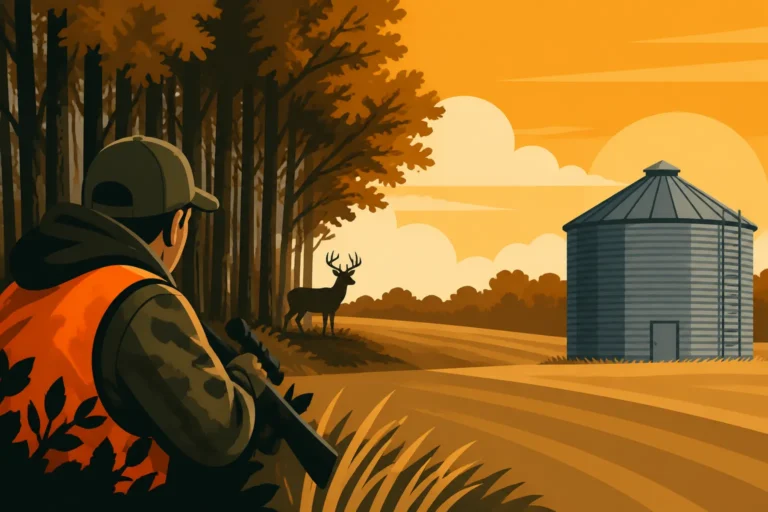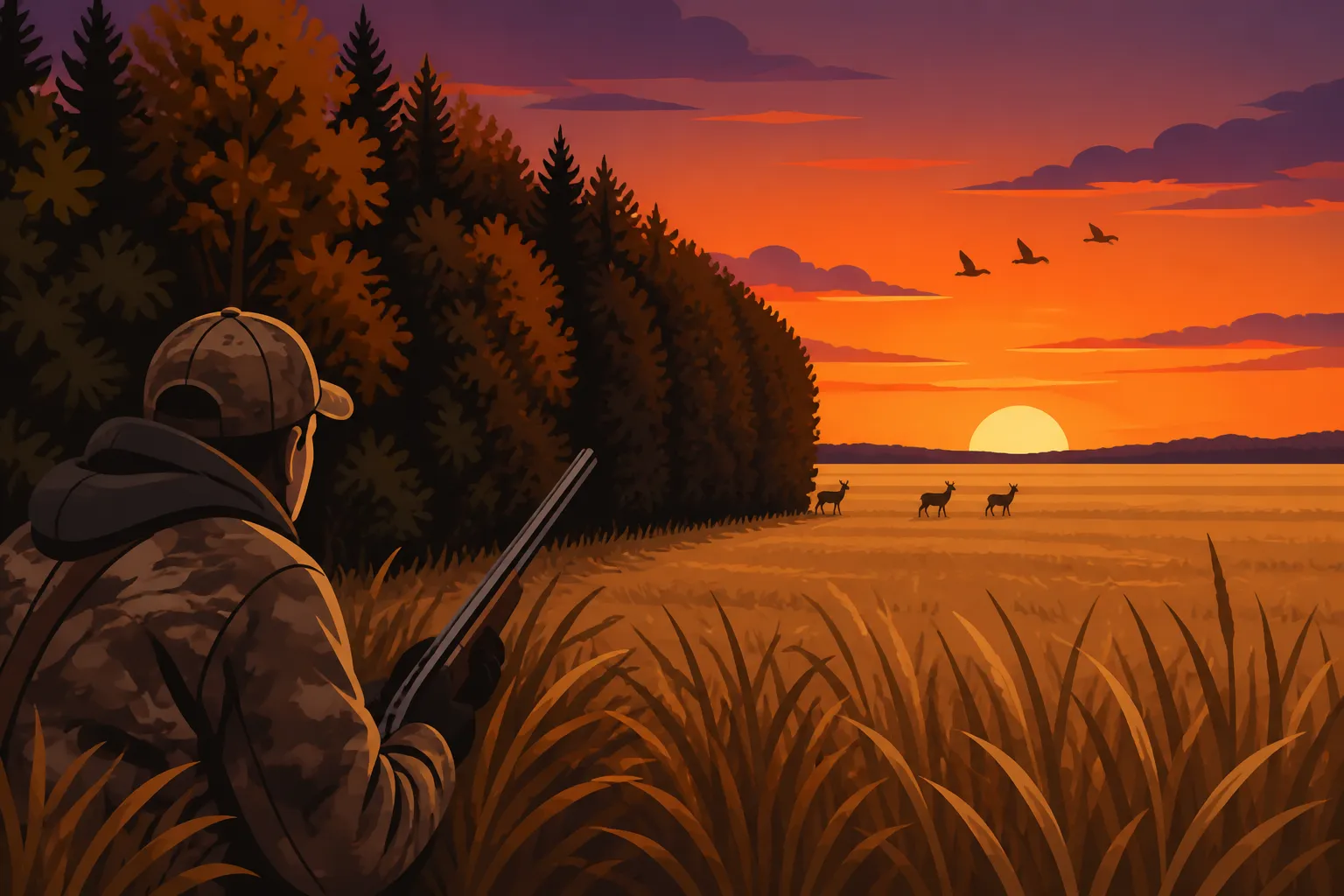
Hunting a Shelterbelt Corner at Dusk
There’s nothing quite like the fading light of a North Dakota evening, especially when you’re nestled into a prime spot, hoping to catch a whitetail deer making its move. One of the most consistently productive locations for this golden hour action is the corner of a shelterbelt, yet many hunters struggle to pinpoint the exact setup that leads to success. This comprehensive guide will walk you through everything you need to know to effectively hunt a shelterbelt corner at dusk, transforming missed opportunities into memorable encounters.
Understanding Deer Movement at Dusk Around Shelterbelts
Shelterbelts, those linear strips of trees planted to break the relentless prairie wind, are absolute magnets for deer in North Dakota. They offer critical resources that deer seek, especially during the low light hours of dusk. Understanding why deer use them and how their patterns shift as evening approaches is the first step toward a successful hunt.
Why Shelterbelts are Deer Magnets
Imagine a deer trying to survive on the open prairie. It needs cover from predators and the elements, food sources, and safe travel routes. Shelterbelts provide all of this in spades, acting as vital oases in a landscape that can often feel barren. These tree lines, often composed of a mix of conifers and deciduous trees, offer dense thermal and visual cover from harsh winter winds and the prying eyes of hunters. They're like natural highways, allowing deer to move between bedding areas and feeding grounds with a sense of security they wouldn't find traversing wide-open fields.
Furthermore, shelterbelts often adjoin agricultural fields, which are primary food sources. Deer will bed down deep within the thicker sections of the belt or in nearby pockets of tall grass, waiting for the evening to approach before venturing out to feed. The corners, in particular, serve as critical transition points. They are often the first place deer will stage before stepping out into a field, offering a brief moment of comfort and a chance to survey their surroundings before committing to the open. This edge habitat also provides a variety of browse, such as young saplings and brush, which adds another layer of attraction for whitetails.
The Golden Hour: Peak Movement Patterns
Dusk, often referred to as "the golden hour" by hunters, is when the magic truly happens around shelterbelts. As the sun dips below the horizon, and the light begins to soften, deer activity typically ramps up significantly. This is when their nocturnal feeding patterns begin to override their daytime bedding instincts. The shift in light and temperature provides a sense of security, allowing deer to move with more confidence.
During this time, the thermals, or air currents, often begin to drop, carrying scent downwards and along the terrain. This can work to your advantage if you're set up correctly, as deer will often move with the wind in their face, trying to scent check for danger. However, it also means your scent is likely dropping and spreading, so impeccable scent control is paramount. Deer will typically emerge from their bedding areas in a shelterbelt or nearby cover, pause at the edge or corner, and then head out into fields of corn, soybeans, or winter wheat. They're often on a mission to fill their bellies before returning to cover as darkness fully settles. Knowing this predictable pattern allows you to strategically place yourself to intercept these moving animals as they begin their evening routine.
Scouting and Setting Up Your Ambush in Shelterbelt Corners
Successfully hunting a shelterbelt corner at dusk isn't just about showing up; it's about meticulous scouting and precise setup. You need to know where deer are traveling, how they're using the corner, and how to position yourself without blowing your cover or your scent.
Identifying the Prime Corner
Not all shelterbelt corners are created equal. The "prime" corner is the one that shows consistent, fresh sign of deer activity. This means getting out there and putting in the legwork before the season, or at least before your hunt. Look for well-worn trails leading into and out of the corner, indicating regular travel. Pay close attention to fresh tracks in the mud or soft soil, and note their direction. Are they heading toward a specific field? Are bucks using a particular side of the shelterbelt?
Scrapes and rubs are also invaluable indicators. A fresh scrape under an overhanging branch near a corner means a buck is actively marking his territory and will likely return. Rubs on small trees or saplings along the edge show where bucks have been demonstrating their dominance. Additionally, consider the wind. Deer almost always approach open areas with the wind in their face to detect danger. So, if you plan to hunt a corner when the wind is out of the west, you'll want to find a corner where deer might approach from the east or north, moving into the wind.
This is where modern tools really shine. Apps like GoHunt offer incredible satellite imagery and topographical maps, allowing you to "scout" from home. You can identify shelterbelts that connect prime bedding areas (often thicker timber or heavy brush) to known food sources (agricultural fields, food plots). Use the mapping features to mark potential bedding spots, likely travel corridors, and those all-important corners. The ability to overlay public land boundaries, such as PLOTS land, also helps immensely in finding accessible, promising locations. By studying these maps, you can narrow down your physical scouting efforts to the most promising corners. You might even find where to hang a camera on a section line to get real-time intel.
Stand Placement and Wind Considerations
Once you've identified a promising corner, the next critical step is stand placement. This needs to be done with extreme caution to minimize your impact on the area. The ideal spot allows you to intercept deer as they transition from cover to food, without them detecting your presence.
For tree stands, look for a mature tree that offers ample cover for concealment, both from the ground and from the angle deer will likely approach. You want to be high enough to break up your silhouette but not so high that you're silhouetted against the sky. Position your stand downwind or crosswind of the expected deer travel route, always prioritizing how your scent will carry. Remember, North Dakota's prairie winds can be unpredictable, especially around linear features like shelterbelts, causing swirling thermals at dusk. Understanding wind and thermals in Badlands terrain is one thing, but shelterbelts present their own challenges, often creating funnels and eddy currents. A slight elevation change, even just a few feet, can drastically alter how your scent travels. It's often better to be slightly off the primary trail but completely scent-free than directly on it with a questionable wind.
Ground blinds are another excellent option, especially if suitable trees are scarce or if you prefer a more concealed approach. Brush in your blind meticulously, making it a natural part of the landscape. Place it where it offers clear shooting lanes into the corner and along the anticipated travel routes, again, paying strict attention to the prevailing evening wind. Set it up well in advance of your hunt, if possible, to allow deer to get accustomed to its presence. Whether you're hanging a stand on a shelterbelt edge or using a ground blind on PLOTS land, remember that minimizing your presence during setup is key. Approach quietly, work efficiently, and leave as little scent as possible.
Tactics for a Successful Dusk Hunt at a Shelterbelt Corner
With your scouting done and your stand perfectly placed, it’s time to talk about the actual hunt. Success at a shelterbelt corner at dusk often boils down to subtle tactics, patience, and knowing when and how to influence deer movement.
Entry and Exit Strategy
The hunt truly begins the moment you leave your vehicle. A poor entry can ruin your evening before you even get to your stand. Your goal is to approach your stand silently and without being detected by deer that may already be staging or moving nearby. Plan your entry route to be as unobtrusive as possible, using natural contours, ditches, or existing field edges to your advantage. Walk into the wind, if possible, or with a crosswind that pushes your scent away from where you expect deer to be.
Timing is also crucial. Arrive at your stand location well before the deer are expected to move – at least an hour or even two before sundown. This allows the woods to settle down after your disturbance and gives you time to get comfortable and quiet. As the light fades, stay alert. Deer often appear as ghosts from the thick cover, materializing without a sound. When the shot opportunity arises, take your time and make it count.
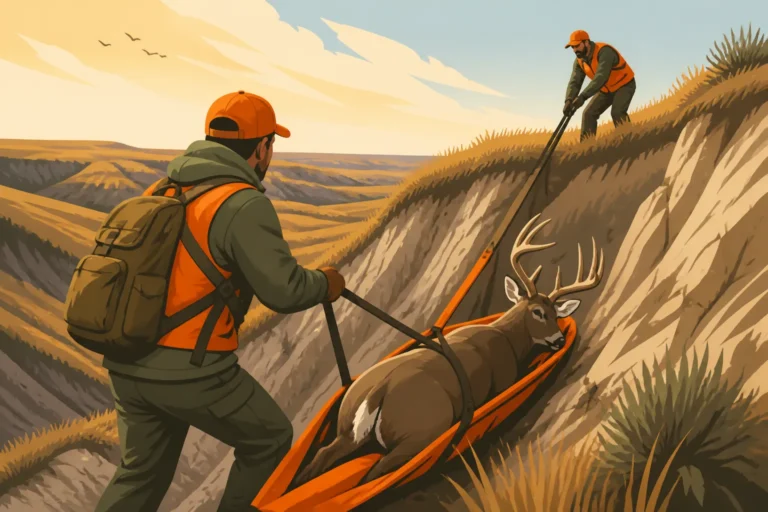
Exiting is just as important as entering, especially if you plan to hunt the spot again. Wait until it is completely dark and, if possible, after you're certain all deer have either passed by or moved out into the fields. Again, plan a quiet, scent-conscious exit route that minimizes disturbance to the area. If you've shot a deer, focus on a calm, quiet retrieve, and remember to track it carefully, especially if it's getting dark. Blood trailing after dark in North Dakota can be challenging, so always have a good light and a plan.
Calling and Decoying Strategies
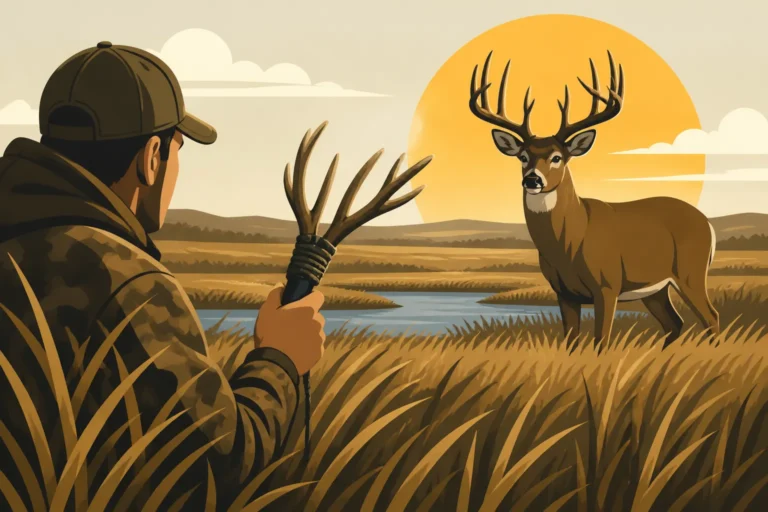
While shelterbelt corners are natural ambush points, you can sometimes enhance your chances with well-timed calling or decoying. For calling, subtle is often better, especially during the early and mid-season. A soft grunt call, mimicking a buck cruising or a doe calling for a fawn, can pique curiosity. If you're hunting during the rut in early-to-mid November, more aggressive tactics like rattling or tending grunts can be effective, especially if you see a buck at a distance. Just be mindful of the open prairie; rattling volume on the open prairie carries a long way, so adjust your intensity based on the conditions and the proximity of other hunters.
Decoys can also be highly effective, particularly a lone doe or a small buck decoy placed at the edge of the shelterbelt, facing the direction you expect deer to approach. The decoy acts as a visual magnet, drawing deer into closer range and potentially distracting them from your position. Place it far enough away from your stand that the deer's attention is on the decoy, not on you, but close enough for a clean shot. Always position your decoy downwind of your stand so that any approaching deer circle downwind to scent-check the decoy, bringing them into your shooting lane. Use a scent-free spray on your decoy to prevent any lingering human odor.
Remember, the goal isn't to force deer into the corner but to subtly influence their natural movement patterns. Don't over-call, and don't place your decoy in an unnatural position. When in doubt, let the natural draw of the shelterbelt corner and the deer's inherent desire to feed do most of the work for you.
| Feature | Tree Stand at Corner | Ground Blind at Corner |
|---|---|---|
| Concealment | Excellent vertical cover, breaks silhouette. | Excellent horizontal cover, full enclosure. |
| Setup Time | Can be quick if pre-hung, but safer to do in daylight. | Can be quick pop-up, but better to deploy weeks prior. |
| Scent Control | Elevated height helps, but wind swirls still a factor. | Enclosed space can contain some scent, but still critical. |
| Mobility | Limited once installed. | Portable options offer more flexibility. |
| Wind Considerations | Needs careful consideration of prevailing wind and thermals for elevated placement. | Still critical for placement, but offers more protection from direct wind. |
| Visibility | Broad view, but can be silhouetted against sky. | Restricted view, but excellent for close encounters. |
| Best Use | Intercepting deer moving along the shelterbelt. | Ambushing deer entering/exiting field at specific point. |
Dealing with the Unexpected: Weather and Hunting Pressure
Even with perfect scouting and setup, North Dakota hunting can throw you curveballs. Weather can change on a dime, and hunting pressure, especially on public land, can alter deer behavior significantly. Being prepared to adapt is crucial for success.
Adapting to North Dakota's Changing Weather
North Dakota's weather is notoriously fickle. A mild, calm evening can quickly turn into a blustery, bone-chilling cold snap, or even a sudden snowstorm. These shifts drastically impact deer movement and your hunting strategy.
For instance, a sudden cold front often gets deer on their feet earlier, especially if it's accompanied by clear skies after a period of warm weather. They'll be driven to feed more aggressively to maintain body heat. In these conditions, be in your stand even earlier and be prepared for increased activity. Conversely, heavy snow or bitter winds can keep deer bedded down longer, or cause them to move through thicker cover, making them harder to intercept at a corner. During a light snow, however, deer movement can be quieted, making them more difficult to hear but also less likely to hear you. They might also follow the path of least resistance, using plowed field edges or established trails more frequently.
Rain can also have a varied effect. A light drizzle might get deer moving, as it dampens human scent and sounds, providing them with a sense of security. A heavy downpour, however, will likely keep them hunkered down. Always dress for the weather and be prepared to sit through less-than-ideal conditions. If you're glassing for moose in river bottom willows or scouting PLOTS land before season, you'll know how quickly conditions can change. Having extra layers, hand warmers, and waterproof gear is non-negotiable for a late-season hunt into a December cold snap.
Navigating High-Pressure Areas
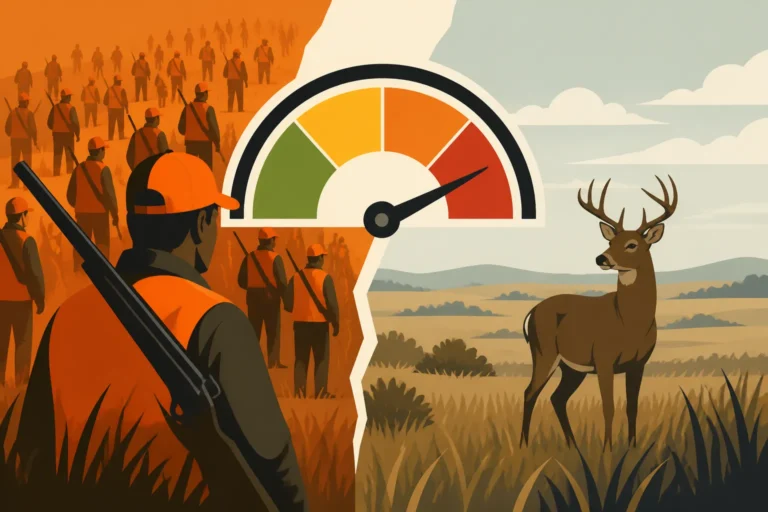
Hunting pressure, especially on popular public land (like certain PLOTS tracts), can make deer incredibly wary. A well-used shelterbelt corner can quickly become a ghost town if too many hunters are pushing through or setting up in predictable spots. Deer will adjust their patterns, moving more nocturnally or using less obvious routes to avoid human contact.
When you suspect high pressure, your best bet is often to go deeper or find less obvious access points. Use tools like the ND Hunt App or GoHunt's mapping layers to identify areas of PLOTS ground others walk past. This might mean walking an extra half-mile or more to reach a corner that sees less intrusion. Deer that are pressured will often hold tight in dense cover until absolute last light before slipping out to feed, or they might utilize interior sections of a shelterbelt rather than the exposed corners.
Consider trying different approach angles or even a different corner of the same shelterbelt. If deer are being pressured from the north, they might start using the south end of the shelterbelt as their primary entry/exit point. Sometimes, the most successful strategy in pressured areas is to focus on micro-terrain features within the shelterbelt itself, such as a small sag or a thick clump of brush, where deer feel more secure moving from one pocket of cover to another before making their final dash into the field. This also ties into finding sign along a shelterbelt.
Disclaimer
Hunting is an activity with inherent risks. Always prioritize safety, understand and follow all North Dakota hunting regulations, and obtain appropriate licenses and permits. This guide provides general advice and should not replace professional instruction or local expertise. Conditions and regulations can change, so always consult the latest North Dakota Game and Fish Department publications before heading into the field.