North Dakota Badlands Unit Antler Point Minimum
It's completely understandable to wonder about antler point minimums, especially when you're dreaming of those big Badlands bucks. Many states implement strict antler point restrictions (APRs) to manage their deer herds, aiming to let younger bucks walk and increase the chances of older, more mature deer. You might be envisioning a "four points on one side" rule or something similar, trying to wrap your head around what constitutes a legal buck in North Dakota's rugged western landscape. This guide will cut through the confusion, explaining North Dakota's specific definition of an "antlered deer" in the Badlands units and how it impacts your hunt, ensuring you're well-prepared for your next adventure.
Understanding North Dakota's "Antlered Deer" Definition
When you hear talk of antler point minimums, it’s often because hunters are used to regulations from other states or specific units where bucks must sport a certain number of points on an antler to be legal. However, North Dakota takes a slightly different, and perhaps simpler, approach, especially in the Badlands units. It's less about counting points and more about a fundamental definition of what qualifies as an "antlered deer" in the first place.
It's About Length, Not Points
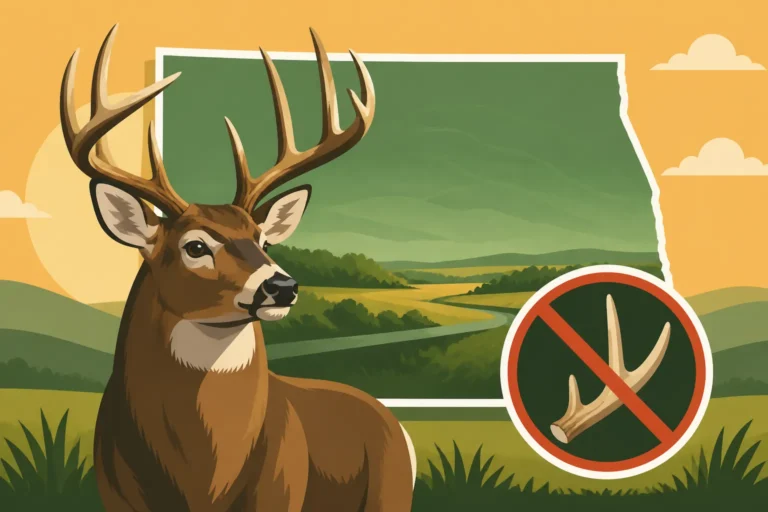
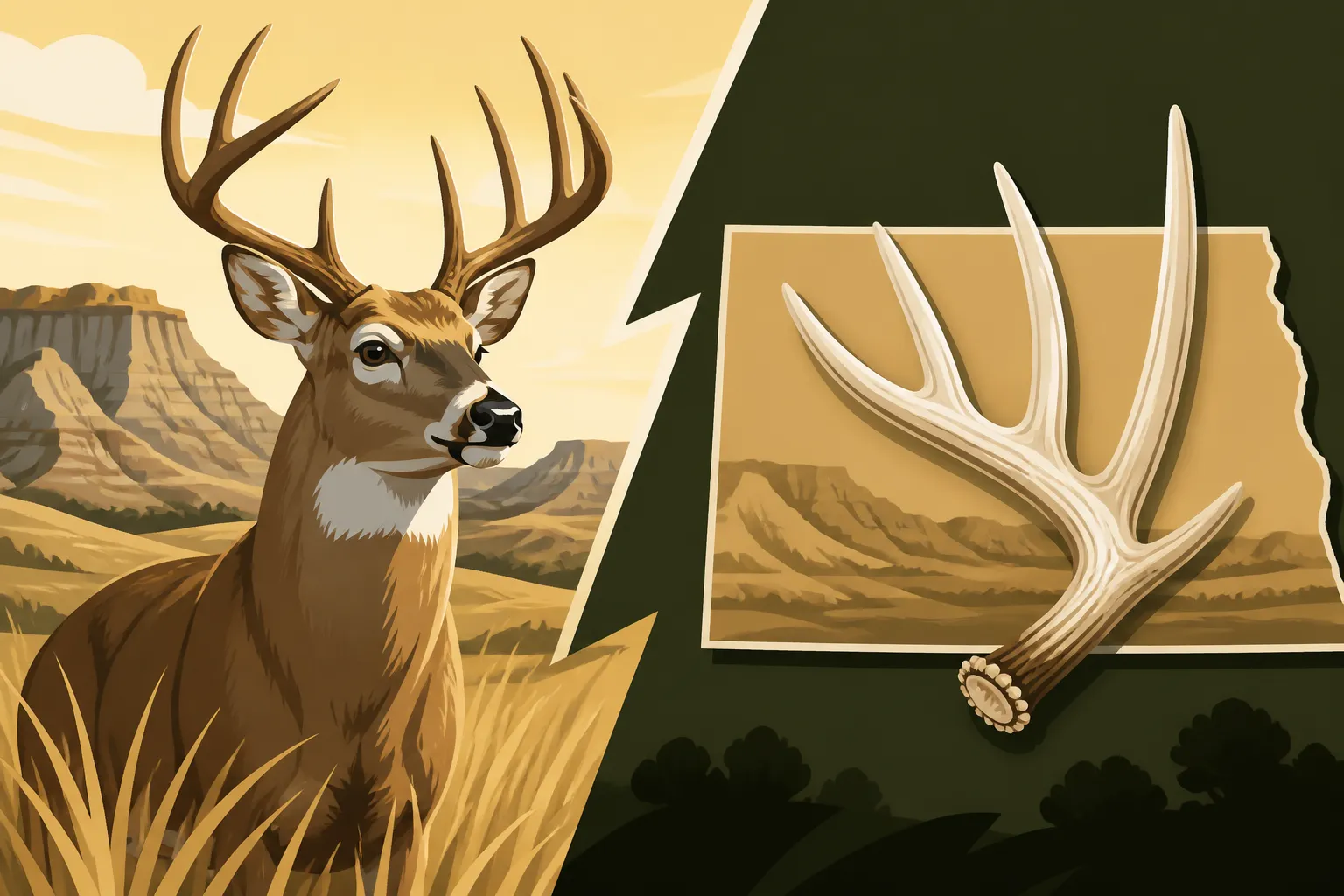
In North Dakota, the statewide regulation defines an "antlered deer" as any deer that has at least one antler three inches or longer. That's it. It doesn't matter if it's a spike, a fork horn, or a magnificent 5×5; as long as one of those bony protrusions extends a minimum of three inches from the skull, it's considered an antlered deer. This can be a huge relief for hunters who are used to the intense pressure of field-judging point counts under stressful, fleeting circumstances. You don't have to debate whether that small stub is a legal point or not. You're just looking for that three-inch length. This simplified rule makes on-the-spot decisions a bit less nerve-wracking, allowing you to focus on shot placement and ethical harvesting.
Where This Applies in the Badlands
This definition of "at least one antler three inches or longer" applies across all deer units in North Dakota, including those rugged and vast Badlands units. Specifically, units 4A, 4B, 4C, 4D, 4E, and 4F are the heart of North Dakota's Badlands and mule deer country. When you draw an "any antlered deer" license for these units, this is the rule you're hunting under. It applies to both white-tailed deer and mule deer, though drawing a mule deer buck license is often a separate and much more challenging endeavor due to their limited numbers and high demand.
Many hunters dream of taking a trophy mule deer from this iconic landscape, and while the "three-inch rule" is straightforward, the real challenge in these units often comes from actually locating a mature buck and having the appropriate tag. While there isn't a strict "antler point minimum" for general antlered deer tags in these areas, the limited number of mule deer buck licenses helps to ensure that mature bucks have a chance to grow, creating those quality opportunities many hunters seek. For those with a general deer gun tag, knowing you just need that three-inch antler makes it clear: if it's got a horn that long, and you have an antlered tag, it's legal.
Why North Dakota Uses a Different Approach to Antlered Deer
It's natural to question why North Dakota bucks the trend of many other states by not implementing widespread antler point restrictions. Most hunters are familiar with states that require a 3-point or 4-point minimum on one side, believing it’s the best way to foster a healthy, mature deer herd. North Dakota's strategy, however, focuses on different levers for deer management, particularly in areas like the Badlands.
Focus on Age Structure and Herd Health
Instead of relying heavily on antler point restrictions, North Dakota Game and Fish Department primarily manages its deer herd through license allocation and season lengths. By carefully controlling the number of "any antlered deer" licenses issued in specific units, they aim to regulate hunter pressure and harvest rates. In units where mule deer are present, especially in the Badlands, the allocation of specific mule deer buck tags is extremely limited and highly sought after. This deliberate restriction of tags is a powerful tool.
Think about it: if fewer hunters are legally allowed to harvest bucks in a given unit, the overall population of bucks has more opportunity to age naturally. This leads to a healthier buck-to-doe ratio and allows more bucks to reach older age classes, resulting in larger antlers not because of a minimum point rule, but because they simply had more years to grow. This approach can be very effective, allowing the deer population to self-regulate to some extent, driven by habitat quality and winter survival rates. It’s a management style that seeks to balance hunter opportunity with the long-term health and age structure of the herd, providing a more holistic approach than solely focusing on antler points. You can track some of these trends by looking at North Dakota Deer Harvest Records.
Managing Mule Deer in Specific Units
The Badlands are iconic for their mule deer, but these populations can be sensitive to overharvest. Unlike the more numerous white-tailed deer, mule deer often have specific habitat requirements and can be slower to rebound from tough winters or excessive hunting pressure. This is why the mule deer buck tags in units like 4A, 4B, 4C, 4D, 4E, and 4F are exceptionally hard to draw. Many hunters will spend years applying for the chance to pursue one of these magnificent animals.
This scarcity of tags indirectly serves a similar purpose to antler point restrictions by reducing overall buck harvest. When a hunter is fortunate enough to draw one of these coveted tags, the challenge often isn't finding a deer that meets an antler point minimum, but rather finding any legal mule deer buck in the vast, broken terrain. The limited availability of these tags helps ensure that a significant portion of the mule deer buck population reaches maturity, contributing to the reputation for quality bucks that the Badlands hold. It's a system designed to protect the integrity of the mule deer herd while still offering a once-in-a-lifetime opportunity for dedicated hunters. The strategy allows for the careful management of North Dakota's Mule Deer Range, preserving it for future generations.
Field Judging and Ethical Considerations
In the heat of the moment, with adrenaline surging and a magnificent animal in your sights, making a quick and accurate judgment can feel like a monumental task. While North Dakota's "three inches or longer" rule for an antlered deer might seem simpler than counting points, it still requires practice and ethical considerations to ensure you're making a legal and responsible harvest.
Making the Call in the Field
The primary challenge with the "three inches or longer" rule is accurately estimating three inches from a distance, especially if the deer is moving or partially obscured. Three inches isn't a huge amount.
- Visual Cues: Think about common objects that are roughly three inches long. The average human thumb is about two to three inches. The base of a broadhead or the length of a small hunting knife blade might be around this length. Practice visualizing this length.
- Binoculars and Spotting Scopes: Always use good optics to confirm. Don't rush a shot based on a guess. Get a clear view of the antler bases.
- Patient Observation: If you have the luxury, watch the deer for a moment. As it moves its head, you'll get different angles, making the antler length easier to discern. A deer that offers a clear profile is ideal for judging.
- When in Doubt, Don't: This is the golden rule of ethical hunting. If you cannot definitively determine that an antler is at least three inches long, it's best to pass. A questionable shot often leads to regret and potential legal issues. It's always better to walk away empty-handed than to make an illegal harvest or wound an animal. This is especially true for Hunting North Dakota's Badlands Mule Deer Country, where a lost deer can be incredibly difficult to recover.
The Importance of Knowing Your License
Beyond the antler definition, it's absolutely critical to understand the specific type of license you hold for your chosen unit. This might seem obvious, but mistakes happen, especially with complex lottery systems and unit-specific rules.
- "Any Antlered Deer" License: This is your straightforward license that allows you to harvest any deer that meets the "at least one antler three inches or longer" definition, regardless of species (mule deer or whitetail).
- "Antlerless Deer" License: This license permits you to harvest only a deer without antlers (doe or fawn). Accidentally shooting an antlered deer with an antlerless tag is a significant violation.
- Species-Specific Tags (e.g., Mule Deer Buck): As discussed, mule deer buck tags are highly restricted in the Badlands. If you are lucky enough to draw one, you can only harvest a mule deer buck. Conversely, if you have an "any antlered deer" tag that is not species-specific, you can harvest either a whitetail buck or a mule deer buck that meets the antler length requirement.
- Unit-Specific Regulations: Always double-check the regulations for your exact hunting unit. While the three-inch rule is general, there might be other nuances or specific dates that apply. What applies in unit 4C might have slight differences from unit 3A, for example. The North Dakota Game and Fish Department publishes a detailed proclamation each year, and it’s your responsibility to know it inside and out. Don't rely on old information or hearsay. You can find detailed breakdowns of these regulations and license costs when looking into North Dakota Hunting Licenses and What They Cost.
Scouting and Preparation for Badlands Hunts
Hunting the North Dakota Badlands is an incredible experience, but it’s far from a walk in the park. The rugged terrain, vast expanses, and often unpredictable weather demand thorough preparation. Simply knowing the antler definition is just one piece of the puzzle; successful and ethical hunting here requires a comprehensive understanding of the landscape, the deer, and your gear.
Using Digital Tools for Success
In today's hunting world, digital mapping and data tools are invaluable, especially when you're tackling unfamiliar territory or trying to maximize your chances in units with specific regulations.
- OnX Hunt or GoHunt: Platforms like onX Hunt are indispensable for navigating the Badlands. They allow you to view public land boundaries, private land ownership, and topo maps that reveal crucial elevation changes, coulees, and potential bedding areas. You can mark waypoints, track your movements, and pre-plan stalk routes. For North Dakota hunters, the PLOTS (Private Land Open To Sportsmen) layer is particularly important for identifying accessible private lands.
- ND Game and Fish App: The official North Dakota Game and Fish Department app is a must-have. It often contains digital versions of the proclamations, maps, and even allows for electronic license display and harvest reporting.
- GoHunt Research Tools: When planning your hunt, especially if you're a nonresident or new to a specific unit, resources like GoHunt can provide valuable insights into draw odds, harvest statistics, and unit profiles. They aggregate data that can help you understand historical success rates, deer populations, and the overall hunting pressure in a given unit. This kind of intel can be crucial for selecting a unit to apply for, understanding what to expect, and fine-tuning your strategy for specific challenges like finding Where Badlands Bucks Bed. Utilizing such resources before you even set foot in the field can drastically improve your preparation and confidence.
Pre-Season Scouting and Familiarity
Nothing beats boots-on-the-ground scouting, but if you're traveling from a distance, pre-season digital scouting is key.
- Satellite Imagery Analysis: Before your hunt, spend hours pouring over satellite imagery on tools like GoHunt or Google Earth. Look for natural funnels, pinch points, water sources, and areas with diverse vegetation that might hold deer. Identify potential access points, parking spots, and areas that might hold less pressure. This allows you to develop a mental map of the terrain before you arrive.
- Understanding Topography: The Badlands are defined by their steep buttes, deep coulees, and broken terrain. Understanding how deer use these features – moving along benches, bedding on south-facing slopes, or seeking cover in deep draws – is crucial. Pay attention to how wind and thermals will affect scent distribution in various drainages; this is critical information for planning your approach. The elevation changes make Wind and Thermals in Badlands Terrain a huge factor in your success.
- Game Sign Recognition: Once you're in the field, learn to read the sign. Fresh tracks, droppings, rubs, and scrapes will tell you where deer are active. Identifying food sources, travel corridors, and bedding areas will help you narrow down productive hunting spots. Remember, deer are creatures of habit, and understanding their patterns in this unique environment is your best bet for success. Even if you don't find a monster, finding any deer in the vastness of the Badlands is a win.
Here’s a quick overview of the Badlands units and the general antlered deer rule:
| Badlands Unit | General Antlered Deer Definition | Primary Deer Species | Mule Deer Buck Tags |
|---|---|---|---|
| 4A | At least one antler 3" or longer | Whitetail, Mule Deer | Highly Limited |
| 4B | At least one antler 3" or longer | Whitetail, Mule Deer | Highly Limited |
| 4C | At least one antler 3" or longer | Whitetail, Mule Deer | Highly Limited |
| 4D | At least one antler 3" or longer | Whitetail, Mule Deer | Highly Limited |
| 4E | At least one antler 3" or longer | Whitetail, Mule Deer | Highly Limited |
| 4F | At least one antler 3" or longer | Whitetail, Mule Deer | Highly Limited |
The absence of a complex antler point minimum in North Dakota's Badlands units might surprise some hunters, but it simplifies the field-judging process while still maintaining robust deer management through controlled license allocations. Focus on understanding your specific tag, confirming that crucial three-inch antler length, and immersing yourself in the incredible challenge and beauty of hunting the Badlands.
Disclaimer
Always consult the official North Dakota Game and Fish Department (NDGFD) hunting proclamation for the current year before engaging in any hunting activities. Regulations can change, and it is the hunter's sole responsibility to be aware of and comply with all applicable laws and rules. This guide provides general information and should not be considered a substitute for the official regulations.