North Dakota Any-Deer Versus Antlerless Tag Differences
Navigating the complexities of deer tags in North Dakota can feel like deciphering a secret code, especially when you're faced with terms like "Any-Deer" and "Antlerless." Many hunters find themselves scratching their heads, wondering which tag offers the best chance at success or aligns with their hunting goals. This comprehensive guide will meticulously break down the differences between North Dakota's Any-Deer and Antlerless tags, helping you understand what each entails, how they impact your hunting strategy, and how to make the most informed choice for your next season.
Understanding the Basic North Dakota Deer Tag System
Before we dive into the specific tag types, it's crucial to grasp the fundamental way North Dakota manages its deer hunting opportunities. The state employs a lottery-based system for many of its deer licenses, particularly for the popular gun seasons. This system aims to balance hunter demand with population management goals, ensuring a sustainable deer herd for future generations.
The General Deer Lottery
Every year, hopeful hunters submit applications for the chance to draw a deer tag. This isn't a first-come, first-served scenario; it's a draw, much like winning a lottery ticket, but with a bit more strategy involved. You're applying for a specific unit, and within that unit, you'll choose your preferred tag type and weapon choice. The number of available licenses, particularly for coveted "Any-Deer" tags, is often limited, making the draw competitive. It's a system designed to distribute hunting pressure and maintain healthy deer populations across the state's diverse landscapes. For more details on this process, you can explore the information on North Dakota's Lottery-Based Deer Gun Season and the North Dakota Deer Gun Lottery Application Process.
Why Tag Types Matter
The type of tag you hold profoundly influences your hunting experience and success. An "Any-Deer" tag offers immense flexibility, while an "Antlerless" tag narrows your focus considerably. This distinction isn't just bureaucratic; it's central to how the North Dakota Game and Fish Department manages the herd. By allocating different tag types, they can direct hunter effort towards specific segments of the deer population. For instance, increasing the number of antlerless tags in a particular unit helps to control overall herd size and mitigate crop damage, while limiting buck tags can help maintain a healthy age structure and trophy potential. Understanding this rationale helps you appreciate why certain tags are easier or harder to draw and how your choice impacts the larger conservation effort.
What is an "Any-Deer" Tag?
The "Any-Deer" tag is often the most sought-after license in North Dakota's deer lottery, and for good reason. It represents the pinnacle of opportunity for many hunters.
The Freedom and Flexibility
Simply put, an "Any-Deer" tag allows you to harvest any legal deer in the unit for which you drew the tag. This means you can pursue a magnificent antlered buck, a mature doe, or even a fawn, as long as it's within the legal framework and seasons for your specific unit. This flexibility is incredibly appealing. Imagine you're out in the North Dakota's Badlands Mule Deer Country, glassing a distant coulee. With an Any-Deer tag, if a trophy mule deer buck steps out, you're cleared to pursue him. But if the opportunity for a healthy, meat-providing doe presents itself, you can fill your tag without hesitation. This adaptability can be a huge advantage, especially when conditions are tough, and deer sightings are infrequent. It means you're not passing on a legal animal just because it doesn't have antlers, increasing your chances of coming home with venison.
Challenges of Drawing an Any-Deer Tag
While the freedom of an Any-Deer tag is attractive, drawing one can be quite challenging. These tags are typically limited in number, especially in prime units known for larger bucks or higher deer densities. As a result, the demand far outweighs the supply. Hunters often apply for years, accumulating preference points in the hope of eventually drawing one of these coveted licenses. The odds can vary wildly from unit to unit and year to year, influenced by winter severity, harvest success rates, and overall deer population trends. For instance, in units with strong deer populations and a reputation for big bucks, the chances of drawing an Any-Deer tag might be significantly lower than in units with fewer deer or less historical hunting pressure. This competitive nature is a real frustration for many, making the application process a nail-biting waiting game.
Strategic Considerations for Any-Deer Hunters
If you're lucky enough to draw an Any-Deer tag, your hunting strategy can be incredibly broad. You can focus primarily on seeking out an antlered buck, spending hours glassing and still-hunting known travel corridors. However, you also have the luxury of adapting your plan if buck opportunities don't materialize. Maybe you pivot to targeting a group of does to fill your freezer, or you focus on a specific food source where any deer might appear. This tag encourages a dynamic approach, allowing you to react to what the deer and the landscape offer. Many hunters with an Any-Deer tag will spend the early parts of the season focusing on trophy potential, and as the season progresses, they'll shift their focus to simply filling the tag with any legal deer. Utilizing tools like GoHunt can provide valuable data on draw odds and unit breakdowns, helping you plan your application and subsequent hunt.
What is an "Antlerless" Tag?
The "Antlerless" tag serves a different, but equally important, role in North Dakota's deer management and offers a distinct hunting experience.
Defining "Antlerless"
An "Antlerless" tag, as the name implies, restricts you to harvesting a deer without antlers. This typically means a doe (female deer) or a fawn (young deer of either sex) that has not yet grown antlers. It’s important to note that the rules usually specify that if a fawn does have visible button antlers, it would still count as antlerless. The key is the absence of hardened, bony antlers extending beyond the hairline. Always double-check the specific regulations in the annual proclamation, as definitions can sometimes have slight nuances. This clarity is crucial to avoid any accidental violations in the field.
Increased Availability and Success Rates
One of the primary advantages of an Antlerless tag is its increased availability. The North Dakota Game and Fish Department often allocates a higher number of Antlerless tags, especially in units where herd reduction is a management priority. This means your odds of drawing an Antlerless tag are generally much higher than drawing an Any-Deer tag. For hunters primarily focused on harvesting venison for their freezer or introducing new hunters to the sport, an Antlerless tag is an excellent option. The higher availability also translates to higher success rates for hunters. When you're not restricted to only bucks, your opportunities expand considerably, as does and fawns are typically more numerous and often less wary than mature bucks, especially outside the rut.
Management Goals of Antlerless Tags
Antlerless tags are a vital tool for wildlife management. Their primary purpose is to control deer populations, especially in areas where deer numbers might be too high for the available habitat, or where they cause significant agricultural damage. By issuing more Antlerless tags, the department encourages hunters to remove female deer from the herd, which directly impacts future fawn production. This helps keep the deer population in balance with its environment, reducing disease transmission risks like Chronic Wasting Disease (CWD) and ensuring healthy deer for the long term. These tags also help alleviate pressure on antlered bucks, allowing them to mature and contribute to a healthier age structure within the herd. For context on CWD, you might want to learn about North Dakota's Expanding CWD Hunting Units and North Dakota CWD Prevalence Rate Trends. The department's annual North Dakota Deer Harvest Records often show a strong correlation between antlerless tag allocations and herd management goals.
Key Differences and When to Choose Each Tag Type
Understanding the nuances between these two tag types is paramount for making an informed decision when you apply for your North Dakota deer license. It's not just about what you can shoot, but about your hunting goals and the realities of the draw.
Direct Comparison Table
To make it easier to visualize the distinctions, here's a quick breakdown:
| Feature | Any-Deer Tag | Antlerless Tag |
|---|---|---|
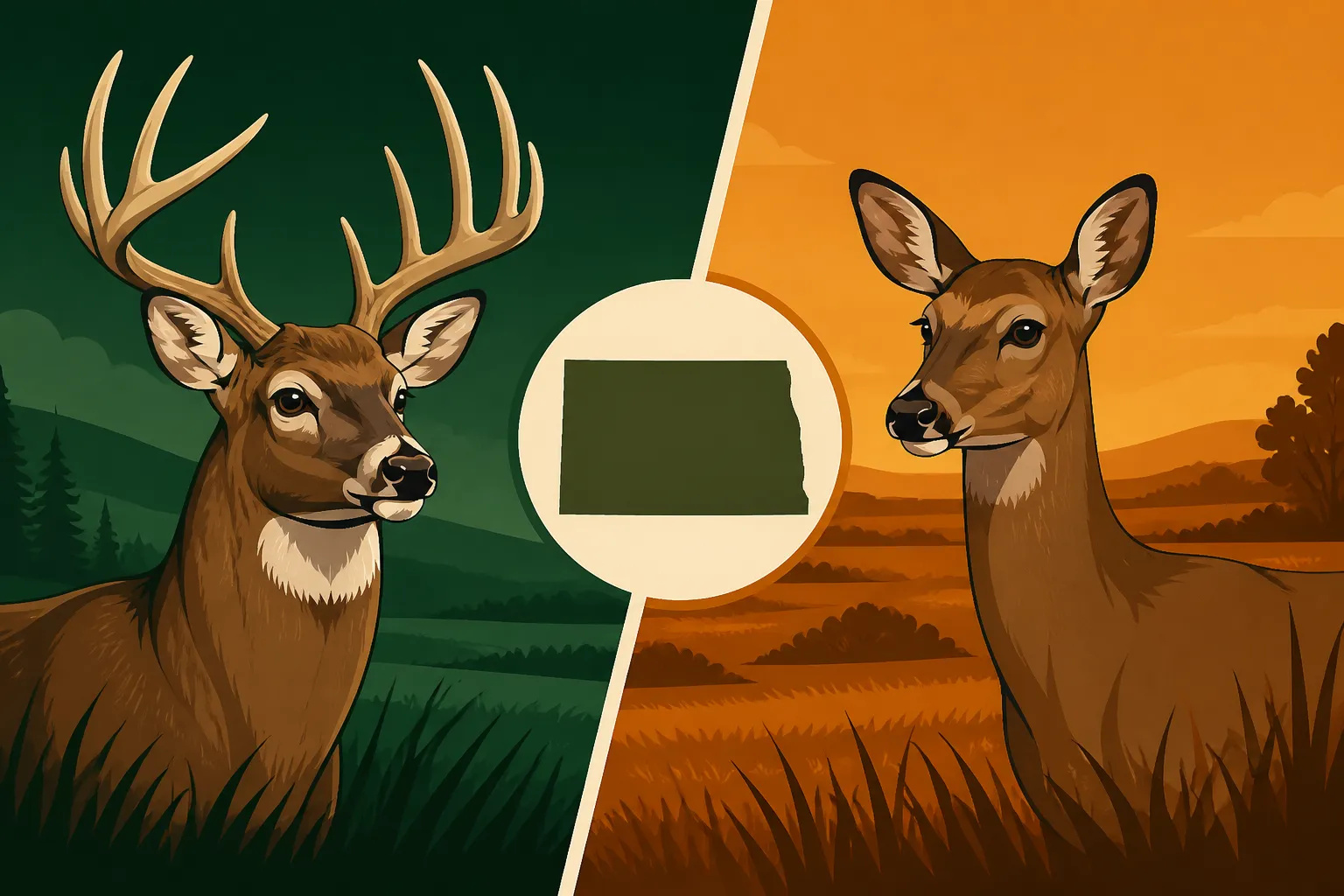
| What You Can Harvest | Any legal deer (buck, doe, fawn) | Doe or fawn (no visible antlers above hairline) |
| Availability | Limited, competitive, harder to draw | More available, easier to draw |
| Draw Odds | Lower, often requires preference points over years | Higher, good for consistent hunting |
| Primary Goal | Trophy hunting, ultimate flexibility, venison | Population management, venison, new hunter success |
| Hunting Strategy | Flexible, can adapt to buck or doe opportunities | Focused on does/fawns, often less pressured |
| Cost | Generally the same base license cost | Generally the same base license cost |
Unit-Specific Considerations
The availability of Any-Deer versus Antlerless tags varies significantly by hunting unit. Some units, particularly those in the North Dakota's Badlands with lower deer densities or specific management objectives, might offer very few, if any, Any-Deer tags. Conversely, units in prime agricultural areas or those with higher deer populations will often have a generous allocation of Antlerless tags. It's critical to research the draw odds and license allocations for your desired unit from previous years. The North Dakota Game and Fish Department releases this data annually, and resources like GoHunt compile it in an easy-to-digest format, allowing you to make an educated guess about your chances. Don't assume that just because a unit is good for deer, it will have plentiful Any-Deer tags. Sometimes, Why Antlerless Licenses Are Unavailable in Some Units is due to a need to rebuild the herd or specific habitat concerns.
Hunter Preference and Experience
Your personal hunting goals and experience should heavily influence your tag choice. Are you a seasoned hunter dedicated to pursuing a mature buck, willing to go several seasons without a tag if it means a shot at a trophy? Then applying for an Any-Deer tag in a desirable unit might be your priority. Do you want to ensure you have a tag every year to fill your freezer, introduce a youth hunter to the sport, or simply enjoy the experience of deer hunting without the intense pressure of finding a specific animal? Then an Antlerless tag is likely a much better fit. For a new hunter, the higher success rate and simpler focus of an Antlerless tag can build confidence and foster a lifelong love for the sport. Furthermore, if you're hunting during the North Dakota's November Gun Deer Season, you'll often find antlerless opportunities more abundant, especially if you're not targeting specific buck movements during the rut.
Applying for North Dakota Deer Tags
The application process can be daunting, but with a clear understanding of your goals and the system, you can approach it strategically.
Navigating the Application Process
The North Dakota Game and Fish Department typically opens its deer lottery application period in May, with a deadline usually in early June. This is your window to decide which unit and tag type to apply for. The application is usually submitted online through the department's portal. You'll need to select your hunting unit (or units, if you have multiple choices), your weapon type (gun, bow, or muzzleloader), and your preferred tag type. Remember, your first choice is your strongest preference, and you might have the option for second and third choices in some scenarios, which can influence your draw odds. Make sure all your information is accurate and submitted on time. Any errors can lead to your application being rejected, which is a frustrating experience you definitely want to avoid!
Maximizing Your Odds
To give yourself the best chance, here are a few tips:
- Research Unit Performance: Look at previous year's draw odds and harvest success for different units. The North Dakota Deer Herd Size and North Dakota Annual Deer Harvest reports provide invaluable data. Some units consistently have higher draw odds for Antlerless tags.
- Consider Antlerless for Consistency: If filling the freezer is your main goal, prioritizing an Antlerless tag in a high-opportunity unit significantly increases your chances of drawing a tag annually.
- Accumulate Preference Points: For Any-Deer tags, especially in premium units, understand North Dakota's preference point system. Many hunters build up points over several years to improve their chances in the lottery.
- Utilize Scouting Tools: Modern mapping tools like GoHunt, along with the official NDG&F website, provide excellent resources to scout units, analyze draw odds, and view habitat details. This can help you identify less pressured areas or those with higher concentrations of antlerless deer.
- Understand Season Overlaps: Be aware of how North Dakota Deer Season Overlap With Small Game might impact hunting pressure and opportunities.
- Know Reporting Requirements: Regardless of the tag you draw, always remember the North Dakota Deer Reporting Requirements to ensure you remain compliant with state law.
Disclaimer
The information provided in this guide is for general informational purposes only and does not constitute legal advice. Hunting regulations and laws in North Dakota are subject to change. It is the hunter's sole responsibility to consult the official North Dakota Game and Fish Department (NDG&F) hunting proclamations and regulations prior to hunting. Always adhere to all local, state, and federal laws.