Pronghorn Antelope in Western North Dakota
For many hunters, the thought of pursuing pronghorn antelope in North Dakota conjures images of endless skies and vast, open landscapes where a keen eye and steady hand are paramount. But the reality of chasing these incredible animals often comes with a dose of humility: they are incredibly challenging, their numbers fluctuate, and drawing a tag can feel like winning the lottery. This comprehensive guide is dedicated to shedding light on these unique creatures, their habitat in western North Dakota, the intricacies of the hunt, and how to best prepare for an unforgettable experience with one of North America's most iconic plains animals.
Understanding North Dakota's Pronghorn Population
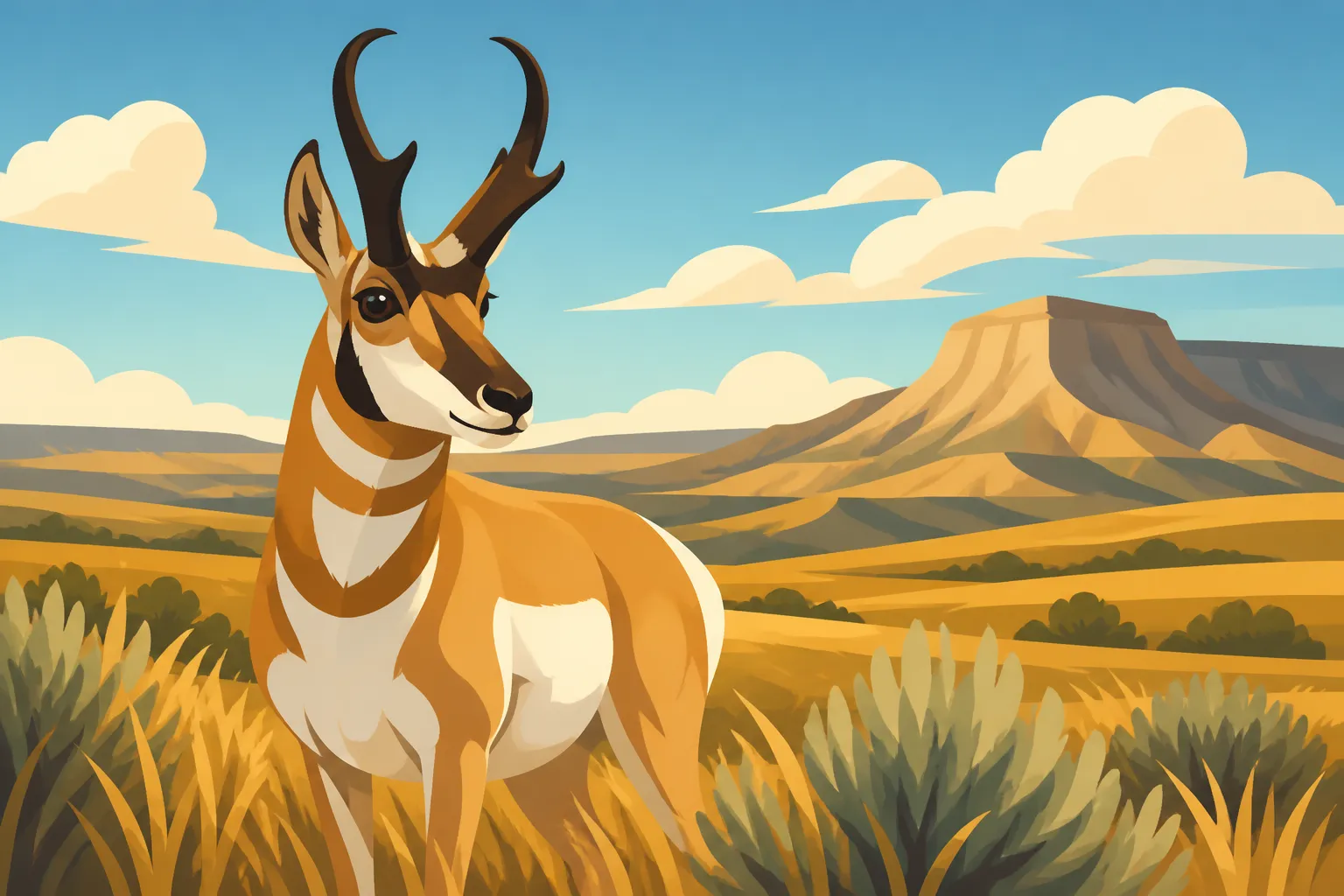
North Dakota's pronghorn population is a testament to resilience, having faced significant challenges over the decades. Often mistakenly called "antelope," these animals are actually the sole surviving member of their own unique family, Antilocapridae, making them truly special. Their numbers have seen dramatic swings, often tied directly to the severity of prairie winters and the availability of suitable habitat. Western North Dakota, with its expansive grasslands, rolling hills, and Badlands fringes, provides the ideal environment for these fast-moving ungulates.
Pronghorn Population Trends and Challenges
The story of North Dakota's pronghorn is one of cautious optimism and continuous management. Historically, pronghorn populations across the plains were decimated by unregulated hunting and habitat loss. While they've made a remarkable comeback, their numbers in North Dakota are still relatively low compared to states further west, and they are particularly vulnerable to harsh weather. A severe winter, especially one with prolonged periods of deep snow and extreme cold, can decimate local herds, leading to a significant reduction in available hunting tags for subsequent seasons. This is a real frustration for hunters who wait patiently for years to draw a tag, only to see opportunity shrink due to forces beyond anyone's control. It’s a stark reminder of nature's delicate balance and the significant impact weather has on these prairie dwellers.
The North Dakota Game and Fish Department (NDGFD) meticulously monitors the population through aerial surveys, primarily focusing on the western units where pronghorn are most prevalent. These surveys provide critical data used to determine tag allocations, aiming to balance hunting opportunities with the long-term health and sustainability of the herd. Understanding these North Dakota Pronghorn Population Trends is key for any hunter hoping to pursue them, as it directly impacts your chances of drawing a coveted license. This constant vigilance is essential because pronghorn are notoriously susceptible to population crashes, meaning conservative management is always the wisest path.
The Recovery Story: How Pronghorn Numbers Rebounded
The journey of North Dakota's pronghorn from near extirpation to a huntable population is a fascinating conservation success story. In the early 20th century, pronghorn were virtually gone from much of their historic range, including North Dakota. Efforts to restore them began in earnest in the mid-20th century, involving trap-and-transfer programs where animals were relocated from healthier herds in states like Montana and Wyoming into suitable habitats in North Dakota. These initial releases were slow, and the pronghorn faced immense challenges, but with improved habitat management and strict hunting regulations, the populations slowly began to establish footholds.
The resilience of the species, combined with dedicated conservation work, gradually allowed herds to grow. However, even with recovery, factors like habitat fragmentation due to agriculture and energy development, combined with those infamous prairie winters, continue to pose threats. It’s a delicate balance, and anyone interested in the broader picture should explore How Pronghorn Numbers Crashed and Recovered to truly appreciate the hard work involved. The NDGFD, alongside private landowners and conservation groups like the National Wild Turkey Federation and Rocky Mountain Elk Foundation, continues to play a vital role in ensuring these unique animals have the space and resources they need to thrive.
Key Pronghorn Habitats in Western North Dakota
Western North Dakota is the heart of pronghorn country. This expansive region is characterized by vast tracts of mixed-grass prairie, sagebrush flats, and the rugged, broken terrain of the Badlands. Pronghorn thrive in these open environments, relying on their incredible eyesight and speed to evade predators. You won't find them hunkered down in dense timber like whitetails; they prefer wide-open spaces where they can see for miles.
Specific areas within counties like Bowman, Slope, Golden Valley, and Billings counties are known for their consistent pronghorn presence. The Little Missouri National Grassland is a prime example, offering vast public access with varied topography that includes rolling hills, buttes, and drainages. These features provide a mosaic of feeding and bedding areas, as well as crucial travel corridors for pronghorn moving across the landscape. Understanding Where North Dakota Pronghorn Concentrate often involves studying maps to identify these specific habitat types and large, unfragmented areas of native prairie that offer both forage and escape routes.
The Unique Biology and Behavior of Pronghorn
Pronghorn are often described as living fossils, having evolved on the open plains of North America long before bison or deer arrived. Their adaptations are nothing short of incredible, perfectly suited to survive and thrive in a landscape that can be both bountiful and brutal. If you want to successfully hunt these animals, you need to understand what makes them tick, because their senses and behaviors are vastly different from other big game species.
Incredible Speed and Vision: Adaptations to the Prairie
The pronghorn's most legendary attribute is its speed. Capable of bursts up to 60 miles per hour, they are the fastest land animal in North America, and second only to the cheetah worldwide. But it's not just their top-end speed; they can maintain speeds of 30-40 mph for extended periods, far outrunning any predator on the prairie. This sustained endurance is what truly sets them apart. Imagine trying to stalk an animal that can cover a mile in a minute without breaking a sweat. It's truly a humbling experience.
Equally impressive is their eyesight. Pronghorn possess eyes that are disproportionately large for their head size, giving them an almost panoramic view of their surroundings. Their vision is often compared to that of an 8-power binocular, allowing them to detect the slightest movement or unusual shape on the horizon from incredible distances. This means that a hunter needs to be acutely aware of their presence and approach with extreme caution, often staying low and using every bit of available cover. A slight misstep or an unmasked movement from a mile away can send a herd scattering. It's an adaptation that makes Stalking Pronghorn on Open Grassland particularly challenging but incredibly rewarding.
Social Structure and Seasonal Movements
Pronghorn social dynamics vary with the seasons, influencing where and how you might find them. During much of the year, females (does) and their young form herds, sometimes numbering in the dozens. Bachelor groups of bucks will also band together, occasionally mingling with the doe herds. As the rut approaches in late summer and early fall, dominant bucks become territorial, attempting to gather and defend harems of does. This can create exciting opportunities for hunters, as bucks are sometimes less wary and more focused on breeding activities.
Their seasonal movements are primarily dictated by food availability and weather conditions. While not true long-distance migrators like some western elk herds, pronghorn will shift their range significantly to find better forage or escape deep snow. In North Dakota, you'll often find them utilizing different pastures and grasslands throughout the year, especially in areas like Hunting North Dakota's Badlands where varied topography offers some shelter and diverse plant life. Understanding these movements is critical for effective scouting and can be greatly aided by using digital mapping tools like GoHunt, which can help pinpoint potential travel routes and historical data on animal locations.
Diet and Foraging Habits on the Arid Landscape
Pronghorn are browsers, not grazers like cattle, meaning their diet consists primarily of forbs, shrubs, and cacti, rather than grasses. This unique dietary preference allows them to thrive in arid and semi-arid environments where other ungulates might struggle. Plants like sagebrush, silver buffaloberry, and various wildflowers make up a significant portion of their diet. This is a crucial distinction for hunters because it means focusing your scouting efforts on areas rich in these plants, rather than just lush green pastures.
They are also incredibly efficient at extracting moisture from their food, enabling them to survive in areas with limited water sources. While they will utilize waterholes, especially during hot, dry periods, they aren't as dependent on them as deer might be. This means you can't always rely on setting up near a water source as your primary hunting strategy. Instead, look for areas with a diverse mix of their preferred forage, often on upland slopes or within wide, shallow coulees that retain moisture longer.
Drawing a North Dakota Pronghorn Tag
Let's be honest: drawing a pronghorn tag in North Dakota is tough. It's not a hunt you can plan for every year, especially if you're a nonresident. The limited number of tags issued reflects the relatively smaller, and often fragile, population compared to states further west. This reality can be disheartening, but for those willing to play the long game, the reward is a truly unique prairie hunting experience.
The Lottery System: Odds and Application Strategy
North Dakota uses a lottery system for its big game species, including pronghorn. This means that every applicant has a chance, but some units and license types are significantly harder to draw than others. The first and most important step is to understand the North Dakota Pronghorn Lottery Application Process. This usually involves an application period in the spring, with results typically announced in early summer. You'll need to decide which hunting unit you want to apply for, and this decision should be based on a realistic assessment of the draw odds and the quality of hunting opportunities in that unit.
The NDGFD publishes draw odds from previous years, which are an invaluable resource. Some units might have a 1-in-50 chance, while others could be 1-in-5. For nonresidents, the odds are often even longer. It’s not uncommon for hunters to apply for five, ten, or even more years before finally drawing a tag. This requires patience and persistence. Many experienced hunters advise applying for the unit you truly want, even if the odds are low, rather than settling for a less desirable unit just to get a tag. The logic is, if you're going to wait for years, you might as well wait for the best possible experience.
Preference Points: Do They Help for Pronghorn?
Unlike some states that have a true preference point system where accumulating points guarantees a tag over time, North Dakota operates a bit differently for most of its big game species. For pronghorn, the system is more of a bonus point system, although it's often colloquially referred to as preference points. Each year you apply and are unsuccessful, you accrue a bonus point. These points effectively give you additional "chances" in the lottery drawing for subsequent years, increasing your mathematical probability.
However, it's crucial to understand that these bonus points do not guarantee a tag, nor do they put you ahead of someone with fewer points. Instead, they give you more entries into the random draw. For example, if you have 5 bonus points, your name might be entered 6 times (your application plus 5 points) into the hat, while someone with 1 point gets 2 entries. This system helps increase your odds over time, but it doesn't ensure success in any given year. This is part of the reason pronghorn tags fall under North Dakota's Once-in-a-Lifetime Big Game Licenses mentality for many—you might only draw a few times in your life.
Nonresident Restrictions and Considerations
For nonresident hunters, drawing a North Dakota pronghorn tag is an even greater challenge. North Dakota has specific allocations for resident and nonresident hunters, with residents always receiving the vast majority of available tags. While nonresidents can apply for pronghorn, their odds are significantly lower, and in some units, nonresident tags might not even be available every year, depending on population numbers.
This means that if you're coming from out of state, you need to be prepared for an even longer wait and potentially higher competition for fewer tags. It's absolutely critical to research the nonresident draw odds for your chosen unit thoroughly. Given the limited opportunity, many nonresidents who do draw a tag invest heavily in scouting and preparation, sometimes hiring a local scout or using advanced mapping services like GoHunt to maximize their chances once they're finally afield. The cost of nonresident licenses and the overall expense of a plains hunt mean you want to make every opportunity count.
Scouting for Pronghorn in Western North Dakota
You've done the hard part: you've drawn a North Dakota pronghorn tag! Now the real work begins. Scouting for pronghorn is an exhilarating process that requires patience, good optics, and a deep understanding of the landscape. Unlike deer that might be found in pockets of cover, pronghorn demand that you cover vast amounts of open country, often before the season even begins.
Utilizing Topographic Maps and Satellite Imagery
Before you even set foot on the prairie, your scouting should start with maps. Modern digital mapping applications, such as onX Hunt or GoHunt, are invaluable tools for identifying potential pronghorn habitat. Start by looking for large, unfragmented tracts of grassland, sagebrush flats, and areas within the Little Missouri National Grassland or other public lands. Identify prominent land features like buttes, long ridges, and wide coulees that could serve as bedding areas or travel corridors. Pronghorn often use these features to break up the wind or provide a slight visual advantage.
Pay close attention to changes in vegetation types visible on satellite imagery. Darker green patches might indicate richer forage or riparian areas, while lighter, scrubbier areas could point to sagebrush country. Also, look for distinct trails or "antelope runs" that crisscross the prairie; these are often visible from above and indicate regular travel patterns. Identifying these features from your couch can save you countless hours of unproductive glassing once you're on the ground, helping you focus your efforts where pronghorn are most likely to be.
Glassing Techniques for Open Prairie
Once you're in the field, effective glassing is paramount. Pronghorn live in a world of sight, and so should you. A good pair of 10x or 12x binoculars, a quality spotting scope (20-60x or higher), and a sturdy tripod are non-negotiable. Forget about "still-hunting" through the prairie; your eyes and optics are your primary tools. Find a high vantage point—a butte, a hill, or even the top of your vehicle if legally allowed and safe—and meticulously scan the landscape.
Don't just sweep the horizon. Break the landscape into grids and examine each section slowly and deliberately. Look for anything that seems out of place: a patch of tan that moves, a flicker of white, or the distinctive dark horns of a buck. Pronghorns' tan and white coloration blends incredibly well with the prairie grasses, making them surprisingly hard to spot, especially if they are bedded down or partially obscured. Patience is key; spend hours behind your glass, letting your eyes adjust and focusing on subtle details. Spotting Pronghorn From a Section Road is often how the process begins, before you commit to a stalk.
Identifying Key Water Sources and Travel Corridors
While pronghorn are adapted to arid conditions, they still need water, especially during the hot North Dakota late summer and early fall. Identifying reliable water sources, such as stock ponds, dugouts, or even natural springs, can be a major advantage. These spots can act as magnets, particularly in dry years, drawing pronghorn from miles around. Incorporate these into your map scouting and then verify their activity once in the field.
Beyond water, understanding travel corridors is vital. Pronghorn, despite their speed, often prefer certain routes across the landscape. These might be subtle draws, the edges of large fields, or natural low points between hills. Look for fence crossings where the wire is often trampled down, or distinct trails leading from bedding areas to feeding grounds. Pay particular attention to how the wind affects these corridors, as pronghorn, like all big game, often use the wind to their advantage, traveling with it or quartering into it to detect scent. This combination of water and well-used travel lanes can give you a solid starting point for where to focus your efforts for Pronghorn Hunting Western North Dakota.
Effective Hunting Strategies for North Dakota Pronghorn
You've drawn a tag, you've scouted, and you've found a buck. Now it's time to execute. Hunting pronghorn in North Dakota demands a blend of patience, physical endurance, and calculated risk. The open terrain is both their advantage and your challenge, requiring unique tactics to get within shooting range.
Spot and Stalk: The Classic Pronghorn Approach
The spot-and-stalk is the quintessential pronghorn hunting method, and for good reason. Given their incredible eyesight and the wide-open nature of their habitat, attempting to "still hunt" them like a whitetail in the woods is largely futile. The process begins by finding a buck, often from a significant distance, using your high-powered optics from a vantage point. Once spotted, the real chess match begins.
The goal is to use every dip, rise, and patch of sagebrush to get within your comfortable shooting range without being detected. This often means long crawls on your hands and knees, sometimes for hundreds of yards, making full use of knee pads and tough clothing. You'll need to pay meticulous attention to the wind, as even though their sense of smell isn't as legendary as their eyesight, a strong crosswind can carry your scent for surprising distances across the prairie. It's a physically demanding and mentally taxing endeavor, but successfully Stalking Pronghorn on Open Grassland is one of the most satisfying achievements in hunting.
Decoying Pronghorn: When and How It Works
Decoying pronghorn is a tactic that can be incredibly effective, especially during the rut, but it requires specific conditions and a bit of courage. Pronghorn bucks are highly territorial and will often investigate anything that looks like a rival buck or a lone doe. A simple silhouette decoy, usually mounted on a stake, can sometimes draw an aggressive buck within rifle or bow range.
The key to successful decoying is timing and presentation. During the rut, when bucks are actively defending their harems or seeking does, they are most susceptible. Position the decoy so it's visible to the buck you're targeting, ideally mimicking a challenge or an inviting posture. The hunter then needs to hide directly behind or very close to the decoy, ready for a quick shot. This is a high-risk, high-reward strategy. Sometimes bucks will charge right in; other times, they'll hang up at a safe distance, or worse, spot you. But when it works, it's one of the most exciting and memorable ways to hunt pronghorn.
Patience and Persistence in Open Country
More than any specific tactic, patience and persistence are your greatest allies when hunting North Dakota pronghorn. The vastness of the prairie, combined with the pronghorn's keen senses, means that opportunities might be few and far between. You could spend days glassing, covering miles, and executing multiple failed stalks before everything finally comes together.
There will be moments of frustration: a buck you've stalked for an hour suddenly vanishes over a rise, or a group of does bust you when you're just about to make your move. It's easy to get discouraged. But the hunter who sticks with it, who keeps glassing, keeps moving, and keeps trying, is the one who ultimately finds success. The reward isn't just the animal, but the profound connection to the land and the sheer satisfaction of outsmarting one of North America's most challenging game animals in its own wide-open domain. Remember, the prairie is a tough teacher, but it yields incredible lessons.
Gear Essentials for a Successful Pronghorn Hunt
Hunting pronghorn on the vast plains of western North Dakota requires specialized gear that can withstand the elements and help you overcome the challenges presented by these sharp-eyed creatures. This isn't a hunt where you can skimp on your equipment; quality optics and appropriate firearms can make all the difference.
Optics: Binoculars, Spotting Scopes, and Tripods
As previously mentioned, optics are king in pronghorn hunting. Your eyes are simply not enough to effectively scout or hunt these animals in such open country.
| Optic Type | Recommended Power | Key Features | Why It's Essential |
|---|---|---|---|
| Binoculars | 10×42 or 12×50 | Wide field of view, crisp edge-to-edge clarity, durable, waterproof | Primary tool for initial glassing, scanning vast areas for movement |
| Spotting Scope | 20-60x or 25-75x | High magnification, fine focus, good light transmission for low light | Confirming species/gender, evaluating trophy quality, directing stalks |
| Tripod | Lightweight, Sturdy | Stable platform for both binoculars (with adapter) and spotting scope, quick setup | Eliminates shake for prolonged glassing, allows detailed examination of terrain |
Investing in the best optics you can afford will dramatically increase your success rate and reduce frustration. Brands like Vortex, Leupold, and Swarovski are popular choices among serious hunters, offering reliable performance in harsh conditions. A quality pair of binoculars will be on your chest all day, so comfort and clear glass are paramount. The spotting scope, on its tripod, will be your long-range reconnaissance tool, helping you Glassing Badlands Coulees for Elk (even though it's pronghorn, the principle of glassing vast areas is the same) and subtle movements of pronghorn a mile or more away.
Rifles and Ammunition: Flat-Shooting for Long Shots
The open country of western North Dakota often means longer shots on pronghorn than you might typically take for deer in timber. While ethical hunting dictates getting as close as possible, you need a rifle and ammunition combination that is inherently accurate and flat-shooting. Many hunters consider 200-300 yards a common shot, and sometimes, depending on terrain and pronghorn behavior, shots can extend beyond that.
Calibers like .25-06 Remington, .270 Winchester, 6.5 Creedmoor, .308 Winchester, and .30-06 Springfield are popular choices. The key is to choose a cartridge known for its flat trajectory and pair it with quality, high-ballistic-coefficient bullets designed for controlled expansion on thin-skinned game. Practice, practice, practice at extended ranges. Knowing your rifle's capabilities and your own limitations at 200, 300, and even 400 yards is far more important than the specific caliber. Understand your bullet drop and wind drift thoroughly; the prairie wind is a constant factor that can easily throw a shot off target.
Clothing and Footwear for Prairie Conditions
North Dakota's weather is notoriously unpredictable, especially in the fall. You can experience scorching hot, dry days, sudden thunderstorms, and even early snow flurries, all within the span of a single hunt. Layering is absolutely crucial. Start with a moisture-wicking base layer, add an insulating mid-layer, and finish with a windproof and waterproof outer shell.
Camo patterns that blend with the prairie grasses and sagebrush, like those offered by Sitka Gear or KUIU, are excellent choices, though solid earth tones work just as well. What's more important than pattern is staying concealed, often by staying low. For footwear, durable, comfortable, and broken-in hiking boots are essential. You'll be doing a lot of walking, often over uneven terrain, through prickly pear cactus, and potentially dealing with muddy conditions after a rain. Make sure your boots offer good ankle support and are waterproof. Don't forget a wide-brimmed hat for sun protection and quality gloves, even in early season, as mornings can be chilly and the ground can be rough during a stalk.
Post-Harvest Care and Meat Processing
Congratulations, you've successfully harvested a North Dakota pronghorn! Now, the work isn't over. Proper post-harvest care is critical to ensure the quality of your trophy and, more importantly, the delicious meat. The hot, often arid conditions of western North Dakota present unique challenges that must be addressed promptly.
Field Dressing in Hot Prairie Conditions
Pronghorn meat, when properly cared for, is lean, tender, and incredibly flavorful. However, it can quickly spoil in warm temperatures. As soon as your animal is down, the priority is to field dress it immediately to begin the cooling process. Get the guts out quickly, and if possible, prop the cavity open to allow air circulation. If you're far from your vehicle, consider splitting the brisket and pelvis to maximize airflow.
A clean game bag is essential. Once field dressed, place the carcass in a breathable game bag to protect it from flies and dirt while allowing it to cool. Avoid plastic bags, which will trap heat. If you're hunting during the early season when temperatures are still high, you might consider packing ice into the chest cavity once you get it back to your vehicle or camp. Every minute counts in hot weather, so work efficiently and cleanly.
Transporting Your Pronghorn Trophy and Meat
Getting your pronghorn from the field to a cooler or processor requires careful planning. Given the size of a pronghorn, it's often manageable for one person to drag or carry, but if you're deep in public land like How Many Acres Little Missouri Grassland Covers, you might need to quarter the animal to make it manageable. Quartering allows for easier transport and faster cooling of the meat. Be sure to check North Dakota regulations for specific transport requirements, such as leaving proof of sex naturally attached until processed.
Once at your vehicle, ensure the meat is kept cool. Large coolers with plenty of ice are a must. Layer ice on the bottom, then meat in game bags, then more ice. Keep the drain plug open to allow meltwater to escape, as sitting in bloody water can taint the meat. If you're planning a multi-day hunt, you might need to transport the meat to a local cold storage locker or processor periodically to ensure its quality. Remember, proper handling is key to enjoying that prime prairie venison.
Dealing with Processing on a Western North Dakota Hunt
Before you even leave for your hunt, it's wise to have a plan for meat processing. Western North Dakota, while rural, does have a number of small-town meat processors. Researching these facilities ahead of time is highly recommended. Call them to confirm their operating hours, capacity, and if they accept wild game. Many processors can get very busy during hunting season, so advance notice or a clear understanding of their drop-off procedures is helpful.
If you prefer to process your own meat, ensure you have the necessary tools, a clean workspace, and enough cooler space at your camp or lodging. Some hunters even bring a small chest freezer on longer trips, running it off a generator. The goal is always to keep the meat clean, cool, and dry. Respecting the animal through proper field care and processing ensures that your hard-earned harvest provides delicious meals for your family and friends, truly completing the hunting experience in North Dakota's vast and beautiful western landscape.
Disclaimer
Hunting is an inherently dangerous activity. This guide provides general information and should not replace official regulations, professional instruction, or personal judgment. Always consult the latest North Dakota Game and Fish Department regulations before hunting. Be aware of private land boundaries, ethical hunting practices, and firearm safety. The information provided here is for educational purposes only, and individuals are responsible for their own safety and adherence to all applicable laws and regulations.