How CWD Spread From the Missouri River Corridor
It's incredibly frustrating, isn't it? As hunters, we pour our hearts and souls into understanding the land and the animals, only to be met with the daunting challenge of Chronic Wasting Disease (CWD). This isn't just a regulatory hurdle; it's a profound concern for the health of our deer herds and the future of our hunting heritage. This guide aims to shed light on how CWD initially spread from the crucial Missouri River corridor in North Dakota, examining the pathways and factors that contributed to its dispersal, so we can better understand how to mitigate its impact.
Understanding CWD and Its Initial Presence in North Dakota
When we talk about CWD, it's easy to feel overwhelmed. It's a disease that brings a lot of uncertainty and worry to the hunting community, especially here in North Dakota where our deer populations are so vital to our outdoor traditions. Understanding what CWD is and how it first showed up in our state is the first step in grasping the broader challenge it presents.
What is Chronic Wasting Disease?
Chronic Wasting Disease is a nasty neurological disease that affects cervids – that's deer, elk, and moose. It's caused by abnormal proteins called prions, which slowly build up in the brain and other tissues, essentially destroying the nervous system. Think of it like a slow-motion, irreversible degeneration. Animals afflicted with CWD will eventually show symptoms like severe weight loss (hence "wasting"), stumbling, drooling, excessive thirst, and a lack of fear of humans. It's always fatal, and unfortunately, there's no known cure or vaccine. The prions are incredibly persistent and can remain in the environment for years, making containment a monumental task. This persistence in the soil and vegetation is part of what makes CWD such a formidable adversary for wildlife managers and hunters alike. It changes how we think about everything from field dressing to carcass disposal, adding layers of complexity to practices we've held for generations.
Initial Detection and Early Concerns in North Dakota
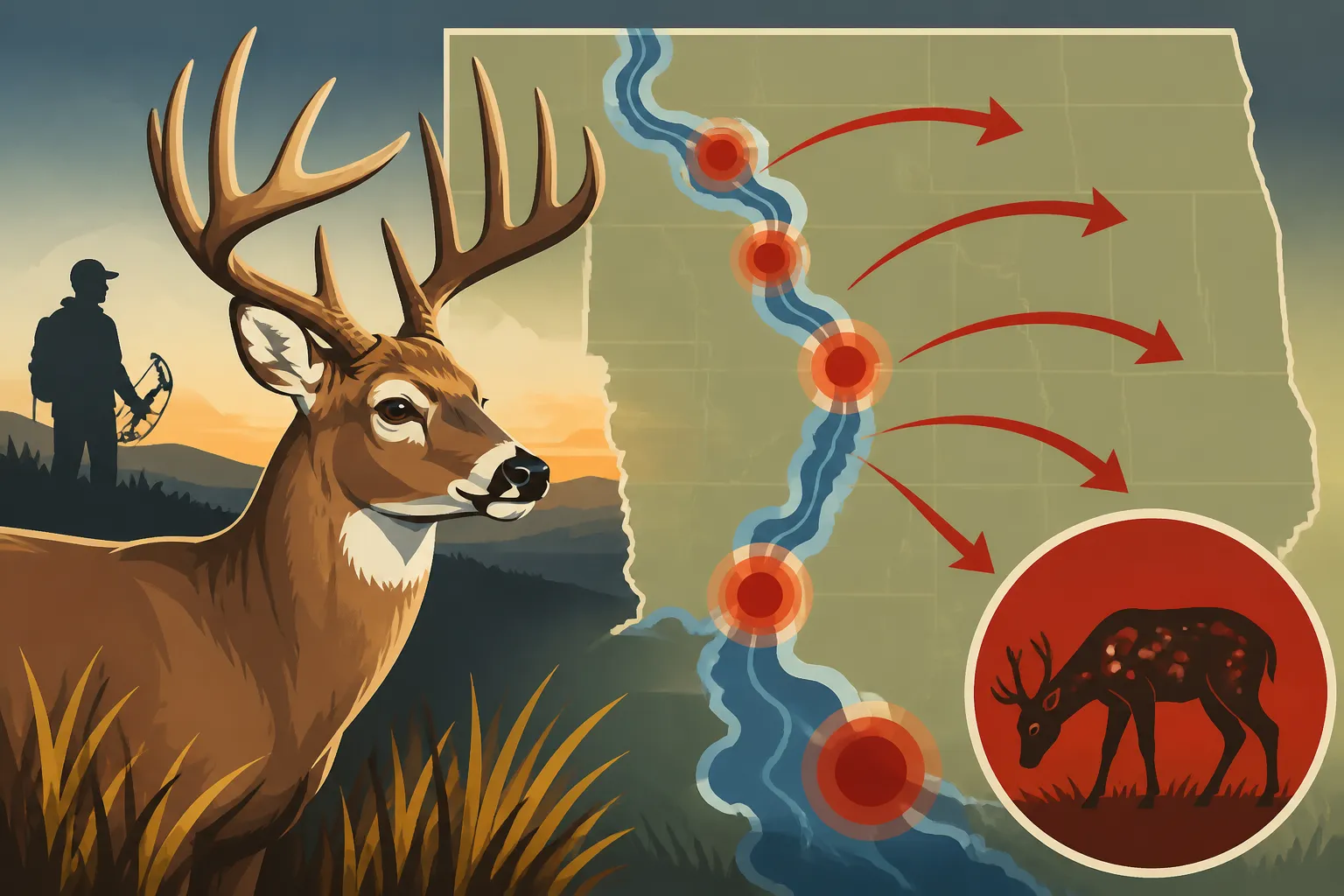
CWD first arrived on the scene in North Dakota, officially detected in 2009. The first confirmed case was in a mule deer harvested in hunting unit 3F2, which is located right along the Missouri River in southwestern North Dakota. This wasn't some random occurrence; the Missouri River corridor, particularly its rough breaks and wooded bottoms, has long been recognized as a prime habitat for both whitetails and mule deer. It's a biological hotspot, drawing and holding significant numbers of animals. The concern from the very beginning was that this concentrated population, combined with the natural movement patterns of deer along the river, would create a perfect storm for the disease to take hold and spread.
The initial detection sent ripples through the hunting community. For years, we'd watched neighboring states grapple with CWD, hoping North Dakota would remain untouched. When it finally arrived, particularly in such a key deer habitat, it immediately raised questions about how far it had already spread and what it would mean for hunting opportunities. The area where it was found is a popular hunting destination, known for its productive deer populations, and the thought of this disease taking root there was, and still is, a sobering one for anyone who cherishes our hunting heritage. Understanding North Dakota's Fourteen-Unit CWD Zone will show you how much that initial detection has expanded in scope over the years.
The Missouri River Corridor as a Hub for CWD Spread
The Missouri River isn't just a beautiful landmark in North Dakota; it's a lifeline for wildlife and, unfortunately, a superhighway for disease. Its unique ecological characteristics played a critical role in how CWD gained a foothold and began its march across the landscape.
River Bottoms as Natural Travel Corridors
Imagine the Missouri River as a giant, winding artery across the state. Its associated river bottoms, with their dense timber, brush, and agricultural fields, provide ideal cover, food, and water for deer. These areas aren't just good places for deer to live; they are natural travel corridors. Deer, particularly bucks during the rut, will utilize these linear habitats to move great distances, often following the river's path. This continuous, interconnected habitat allows for a much more efficient movement of animals than, say, traversing open prairie, where deer might be more dispersed.
When a disease like CWD, which can be transmitted through direct contact or environmental contamination, enters such a system, it finds an ideal environment for dissemination. An infected deer moving along these river bottoms can shed prions through saliva, urine, or feces, contaminating the very trails and bedding areas that other deer will use. This constant flow of deer along established pathways means that a single infected animal can potentially expose many others, acting as a slow, but steady, carrier of the disease throughout the corridor and beyond. Hunters who use mapping resources like GoHunt can often spot these natural corridors when planning their hunts, highlighting why these areas are also so critical in disease management.
High Deer Densities and Interactions
The Missouri River corridor often boasts some of the highest deer densities in North Dakota. This isn't a surprise – the ample resources create prime habitat, drawing deer in from less productive areas. While fantastic for hunting opportunities and wildlife viewing, these high concentrations also act as an accelerant for CWD transmission. More deer in close proximity means more direct contact, which is one of the primary ways CWD is thought to spread between animals. During social interactions, like grooming or sparring, prions can be exchanged.
Furthermore, these areas often have shared food plots, water sources, and mineral licks, which can become hotbeds of environmental contamination. If an infected deer frequents these common areas, it deposits prions into the soil and vegetation, which can then be ingested by other deer. The social dynamics of deer, combined with their tendency to gather in preferred habitats, creates a perfect storm for CWD to cycle through a population. The very characteristics that make these river bottoms so attractive to deer, and thus to hunters, are precisely what make them vulnerable to the rapid spread of diseases like CWD. The more deer interact in a contaminated environment, the higher the likelihood of new infections.
Factors Contributing to CWD Dispersal Beyond the Corridor
While the Missouri River corridor provided the initial staging ground, CWD didn't stay neatly confined to its banks. Several factors, both human-influenced and natural, allowed the disease to extend its reach into broader areas of North Dakota.
Human-Assisted Spread
As much as we love to hunt, we also have to admit that human activities can inadvertently contribute to the spread of CWD. One of the biggest concerns is the transportation of infected carcasses. Imagine a hunter harvests a deer in a CWD-positive unit along the Missouri River, unaware that the animal is infected. They then transport the entire carcass, or parts of it that contain high concentrations of prions (like the brain, spinal cord, or lymph nodes), back to their home county, which might be hundreds of miles away and currently CWD-free. If parts of that carcass are disposed of improperly—say, by tossing bones in a ditch or processing the meat and leaving the prion-laden remains in a landfill where cervids can access them—it can introduce CWD to a new area. This is why strict carcass transportation regulations are so crucial, and why hunters are urged to process animals at the kill site or at designated CWD sampling stations.
Another factor can be the movement of live animals, though less common with wild deer. Historically, captive cervid facilities have been implicated in CWD spread in other regions, and while North Dakota has regulations in place, the concern highlights the importance of biosecurity. Lastly, baiting practices, though generally restricted or banned in CWD management units, can concentrate deer and increase contact, potentially accelerating local spread. Hunters need to be diligent about understanding North Dakota Baiting Restrictions on National Grasslands and other public lands, as well as private land rules, to prevent inadvertently contributing to the problem. Before heading out, checking the latest CWD regulations, perhaps through a platform like GoHunt, is absolutely crucial.
Natural Deer Migration and Seasonal Movements
Deer are not static creatures; they move, often quite a bit, throughout the year. These natural migration and seasonal movements play a significant role in how CWD expands its territory. Deer often have seasonal ranges, moving from wintering grounds to summer fawning areas, or shifting between different food sources as they become available. For example, deer might spend the winter in the protective cover of river bottom timber, then fan out into agricultural fields or adjacent prairie lands during the spring and summer. If an infected deer makes these movements, it can carry the disease with it, potentially contaminating new areas previously untouched by CWD.
Furthermore, dispersal by young bucks seeking new territories is a natural phenomenon. These deer can travel many miles from their birth ranges, and if one of them happens to be infected, it can introduce CWD to an entirely new population. While the Missouri River provided the initial entry and a dense breeding ground for the disease, the inherent nomadic nature of deer ensures that CWD, once established, has the means to gradually radiate outwards. Hunters using tools like GoHunt can often predict these movements based on habitat and seasonal changes, which helps inform wildlife managers about potential spread patterns.
Management Strategies and Hunter Responsibility in Containing CWD
Facing a disease like CWD can feel overwhelming, but both wildlife agencies and individual hunters have vital roles to play in trying to contain its spread and minimize its impact. It's a collective effort that requires ongoing vigilance and adaptation.
Current CWD Management Zones and Regulations
North Dakota's approach to CWD management involves establishing specific CWD hunting units where the disease has been detected or is deemed a high risk. Within these units, specific regulations are often put into place to monitor the disease and prevent its further spread. This can include mandatory sample collection from harvested deer during certain periods, particularly the first few days of the gun season, to better understand the prevalence and geographic extent of CWD. Hunters in these units must submit lymph node samples for testing, which provides critical data for wildlife biologists. Understanding Mandatory Testing Inside a CWD Hunting Unit is non-negotiable if you plan to hunt in these areas.
Additionally, strict rules regarding carcass transport are usually in effect. Generally, only specific parts of a harvested deer – like deboned meat, quarters with no spinal column, or clean skull plates – can be transported out of a CWD unit. The goal is to prevent hunters from unwittingly moving prion-laden tissues to CWD-free areas. These regulations are designed to limit human-assisted spread, which is a key pathway for the disease. It's an inconvenience, absolutely, but a necessary one for the long-term health of our deer herd. Resources are available, like Finding a North Dakota CWD Sampling Station, to make compliance easier.
The Role of Hunters in Mitigation
Hunters are truly on the front lines of CWD management, and our actions make a huge difference. The most crucial step is to stay informed. Every year, new information emerges, and regulations can change, so it's vital to check the latest guidelines from the North Dakota Game and Fish Department before each season. Platforms like GoHunt can provide updated mapping and regulatory information, helping you plan responsibly. If you hunt in a CWD management unit, participating in voluntary or mandatory testing is paramount. It’s how the state gathers essential data to track the disease.
Proper carcass disposal is another critical responsibility. If you harvest a deer in a CWD-positive area, dispose of the carcass remains – especially the brain, spinal cord, and lymph nodes – in a designated landfill that is equipped to prevent scavenger access, or leave them at the kill site. Never dump carcass remains in an unregulated area, as this can directly introduce prions into a new environment. Finally, being mindful of activities like baiting, which can concentrate deer and increase the risk of transmission, is also important. Our commitment to responsible hunting practices is the best defense we have against CWD taking a greater toll on our beloved deer populations.
Here's a quick reference for common hunter actions in CWD management:
| Hunter Action | Description | Importance |
|---|---|---|
| Stay Informed | Review the latest CWD regulations and unit boundaries from official sources before hunting. | Regulations change annually; critical for compliance and effective management. |
| Submit Samples | Participate in mandatory or voluntary CWD testing by providing required samples (lymph nodes) from harvested deer in designated units. | Provides vital data for tracking disease prevalence and spread, informing management decisions. |
| Proper Carcass Disposal | Follow guidelines for disposing of carcass remains, preferably at the kill site or in approved landfills, especially in CWD units. | Prevents environmental contamination and human-assisted spread to new areas. |
| Understand Transport Rules | Know which parts of a deer can be legally transported out of a CWD unit and adhere strictly to these rules. | Minimizes the risk of prions being moved to CWD-free zones. |
| Avoid Illegal Baiting/Feeding | Refrain from baiting or feeding deer, especially in CWD units, as it can unnaturally concentrate animals. | Reduces direct animal-to-animal contact and the potential for prion transmission in shared feeding areas. |
| Report Sick Animals | Contact North Dakota Game and Fish if you observe deer displaying CWD-like symptoms (e.g., severe emaciation, neurological issues). | Early detection of new cases or clusters can help implement localized management actions quickly. |
Disclaimer
This article is for general informational purposes only and does not constitute professional advice. Laws, prices and regulations vary by location and change over time. Consult a qualified professional for guidance on your specific situation.