Renville County Public Hunting Ground
Finding good public hunting ground can feel like looking for a needle in a haystack, especially in counties that might not be renowned for vast stretches of wilderness. Renville County, tucked away in north-central North Dakota, presents its own unique set of challenges and rewards for hunters willing to put in the effort. This guide is designed to help you navigate those nuances, offering practical advice and insight into uncovering hidden gems within Renville's landscape.
Understanding Renville County's Unique Hunting Landscape
Renville County might not boast the sprawling national grasslands of the Badlands or the massive marsh complexes of the Devils Lake Basin, but it holds a quiet charm for the dedicated hunter. It's a place where agricultural fields meet scattered pockets of native prairie, where small coulees provide deer cover, and where numerous prairie potholes attract migrating waterfowl. To truly succeed here, you need to understand the lay of the land and how game animals utilize its fragmented habitat.
General Characteristics and Habitat
The landscape of Renville County is a classic example of mixed-use prairie. You'll find vast expanses of privately owned agricultural land, primarily dedicated to crops like wheat, corn, sunflowers, and soybeans. Interspersed within this agricultural matrix are critical islands of cover and water that game animals depend on. Think about those small, often overlooked shelterbelts, the winding tree lines along creek bottoms that might be barely noticeable on a map, or the numerous shallow wetlands that dot the prairie.
For the whitetail deer hunter, these smaller timber stands and dense brush along riparian corridors are absolute magnets. They offer sanctuary and thermal cover, especially when the surrounding fields are picked clean in late fall. Pheasants and Hungarian partridge cling to the edges of these woodlots, the standing stubble, and the thicker grass pockets in pastures. Sharptail grouse, ever the prairie connoisseurs, will favor the larger remnants of native mixed-grass prairie. And, of course, the countless small potholes and larger sloughs provide crucial staging and feeding grounds for ducks and geese throughout the migratory seasons. North Dakota's Prairie Pothole Region Explained details this critical habitat.
Public Land Types and Their Distribution
Unlike some other parts of the state, public hunting access in Renville County is typically found in smaller, often isolated parcels. This isn't a place where you can just wander for miles across continuous public ground. Instead, you'll be focusing on a mosaic of specific designations:
- PLOTS (Private Land Open To Sportsmen): This is often your best bet for accessible hunting in counties like Renville. These are privately owned lands enrolled in a program that opens them to public hunting. They can range from small blocks of grass to larger tracts encompassing wetlands or crop edges.
- Waterfowl Production Areas (WPAs): Managed by the U.S. Fish and Wildlife Service, these lands are primarily focused on waterfowl habitat, but often offer excellent opportunities for upland birds and deer as well, especially in the cover surrounding the water.
- State School Lands: These are typically square-mile sections (640 acres) that were granted to the state to generate revenue for schools. Hunting is generally allowed, but it's crucial to understand the access rules, which often involve using section line roads.
- Wildlife Management Areas (WMAs): While Renville County has fewer large WMAs compared to some other regions, any that exist are specifically managed for wildlife and public access, often providing diverse hunting opportunities.
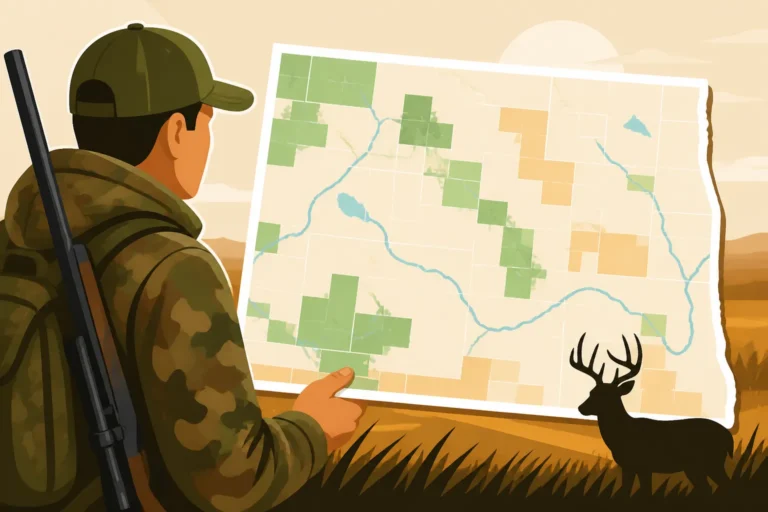
The key takeaway here is that you need to be precise with your planning. "Wing it" hunting often leads to frustration and wasted time. Identifying these specific parcels on a map and understanding their characteristics before you ever leave home is paramount to success.
Navigating Renville County's PLOTS Program and Other Access
The beauty of hunting in a county like Renville lies in the discovery. It's not about grand expeditions but about methodically identifying and utilizing every available acre of public access. This means becoming intimately familiar with mapping resources and understanding the rules of engagement for each land type.
Maximizing PLOTS Land in Renville
PLOTS lands are often the backbone of public hunting in heavily farmed regions like Renville County. These tracts are a testament to cooperation between private landowners and the state, providing invaluable access. To truly maximize your chances on PLOTS land in Renville:
First, get your hands on the latest PLOTS Guide. While it’s tempting to just rely on apps, having the physical guide can sometimes reveal details or allow for planning when cell service is spotty. More importantly, embrace technology. The onX Hunt app, for instance, is an absolute game-changer. It layers public and private land boundaries directly onto detailed maps, often showing the PLOTS designation clearly. This allows you to zoom in on specific parcels, identify adjacent cover, and plan your approach with incredible precision. Scouting PLOTS Land Before Season delves into effective use of these tools.
When looking at PLOTS tracts in Renville, pay attention to:
- Edges: These are often the most productive. The border where a PLOTS grass field meets a standing corn field, a small coulee, or a shelterbelt is where game naturally congregates. Deer will often stage along these edges before moving into fields to feed. Pheasants will use the dense cover as thermal protection and escape routes.
- Water Sources: If a PLOTS tract includes a slough or a pothole, even a small one, it instantly becomes more valuable, particularly for waterfowl and as a general draw for other game.
- Access Points: Observe where other hunters might park or enter. Sometimes, walking an extra quarter or half-mile past the obvious entry point can lead you to less-pressured areas within the same tract. Public land can feel crowded, but often that pressure is concentrated near roads.
- Surrounding Private Land: While you can't hunt private land without permission, understanding its characteristics can inform your approach to public land. If an adjacent private field has attractive food sources, deer might funnel through a PLOTS tract to get there.
Remember, PLOTS land can change year to year as contracts expire or new ones are added. Always verify the current status of a tract before you hunt.
Waterfowl Production Areas (WPAs) and State Lands
Renville County, sitting within the larger prairie pothole region, is dotted with numerous Waterfowl Production Areas (WPAs). These federal lands are invaluable resources for bird hunters, but their utility extends beyond ducks and geese:
- Waterfowl: Naturally, WPAs are prime real estate for duck and goose hunting. Many consist of complexes of wetlands, ideal for setting up decoy spreads or jump-shooting. Decoy Spreads for Prairie Pothole Mallards offers great tips. Be mindful of federal regulations, which can sometimes differ slightly from state rules, especially concerning things like non-toxic shot requirements.
- Upland Birds: The grass and brush habitat surrounding many WPA wetlands are often fantastic for pheasants, sharptail grouse, and Hungarian partridge. These areas are specifically managed for wildlife, meaning good cover is usually present. Hunting a WPA for upland birds might involve walking thicker cover than agricultural edges, so be prepared for a good workout.
- Deer: Don't overlook WPAs for deer. Whitetails will use the dense cover, particularly around cattail sloughs or thickets, as bedding areas. If a WPA borders agricultural fields, it can be a significant travel corridor. Early season bow hunters might find success patterning deer movements in and out of these areas.
State School Lands represent another layer of opportunity. These sections, often identifiable as one of the four corners of a township, typically have public access via existing section line roads. The key here is to confirm they are indeed State School Lands (not just any private land along a section line) and that no other special restrictions apply. These lands can be incredibly diverse – from native prairie to agricultural fields – and because they are less actively "managed" for hunting access signs, they can sometimes be overlooked by other hunters. They require diligence in mapping and scouting but can yield surprising results.
| Public Land Type | Primary Game Focus | Typical Habitat | Access Notes |
|---|---|---|---|
| PLOTS (Private Land Open To Sportsmen) | Deer, Pheasant, Waterfowl, Sharptail | Grassland, shelterbelts, crop edges, small wetlands | Marked with yellow signs; verify status annually; use mapping apps. |
| Waterfowl Production Areas (WPAs) | Waterfowl, Pheasant, Sharptail, Deer | Wetlands, dense grass, brushy uplands | Federal regulations apply; often excellent bird cover. |
| State School Lands | Deer, Upland, Waterfowl | Highly variable (prairie, crops, brush) | Access via section line roads; verify land type; often less marked. |
| Wildlife Management Areas (WMAs) | Deer, Waterfowl, Upland | Managed habitat for diverse species | Fewer large WMAs in Renville; check specific rules for each unit. |
Strategies for Successful Hunting in Renville County
Success in Renville County isn't about finding the biggest trophy; it's about consistent effort, smart scouting, and adapting to the dynamic prairie environment. It demands a hunter who is patient, observant, and willing to work a little harder.
Scouting and Pre-Season Preparation
Even in a seemingly homogenous landscape, good hunting spots stand out if you know what to look for. Pre-season scouting is absolutely non-negotiable for Renville County.
Start with your digital tools months before the season. Fire up onX Hunt or GoHunt and pour over aerial imagery. Look for:
- Irregularities: Straight lines of crop fields are uniform, but where do they meet a winding creek, a bluffy coulee, or a block of timber? These transition zones are vital.
- Isolated Cover: Small, uncultivated patches of dense grass, brush, or timber in the middle of vast fields can be magnets for deer and upland birds looking for security.
- Water: Identify every slough, pothole, and stock dam. These not only draw waterfowl but provide a drinking source for all game.
- Access Routes: Note section line roads, two-tracks, and potential parking areas. Think about how you'll get into a spot without disturbing game or crossing private land.
Beyond digital, physically driving the county roads is key. Do this in late summer or early fall when crops are high, and again after harvest. Look for deer trails entering and exiting cover, observe where pheasants might roost or feed, and note active waterfowl usage on wetlands. Pay attention to how the agricultural rotation impacts cover and food availability year to year. Reading North Dakota Mud for Fresh Deer Movement can help you interpret game sign.
Adapting to Hunting Pressure and Conditions
Renville County, like much of North Dakota, sees its share of hunting pressure, especially on opening weekends or prime days. Your strategy needs to account for this.
- Go Deeper: Many hunters won't venture far from their vehicles. If you're willing to walk an extra half-mile or more into a PLOTS tract or WPA, you significantly increase your chances of finding unpressured game.
- Hunt Mid-Week/Mid-Day: If your schedule allows, hunting on a Tuesday or Wednesday after the opening weekend rush can make a huge difference. For pheasants, many hunters quit by mid-morning, leaving prime cover undisturbed in the afternoon. Walking a Pheasant Field at Midday offers more insight.
- Weather Wise: Don't shy away from less-than-ideal weather, within safe limits. A drizzly, overcast day can keep other hunters home but often encourages deer movement. A cold front will push migratory birds. High winds might make shooting challenging, but deer often hunker down in thick cover, making still-hunting more effective.
- Focus on Overlooked Species/Areas: While everyone might be chasing pheasants, consider dedicating time to sharp-tailed grouse in expansive grasslands or actively calling coyotes in the off-season. Sometimes the "less popular" hunts offer fantastic experiences with fewer crowds.
- Deer Tactics: For whitetails, Hunting a Shelterbelt Edge for Deer is a classic tactic that works well in Renville. Identify a thick shelterbelt on public land that connects two larger blocks of cover or runs between a bedding area and a food source. Set up a ground blind or mobile stand downwind, ideally along a well-used trail. Remember to consider wind and thermals, especially in varied terrain.
Key Considerations for Hunters in Renville County
Hunting responsibly and effectively in Renville County means more than just knowing where to go; it means understanding the rules, being prepared, and respecting the land.
Respecting Private Land Boundaries
This cannot be stressed enough in North Dakota. Much of Renville County is private land, and respecting those boundaries is paramount to maintaining a positive image for hunters and ensuring future access. Always, always know where you are. Use your mapping apps religiously, and don't assume a fence line or a two-track is a boundary. A section line road doesn't automatically mean the land on either side is public, either. What North Dakota Trespass Law Requires outlines your obligations.
If a game animal crosses onto private land, you must obtain permission from the landowner before pursuing it, even if you clearly hit it on public ground. This is non-negotiable. Building relationships with landowners, even if just a quick chat about local conditions, can sometimes open doors for future permission, but never assume.
Equipment and Gear for Renville County Hunts
Your gear choices in Renville County should reflect the mixed terrain and unpredictable prairie weather.
- Footwear: Sturdy, comfortable, waterproof boots are essential. You'll be walking through wet grass, muddy sloughs, and potentially uneven ground. Blisters can ruin a hunt faster than anything.
- Layered Clothing: North Dakota weather can change rapidly. Start with moisture-wicking base layers, add insulating layers, and top it with a waterproof/windproof outer shell. You might start a pheasant hunt in a light jacket and end up needing a heavy parka a few hours later, especially as the season progresses. Don't forget your North Dakota Blaze Orange Requirements if hunting during gun seasons.
- Optics: Good binoculars are invaluable for spotting deer across open fields or glassing ducks on distant potholes. A rangefinder is also a smart addition, particularly for deer or long-range upland shots.
- Navigation: While
onX Hunton your phone is excellent, a backup GPS device or a paper map and compass is always a good idea, especially if you venture deep into a large WPA or a complex of PLOTS tracts where cell service can be spotty. - First-Aid: Always carry a basic first-aid kit, especially if you're hunting alone or in remote areas. Accidents happen, and being able to treat minor cuts, scrapes, or sprains can be crucial.
- Game Retrieval: For larger game like deer, consider a deer cart or sled, especially if you anticipate a long drag out of a coulee or a muddy field. For birds, a good game vest or backpack with plenty of space is a must.
By combining careful planning, smart scouting, and a thorough understanding of the regulations, Renville County can offer some truly memorable hunting experiences, proving that even in seemingly modest landscapes, great adventures await.
Disclaimer
This article is for general informational purposes only and does not constitute professional advice. Laws, prices and regulations vary by location and change over time. Consult a qualified professional for guidance on your specific situation.